Tag: Alison Luterman

  • Guest Blogger Alison Luterman . . . Go deep into your writing.

    Guest Blogger Alison Luterman  writes about going deep with your writing.

    Originally posted in her May 1 newsletter.

    Many years ago, in Hawaii, I got a chance to go “scuba diving.” I’m putting the words in quotes because it was really pretend scuba diving for tourists. There was no training involved other than the most basic instructions on how to breathe through a tube connected to the oxygen tank that was strapped to each person’s back. I think we had to sign a waiver saying we would not sue the company if we drowned. Then a group of us waded out, submerged, and voila! We were “scuba diving.”

    Well, not quite. My man-friend, S., had heavy bones and big muscles and he descended like a stone to the ocean floor. I could see him fifteen feet below me picking up beautiful shells while I floated directly above him. I couldn’t sink. They gave me a weight belt affixed with all kinds of metal doodads which allowed me to at least get below the surface, but my small bones, light muscles and, ahem, general fluffiness meant that my body just wouldn’t go down to the depths where S was exploring. Instead I watched him, and enjoyed what I could see from the mid-level.

    I thought about this image last week in memoir class when the timer went off—we had been writing for thirty minutes—and I softly announced that it was break time. My students ignored me and kept writing. They were down there on the ocean floor with all the sea creatures and hidden caves and to come up too quickly would have given them the bends.

    I let them go on for another five minutes, at which point I set a good example by standing up and stretching. No one even looked up. They were too busy confronting dragons and consorting with mer-people.

    “They say sitting is the new smoking,” I remarked helpfully. Silence, except for the sounds of pens scratching and computer keys clicking.

    When they finally consented to stop writing and shared their work aloud, I was reminded again of the image of one diver floating directly above the other. Because of the nature of the reading assignment and our discussion, many of them had felt prompted to write about trauma. Trauma writing is a place where you can often viscerally feel various layers of consciousness operating at the same time. Deepest down is the Child or the Actor, the person who experienced what happened. He or she is like my friend S., at the bottom of the ocean floor, experiencing all the details.

    Hovering just above the Child is the Witness-Self, taking notes. The Witness is in touch with the Child, but can see more of what’s going on than the Child does. The Child cannot see the Witness just as S couldn’t see me during our whole dive, (he told me later he had spent the whole sojourn wondering where I was.)

    The Witness floats like a guardian angel near the Child’s back, even if the Child is oblivious.

    Floating above them both is the Writer-Self who is close enough to the surface to be aware that there’s a whole other sunlit world out there. The Writer-Self knows how things turn out in the long run and she can, if needed, give a larger context (political, social, spiritual) to the story.

    It’s important to say here that the depths can be scary but they’re also nourishing and rich. They’re the ancient birthplace and deathplace, place of mystery and regeneration. It takes courage to return there to uncover the bones and retrieve the gems. And the support of a class or group can help.

    This particular class of psychic scuba divers are very dear to me, for their courage and stubbornness and willingness to stay deep until they have completed their mission, until they are down to their last sips of oxygen.

    Note from Marlene: There are many wonderful writing teachers who can help you go deep in your writing. Check your local resources. In Sonoma County, writing teachers are listed in the Sonoma County Literary Update.

    The Write Spot Blog posts for suggestions on how to write about difficult situations without retraumatizing yourself:

    How to Write Without Adding Trauma

    Use Your Writing to Heal

    Suzan Hagen’s Guest Blog Post on The Write Spot Blog : Healing Through Writing

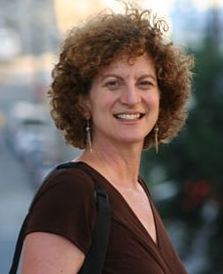
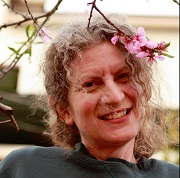
    Alison Luterman is a poet, essayist and playwright. Her books include the poetry collections Desire Zoo (Tia Chucha Press), The Largest Possible Life (Cleveland State University Press) and See How We Almost Fly (Pearl Editions) and a collection of essays, Feral City (SheBooks). Luterman’s plays include Saying Kaddish With My Sister, Hot Water, Glitter and Spew, Oasis, and The Recruiter and the musical, The Chain.

    Her writings have been published in The Sun, The New York Times, The Boston Phoenix, Rattle, The Brooklyn Review, Oberon, Tattoo Highway, Ping Pong, Kalliope, Poetry East, Poet Lore, Poetry 180, Slipstream, and other journals and anthologies.

    Go to Alison’s website for writing workshop dates as well as her coaching and editing work.

  • “At the Ice Rink” by Alison Luterman . . . Prompt #349


    Today’s writing prompt is a poem by Alison Luterman. When the prompt is a poem, you can write on the theme or the mood of the poem. Or use a stanza, a line, or a word to inspire your writing. Just Write!

    At the Ice Rink

    I came here to fail
    and to fall
    but not so well
    as that man careening over the ice
    sliding into the wall
    as if into second base
    shambling up, grinning, like a great bear,
    and taking off again,

    saying, over his shoulder,
    “You’ve got it backwards.
    Learn to fall first,
    then  skate.”

    I end up clinging
    barnacle-like to the sides,
    inching around the perimeter like a caterpillar.
    Wall-hugger. Nothing has changed since I was eight
    and my parents paid for skating lessons
    in hopes I would become more balanced.

    Now as then I am wobbling, terrified,
    feet frozen like blocks of wood at the ankles.
    Not loose-limbed and easy like Hilary
    who rides the ice like a North wind scouring the plains,
    nor deft and graceful like Ruth
    picking up her feet and kick-gliding
    in time to the ’70’s pop muzak.

    But what can we do
    when fear throws its rustiest pickaxe
    dead ahead in our path?

    Mince. Inch. Stumble. Pray
    for the grace to fall
    and not be rescued, pray for the scramble-up

    for the liberating laughter that knowsit is not in our control.
    There is the center, gleaming like a fish-eye.
    Little girls spin on it, twirling their bright skirts.
    It shines under its white scars like a destiny.

    —Alison Luterman

    Alison Luterman:

    As a child, I used to creep onto the stairs when my parents had guests over and eavesdrop on the grown-ups. A creak of the stairs would invariably give away my position and I’d be chased back to bed, only to reappear at the next opportunity, hiding and listening. I wanted to be where the interesting conversations were happening. I still want that. Only now the conversations happen all over the country, all over the world, with friends, friends of friends, and complete strangers. Our stories rub up against each other and expand and change in ways I could never have imagined when I was young, and they now include rocks, weeds, fruit trees, cats, stars, and myths from all over the world, as well as all kinds of people.

  • Alison Luterman and Patience


    Guest Blogger Alison Luterman writes:

    January 2018

    Happy New Year! A few weeks ago I read something on-line about the concept of a “word for the year” and being a sucker for all things woo, decided to try it. Someone had used the word “Delight” and her career exploded into a lovely confetti burst of rainbows and candy canes.

    Sounds good, I thought. I’ll take “Delight” too. But wait! It turns out that you can’t just choose a word willy-nilly. It’s more like the word chooses you. The next day as I sat scribbling morning pages it came to me in a sickening flash of insight: my word is Patience; unsexy, old-fashioned Patience. Not the ever-popular Abundance or Adventure or Sex Goddess, (even those are all very good words and you’re welcome to them). But as soon as I saw my pen writing “Patience,” I knew: It’s what I need most.

    Like most writers I tend to live in my head where conception occurs simultaneously with the fantasy of fulfillment. Meaning, I can get a Big Idea for a new play or musical or book of poems and at the same time imagine the finished product, and the opening night party. Even knowing that somewhere between the germ of an idea and whenever a production actually sees the light of day lies an ocean of work, much dumb luck, and the budgeting of time and work and money to live on while doing the work—and I know all this—still, each time I get swept off my feet by the next entrancing vision.

    So the only way to move forward is step by step. Much as I would have liked to instantaneously undo the last election, and much as I’d like to wave a magic wand and have all my creative babies realized and successful, the reality remains a lot of work, some of it tedious, much of it invisible. Hence, Patience.

    And then there’s teaching, which is my spiritual path, but like all spiritual paths, in addition to being rewarding and fulfilling, also lights up my growing edges, as we charitably call them in California, with painful clarity.

    Here’s what I learned in teaching and coaching this past year: I’m great at seeing what’s missing, which is sometimes a useful superpower. With one client, I read her wonderful memoir-in-progress and said, “I love all these vivid tales from your youth, but I’m not getting the turning-point. When and how did you turn your life around?”


    “Oh, I wasn’t sure if I should include that,” she said, before telling me the story of an important relationship whose demise signaled her awakening. We both saw immediately that this was where the plot pivoted and she went away inspired, knowing what to write next. This client and I work well together; she’s a lot like me, driven and fierce in her process.

    But there are other students whose growth depends on gentle spacious encouragement. What would it be like to practice radical patience, not only in politics and writing, but also with beginning students, and in my personal life, with my husband and friends and family, and most of all with myself?

    I think it’s an Indonesian proverb that says, “Go slowly, we’re in a hurry.” Patience doesn’t always come easily to me. But seeing as how the world is at stake I’m willing to take it on.

    Alison Luterman is a poet, essayist and playwright. Her books include the poetry collections Desire Zoo (Tia Chucha Press), The Largest Possible Life (Cleveland State University Press) and See How We Almost Fly (Pearl Editions) and a collection of essays, Feral City (SheBooks). Luterman’s plays include Saying Kaddish With My Sister, Hot Water, Glitter and Spew, Oasis, and The Recruiter and the musical, The Chain.

    Her writings have been published in The Sun, The New York Times, The Boston Phoenix, Rattle, The Brooklyn Review, Oberon, Tattoo Highway, Ping Pong, Kalliope, Poetry East, Poet Lore, Poetry 180, Slipstream, and other journals and anthologies.

    Alison has taught at The Writing Salon in Berkeley, the Esalen Institute, and the Omega Institute, as well as at high schools, juvenile halls, and poetry festivals.

  • Go With The Flow

    What do you call it when your creativity just seems to flow?

    Alison Luterman had an epiphany:

    I was singing in a little pop-up chorus this past month. It was a tricky classical piece, and the other women were all looking intently at their sheet music. I don’t really read music, so I ignored the paper and gazed at our teacher, trying to meld my brain with hers. Okay, I know this is going to sound woo-woo, but that night in chorus, watching the teacher’s hands on the keyboard, hearing her sing the parts, my body understood the music on a level my mind couldn’t.

    In Interplay we call this “ecstatic following” and we often do it as a group in dance. I remember being introduced to the concept and having an immediate suspicious reaction to it: “Ecstatic following– you mean you surrender your critical thinking? That’s how we end up becoming good Germans and supporting Fascism!” I’m very attached to my critical brain that helps me do crossword puzzles, solve murder mysteries, and participate in spirited debates.

    But when I go to sing or to dance or play theater improv games, if I worry too much about what I’m doing, or try to figure it out ahead of time with that same busy brain, I freeze up. I’ve seen some of my students try to scheme and strategize their writing and in the process block their own flow. The writing becomes stiff and wooden, and it feels like a burdensome task rather than an exploration.

    On the other hand, it’s good to know some technique. Thanks to an extremely patient musician husband, I can now find middle C on the keyboard and navigate around from there. I know what a scale is. I know the difference between a third and a fourth and a fifth, and on a very good day I can sing them. And all of that is helpful.

    So it’s not like Intuition Good, Technique Bad. It’s more like Left Foot and Right Foot, and then Left Foot and then Right Foot again. We need them both.

    In many ways I’m a left-brained nerd who loves crossword puzzles, dramatic structure and logical arguments. But that evening in chorus I remembered that my intuition is a resource that I can call on when I need it. I actually do this all the time with poetry, where the leaping and magic that the unconscious supplies are an essential part of the magic. I just didn’t realize that I could also do it with music which I think of as “hard” and something I’m not good at.

    We all have this ability to let the energy of doing the thing we love lead us, and that, combined with a deep abiding commitment to love and clarity and truth, can create great work. I just don’t know how to put Intuition on a syllabus or a lesson plan along with handling dialogue or story structure, or metaphors and similes and figurative language. But it is part of the package.


  • Guest Blogger Alison Luterman writes about the “shadow”

    Alison Luterman Guest Blogger Alison Luterman talks about “how to be true to the complexity of intimate relationships, while at the same time protecting the dignity of all concerned.”

    The other night in essay class, a student read her story aloud.  Behind her moving account of her mother’s death, I could sense something missing.

    “I can tell from your description what a wonderful woman she was, ” I said. “But there are hints here and there about things that might have been difficult as well.”

    “Yes, that’s true,” she admitted. “We got into some tangles, but I didn’t know how to write about that part. Maybe I wasn’t ready.”

    I knew exactly what she meant. I also struggle with how to be true to the complexity of intimate relationships, while at the same time protecting the dignity of all concerned. I don’t have any one-size-fits-all answer. I just know that the weight of things unsaid, or said partially, becomes a presence in a poem or story, as much as the words that are actually on the page.

    As we continued our discussion, other students wanted to know if they always have to write about “bad stuff” to be considered honest. Aren’t some love affairs or family relationships just sweet? Isn’t mortality, that ever-present shadow of loss that accompanies every human love, enough?

    I admit to a certain personal affinity for the shadow. When I was very little, my father assigned me the chore of picking up rocks, finding earthworms underneath, and putting the worms in his vegetable garden where they would aerate the soil. He was probably just trying to keep a six-year-old occupied while he tended his tomatoes and zucchini, but I took my job very seriously. I still like to pick up rocks and see what’s writhing under there. Under the shame, rage, and terror, there lurks raw life energy, that thing we desire and fear the most.

    When my friend Carla was dying, she said her favorite word was “bittersweet.” Never had the beauty of life been so vivid to her; never had pain been so intense. That’s the shadow. I don’t know how to get away from it. That’s why there’s a big box of Kleenex on the table at writing class. At the same time that’s why the room often erupts into peals of raucous laughter, and why we all hug each other so hard when our time together is over.

    Originally posted March 15, 2015, Alison Luterman‘s Monthly Newsletter.