
What to look for when working with an editor:
“My goal is to help them [editing clients] bring their vision to life and to push their craft further.” –Maggie Smith, “Building Together,” Jan/Feb 2025 Poets & Writers.
More about editing:
Just Write!
What to look for when working with an editor:
“My goal is to help them [editing clients] bring their vision to life and to push their craft further.” –Maggie Smith, “Building Together,” Jan/Feb 2025 Poets & Writers.
More about editing:
Just Write!

“With nothing more than a pen and a notebook, nature journaling can help you slow down and create a reference you can call upon to bring your reader into the worlds you build on the page.”
Excerpted from “How Nature Journaling Can Help Your Writing,” by Maria Bengtson. Writer’s Digest, July/August 2024.
Go outside with pen and notebook, get settled, observe, use sensory detail to enhance your writing.
Bengtson suggests using these prompts
I notice . . .
I wonder . . .
It reminds me of . . .
“Your observations will create a reference that will help you transport your reader from their cozy chair to the world on your pages. Sketch a tree or flower or a critter you see.
The work of creating a rough map, schematic, or stick-figure diagram forces you to think about how things are related to one another, and how the environment and the things in it are structured.”
For example: Dave Seter’s poem, “Fox Trot.”
A curtain parted, beaded, of mustard grass.
Fox made an entrance and trotted across
an asphalt stage, expanse of empty parking spaces
stained with motor oil. Without missing a step.
The audience was wind, full of bluster,
phrased with pollen mitigated by a whisper
of unseen lilac. But the fox was seen
despite having gotten scent, or sixth sense,
college was closed, cars and people absent.
The fox’s coat was the color of caramelized sugar.
He/she/they paused like a debutante waiting
to be conferred royal title, the applause of a suitor,
but it was my nose that was in the air.
My heart on my sleeve hid a heart tattoo.
What is happiness, I asked, what sweetness
has been missing? But the fox didn’t answer.
Did the fox want to be seen frozen,
skilled as lawn statuary unmoved by wind?
Or did the fox just not want to give audience
dancing in a coat the color of caramelized sugar?
Dave Seter, civil/environmental engineer, poet, and essayist is the Sonoma County Poet Laureate for 2024-2026.
He is the author of Don’t Sing to Me of Electric Fences (Cherry Grove Collections, 2021) and Night Duty (Main Street Rag, 2010).
He writes about social and environmental issues, including the intersection of the built world and the natural world. He is the recipient of two Pushcart nominations.
His poems, essays, and book reviews have appeared in various publications including Appalachia, Cider Press Review, The Florida Review, The Hopper, The Museum of Americana, Poetry Northwest (forthcoming), and others.
He has been an Affiliate Artist at the Headlands Center for the Arts, and has served on the Board of Directors of Marin Poetry Center.
He earned his undergraduate degree in engineering from Princeton University and his graduate degree in humanities from Dominican University of California.
“Fox Trot” can be found in “The Write Spot: Musings and Ravings From a Pandemic Year.”
#justwrite #iamawriter #iamwriting

Write about someone who . . .
You would like to have a meal with.
You want to have a do-over with.
You have a question for.
What is the question and why do you want to know the answer?
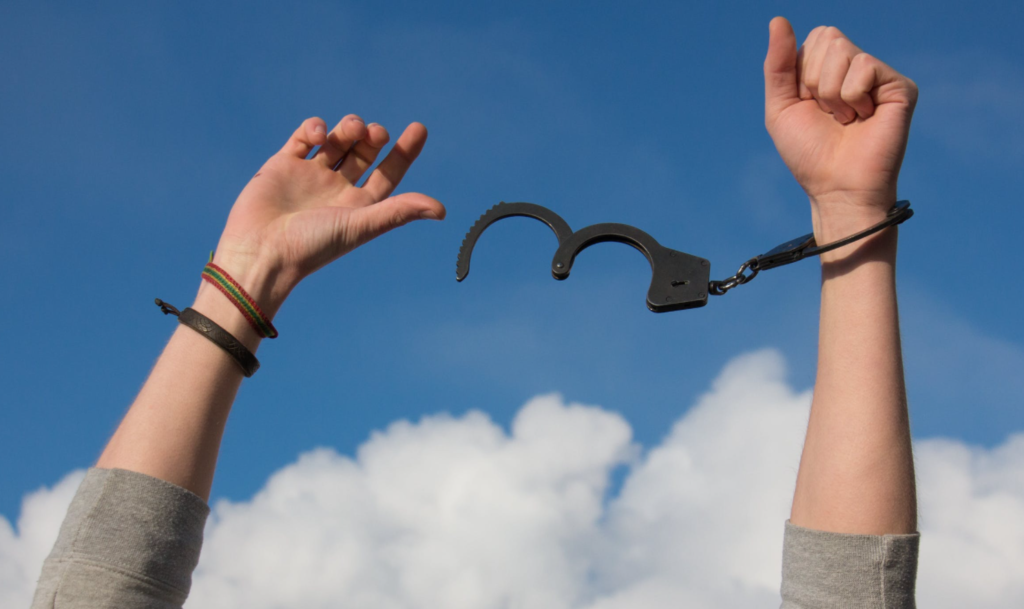
“So, while I still write for understanding, for truth, for clarification, to tell a story, to help people, to help myself and even for fun—I also write for communication, for discussion, for connection.
In a world that can feel fragmented and lonely, I write to bring myself closer to others.” —Diane Forman, “Why I Write,” Brevity’s NonFiction Blog, October 31, 2022
More on “Why Write?”
“We are all storytellers. We are constantly telling each other about our lives—what happened to us. What we saw, what we thought. We share news of dramatic events in our lives and the lives of our friends.
We tell jokes. We share dreams and memories. Starting with these kinds of ‘tellings’ can be a good way to begin our practice of writing stories.”
—The Writer’s Path: A Guidebook for Your Creative Journey : Exercises, Essays, and Examples by Todd Walton and Mindy Toomay
By Ken Delpit
Individual voices are fascinating. They reflect uniqueness.They involve specific characteristics and abilities, both physical and mental. In tone and in lyric, they express specific perspectives and emotions. They can be soft; they can be harsh. They can be musical to some, grating to others. They can be up-lifting, but also down-putting. Voices may not define us completely, but they certainly represent us while the rest of us waits backstage.
But voices rarely come just one to a customer. Multiple voices can reside in a single person. This is certainly true for writers. Each fictional character, partially invented and partially native, taps into its writer’s own voice box. Voices within propel writers’ fingers, and shape their stories.
With few exceptions, it is also true that everyone has multiple voices, whether writer or not. Anyone who hides true feelings or conceals real intentions uses a voice convenient for the deceit. Anyone who senses that they could inflict emotional damage may give their real voice the hook, and push a kinder understudy out as stand-in.
United voices can swell the heart. They project multiplied energy.They promote commonality. They express hope and desire in ways that are much greater than the sum of their individual parts. And in a good way, they reduce us. They reduce us to not-so-different beings, with both interests and purposes in common.
Then, too, united voices can be daunting. When assembled spontaneously, they can give birth to future planned gatherings. When unanimous in pain, they can startle us into action. When joined in purpose, they can change societies. When unified in anger, they can erupt in revolution.
Voices. Both calming and rallying. Both music and weapon. Take care of your voice, as you would a fine French horn. Be careful with it, as you would a loaded revolver. And, remember to let it be silent much of the time. Absence of voice can often be the most commanding, and most harmonious, voice in your repertoire.
Hearing voices” is sometimes a sign of losing it. While that may well be true in his case, Ken Delpit clings to the notion that being fascinated by the many voices that surround and lie within us helps with his writing. Ken hopes to promote himself beyond his technical background (computers, mathematics) into credible and imaginative science-fiction novels.
“Voices” was inspired by Baba Yetu, Prompt #583 on The Write Spot Blog.
| Guest Blogger Suzanne Murray encourages creativity by surrendering. SURRENDER IS CRITICAL TO CREATIVITY We can’t force creativity. We know this intuitively. If we told a painter that we wanted a masterpiece by five o’clock tomorrow, they would look at us like we were crazy; that we clearly didn’t understand what being creative was all about. An important part of being creative is learning to surrender to the flow of the universe, allowing something greater than our everyday self to move through us. It’s not something we can figure out with our linear mind. Of course, if we want to paint we need to learn how to work with our chosen medium and studying the work of the masters can help. If we want to write it’s really valuable to read widely and deeply, to show up daily to put pen to paper (or fingers to keyboard) and perhaps take a workshop on the form we want to work with. Yet at the heart of being creative is letting go and allowing the ideas, the inspiration to move through us. This is where practice comes in. As Flannery O’Connor said of her writing experience, “I show up at my office everyday between 8 am and noon. I’m not sure that anything is going to happen but I want to be there if it does.” I recently met a young man in the park who had a set of watercolors laid out on a table and quickly produced a couple of small paintings that were quite lovely. We spoke of creativity and how so many people think you either have it or you don’t. “Yeah,” he said, “really it’s a muscle, you’ve got to use.” He went on to say “No matter how lousy I feel, if I do even a couple of little paintings I instantly feel better.” I feel the same way about writing, even if it’s just a page of free writing where I let the words flow out of the pen. Being creative feels good and lightens our mood because we become more present to the moment, quiet our chattering minds, and allow for the awareness of our heart and knowing to do the work. In the surrender we find ourselves in an expanded state of consciousness where we can do things we didn’t think we could. In whatever way creativity calls to you, make a habit of showing up to play with it. Let your self be guided by what excites you. Surrender to what brings you alive. Sending you blessings and the wish for creative flow, Suzanne. Suzanne Murray is a Creativity Coach, Life Coach, Writing Coach, and EFT practitioner. She blogs at Creativity Goes Wild. |
By Kathleen Haynie
Yes, it drives me nuts. They take an English word that has some nuanced meaning for them personally, and they use it to name some untouchable gadget they have invented. And then someone else makes the gadget anew and puts a new name on it. Then it becomes daily language usage.
She was complaining that her boyfriend didn’t understand her feelings.
“He doesn’t have enough bandwidth, I guess.”
That word no longer belongs in Techieville.
Complement with an “e” gets merged into compliment with an “I” because spell check doesn’t check it. Someone must think highly of me because I am always getting complimentary “one-month free” offers.
My e-mail gadget is called a program, a file, or a client. My clients usually pay me for my services, but this one does a service for me for free!
I went to copy some text on my computer to a CD disk. The boxes say rip, export, import, burn, copy. Which is which? Is it a webpage, a site, a platform, or what?
And how do I populate a digital screen? If I click “OK,” will it apply it?
I put my computer desk in my new large bedroom. I had never slept with my laptop before, and did not know that computers, like spiders, are nocturnal creatures. In the middle of the nights, Microsoft updates my windows.
I hate cleaning my windows. The updates update my task bar so the start icon won’t open and the sound icon doesn’t adjust the sound.
The techie help support on the phone tells me to fix the problem by first opening the start icon.
“Oh, that’s right. You can’t do that.”
Help!
Kathleen Haynie. This City Girl turned into a Sonoma County Horse Girl, and then retired from decades as a professional in health care. She is now acting out a latent inclination for the dramatic arts as a drama student and cast member of Off the Page Readers Theater. Surprisingly, the journey continues into the newly found delight discovered in written expression. Kathleen felt honored to have her work, What They Did to Alice, performed at the 6th Street Playhouse 2020 Women’s Festival. She has decided that dark chocolate is perfect with a full-bodied red wine.

Today’s Guest Blogger Lara Zielin:
I often have the feeling I’m in trouble.
It’s this pervasive unease, like I’m doing something wrong.
The problem is, I don’t know WHAT I’m doing wrong. Which means that if or when I get in trouble, it’s going to be a terrible surprise.
Because of this, I have my antennae up all day, scanning, looking, wondering what I could be doing that’s awful. I mind my P’s and Q’s and I try so hard to do everything right. I try to stay busy.
I try to be so, so good.
But some part of me knows it won’t be enough. Trouble is still a-comin’.
Which means by the time I get to the end of the day, there is this exhausted part of me that is BEYOND READY to feel safe. To feel good enough. To feel comforted.
That part of me wants to eat ALL the carbs. And drink. And scroll Facebook. And numb, numb, numb. Because it’s painful out there, people.
This feeling has only gotten worse during the COVID-19 pandemic.
Without regular face-to-face check-ins with colleagues and friends, the gnawing unease that I’ve done something wrong only grows. My hankering for carbs only grows. My addiction to Netflix and my phone only grows.
That is, until I stop running and face the darkness. Until I open my arms to the fear and to the pain of thinking I’m not enough and just … sit with it.
I’ve been doing a LOT of writing around this lately. And I’m here for you if you want to do some writing around this, too.
Instead of trying to run from the darkness, let’s invite it in. Let’s listen to it. And let’s meet it with love.
Because that’s the ONLY thing that’s going to help us feel better, feel lighter, and feel whole. If we run from the darkness, it will only continue to chase us. But if we embrace it, we can let it complete us.
To help us do just that, Lara is leading a free one-hour online group writing time on Thursday, April 23.
Note from Marlene: If you need ideas for relaxing and de-stressing, here ya go. You might already be doing some of these.
I’m working on the next Write Spot book and will include these self-care tips and more!
Creativity Coaching
Hypnotherapy
Inspiration
Hands Free Mama – Rachel Macy Stafford
Meditate
Movement
And, of course. Write. Write what you know. Write what you want to know. Just write. If you need writing prompts, take a look at The Write Spot Blog.