
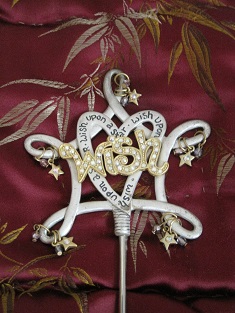
Do you have a talisman or a good luck charm?
If yes, write about that.
If no, what would you chose for a good luck charm?
Do you have a talisman or a good luck charm?
If yes, write about that.
If no, what would you chose for a good luck charm?
Write from your point of view or from a fictional character’s pov.
Don’t have a fictional character? Today might be a good time to create one.
Use these words in your writing:
Illusion, jar, hope, shatter, widget, super, awkward
Hope = hoping, hopeful
Jar = jars, jarring

Make a List.
Start with the year you were born and make a list of significant events that happened in your life, both personally and historically.
If you are having trouble thinking of major events, here are a few:
1950-1975 Vietnam Conflict
1958 Explorer I, first American satellite is launched
January 1959 Alaska becomes the 49th state
August 1959 Hawaii becomes the 50th state
January 1961 John F. Kennedy is inaugurated as the 35th president
August 1963 Martin Luther King Jr., I Have a Dream” Speech
Nov. 1963 President Kennedy is assassinated
1964 Beatles appear on the Ed Sullivan Show
April 1968 Martin Luther King is assassinated
June 1963 Sen. Robert Kennedy is assassinated
July 1969 Astronauts Armstrong and Aldrin walk on the moon
1973 Roe v. Wade, legalizes abortion
1973 Watergate cover-up.
July 1974 Nixon resigns
1986 Space shuttle Challenger explodes 73 seconds after liftoff
1990 Iraqi troops invade Kuwait, leading to Persian Gulf War
9/11/2001 Two hijacked jetliners ram two towers of World Trade Center
April 2009 Swine flu
June 2009 Michael Jackson dies at age 50
Writing Prompt: Take one item from your list and write in detail what happened to you that year. If you have time, take another year and write what happened to you that year.

If you could give the world one message, what would it be?
Inspired from Rachel Macy Stafford’s guest blog post.

Today’s writing prompts are inspired from movies.
~ Thelma and Louise, National Lampoon’s Vacation, Little Miss Sunshine. Write about a road trip.
~ Dirty Dancing, Saturday Night Fever, Footloose. Write about how you learned to dance.
~ The Sting, two con men outcon a con. Write about a time you were tricked, or you tricked someone.
~Forrest Gump. Life is like a box of . . . [fill in the blank and continue writing].
Some of the writing prompts on The Write Spot Blog are just for fun, like these:
What Makes You Smile? Prompt #438
Paint A Word Picture. Prompt #450
Imagination Receiving a Greeting Card. Prompt #455
Others, like today’s, are contemplative.
Today’s Writing Prompt: What challenge do you want to overcome?
I’ve been thinking about my mom, who passed away in July 2017. Every so often, like today, I want to phone her.
I just want to talk with her.
Prompt: Who do you miss?
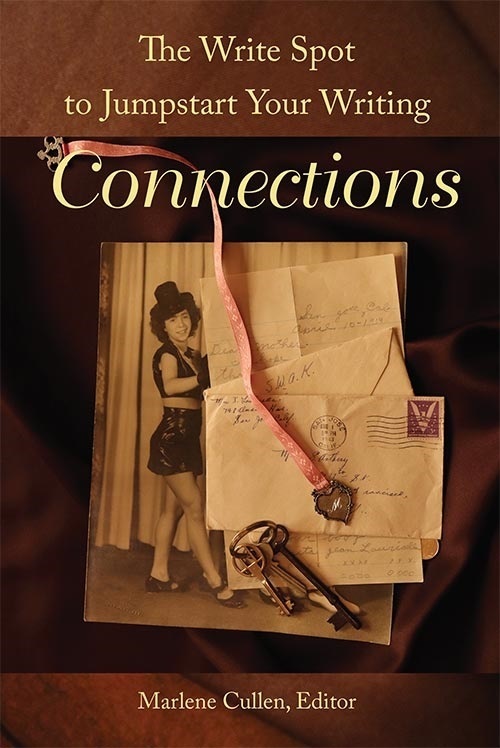
That’s my mom on the cover of The Write Spot: Connections. She was a dancer in her teens, performing at convalescent hospitals in the 1940’s.
Connections is a collection of writing from mothers and their adult children. Some are funny, some poignant, some surprising. All are entertaining. Here’s an excerpt:
Dime Sightings by Pamela Swanson
Although my mother, Ione, could not afford them, she
loved diamonds. Eventually she did save up enough money to buy herself a
diamond ring. She was so proud of that ring. One year, early in November, Ione
died without warning at the age of 54. Suddenly I was traveling the 2,100 miles
from California where I lived to the small town in Minnesota where she had
died. Completely unprepared, I found myself faced with finalizing my mother’s
existence on this earth.
Grand Marais, a small fishing village located on Lake Superior, is where I was
born. It is where my Mom grew up, met my dad, and was married. My roots are
firmly planted there so when I arrived it was to the open arms of my aunts and
uncles. Soon after, family members from other distances began to arrive. I was
cocooned in love and support.
All of the pieces in Connections end with a prompt that readers can use to inspire writing. The prompt for “Dime Sightings” was “Sometimes Magic Happens.”
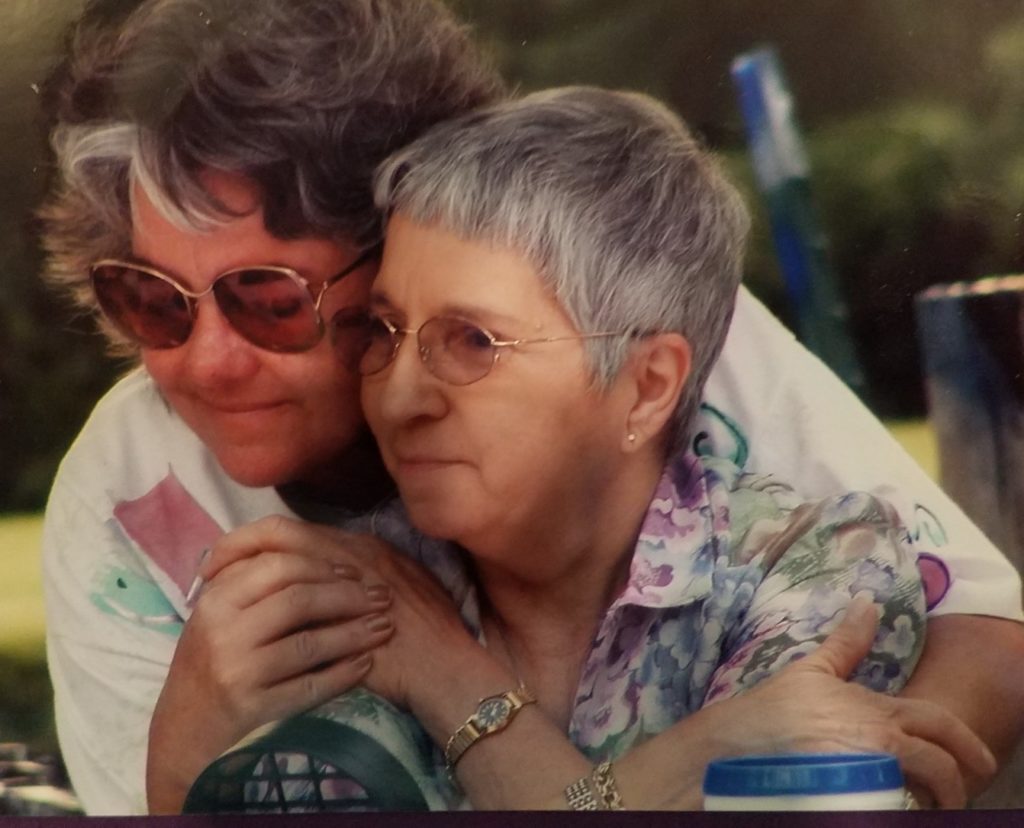
My mom and me at her 75th birthday party.

Guest Blogger, David Moldawer, is the author of The Maven Game. He writes weekly essays for writers.
Perfection vs Good Enough
Take the old quote: Perfect is the enemy of good.
Voltaire might have been the one to say it in this form, but the idea of “good enough beats unattainable ideal” has been around much longer. In fact, it warrants its own Wikipedia entry, if you’re curious to trace its history.
However it’s expressed, it’s good advice for a writer. But is it perfect? (See what I did there?) I’ve often said, “remember, perfect is the enemy of good,” to people stuck in the trap of perfectionism, but over time I’ve come to question the effectiveness of simply saying the words.
If you’re working on a solo project with no genuine deadline, more can be done to improve it. And even more. There is always a better solution to even the smallest creative problem in any work, whether or not you can find it in a reasonable amount of time. That simple fact can be paralyzing. In fact, I’d argue that while writers might not actually get “blocked”—nothing is truly in the way of getting words down—they can definitely be paralyzed by perfectionism.
While I’m skeptical of the value of the adage—it’s never gotten me out of any ruts—I do find demonstrations of the good-enough philosophy motivating. They get me going when nothing else can. Seeing good-enough in action, it becomes just a little bit easier to inject a little pragmatism into your own work.
I’ve written before about my love of the competitive forging reality show Forged in Fire and this is a part of it. When a smith accidentally snaps his blade in half with thirty minutes left on the clock, it’s inspiring to see a feat that took over two hours the first time somehow repeat itself in a quarter of the time with comparable results. A few minutes of an episode of Forged in Fire is often the kick in the pants I need to push through and finish instead of finesse.
Another place I turn to for good-enough inspiration is the YouTube series Pitch Meeting. In it, writer/actor/comedian Ryan George portrays both a sociopathic studio executive and the manically productive screenwriter tasked with pitching him on his latest project. (He’s the writer behind all the big movies.) As the screenwriter explains what happens in the film, the exec can’t help but point out all the things that don’t make any sense, or that might annoy viewers, or that might be downright offensive. “Whoopsie!” the screenwriter cheerfully replies. “Whoopsie!” The exec repeats. And on they go to the next plot point. After all, they’ve got a movie to make.
For over two years, George-the-screenwriter has pitched George-the-exec on dozens, if not hundreds, of movies.
The beauty of the Pitch Meeting concept is that it forces you, the viewer, to grapple with the fact that a real writer and a real exec—at minimum—had to force their way through all the inconsistencies and logical fallacies inherent in a screenplay in order to get it made. It goes without saying that they solved many more than they ignored, but at a certain point, the originators had to say “whoopsie!” and leave it at that.
Click here to read the rest of David’s “Whoopsie” essay.
Your fictional characters should be as different from one another as the real people in your life. One way to show differences is in their voices.
Years ago, returning home from Aqua Zumba, I drove past Hermann Sons Hall and remembered the German woman who managed the building as if it were her immaculate residence. On our early morning walks, my husband and I watched as she polished door knobs, washed windows, and replaced gravel in the driveway. Her mission was to keep “her” building spotless. You didn’t want to cross her.
How does a writer establish “voice” for characters?
If your character is a stoic German woman who manages a building as if it were her pristine cottage, picture what she looks like. Short hair, stern features, sensible shoes, tailored clothing. Then you can imagine what she sounds like: sharp, clipped sentences, uses precise words sparingly.
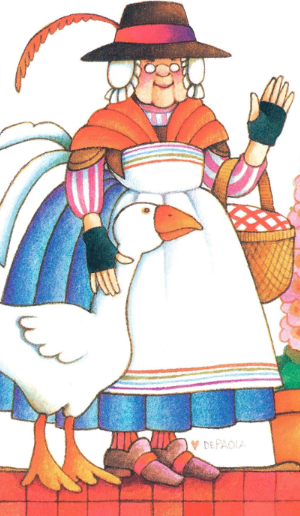
Contrast that with a Mother Goose type: round in looks, ample lap for children to sit on, laugh lines forming parenthesis around her mouth, her eyes crinkle with merriment. She might talk softly or slow. You can hear the smile in her sugary voice.
Write a scene showing two characters’ personalities using dialogue.
For more on writing about character: Three-dimensional characters . . . Prompt #444 on The Write Spot Blog.