Tag: just write

  • Is Flash Fiction right for you?


    Want to learn more about Flash Fiction? If you live in the SF Bay Area, you are invited to attend the August 17, 2017 Writers Forum when presenter, Peg Alford Pursell, will talk about Flash Fiction: The Power of Writing Short.

    “Flash fiction isn’t simply fast fiction. It’s storytelling writ big—by writing short. Miniatures hold so much power that authors have turned to them to write highly successful novels and memoirs. Learn more about the short short and explore its potential to enliven and deepen your writing.”  — Peg Alford Pursell

    6:30 pm to 8:30 pm
    Copperfield’s Books, 140 Kentucky St, Petaluma
    Free

    Read about Flash Fiction— What it is and what it is not

    Places to submit Flash Fiction

    Smokelong
    Flash Fiction Online

    Pulp Literature

    Fireside Fiction

    Note from Marlene: Whether your write short, long, fast, or slow. . . Just Write!
     

  • Something that was lost or stolen. Prompt #326

    Write about something that was lost or stolen from you.


    Photo Credit: Pro_Deluxe Photography by Jeff Cullen

  • Random Things About Yourself  Prompt #325

    Today’s writing prompt is in two parts.

    Part 1:  Write 25 random things about yourself.

    Write whatever comes up for you. Some things from my list:

    I like to be organized.

    I come from poor, but not poverty.

    I like sharp colorful pencils.

    I love the smell of cucumber/melon hand soap.

    My first job besides babysitting and house cleaning was at Playland-At-The-Beach, in the accounting department.

    You get the idea. . .

    Write whatever pops into your head.  When you have a list of 25 things, scroll down for Part 2.


    Part 2:  Pick one thing from the list and expand upon it.

    Thank you, Adair Lara, for the inspiration for this writing prompt.

    ~Marlene

  • Your first experience with death.  Prompt #324

    Write about your first experience with death.

    Or write about a death that transformed you.

    Or a death you might never get over.


    Grief by Gwen Flowers

    I had my own notion of grief

    I thought it was a sad time

    That followed the death of someone you love.

    And you had to push through it

    To get to the other side.

    But I’m learning there is no other side.

    There is no pushing through.

    But rather,

    There is absorption.

    Adjustment. Acceptance.

    And grief is not something that you complete.

    But rather you endure.

    Grief is not a task to finish,

    And move on,

    But an element of yourself —

    An alteration of your being.

    A new way of seeing.

    A new definition of self.

    ###

    There have been many deaths this July 2017. This poem came across my Facebook feed on the day of my dear friend’s memorial service. It’s given me some things to think about. Maybe it will cause you to pause and ponder, too.

    ~Marlene

  • Flash Fiction – What it is and is not.

    When I prepared this blog post, I neglected to note the source. I only have “White” as the author. I considered not posting this, but I love this definition of flash fiction. If you know who “White” is, please, let me know.

    Flash Fiction

    According to White, flash fiction “combines the narrative grip of traditional short fiction with the compression, imagery and allusiveness of poetry. A good flash tale instantly intrigues us, may also momentarily bewilder us, and delivers an emotional jolt to the solar plexus—all in fewer than 1,500 words.”

    White lays out the steps to writing flash fiction. Briefly:

    • The best flash stories are bona fide stories in which a viewpoint character struggles with internal or external conflict.
    • Aims for intrigue and complications.
    • Includes unique ways the protagonist struggles with the problem.
    • A lesson is learned or an epiphany experienced.
    • Uses sensory detail.

    What Flash Fiction is not

    A flash story isn’t merely a hyper-compressed regular-length story; rather, the compression unlocks a dimension of experience that eludes us in other modes of creative expression. — White

  • If you could change . . . Prompt #323

    If you could change some things in your history, what would you change?

  • A little known fact. Prompt #322

    Write about something most people don’t know about you.


  • Something lost or stolen. . . Prompt #321

    Write about something that was lost or stolen from you or your fictional character.


  • Make Sense of Your World Through Writing

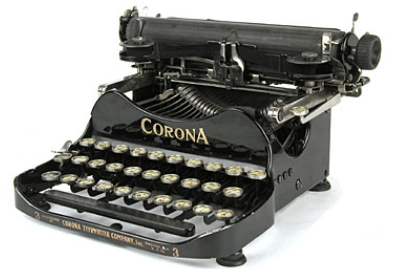
    “Portable Corona number 3. That’s my analyst.” — Ernest Hemingway

    Heal Through Writing

    “Several incidents contributed to social psychologist James W. Pennebaker’s interest in ‘healing writing.’ But when his parents’ visit during college launched a bout of the asthma he thought he’d left behind in the dry Texas of his childhood, he realize climate wasn’t to blame; his emotions were. Once he recognized the connection, the asthma attacks stopped.” —“Writing to heal,” by Gail Radley, May 2017 The Writer magazine.

    Pennebaker has conducted multiple studies indicating that writing can lead to healing.

    Dr. Edward J. Murray investigated healing through writing and concluded “’It seems that putting our thoughts and feelings into language helps confront them, organize them, and wrest the meaning from them. . .” —Gail Ridley, May 2017 The Writer magazine.

    Perhaps we can make sense of our world by using freewrites as a vehicle.

    Note: If you are experience troubling thoughts that are disabling or disturbing, please seek professional help.

    Posts on The Write Spot Blog about healing through writing

    How To Write Without Adding Trauma    

    Does Your Heart Hurt? Prompt #269   

    Things Falling Apart is a Kind of Testing  

  • Who will you interview? . . . Prompt #320

    Today’s writing prompt

    Interview yourself or your fictional character, by answering these questions:

    How did you get started in your line of work?

    How did you become interested in your hobby?

    What did you desire at age 12?

    What did you desire at age 18?

    What did you desire at age 25?

    What did you desire at age 26 or older?

    What do you desire now?

    More ideas on Interviewing Character . . . Prompt #6