
Guest Blogger Elaine Silver: How to show your expertise in your writing.
Think about any book that you have read that really grabbed you. Take some time to read parts of that book again with the idea in mind of writerly authority. Once you start looking for it, you will be dazzled at the facility with which the author commands the story.
You can write like that too.
Let’s examine the word authority. What feeling do you get reading the word “authority?” Do you feel rebellious, like you don’t want to listen to someone else? Do you feel like you want to immediately say “no” to a request? If you answered yes to these questions, then you think of authority as something that subjugates you.
Or conversely, when you think of authority, do you feel secure knowing that someone else knows more than you do about something? Do you envision someone who can give you guidance and advice? Does having someone around in authority make you feel like all is handled?
Or do you have both reactions to the word—positive and negative?
It is my experience that many people are ambivalent about authority—both as it is exercised by others and by themselves. We seem, as a culture, to be confused about it. To whom do we give authority and why? When do we claim it ourselves? This ambivalence is understandable since we live in a heterogeneous culture with many value systems and many people claiming power over us who may not have our best interests at heart.
What does this have to do with writing, you may ask? Well, actually, everything.
The word authority comes from the word “author.” From the Latin: auctoritatem (nominative auctoritas) “invention, advice, opinion, influence, command,” from auctor “master, leader, author.”
In my work as an editor, one issue that I deal with frequently is a writer who is reluctant to become an author, a leader—someone who is actually claiming authority over what the reader is reading and understanding.
I can tell you that the writer/author/leader who does not claim authority might as well hang up her keyboard and call it a day.
Here are two examples:
I recently helped a vocal coach with a book about the technique she has developed to teach her singing students. She is without question an absolute authority on teaching singing and her students have had remarkable results using her methods. However, the initial version of the book did not reflect these facts. She backpedaled on many of her explanations of her methods. She wrote in passive sentence structures
I asked her to describe to me how she acts in her studio sessions with her students. She painted a picture of herself as a confident leader who creatively deals with every issue that comes up and inspires her singers to move past their perceived limitations to achieve vocal prowess that they did not think possible. Armed with that knowledge, we changed her book and her writing to reflect this powerhouse of a teacher. Now her message comes through beautifully and forcefully, as it should.
Another client of mine who is writing a memoir found herself awash in a powerful story but she was writing it as if she had no idea what was going on. This made me, as surrogate for the reader, uneasy and insecure. How am I supposed to trust this author if she doesn’t trust herself?
This writer made the mistake many writers make. She did not take charge of the story and instead let her main character (her younger self) run the show. And the show she ran was a meandering and bumbling mess, much like her life. The author was confusing the actions of her main character with her own role as author. Once she began to differentiate between herself and her protagonist, the book gained cohesion and clarity while story remained an account of chaos and confusion. What a lovely achievement!
No matter what the story is or who the main character is, the author must act as captain and keep steering the ship with a steady hand even in unruly seas.
We read because we want to see the world through the eyes of the author. We want to know what he knows. We ask and expect her to be our leader and show us some new terrain. We expect our author authority to navigate us safely into and through an uncharted, exciting land that we have not experienced before.
Know your story. Know the journey you want to take your reader on. Lead with confidence. Write with Authority.
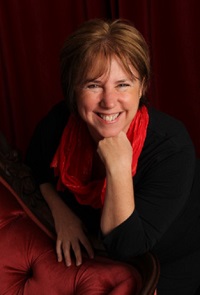 Elaine Silver helps writers realize the greatest potential of their writing by discovering their true intent and translating it to the pages of their books. She has written on topics as varied as choosing the right college to the innovations in green building techniques. Elaine’s specialty is seeing how your message will be perceived by others and guiding you to create your best work.
Elaine will be one of the editors on the Editors Panel at Writers Forum on July 21, 2016, 6:30 pm to 8:30 pm at Petaluma Community Center.