Rubbing Aladdin’s Lamp

  • Rubbing Aladdin’s Lamp

    Aladdins Lamp

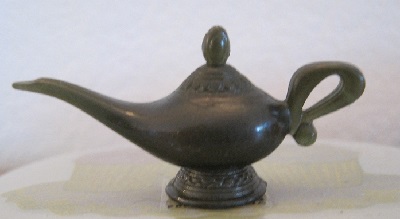
    “The past,” Phillip Lopate says, “is an Aladdin’s lamp we never tire of rubbing.”

    Guest Blogger Norma Watkins studied with Phillip Lopate. The following is what she gleaned working with the master of the personal essay.

    The hallmark of personal essay and memoir is its intimacy. [Links below on memoir writing.]

    In a personal essay, the writer seems to be speaking directly into the reader’s ear, confiding everything from gossip to wisdom: thoughts, memories, desires, complaints, whimsies.

    The core of this kind of writing is the understanding that there is a certain unity to human experience. As Montaigne put it, “Every man has within himself the entire human condition.”

    This kind of informal writing, whether a short piece or a book of memoir, is characterized by:

    • self-revelation
    • individual tastes and experiences
    • a confidential manner
    • humor
    • a graceful style
    • rambling structure
    • unconventionality
    • novelty of theme
    • freshness of form
    • freedom from stiffness and affectation

    The informal writing of the personal essay and memoir offers an opportunity toward candor and self-disclosure. Compared with the formal essay, it depends less on airtight reasoning and more on style and personality. We want to hear the writer’s voice.

    How do we achieve this?

    Use a conversational tone. Instead of seeing our memoirs as collections of facts we are leaving to the future, strive to write as if this were a letter to a friend.

    We have a contract to the reader to be as honest as possible.

    Humans are incorrigibly self-deceiving, rationalizing animals. Few of us are honest for long. Often, in shorter personal essays, the “plot,” its drama and suspense, consists in watching how far the essayist can drop past her psychic defenses toward deeper levels of honesty. You want to awaken in the reader that shiver of self-recognition.

    Remove the mask. Vulnerability is essential.

    The reader will forgive the memoirist’s self-absorption in return for the warmth of his candor.

    The writer must be a reliable narrator. We must trust that the homework of introspection has been done. Part of this trust comes, paradoxically, from the writer’s exposure of her own betrayals, uncertainties, and self-mistrust. This does not mean relentlessly exposing dark secrets about ourselves, so much as having the courage to cringe in retrospect at our insensitivity that wounded another, a lack of empathy, or the callowness of youth. As readers, we want to see how the world comes at another person, the irritations, jubilations, aches and pains, humorous flashes. These are your building blocks.

    Ask yourself questions and follow the clues. Interrogate your ignorance. Be intrigued by limitations, physical and mental, what you don’t understand or didn’t do.

    Develop a taste for littleness, including self-belittlement. Learn to look closely at the small, humble matters of life. Develop the ability to turn anything close at hand into a grand meditational adventure. Make a small room loom large by finding the borders, limits, defects and disabilities of the particular. Start with the human package you own. Point out these limitations, which will give you a degree of detachment.

    You confess and, like Houdini, you escape the reader’s censure by claiming: I am more than the perpetrator of that shameful act; I am the knower and commentator as well. If tragedy ennobles people and comedy cuts them down, personal writing with its ironic deflations and its insistence on human frailty tilts toward the comic. We end by showing a humanity enlarged by complexity.

    We drop one mask only to put on another but if in memoir we continue to unmask ourselves, the result may be a genuine unmasking. In the meantime, the writer tries to make his many partial selves dance to the same beat: to unite through force of voice and style these discordant, fragmentary parts of ourselves. A harvesting of self-contradiction is an intrinsic part of the memoir. Our goal is not to win the audience’s unqualified love but to present the complex portrait of a human being.

    A memoirist is entitled to move in a linear direction, accruing extra points of psychological or social shading as time and events pass. The enemy is always self-righteousness, not just because it is tiresome, but because it slows down the self-questioning. The writer is always examining his prejudices, his potential culpability, if only through mental temptation.

    Some people find a memoir egotistical, all that I, I, I, but there are distinctions between pleasurable and irritating egotism. Writing about oneself is not offensive if it is modest, truthful, without boastfulness, self-sufficiency, or vanity. If a man is worth knowing, he is worth knowing well. It’s a tricky balance: a person can write about herself from angles that are charmed, fond, delightfully nervy; alter the lens a little and she crosses into gloating, pettiness, defensiveness, score-settling (which includes self-hate), or whining about victimization. The trick is to realize we are not important except as an example that can serve to make readers feel a little less lonely and freakish.

    The Past, as we said in the beginning, is a lamp we never tire of rubbing. We are writing the tiny snail track we made ourselves. Such writing is the fruit of ripened experience. It is difficult to write from the middle of confusion. We need enough distance to look back at the choices made, the roads not taken, the limiting family and historic circumstances, and what might be called the catastrophe of personality.

    Finally, the memoirist must be a good storyteller. We hear, “Show, don’t tell,” but the memoirist is free to tell as much as she likes, while dropping into storytelling devices whenever she likes: descriptions of character and place, incident, dialogue and conflict. A good memoirist is like a cook who learns, through trial and error, just when to add another spice to the stew.

    The Art of the Personal Essay, Phillip Lopate, Doubleday, 1994.

    Note from Marlene:  For more suggestions about how to write a personal essay, please see Write Spot Blog posts:

    How to Write A Memoir-Part One

    How to Write A Memoir-Part Two

    Norma Watkins will be the Writers Forum Presenter on August 18, 2016: “Writing Memoir and How To Turn Your Stories Into Fiction.”

    Norma grew up in Mississippi and left in the midst of the 1960s civil rights struggles. Her award-winning memoir, The Last Resort: Taking the Mississippi Cure, tells the story of those years. When asked what the memoir is about, Watkins says: “Civil rights, women wronged, good food and bad sex.”

    Watkins has a Ph.D. in English and an MFA in Creative Writing.  She teaches Creative Writing for Mendocino College and  serves on the Board of the Mendocino Coast Writers Conference, and the Coast branch of the California’s Writers Club.

  • Ingram Spark? Bookbaby? CreateSpace?

    Shirin BridgesGuest Blogger Shirin Bridges sheds light on Ingram Spark, BookBaby, and CreateSpace.

    The following is an excerpt from Shirin Bridges’ June 24, 2016 blog post on Goose Tracks.

    I was recently asked for the pros and cons of Ingram Spark vs. BookBaby. The answer, I quickly realized, is a complex one, greatly dependent on the particular publishing goals for the book. I also thought that in any decision tree, Amazon’s CreateSpace would have to rate a mention. So what follows is my attempt to delineate the decision tree I would adopt in choosing between these three services . . .

    [Note from Marlene: For the full post, please go to Shirin’s informative blog, Goose Tracks].

    1. How important are bookstores to your sales strategy?
      If NOT VERY, skip to 4.
      If VERY, keep reading.

    Self-published authors will find it almost impossible to get wide distribution in bookstores. Period. The reasons are legion but boil down to two words: workload and risk. Most self-published authors aren’t represented by distributors that bookstores are already doing business with, and there’s little incentive to slog through the paperwork to set up a new account or to take your books on consignment and handle you outside the system.

    . . .  bookstores might be a valid cornerstone of some self-publishers’ sales strategies. A good example would be if you have a book with a very specific market that can be reached through very specific bookstores. Take Katy Pye‘s Tracking the Flash: My Lighthouse Travel Log. Where would you sell that? Gift shops attached to lighthouses, or bookstores in the neighboring towns. If you’re a buyer in one of those stores . . .  You’d probably at least take a peek at something so specifically lighthouse-y.

    You may also decide for emotional reasons that getting into bookstores is important to you. It’s perfectly valid to feel that if you’re going to go to all this trouble to write, fund, and publish a book, you’re going to enjoy a book launch party and the pride of having your book on a shelf in your local bookstore(s). Depending on your relationship(s) with your local bookstore(s), this might be a real possibility and may even lead to a reasonable number of sales. Amanda Conran, for example, was guaranteed a launch party at Book Passage in Corte Madera, for the excellent reason that she works there. She sold around 120 copies of The Lost Celt on her big day. That’s about half the total sales of most self-published titles . . .

    . . . if you decide that bookstore sales are important to you, then drop CreateSpace right off the bat. Most independent bookstores will not knowingly take a CreateSpace book. They hate Amazon that much, and Amazon doesn’t help out by playing ball either: CreateSpace offers roughly half the discount (read profit margin) that bookstores are used to getting from other distributors and publishers.

    Ingram, on the other hand, already has a relationship with just about every bookstore in the USA and an established (and accepted) discount schedule. Within the industry, Lightning Source, Ingram’s original print-on-demand offering, was thought to provide much better production quality than CreateSpace—better color handling, more trim sizes, fewer typographic anomalies, etc. Spark has probably inherited some of this perception as a halo effect, even though its production process is different. (Lightning Source accepts printer-ready PDFs, forcing someone to pay attention to typography—or so one would hope; Spark, like CreateSpace, uses a “meat grinder”—an automatic formatting system that, in CreateSpace’s past, at least, was prone to errors.)

    The Amazon stigma, if you’re targeting bookstores, is a compelling argument for favoring Ingram Spark. But how do you choose between Spark and BookBaby?

    1. Do you want someone to produce your book for you?
      If you want help, keep reading.
      If you think you can do it yourself, skip to 3.

    As Ingram wholesales for other book producers, you can benefit from Ingram’s bookstore relationships without producing your book with Ingram. BookBaby is a popular option.

    When authors gush about their experiences with BookBaby, and quite a few of them do, it’s usually because BookBaby makes everything so easy. You pay them; they take care of it. Then, once your books are produced and in all the promised sales channels, they are out of the picture. No ongoing royalties, etc. It’s a straight “for fee” service.

    They are credited with an excellent support staff who actually answer the phone. They provide easy, one-shop access to professional book designers and editors. (BARNT BARNT, that’s my alarm system blaring: for a professional-quality book, you need both of these services!) If I wasn’t a publisher myself and didn’t have easy access to designers and editors, etc., I’d probably consider using BookBaby.

    1. Do you think you can produce a book yourself?
      On the other hand, some self-publishers don’t need BookBaby’s menu of services. Some are already working with editors. I’ve been retained by a few of them, and these clients are a determined bunch who want to be more than authors—they want control of the entire publication process. (I actually brought one an invitation to submit from a traditional publisher, and he turned it down because he wanted to retain all creative control.) They want to pick their own illustrators and/or designers and have control of the cover art. They relish the challenge of marketing. They are digitally adept enough to deal with the meat grinders without suffering dangerous spikes in blood pressure. If you have your stable of professionals in hand and don’t need much additional production help, Ingram Spark is the most direct route into the Ingram database. As Ingram is America’s largest book wholesaler, that’s the catalog most independent bookstores will use when placing an order.

    Be very clear that Ingram Spark, BookBaby, and nearly all similar services offer production, fulfillment, and easy ordering of your books, but although they use the word “distribution,” they are not full-service distributors. Industry distributors like Perseus and Independent Publishers Group have sales forces. In theory at least, their sales reps will go out there and plug your book. (In reality, their sales forces have thousands of books they can plug; they will plug what they think they can sell.)

    Ingram and BookBaby, et al., do not offer sales services. They do not sell to the trade. YOU have to do the work to get a bookstore to place an order. Although you will be in the Ingram database, that database during any given season includes thousands upon thousands of titles, so unless the bookstore is actively looking for it, your book will not be found.

    1. Are you primarily interested in online sales?
      . . .  If your intent is to go online-only, the choice comes down to Amazon vs. someone like BookBaby.

    BookBaby’s advantages were covered in #2 and they apply whether or not you’re interested in bookstores . . .  BookBaby will take care of production of the print-on-demand (POS) book and conversion of the e-book, and usher both into the appropriate retail channels, dominated by Amazon for POS, and Kindle for e-books. They’ll charge you a fee for their services, and then you will take all profits minus the cut to your retailers.

    Amazon is a little trickier in that not only do you have to handle print book production yourself, you have to handle ebook production also. Even if you are not intimidated by this, there will still be two separate Amazon companies with their own procedures that you’ll have to deal with: CreateSpace for the POS book; and Kindle for the e-book. If you would like your e-book available for every device, you will also have to convert your book into multiple e-book formats and distribute them separately to non-Kindle platforms like iBooks and Kobo.

    One plus of persevering and tackling CreateSpace and Kindle yourself is that you can take advantage of Kindle’s Select program. This gives you higher royalties and various marketing perks in exchange for a period of exclusivity—at a minimum, 90 days. Another advantage is that your POS books are directly in the Amazon system. You don’t have to ship books to them; they print them right off their own printers. But one of the most compelling reasons to consider the CreateSpace + Kindle bundle is profit. By not paying the likes of BookBaby, you can invest less in the production of your book. (Although, repeat repeat: I would really urge you to pay for a book designer for the cover, a professional editor, and ideally a separate copyeditor—so any apparent savings may be a false economy.) CreateSpace is also thought to generally offer lower per-book prices than Ingram Spark, although costs vary with page count and format. When you get into the publishing business, you will be bowled over by how thin the margins are, so any penny saved is a penny earned.

    OK, at this point I’m not sure if I’ve bored or depressed you into a stupor or confused you with all the branches of my decision tree, so I’m going to close with one last question:

    1. Do you really have to choose between them?
      Going back to the original question of whom I would choose, BookBaby or Ingram Spark, and having introduced Amazon as a third candidate myself, here is what I would try if I were a self-publisher with a commercial fiction novel. If, say, I had a romance, or a piece of sci-fi, or a mystery—all genres that do well digitally—and I were a first-time publisher with few professional contacts, I would:

    Go to BookBaby and have them help with design and editing, because, as I hope I’ve made abundantly clear, both are necessary to give your work its best shot, and unless you are from an affiliated field, you might not know what good design and editing is. BookBaby not only gives you access to those services, but their suppliers have been vetted, and from what I can see, BookBaby knows a thing or two about professionalism and design, so “better than nought” as they say in northern England (pronouncing the “nought” as “nowt”).

    Have them distribute your POS book, including to Amazon and Ingram. You will get the world’s largest online retailer, and the world’s largest bricks-and-mortar wholesaler as sales channels—recognizing that the responsibility for sales (pushing consumers to those channels) falls 100% on you.

    Order 100 (more if you’re really brave) print copies and sell them hard to friends and family. Take sample copies into all the independent bookstores within a 50-mile radius (my personal definition of “local”) and try to negotiate consignment deals. Do the math carefully here because you should expect to give away a commission of at least 40%. That may leave you with little profit.

    At the very least, negotiate a book launch party with the best independent bookstore within that radius. I work very, very hard at bringing my own crowd, knowing that I will get exactly three members of the public who happened to wander in.

    Have lots of photos taken signing books. This is your author’s moment, and most self-published authors will look back and realize they spent a few thousand dollars on it, so suck as much joy out of this marrow as you can.

    In the meantime, happy writing!

    Note from Marlene: Please go to Shirin Bridges’s blog, Goose Tracks, for the rest of her amazing and thorough report on this topic.