Writing Family Stories

  • Writing Family Stories

    Guest Blogger Nancy Julien Kopp encourages writing family stories as a gift to family members.

    When stories are only told around the holiday dinner table, they eventually get lost. Writing the stories ensures that they will live on, that those stories will be a continuing gift to other family members.

    Many people want to write their family stories, but don’t know how to begin. There is no set place or time to begin. It’s not necessary to start with the first ancestor you remember. The starting spot is anywhere, about anyone, or anyplace.

    Begin with the most vivid memory you have. Type your family stories, put them in a binder, and assemble them any way you like: By the person, by the era, by the ones you like best. It does not matter how you put your book of family stories together. What is important is that you do it.

    Writing family stories is a big undertaking and once started, people get enthused and want to keep going. 

    Below is a list of prompts to help you get started. You’ll note they are questions, and it’s you who have the answers.

    What part of the world did you live in?

    Did you live near close relatives?

    Did you see relatives only on holidays?

    Were grandparents part of your everyday life?

    Were your closest relatives born in America or somewhere else?

    What kind of storms did you have where you lived?

    Were your parents and grandparents strict?

    Did you have siblings?

    Were you close to siblings?

    Was there jealousy among siblings?

    Were any of your relatives mean?

    Who was the kindest relative you had?

    Do you know stories about your siblings at school?

    Did you have cousins who were close to you?

    Was your family large or small?

    What were holiday gatherings like in your family?

    How did you decorate for holidays?

    What special foods did your family make for holidays?

    Did you wear new clothes or hand-me-downs?

    Did you have chores to do every day?

    Who was the biggest eater in the family?

    Who made you happy?

    Who made you sad? 

    Who taught you to drive?

    Do you know any weather-related family stories?

    Was there anyone in your extended family that scared you?

    Who had a special hobby?

    Who was the best cook?

    What were family vacations like? Or were there any?

    Did your family attend church?

    What leisurely activities did your family pursue?

    Did you have radios, TVs, record players?

    Who was your favorite relative? Why? 

    Did your father and mother each have a best friend?

    How did your parents or grandparents meet?

    What kind of wedding did they have?

    These are not meant to receive one-word answers but to trigger some memories so that you can begin to write your family stories. Pick any one of them and get started. Starting is the hardest part of the project. Once you begin, you’ll probably want to continue. 

    There will be parts missing as you delve into your family history.

    For instance, I know that my maternal grandparents lived in different states. My grandmother grew up on a Minnesota farm, daughter of Irish immigrant parents. My maternal grandfather came to America from England with parents who settled in Iowa and were coal miners. How, I have often wondered, how did they meet and decide to marry? As a very young person, I never thought to ask my mother. Did she even know? So, it remains a mystery. That story about my grandfather coming to America with his parents? Turned out the man his mother married was not his father. Grandpa was not English but 100% Irish like his mother and the man who fathered him before his mother fled to England in shame. It’s the stuff that we read in novels. A great-uncle went to England and Ireland and researched the people involved. It was a true revelation in our family. A family story to be told over and over, but I still don’t know how my grandparents met! Or where.

    Ask questions of your older relatives. Find out the answers to questions you have before it’s too late. Don’t worry about where or how to begin writing your family stories. Just start!

    Nancy Julien Kopp lives and writes in the Flint Hills of Kansas. She has been published in various anthologies, including 23 times in Chicken Soup for the Soul books, websites, newspapers, and magazines and The Write Spot: Writing as a Path to Healing (available on Amazon both in paperback and as an e-reader)

    She writes creative nonfiction, poetry, fiction for middle grade kids, and short memoir.

    Nancy shares writing knowledge through her blog with tips and encouragement for writers. www.writergrannysworld.blogspot.com 

  • Crystallize A Moment

    Today’s guest blogger Nancy Julien Kopp muses about capturing and crystalizing a moment.

    The Wall Street Journal had an article profiling Maggie Smith, a contemporary poet. One of her quotes was simple but said a lot.

    “A poem doesn’t have to tell a story; it can just crystallize a moment.”

    I read it two or three times, then copied it on a notepad. 

    If you’ve ever been stopped by a beautiful sight or sound and wanted to write a poem, you’ll understand her thought to crystallize a moment.

    There’s no set number of verses to do that, no rhyming pattern, or anything else . . . just crystallize a moment.

    Maybe you’ve watched your children interacting, and there was a moment that you wanted to keep forever. It’s then that you should get that little notepad you keep nearby and jot down the thoughts you had. If you don’t do it right away, you’ll probably lose the intensity of the moment. 

    Early one morning, I went outside to pick up the newspaper, and I saw something that made me stop and watch and think. I wrote a poem about that one moment and what I saw in that tiny sliver of time, that took me to do a daily chore. It was a moment I wanted to remember, and the poem helped me do so.

    Message by Nancy Julien Kopp

    The cacophony of geese  

    caught my ear immediately  

    this cold, early morn, 

    as I claimed my newspaper

    on the still frosty driveway.

    I scanned the cloud-dense sky,

    paper clutched in hand,                                                              

    none sighted, but raucous honking

    pierced the dawn as they flew

    north from warmer climes.

    Yet, their message arrived with

    clarity, joy, and triumph.

    I smiled, knowing another spring

    will grace us one day soon. 

    Many nature poems are something we see for a moment, perhaps a quick glance at a colorful butterfly on a flowering bush. If that glimpse of something beautiful spoke to you, that’s when a poem might ‘crystallize’ the experience. It might be as simple as a haiku, or it could be a poem of several verses. 

    As you go about your day, use your writer’s eye to look for that exceptional moment or special sight, and pen a poem. You can ‘crystallize’ whatever it happens to be. 

    Nancy Julien Kopp lives and writes in the Flint Hills of Kansas. She has been published in various anthologies, including 23 times in Chicken Soup for the Soul books, websites, newspapers, and magazines and The Write Spot: Writing as a Path to Healing (available on Amazon both in paperback and as an e-reader)

    She writes creative nonfiction, poetry, fiction for middle grade kids, and short memoir.

    Nancy shares writing knowledge through her blog, Writer Grannys World by Nancy Julien Kopp with tips and encouragement for writers.

    Today’s photo is from the Queen Wilhelmina’s Tulip Garden, near the windmill in San Francisco. My crystalline moment.

  • On Top Of Your Game

    My dear friend, Nancy Julien Kopp blogs at Writer Granny’s World by Nancy Julien Kopp.

    Last year, Nancy posted:

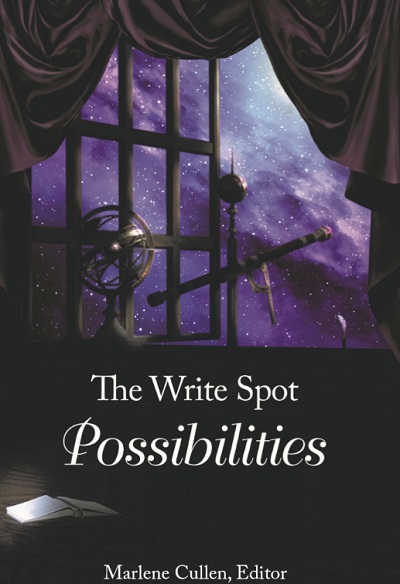
    In mid-November, I posted a review of The Write Spot: Possibilities.  The anthology consists of stories, essays, and poems by several writers. At the end of each offering is a prompt that might have inspired what they wrote and also a paragraph or two of advice for writers.

    Ahhh, advice. It can be given, but is it always accepted? Not by a longshot. Sometimes, we read the advice of other writers with a shield in front of us. The attitude can be Go ahead, teach me something I don’t already know. At other times, we’re wide open to any advice given. We want to soak it up like water in a sponge. 

    I’ve been skimming through the book again looking at the advice the writers offered. I consider it a gift to us, the writer-readers. I’m not going to quote from the book but have chosen bits and pieces of the advice that was given to share with you. Many of the writers repeated similar advice. I find that, when multiple people advise the same thing, I’d better pay attention.

    Advice from other writers:

    Don’t be afraid to share your work

    Join a writing group

    Write!

    Try different mediums of writing

    Never stop growing as a writer

    Find a special place to write that is your own

    Learn from your failures

    Nearly every one of those pieces of advice has appeared on my blog at some time, and often more than once. The suggestions for writers to heed is important enough to bear repetition. 

    One of the reasons I especially liked this anthology for writer-readers is that it offers more than the stories, poems, and essays. The prompts are excellent help for writing exercises, and the advice is worth a great deal. These writers put in a nutshell what some need an entire book to explain. An additional plus is the short bio of each writer. 

    The pieces of advice in The Write Spot: Possibilities and on my blog are simple things. Nothing so technical or intricate that others scratch their heads when they read them. Do all those little things, and you’ll be on top of your game. 

  • The Courage to Write

    My new writing friend, Nancy Julien Kopp, writes beautiful and inspiring posts on her blog, Writer Granny’s World by Nancy Julien Kopp.

    New Writers Need To Believe—Memoirs and Family Stories, by Nancy Julien Kopp

    Ever hear naysayers in the world of those who want to write a memoir or family stories who utter things like:

    I’m not a professional writer.

    I can’t write like some people do.

    I want to write the story but I wouldn’t know where to start.

    My grammar is not good enough to write.

    My writing is boring.

    All of the above can be overcome. But the first thing you must do is believe that you can write a memoir or a book of family stories. Sounds easy? Maybe.

    Possible? Yes.

    It takes some courage to do something new. Look at the people who zipline.

    Looks like fun but maybe a bit scary, too. Those who try to zip from one end of a line to the other have to believe they can do it or they’d never take step 1.

    An athletic kid who tries out for a sport has to believe in him/herself enough to make that effort. They know success is not ensured but they believe they can make it so they try. They’re brave enough to give it a whirl.

    If you have a little bit of courage and a small dose of bravery, you can do many things you never thought you could.

    Believing in yourself is only part of being able to overcome the problems listed above. Another part is having the courage to try. Still another is working hard to be a better writer. How?

    Read. If you want to write a memoir, read as many as you can find. You’ll see the various methods used.

    Read books on the topic of general writing—not just memoir or family stories.

    Attend conferences to learn more about writing methods.

    Do writing exercises. I pound and pound about this and too many writers want to skip it. Don’t!

    Many books on writing have exercises at the end of each chapter. They are to help you. Try them!

    Sign up for a writing class, either locally or online. Don’t be embarrassed to tell the others you’re new at this game and here to learn. They’ll admire you for that.

    Don’t start out attempting to write a full book. Try short snippets that can be put together later.

    Taking on too much at the onset is overwhelming and sometimes defeating, and can be a quick way to stop believing in yourself.

    Becoming a better writer doesn’t happen overnight or in a week or two. Time and hard work and writing on a regular basis all help you achieve that goal.

    Originally posted on Writer Granny’s World by Nancy Julien Kopp, August 15, 2018

    Note from Marlene: Great advice, Nancy.

    I’m currently reading The Sound of Paper by Julia Cameron. I highly recommend this book to help go from “What was I thinking” to “I can write this.”

    Nancy Julien Kopp:

    Nancy has been published in 21 Chicken Soup for the Soul books, several other anthologies, newspapers, magazines and ezines. Her writing includes award winning fiction for children, creative nonfiction, poetry, travel and personal essays. She was named Prose Writer of the Year in 2013 by the Kansas Authors Club. A former teacher, she continues to teach through the written word.