-
Shame. Prompt #114
 Shame. . .
For this prompt, you can write about “shame” as a topic in general.
Or: Write on something you are feeling shameful about. You can fictionalize your personal situation to write about a difficult subject.
Or: You can write about shame as character development . . . a character feature to be overcome.
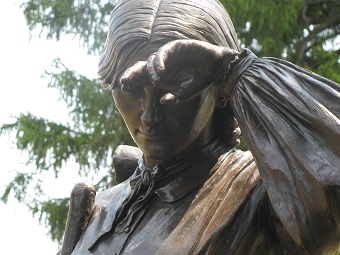
Photo by Jane Person
-
Write about a secret. Prompt #113
 Write about a secret. Either a secret you hold, or write from a fictional point of view.
You can take your personal experience and write it as fiction.
If you want, change the gender, age, details of the main character.
-
A day without consequences. Prompt #112
If you could live one day without consequences, what would you (or your fictional character) do?
-
Evening. Prompt #111
Today’s prompt: Evening.
Hmmmm. . . I wonder what you will come up with for this freewrite? I look forward to your writing about “evening.”

-
Breathe, focus, keep your head down and . . .
keep going.
— Christina Baker Kline, interviewed by Alicia Anstead in the October 2014 issue of The Writer Magazine.
Or, as Dory sings in Finding Nemo, “Just keep swimming. . . swimming. . . swimming. . . ”
At some point in your writing life, you may think your writing is no-good, awful, horrible and no one would want to read it.
Join the Ark. Most writers, I think, are in that boat at least once.
Take the advice of Christina Baker Kline, author of Orphan Train, “Breathe, focus, keep your head down and keep going.”
Click here if you want prompts to jumpstart your writing. Click on “Comments” on any of the Write Spot Blog posts to read inspirational writing.
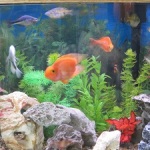 And just keep swimming, swimming. . . writing, writing.
 -
What do you want? Prompt #110
What do you want?
Set your timer and write for 15 or 20 minutes. See what comes up for you.
If this prompt is too “open” or vague for you, how about this:
What do you want to do today? If you could do anything you want. . . what would you like to do today?
You can answer for yourself, or as your fictional character would answer. This might be a fun way to get to know your fictional character(s) a little deeper.
Above all, have fun with this prompt!
-
Scene Two: Other character’s POV. Prompt #109
Using the same scene you wrote about for Prompt #108, write from the other person’s point of view. All inner thought, motivation and drama come from the secondary character’s point of view.
Or take any two characters: First write from one point of view, then write from the other person’s point of view.
-
Scene One: Your point of view. Prompt #108
Today’s writing prompt is inspired from “Falling Down the Rabbit Hole” by Emily Hanlon, December 2007 issue of Writer’s Digest magazine.
Using an incident from your life, or your fictional character’s life, write a scene from your point of view (or, your fictional character’s point of view). Use dialogue. Inner thought is what defines point of view. The other character in this scene speaks and acts, but the reader doesn’t know the secondary character’s thoughts. All the inner thoughts belong to the point-of-view character.
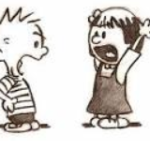 Basically, you are writing about an argument or a fight, or a heated debate between two people . . . yourself or your fictional character, and a secondary character, using dialogue.
 -
Create a pantoum. Prompt #107
So far, on The Write Spot Blog, the prompts have been nice and easy. How about challenging yourself with a pantoum?
Pantoum is the Western word for the Malayan pantun, a poetic form that first appeared in the fifteenth century, in Malayan literature. It existed orally before then.
The Western version of the pantoum is a poem of indefinite length made up of stanzas whose four lines are repeated in a pattern: lines 2 and 4 of each stanza are repeated as lines 1 and 3 of the next stanza.
___________________________________________________________ line 1
___________________________________________________________ line 2
___________________________________________________________ line 3
___________________________________________________________ line 4
___________________________________________________________ line 5 – same as line 2
___________________________________________________________ line 6
___________________________________________________________ line 7 – same as line 4
___________________________________________________________ line 8
___________________________________________________________ line 9 – same as line 6
___________________________________________________________ line 10 – same as line 3
___________________________________________________________ line 11 – same as line 8
___________________________________________________________ line 12 – same as line 1
 The final stanza has a twist: The second and fourth lines are the same as the third and first lines of the first stanza. The first line of the poem is the same as the last. This way, every line is used twice.
Click on comments below to see samples of pantoums.