Are You Starving Your Soul?

  • Are You Starving Your Soul?

    An honest evaluation by Guest Blogger Nina Amir:

    I had to get really honest with myself. And then I had to get honest with others . . .

    I have been unhappy. I have not been successful. I have given away my power. I have not followed my own path. I have lived up to other people’s expectations.

    I have not lived the life I wanted to live or done the work that is my purpose in this lifetime—my life’s work.

    And something had to change. I had to change. My life had to change.

    I’d been starving my soul.

    Now, I am feeding it. I am creating, day by day, a life that feeds my soul.

    And every day I’m a bit happier and fulfilled.

    I’m starting to recognize myself again.

    I’m making little changes that put me back on the path I want to walk.

    People have asked me: “Why are you offering a program about personal and spiritual growth? You are an expert on writing, publishing, and blogging.”

    Well . . . I’m also a Certified High Performance Coach—which makes me an expert in personal growth.

    And I’ve been studying and writing about spirituality and metaphysics for years. And I’m a Law of Attraction (LOA) coach and a minister. I guess that makes me an expert in spiritual growth.

    And . . . more than any of the credentials, writing and coaching about personal and spiritual growth makes my heart and soul sing. It’s my passion. It inspires me.

    And, if I am going to live a life—create a life—that feeds my soul, I have to focus on my life’s work. I have to write and speak and coach about personal and spiritual growth.

    Watch the changes happening . . . to my website, my offerings, me . . .

    And ask yourself: Is your life starving your soul or feeding it?

    In this crazy world . . . at this crazy time . . . start living a life that feeds your soul. None of us know what will happen to us tomorrow.

    You are a creator. You are meant for more. Create a life that feeds your soul.

    If you want to know how to do that, go to www.ninaamir.com/ICC.

    Nina Amir is known as the Inspiration to Creation Coach because she helps her clients combine their passion and purpose so they Achieve More Inspired Results. It’s Nina’s mission to help people step into the best version of themselves, fulfill their purpose, and achieve their potential as they create fully lived lives.

    Nina Amir’s Books
    Nina is a hybrid author who has self-published 18 books. Her traditionally published books include How to Blog a Book, The Author Training Manual and Creative Visualization for Writers.

    Nina’s Blog

  • Is “Go Big or Go Home” Right for You?

    Guest Blogger P.A. Cornell explores measuring success with writing . . . when can you call yourself a writer?

              Not so long ago I was speaking with someone about how much I’m enjoying being a short fiction writer. I was trying to convey all the great opportunities that short fiction can offer: variety in setting and characters, finding your voice, etc. They kept nodding, but I could tell my words weren’t really penetrating, and when I finished, they said, “Okay…but why think so small? You’re working on a novel, right? I mean, go big or go home is where it’s at!”

              Is it though?

              In our society we tend to equate success with tangible things like fame and income, and this does have some validity, but is this the right measure of success for all of us? When it comes to writing, there are some very specific signs of a successful career: fame and fortune—if you can achieve them—are at the top, but along the way there are other markers like getting an agent, publishing a book (preferably with a Big Five publisher), and winning the top awards. Many people both in and out of the industry still have the attitude that if you aren’t working toward these lofty goals, you’re not a “real” writer. I disagree.

    Before I was published, I was told I wasn’t a real writer, but every author in the bookstore was once an unpublished writer. And when you think about how many books are submitted to publishers each year and how few actually end up published, the odds are not unlike winning the lottery. Does this mean that every book that’s rejected is garbage? Are their authors not real writers? As someone who once read the slush pile for a publishing house, I can assure you that many of those rejected books are great, but there are only so many spaces to fill. Published, or not, their authors put in the work of learning their craft and completing their book—something which is no small achievement. And what about someone who chooses to self-publish; are they not a real writer?

    To me, a writer is someone who expresses themselves through the written word and does so in a way that’s dedicated, with the aim of one day having someone else read what they’ve written. That’s it. I say this because I see so many writers beating themselves up for not fitting the description of the “successful author” that seems so prevalent. And if they’re not belittling their own efforts, there are so many others who will see a writer who hasn’t gotten a major book deal, or won awards, or who writes as a hobby rather than as their main career, as somehow less-than. I’m here to say it’s okay to think small.

              There are so many paths available to us as writers, and none of these is superior to any other. None of them make you more of a writer. The goals we set for ourselves are so personal and have such varied motivations behind them—our measure of success should be just as personal.

    It’s also okay if your goals change over time. When I was younger, I too fell into the trap of what it meant to be a successful writer. I wanted to publish a book—or series of books—and have them all become bestsellers and have the world know my name. The thing is, I didn’t so much want these things for myself, I wanted them as a means of proving to other people that I was a real writer.

    As I’ve grown older, I’ve reexamined what my measure of happiness is as far as my career is concerned, and a lot of this goes back to what made me want to be a writer in the first place, when I was a little girl. Back then I just loved stories. Stories to me were magical, and when I learned that they came from the imaginations of people called writers, I just wanted to be a part of that. To me, that was how I could contribute to the world and somehow make it just a tiny bit better. That’s exactly what I’m doing right now, as a short fiction writer.

              Do I have other goals? Sure, but fame and fortune aren’t really what I’m striving for these days. Sure, it would be nice to see my own book on store shelves, and I certainly wouldn’t turn down a decent advance. Likewise, if someone wants to give me an award I’d be elated. But are these things I need in order to consider myself successful? No.

              My goals these days are simple. I intend to continue writing—and hopefully publishing—my short fiction. One day I’d like to publish a short story collection, but how it’s published is something I’ll decide when the time comes. I know writers who are published traditionally, self-published, or are hybrids of the two, and all these paths have pros and cons to consider, but all are valid options. One thing I do know is that short story collections tend not to be huge money-makers, especially if you’re not a big-name author—and I’m okay with that.

              Maybe I’ll even write a novel one day, but I no longer dream of a long career as a series novelist. There’s nothing wrong with choosing that if it’s right for you, and I suppose if I did have a super successful first novel and publishers were knocking down my door begging for the sequel, I’d consider it. What I’m trying to say is that in the scenario where that doesn’t happen—the one where I quietly publish a book and it’s not widely read, doesn’t make me rich and famous, but a few readers do enjoy it and tell their friends—I’m still happy, and I’m still a real writer. I no longer feel the need to prove that to anyone.

              I have friends who want more, and that’s fine. I’ll cheer them on as they achieve their goals. I’ll spread the word about their major book deal, movie option, or award. I’ll buy all their books and tell people I “knew them when.” I’ll be incredibly proud of them—but that doesn’t mean I want to be them.

              There are real people behind every story, book, or article that’s written. People with lives that don’t always allow them to “write every day.” People with enormous obstacles to overcome. People who write for fun. People for whom the very notion of fame is enough to trigger their anxiety. People who are yet to be published but are working diligently on a story they know will one day see the light of day, even if they have to publish it themselves. And there are people who—like me—are just enjoying exploring new worlds and characters through short fiction or poetry or what have you, and who’ll decide later if they want something else. All these people are still writers, and every one of them is the real deal.

    P.A. Cornell is a Chilean-Canadian SFF writer who wrote her first science-fiction story as a third-grade assignment, and still has it in her possession over three decades later. A member of the SFWA and graduate of the Odyssey workshop, her short fiction has appeared in several anthologies and genre magazines. For a bibliography visit pacornell.com.

    Note from Marlene: I relate to: “. . .  I quietly publish a book and it’s not widely read, doesn’t make me rich and famous, but a few readers do enjoy it and tell their friends—I’m still happy, and I’m still a real writer. I no longer feel the need to prove that to anyone.”

    My series of Write Spot books fills the category of “not widely read,” but for the readers who have enjoyed them: Thank you! And even if those books weren’t published, I would still call myself a writer, which took me years to be able to say.

    I am a writer. How about you? Are you a writer? Say that out loud.

    I am writer.

    Welcome aboard the writing train!

  • Chug, Chuff, Hiss, Squeal, Off We Go

    Today’s post is inspired by Nancy Julien Kopp’s blog post about using sound in writing.

    Nancy wrote:

    This morning, I was catching up on email when I heard the whine of a train whistle, blown several times. I wondered if it was the historic Union Pacific train, known as Big Boy, making its way across Kansas this week in celebration of 150 years of the Transcontinental Railroad. It was due to stop here in our town at 9:30 a.m. 

    The sound of that whistle made me stop and listen. I always liked to hear train whistles when I was a child. We lived across the street from the railroad tracks, so we were treated to that arresting sound on a frequent basis. I can remember being in bed on a summer night, windows open, hoping for the train to come by and announce its presence. When I did hear it, I wondered where it was going. My own world in those days was quite small, but I knew a train went to many places.

    What do you think of when you hear a train’s whistle? Does it trigger any memories for you? Do you think of it as mournful or cheerful? Is it different at nighttime when the train moves through the darkness than it is on a sunny day? 

    Readers knows what a train whistle sounds like, so you don’t need to write “The train blew its whistle.” You can enlarge that thought to make it more interesting: The train’s whistle whined loudly as it passed by the crossing gates, growing dimmer and dimmer as it sped down the track. 

    Write a sentence or two for each of the items below, using sensory detail.

    jet plane

    waves on the shore

    ball hitting a baseball bat

    washing machine

    school bell

    air brakes on a bus

    popcorn popping

    crying child

    church bells

    piano

    cow mooing

    birdsong

    Note from Marlene: Adding sensory details enhance the story and help readers “see” the scene and the characters.

    The Magic of Sensory Words by Enchanting Marketing.

    Write Spot Posts about sensory detail:

    The neurological impact of sensory detail.

    Imagery and sensory detail ala Adair Lara Prompt #277

    Sensory Detail – Sound

    Sensory Detail

    Using sensory detail in writing.

    See more posts about using the senses in writing by typing “sensory detail” in the Search Box on The Write Spot Blog.

  • You Can’t Wait For Inspiration


    Today’s Guest Blogger post is about inspiration, by Suzanne Murray.

    Excerpted from Suzanne’s September 5, 2020 Creativity Goes Wild Blog Post.

    “You can’t wait for inspiration. You have to go after it with a club.” — Jack London

    Recently a new writing coaching client emailed me to say, “I haven’t been writing. I just don’t feel inspired.”

    I immediately shot a message back, “You can’t wait for inspiration. If you get nothing else out of our coaching together, this awareness will make a huge difference in your creative life.”

    No writer or other artist waits for inspiration before showing up. Painter Chuck Close said, “Inspiration is for amateurs. The rest of us just show up and get to work.” Flannery O’Connor, the noted Southern writer,
    described her habit of going to her office every day from 8 am to noon, “she wasn’t sure if anything was going to happen but she wanted to be there if it did.” 

    Most writers just start writing and find inspiration along the way. John Steinbeck would always end one day’s writing in the middle of the page, so he could pick up the thread the next day. He insisted that “In writing, habit seems to be a much stronger force than either willpower or inspiration.”

    Research in the neuroscience of the brain shows that creativity is activated when we are in the brain wave states of alpha and theta which are associated with meditation, intuition and information beyond our conscious awareness. This is why a writer often needs to write a page of what feels uninspired in order slow the mind down and hit the zone. 

    This is true of all acts of creativity. We have to show up and begin to play with the process to access the place of inspiration. The more we commit to our creativity through our intentions and actions the more our creativity flows and the more juiced, excited and inspired we feel.

    Now more than ever we need to play with our creativity in whatever way that calls to us and see where it leads. Even small creative acts can help lift our spirits and energy as we face the many challenges we see in our world. Exercising our creative muscles can open us to new possibilities and inspiration.

    Note from Marlene:
    Many writers use a method of freewriting to warm up before embarking on their writing project. You can use a prompt to inspire freewrites. Writing Prompts on The Write Spot Blog.
    Suzanne Murray is a gifted creativity and writing coach, soul-based life coach, writer, poet, EFT practitioner, and intuitive healer committed to empowering others to find the freedom to ignite their creative fire, unleash their imagination, and engage their creative expression in every area of their lives. 

    THE HEART OF WRITING COACHING Do you want to ignite your creativity and show up to your writing on a regular basis or go deeper into the process and craft? Suzanne offers online coaching to support you and coach you through any resistance or problems along the way.   She holds the space of unconditional acceptance and support to nurturing your unique voice and work on the stories that are really important to you.  

    The Heart of Writing eBook   Jumpstart the Process, Find Your Voice, Calm the Inner Critic and Tap the Creative Flow

    * Follow Suzanne on Twitter at @wildcreativity where she tweets inspirational quotes for creativity and life.      

  • All You Need Is Love

    Today’s Guest Blogger, Lindsey Crittenden, muses about fiction and decides to take a risk.

    A few weeks ago, early planning started for an upcoming fiction class during which I’ll be giving a talk: What Is Fiction? Yes, it’s a question both daunting and exhausted. Nothing I can say here that’s particularly new. And I’m wary of definitions that suggest fiction is any one thing. Escapism? Moral duty? Truer than truth? Totally amoral? A pack of lies? All of the above.

    But the more I keep thinking, the more excited I get. Examples tumble out like toys from a cupboard, begging my attention—and they surprise me. I’ve taught fiction long enough to have the anthologized standards at the ready. You know, those classics with clear, dramatized change manifested in action or image: “Barn Burning,” “Araby,” “Roman Fever,” and, for a more contemporary example, a terrific Dagoberto Gilb story called “Uncle Rock.” Great examples, all. In most of those stories, there’s a character you can easily identify with, a character you can readily see yourself as. But the stories clamoring for my attention right now fall into another category.

    Denis Johnson’s “Work” and Grace Paley’s “The Little Girl”; Flannery O’Connor’s “Everything that Rises Must Converge” and Tobias Wolff’s “Bullet in the Brain” feature liars and pimps and junkies and addicts, bigots and fools and snobs. People you’d want nothing to do with, in situations you’d pray to avoid. That’s exactly what makes the stories particularly useful, I think, in looking at love. Love, not like.  

    Many students who take the upcoming class are new to fiction writing, and to workshops.  Because of this, their reactions often touch on how much they like, or relate to, the characters and situations.

    “We just didn’t love Ed,” an editor told a friend of mine, by way of passing on my friend’s novel. Ed is a key character in the book, but not the main protagonist. He’s a bit of a jerk—self-absorbed, haughty, manipulative. Human, in other words. Flawed. Who among us isn’t? Who among us doesn’t love others who are? If love allows us to see the whole person, to glimpse the humanity in even the most despicable behavior, I can think of fewer better venues than fiction.

    Yes, the insufferable book critic Anders, in “Bullet in the Brain,” and the tiresome Grandmother from “Everything That Rises Must Converge” do undergo change. Or, in the word used by Aristotle, metanoia—the same Greek word used by the writers of the Christian gospels to signal repentance, turnaround. The book critic and the grandmother pay an enormous price, but their completion brings grace.

    As a fiction writer, I struggle with the tension between narratively earned resolution (to borrow from workshop-speak) and credibility. Hearing a reader say, “I just don’t believe this would happen” tells me something different than if she’d said, “I just don’t believe he would do this.” The second sends me back into the words, back into craft. The first sends me to a place beyond words, a place I don’t like visiting, as much as I need to.

    A few months ago, a writer friend spoke of spending a week in her office thinking. Not writing, not even making notes—just thinking. I shuddered. I couldn’t imagine doing that. I need to feel productive, to feel constructive—and what better way than to keep tapping words on the keyboard? Stuck? Write some more! You’ll write your way out of it!

    And often, I do. But other times I just create more words. My friend’s experience got me thinking. What if I did just what she’d spoken of? What if I sat in my office—okay, maybe not all week, but for a few hours—and didn’t write a word? It would be like sitting with someone in silence—not my favorite thing, either (unless I know the person very well). It would be like prayer, when I stop thinking and asking and worrying and start listening. It would be difficult and perhaps a bust. Or perhaps completely transformative. Or, most likely, something in the middle.

    I might consider an ugly act, or a tawdry thought. I would need to stay open to such possibility, suspend my oh-so-eager judgment, take a risk. The kind that takes my breath away. The kind of love that earns the word. This week, as I work on an unlikeable character in my fiction, as I try to make her a full person if not a commendable one, I decide to try.

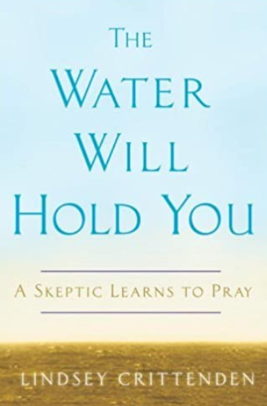
    Lindsey Crittenden is the author of The View From Below: Stories and The Water Will Hold You, a memoir. Her essays have appeared in Cimarron Review, the Washington Post, the New York Times, Best American Spiritual Writing, Real Simple, and Image. Lindsey’s award-winning short fiction has been published in Mississippi Review, Cimarron Review, Glimmer Train, Quarterly West, and elsewhere. In November, 2019, her story “The Ruins” was performed onstage by Word for Word Theater Company as a winner in the “Exactly!” They Said celebration of California short fiction. Lindsey lives in San Francisco and is a member of the Writers Grotto. 

    Lindsey read “Ice Cube Moon” at her recent Writers Forum event.

    Amazon link to Lindsey’s books

  • Suleika Jaouad and The Isolation Journals

    Guest Post by Suleika Jaouad, creator of The Isolation Journals.

    The Isolation Journals was founded on the idea that life’s interruptions are invitations to deepen our creative practice.

    Suileika:

    When I started The Isolation Journals project, I had no idea so many would join me.

    In late March 2020, I was quarantining in my parents’ attic, having left New York City as Covid-19 was surging. I was no stranger to isolation. For much of my twenties, I was in treatment for leukemia, unable to travel, eat out, see friends, even take a walk.

    Now isolation was back—this time on a global scale.

    The Isolation Journals is an artist-led community and publishing platform that cultivates creativity and fosters connection in challenging times.

    We are in an unprecedented moment. This is one small way to stay grounded and hopeful to transform our isolation to connection.

    Suleika’s August 2, 2020 Isolation Journals Post:

    Today’s prompt is inspired by the relationship between movement and creativity. It’s something that artists and thinkers have observed for millennia. One of the earliest examples is the legend of Aristotle, who paced while he taught, and his students—called “the Peripatetics,” a word that means “to walk around”—followed suit. As Thoreau wrote in his journal, “Methinks that the moment my legs begin to move, my thoughts begin to flow.” 

    But what is new is scientific evidence to support the age-old phenomenon. In the last decade, studies have emerged showing that movement and thinking are symbiotic, and some neuroscientists theorize that the evolutionary process that allowed us to develop the ability to walk upright is the same one that helped us develop conscious cognition. It’s a fascinating idea, one with so many implications for the creative practice.

    I’ll say one last thing before getting to the prompt—that we’re all different, with varying access to places to walk, with bodies that have different abilities and disabilities. Because of that, it’s natural that how we move will vary as widely as the writing that will follow it. Just find what works for you; as always, this practice is yours, so make it your own.
    Prompt 103. The Singular Glory of a Solo Walk In mid-March, I was working on a grueling last edit of my memoir Between Two Kingdoms. From early in the morning until late at night, I sat hunched over my computer in my parents’ attic, second-guessing every comma, re-thinking every word. I was panicking, sure it was a total disaster, and my quarantine roommate Carmen offered to read the entire manuscript out loud with me. Between the stress of the deadline and being so sedentary, our bodies ached. From time to time, we’d have to take a break—walking in the woods and stopping for a spontaneous snowball fight, or doing yoga there in the attic.

    One afternoon, we were both in downward dog, and I said to Carmen, “I have an idea.” I rambled something vague about journal prompts and helping others complete a 100-day project. “Go write that down,” Carmen told me. “Now—before you forget it.” And I got up from the mat, and I did. I didn’t expect it would go anywhere, at least not immediately. But writing it down made the idea seem more real, and I kept mulling it over. Then as the number of cases of covid-19 rose, as cities and states and countries went into lockdown, that seed of an idea—one that had occurred in a moment when I was giving my mind a break—sprouted a week later into the Isolation Journals.

    This isn’t a one-off. When I’m stuck and can’t work something out on the page, or when my head is too full of chatter, I’ve learned to get out of my mind and into my body. I go for a walk, and as I move and fall into a rhythm, the chatter quiets. Whatever knots my thoughts are in begin to loosen. 

    It happened just yesterday. Over the weekend, Jon and I moved to an artist’s residency, to a house near a river with miles and miles of walking paths. I’ve been sick—last week I tested positive for Lyme disease, which has made my joints swollen, my movements slow and labored. But yesterday morning, I felt good enough to take a walk, and on a long gentle amble, I began to get an idea of what I want to write next. Right now, I’m just seeing little glimpses, like glints of sunlight on the river, but it feels good to be inspired again. As I settle into our new digs, I’m setting a new intention to take a quiet, solitary morning walk before I write. I trust that soon enough, the seed of this next idea will begin to sprout.

    Your prompt for the week:
    Begin with a movement that roots you in your body. Maybe take a walk outside, or dance around your house, or take deep breaths and blow each exhale through loose horse lips—whatever will get you out of your head. Capture what springs to mind using the voice recording app on your phone or by jotting quick notes. Do this for as long as you’d like.

    Next, write in your journal about what came up. You can elaborate on the thoughts and ideas you had, or you can get meta, reflecting on how movement carried you into a new contemplative space. 

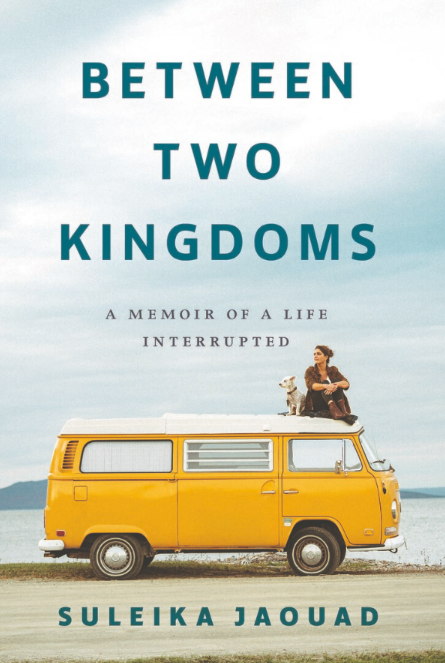
    Suleika Jaouad is an Emmy Award–winning writer, speaker, cancer survivor & author of the forthcoming memoir, Between Two Kingdoms.

    She is the creator of The Isolation Journals, a global movement cultivating community and creativity during hard times.

    You can pre-order her book, due to be released February 2021, Between Two Kingdoms, A Memory of A Life Interrupted.    

    Suleika’s humorous, informative, meaning-full Ted Talk.

    “The hardest part of my cancer experience began once the cancer was gone,” says author Suleika Jaouad. In this fierce, funny, wisdom-packed talk, she challenges us to think beyond the divide between “sick” and “well,” asking: How do you begin again and find meaning after life is interrupted?” — Official TED Conference, 2019

  • The Three Questions

    Guest Blogger Shawn Langwell shares smart writing tips, focusing on three important questions.

    Octavia E. Butler said, “You don’t start out writing good stuff. You start out writing crap and thinking it’s good stuff, and then gradually you get better at it. That’s why I say one of the most valuable traits is persistence.”

    Writing and leadership have a lot in common. Both require creativity, passion, and persistence. Both are conversations. And every good author as well as effective leaders know their audience. Each requires a level of confidence and humility to listen. To listen to the suggestions of an editor. To listen to the inner voice that says you need to sit your butt down on a regular basis and write. Or, upon awakening to listen and follow the conviction of a dream so vivid and powerful that the story just unfolds and becomes a book and a short memoir entitled: “Cathartic Writing: The Healing Power of a Story Now Told,” included in The Write Spot: Writing as a Path to Healing, by editor Marlene Cullen.

    I am still very much a rookie when it comes to writing and, like many people, tend to overthink the entire process before I even write the first word. For me, focus is a key to establishing a successful plan for any endeavor. Sure, there’s a lot more to writing than focus but I have found that lack of focus tends to lead to overthinking, which is a result of fear about not knowing where you want to go or believing enough in your abilities that one becomes consumed with analysis paralysis.

    Not everyone wakes up from a dream with a crystal-clear vision of what they want to write. Sometimes you need to kick that doubt to the curb and sit your butt down in front of your computer and write. Don’t worry about the results, yet. And certainly, don’t try and edit as you go. Some may be able to do this, but I find it messes with my flow and I get back onto the perfectionism merry go round and lose any emotion or momentum I may have finally gained.

    Writing is messy and not many like being messy. Writing also means you must become vulnerable. You are putting your thoughts and ideas out there for the world to see and some people may not like them.

    “Almost all good writing begins with terrible first efforts. You need to start somewhere. Start by getting something—anything—down on paper. What I’ve learned to do when I sit down to work on a shitty first draft is to quiet the voices in my head.” ― Anne Lamott

    I’ve been in sales and marketing for over twenty-eight years and, like authors, occasionally feel stuck. A few years ago, I went to a colleague to get input on a big proposal I was working on. He stopped me before I even got started and asked me if I had done a needs assessment.

    “What do you mean? Yes, I know they need to increase their business.” I said.

    “No. Have you asked them the three questions?”

    “The three questions?”

    “Before you can give a business presentation or any type of communication you need to ask these three questions:

    One: Who do you want to reach?

    Two: What do you want to say to them?

    Three: What do you want them to do?”

    Before they write or submit for publication these same three questions need to be decided by every author or speaker.  In other words, who is your audience or what genre do you want to write?

    Are you writing fiction or non-fiction? Each of these will dictate the voice, narrative and theme of your work.

    Lastly, What’s the purpose of your writing? Is it to entertain (Fiction)?

    Or, is it to inform? Persuade?  Or share a unique experience? (Non-fiction).

    Taking time to focus on these three questions has dramatically helped me increase my success rate in sales and made it easier to get started with writing. I have learned that answering these questions up front and not worrying about writing crap at first takes the pressure off. My persistence in practicing these steps has enabled me to finish three years of creative writing at the junior college, write and submit to three additional anthologies, give six speeches for Toast masters, and be asked to share a few words about the process with other writers like you.

    I look forward to meeting you on August 5th when we explore this a little more in depth at a Writers Forum Zoom Event.

    Be well, Shawn Langwell

    Note from Marlene: Shawn leads the parade in a series of Zoom talks based on the anthology, The Write Spot: Writing as a Path to Healing. Please join us for these free Writers Forum events.

    Shawn Langwell is a graduate of San Francisco State University with a Bachelor of Science Degree in Marketing and Advertising. He earned certificates from Dominican University, Barowsky School of Business Executive Education Leadership Program, and the San Rafael Chamber of Commerce Leadership Institute.

    He is President of Redwood Writers, a branch of the California Writers Club, and immediate past President of Toast of Petaluma.

    Shawn’s personal mission is to add value to people and businesses everywhere. He is a sought-after speaker for recovery and has over 33 years of continuous sobriety. He lives in Petaluma, CA with his wife, three adult children, and a Maine Coon cat, Cleo.

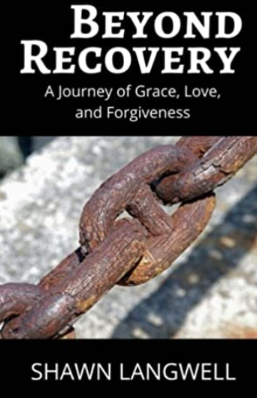
    Shawn is the author of the memoir, Beyond Recovery: A Journey of Grace, Love, and Forgiveness.

  • Storytelling: Family Secrets

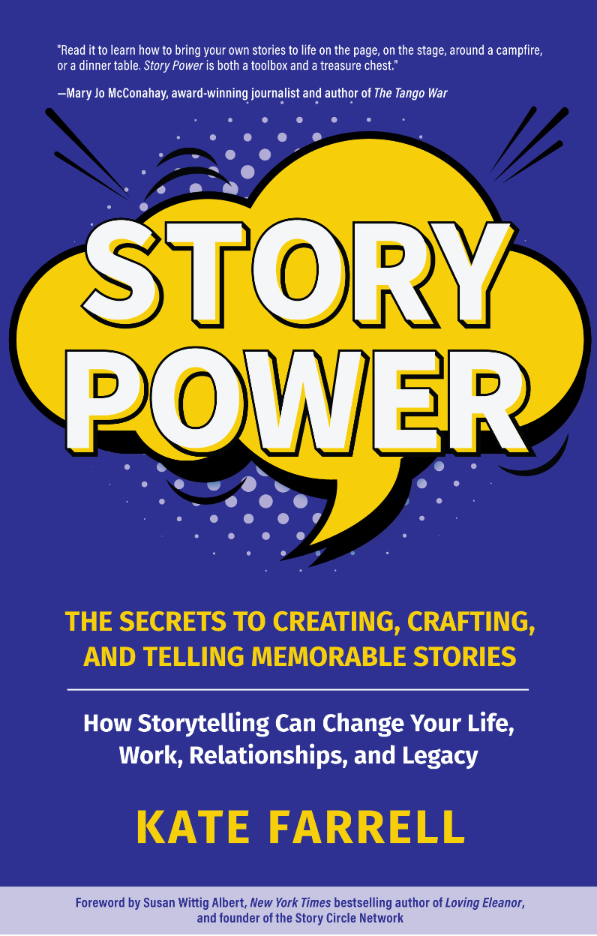
    Today’s Guest Blogger, Kate Farrell, author of Story Power, with her unique experience as a storyteller, shares methods to unlock family secrets,

    There’s nothing louder than a family secret—it pesters and pokes until someone speaks up. Secrets have a way of hiding in plain sight. There are always the whispered rumors, missing pieces of a puzzle, stories that keep changing. But just as shared family folklore can develop strength and identity, keeping family secrets can destroy trust. Secrets that persist, unspoken and misunderstood, can erode the very foundation of a family. Family members who are perceptive, who sense hidden truths, may become fearful or internalize guilt and shame. At the very least, family secrets isolate—family members from one another and the entire family from their community.

    Some family secrets are more harmful to keep than others. Those that were traumatic, that violated some taboo, or were life-changing are vital to expose. Some of these important secrets can only be shared privately, within the family, and only with members old enough to understand. Certainly, by the time most children reach adulthood, they ought to know most of the essential family secrets that were kept from them, yet influenced their lives in ways both known and unknown.

    When considering the sensitive nature of family secrets, a storyteller should proceed with care. There will be those in the family who will never accept the truth, once exposed. And there will be those members who will feel relieved or validated by newly discovered stories that make sense of a puzzle. It can be a powerful healing process for many. Of course, there will also be relatives who find family secrets fascinating and telling them juicy entertainment. As a family member and storyteller, it’s often a challenge to share family secrets in a responsible, but enduring way.

    As you ponder what secrets you’ve learned about your family, either from relatives or from research, choose the ones whose revealed truth meant the most to you. Which ones contributed most to your identity, and resolved issues that had once confused you. Select the ones with the most personal impact to shape into stories and tell, to store in notebooks or to record. As you share these, other family members might be encouraged to share theirs.

    Exercises & Prompts: Family Secrets & Shadows

    Prompts: Shadows

    1. Think of a family member in the past who was shunned or forgotten
    2. Remember someone who brought shame to the family
    3. Recall a family member in past generations who committed a wrong
    4. Remember someone who was wrongly accused
    5. Think of a family member who was judged by an outdated taboo
    6. Remember a relative who was flawed or found lacking
    7. Think of a time when you were judged or the family thought less of: what happened?

    Prompts: Secrets

    1. What are the worst family secrets?
    2. Which ones were committed three or four generations back?
    3. What secrets were kept by your grandparents’ generation?
    4. What secrets were kept by your parents’ generation?
    5. What secrets were yours or your siblings?
    6. Are there secrets still hidden by your family today?
    7. What secrets of yours do you want to share with your family?

    Let all these memories and stories play in your mind’s eye as you search for one story to tell. Select one that has a clear structure with a beginning, middle, and end. Choose one that has a conflict, a problem, suspense, tension, or an adventure.

    Freewrites

    Freewrites, or stream of consciousness writing, might reveal new thoughts and perhaps uncover information and present answers that haven’t been previously discovered.  With freewrites, personal experiences emerge for your writing. Writing prompts can be used to inspire writing. Prompts can be a word, a phrase, a picture, a sound, a smell, a line from a book or a poem. Set a timer for fifteen minutes to corral your writing time. Choose a prompt and start writing.

    Freewrite Example: Family Secrets

    Marlene Cullen employs the practice of free writing or “freewrites” with great success and has shared it with many writers over the years. It is also called timed writing and the results are unpredictable, creative, and at times, surprising. It’s one sure way to reach into the shadows to a family member whose status in the family was diminished, as Marlene does with her father. By letting her mind probe a theme without judgement, she reveals her own feelings, ones she’s kept under wraps for a lifetime. Start, as Marlene does, with a prompt about family secrets and see where your free writing takes you. Use a freewrite to explore the secrets and shadows within your own family.

    “Meeting My Father”

    Marlene Cullen

    I have always had a hard time describing how my father didn’t fit into our family. He was a merchant seaman, away from home for months. He brought home exotic toys, and clothes for me and my sisters, always too small.

    “I have the perfect family. A daddy, a mommy, and two little girls.” I knew I wasn’t telling the truth to my second grade playmates, but if I pretended hard enough, maybe it would come true.

    When my father was home, it meant he was out of work, and could be found at one neighborhood bar or another. I have a child’s handful of memories about my father—none of them are good. The best I could say was that he was a “Third Street Bum.” He died when he was thirty-seven of alcohol related diseases. I was sixteen.

    When I was fifty-four, through a series of serendipitous happenings, I met my father’s high school best friends. They painted a picture of him as a happy-go-lucky kid. They said Bill was a quiet guy, a gentleman, a prankster, and very sensitive. Seeing my father through the eyes of his teenage friends introduced me to the person I never knew.

    Sloshing my way through freewrites, I realized my father was more than a person with an alcohol problem. He was a husband and a father, a loving son, and a loyal friend, struggling to navigate the challenges of life.

    Several free writes about my father evolved into a story revealing my epiphany about him, published in The Write Spot: Memories. My insight concludes: “He is a part of me, imperfections as well as the good parts. He is part of my granddaughter who shares his hazel-colored eyes.” Without freewrites, my father would have remained a “lesser” person in my mind.

    Kate Farrell, storyteller, author, librarian, founded the Word Weaving Storytelling Project and published numerous educational materials on storytelling.

    She has contributed to and edited award-winning anthologies of personal narrative.

    Farrell recently completed a how-to guide on the art of storytelling for adults, Story Power: Secrets to Creating, Crafting, and Telling Memorial Stories, released by Mango Publishing.

    She is past president of Women’s National Book Association, San Francisco Chapter.

    Kate blogs at Storytelling For Everyone.

  • Guest Blogger Nancy Julien Kopp and The Writing Fairies

    Guest Blogger Nancy Julien Kopp writes about her struggles and success with Good Fairy/Bad Fairy.

    2012

    I’ve had a story swirling in the recesses of my mind for several weeks. One that I think would work for a Chicken Soup for the Soul book. Last night, I opened a blank page in Word and began to write the story.

    I wrote for well over an hour. The story seemed to be coming together nicely. I was aiming for 1200 words, and by the time I was ready to call it quits for the day, I had over 700 words and still a lot to be told. I didn’t take time to read over what I’d written, knew there would be time to do that in the morning.

    I got ready for bed, feeling satisfied that more than half the first draft was complete. I settled down in bed to watch the news but while the news anchor and weatherman jabbered on about the day’s events, something began to gnaw at me. My story!

    I knew that the story wasn’t right but what, I wondered, was wrong with it. I mentally replayed what I’d written, and the answer came. The first two paragraphs were fine, but the rest of it went into background that threatened to take over the original story. It would overshadow the original premise. Maybe I’d find a solution the next day.

    Then the Bad Writing Fairy whispered that it would be a shame to lose all those words that I’d so painstakingly written. “Leave it the way it is and keep going.” The Good Writing Fairy rapped her over the head with her Writer’s Wand. but smiled sweetly at me. Then she said, “Dump all except the first two paragraphs and keep going.” I knew which one I should heed. I pushed both fairies off my pillow and decided to sleep on their advice.

    The next day there was no doubt in my mind that I had to begin the story again. The first thing I decided to was to delete more than 500 words, no matter how much it hurt. There was no reason to sabotage my own story with words that didn’t belong.

    A good many stories that are published look nothing like the first draft. It’s a practice round to help a writer know what direction to go. We begin and often begin again. Writing isn’t easy. Well, maybe the Bad Writing Fairy might tell you it’s a piece of cake, but the Good Writing Fairy is going to remind you that it’s hard work but well worth the effort.

    2020
    If you listen to that Bad Writing Fairy too often, you’ll become a lazy writer. Sometimes she talks loud enough to make you pay attention. You’ll be a lot better off paying attention to the Good Writing Fairy. She will push you in the right direction because she wants you to be the best writer ever.

    I was in that Bad Fairy/Good Fairy situation once again. I had a YA story that was finished. Well, maybe it was. It could end in two different ways. I chose one, then finished the story. But the Good Fairy kept tapping me on the shoulder with her wand. I knew she wanted me to write the second possible ending, then decide which one would work best. The Bad Fairy must have been hiding somewhere. I didn’t hear her say to use what I had and forget about writing the best ending.

    I know it pays to listen to each of those little nymphs, then make an adult decision.

    The Good Fairy is way ahead in scoring points. 

    Nancy Julien Kopp lives in Manhattan, KS where she writes creative non-fiction, fiction for children, personal essays, articles on the craft of writing, and poetry. She has been published in 22 Chicken Soup for the Soul books, newspapers, magazines, and ezines, and several anthologies including The Write Spot: Possibilities (available in both print and as an ebook at Amazon).

    Nancy was Prose Writer of the Year in 2013 by the Kansas Authors Club.

    She blogs at Writer Granny’s World With Nancy Julien Kopp with tips and encouragement for writers.

  • The Gift of Writing

    Today’s guest blogger, Nona Smith, relates her experience about how her book, Stuffed: Emptying the Hoarder’s Nest, came about.

    Eight years after our friend, Al, died, and two weeks after his wife, Linda, was put to rest, my husband, Art, and I stood on their doorstep, key hovering at the lock. As the executor of their estate, Art had every right to be there. But still, we felt like trespassers. He gave a small shrug and turned the key in the lock. We pushed the door open, walked inside, and gazed around at the chaos that greeted us.

    In the living room, twin oak desks stood in front of a window, their drawers exploding with old mail, catalogues, writing implements, and paper. A couch, laden with a mountain of stuffed animals, was sandwiched between two Tiffany floor lamps. On the floor, handwoven rugs were piled on top of handwoven rugs. The dining room had been transformed into a jewelry making studio, and the counters in the kitchen were obscured by apothecary jars filled with mystery liquids, boxes of costume jewelry, and unopened cooking gadgets.

    In Linda’s bedroom, teddy bears ruled the roost. Dressed in elegant attire and jaunty outfits, some wore tutus and some wore nothing more than the fur on their backs. Bears lined the walls, trespassed on the headboard and spilled onto the bedside tables and dresser.

    In the second bedroom, a queen size mattress was propped against a wall, and a daybed held more bears, a brass trumpet, cases of adult diapers, and several folded Navajo rugs. No horizontal surface remained visible.

    Three decades earlier, Art had agreed to be the couple’s executor and now I turned to him.

     “You knew about this?”

    Yes, he nodded somberly. “But I didn’t think they would actually die.”

    And so began our three year undertaking and the beginning of my book Stuffed; Emptying the Hoarder’s Nest.
    I didn’t set out to write a book. But the task we undertook was so unique, troubling, and different than how Art and I live our lives, that I felt compelled to write about it. I found putting down on paper what we discovered, and the profoundly disturbing aggravations we encountered in liquidating this eclectic estate, helped me process the experience.

    I wrote to bring about order. It was therapy . . . and it kept me sane

    We began by choosing one collection at a time and gathering it up, accounting for every item. This part of the process alone was daunting because there was so much scattered over such a large area.

    Al and Linda were well-educated, intelligent, and curious people who were also financially well off. So, not only were they able to acquire things, they had places to store their acquisitions: two houses in southern California, a store in the northern part of the California Bay Area, and a warehouse and apartment building in Berkeley near the UC campus. Stuff was stashed everywhere.

    Once we corralled a collection, we needed to ascertain its value before we could decide whether to sell or donate it. The cartons of never-worn-and-still-in-their-original-wrapping plaid shirts, the used table linens, the mounds of staplers and plyers and cabinets filled with financial papers from businesses Al no longer owned were easy to deal with.

    As the collections became more extraordinary, however, we needed to research and find experts in the field to advise us: What is a merry-go-round calliope worth? Are these gemstones real? What about the fleet of ’57 Plymouths parked tandem in the apartment garage? Are they worth anything? And the hundreds of player piano rolls? How about the profusion of original artwork by a famous botanical printmaker, each signed, dated, and numbered? The Navajo rugs? And, gosh, the teddy bears: are they of any value?

    Dealing with one at a time, we went through the buildings and the collections. Once we knew its value, the entire collection was sold or donated . . . or sent to the dump . . . and I wrote about it.

    I introduced the characters we met along the way and wrote about our frustrations and successes. I began bringing what I wrote to my weekly writing group for editing.

    I didn’t think of them as such, but before long, my writing buddies began referring to these pieces as “chapters.”

    As Art and I neared the end of our journey with this estate, I began to view what I’d written as a book. When we turned what was left over to an estate liquidator, I wrote the final chapter. It came to me as an epilogue, and almost wrote itself.

    Now the question became, what did I want to do with it? Did I want to pursue an agent? Look for an editor? How much more time and energy did I want to spend with Al and Linda and their stuff? The answer came quickly: not much. But out of a desire to honor the time we spent and the education we received, I wanted to create something permanent out of these stories. So, working with a local publisher, Stuffed came into being. I held a small and satisfying book launch at our local independent bookstore, Gallery Bookshop in Mendocino, and sold out of my first two runs.

    The three years Art and I spent dismantling this estate were disturbing and unsettling for me.

    Writing about it as it was happening calmed and comforted me. Putting down on paper how we handled the chaos that surrounded us helped me process the events from the initial sense of overwhelm at the task ahead of us through our frustrations and successes.

    Writing was a gift I cherished.

    Nona Smith has been part of the very active Mendocino Coast writing community since she moved there in 2006.

    Nona is the author of Stuffed: Emptying the Hoarder’s Nest: A True Tale and numerous other published short stories, humorous memoir pieces, and poetry. She is a board member of the Writers of the Mendocino Coast and has been president of the 31-year old Mendocino Coast Writers’ Conference for four years. Nona lives with her patient husband Art and two demanding cats.

    More details about the writing of Stuffed: Emptying the Hoarder’s Nest.