“Mother Memoir” Story Submission Guidelines 2014

  • “Mother Memoir” Story Submission Guidelines 2014

    Lynn Cook Henriksen writes:

    When “TellTale Souls Writing the Mother Memoir…” was setup on the Amazon site, they characterized it as Volume I. I felt someone was trying to tell me Volume II would need follow, so now’s the time to start writing the story only you can write and send it to me for possible inclusion. Volume II will be mainly filled with TellTale Souls’ bio-vignettes, not as a guide to writing, since I covered that well throughout the Five Acts making up Volume I.

    For the publication of your non-fiction, telling-tale on the TellTale Souls/The Story Woman blog or possible inclusion in a future memoir collection, please follow these guidelines.

    Look over the The Story Woman Blog  carefully and you will gain insight into what we would like to see in your story (your bio-vignette). Need help?

    Tell Tale Souls.1Consider reading  TellTale Souls Writing the Mother Memoir: How to Tap Memory and Write Your Story Capturing Character & Spirit for a creative exploration, including over 40 story examples, to get your juices flowing on your path to writing your Mother Memoir.

    Here is the seminal question for you to answer, “If you could tell just one small story that would capture your mother’s character and keep her spirit alive into the future, what would it be?” Become a TellTale Soul in answer to that question by writing your short, true story about a woman who greatly influenced your life—could be your mother, grandmother, aunt, or anyone to whom you felt like a daughter or a son.

    Stories are accepted by TellTale Souls of all ages.

    Story Specifications:

    • Original, non-fiction (and not previously published)
    • Use plain, 12-point font
    • Story, bio-vignette, length is around 800 to 1800 words
    • Include a brief Author Note about what it meant to you to write this story about a mother figure (that will be added after each story)
    • Important to add your e-mail address and phone number again in the body of your email, so that I can easily communicate with you
    • Optional: Include a picture pertaining to your story in pdf or jpeg format
    • Send each story only one time

    Henriksen photoPlease email your Mother Memoir to Lynn Henriksen: lynn(at)telltalesouls.com

    To learn more about Lynn Cook Henriksen please visit her website and her blog.

    Thank you!

  • How do you handle rejection?

    First, don’t take rejection personally. When you submit your writing for inclusion in an anthology, magazine. . . to an editor, publisher, agent. . . and you receive a “no, thanks” letter, or worse, you never hear back . . . don’t take it personally.

    It may or may not be the quality of writing, but it’s definitely not a rejection of you personally.

    My Submission Philosophy

    You won’t receive rejection notices unless you submit your writing.

    And if you submit your writing . . . you will probably receive a rejection note, or two, or more.

    Welcome to The Club

    welcomeI wrote a story about pesky gophers around 2007. Shopped it around. Submitted to a little contest. Won second place. I was thrilled. But really, this was a miniscule contest. Probably two entries.

    So I shopped it some more. Got accepted. But the editor said since it was seasonal, I should submit the following spring (nine months away). I dutifully waited and re-submitted.

    “Alas,” she said (or maybe she didn’t. Maybe that’s the storyteller in me).

    “We can’t accept this since you don’t live in our geographical area.”

    Hmmm. . . She couldn’t tell me that with the original submission (and acceptance, I might add and will add).

    Submissions, semi-acceptances and rejections are quirky.

    Time went by. I sulked, got mad and stomped around a bit.

    A few years later, I was over my annoyance and once again submitted. This time my gopher story was accepted!

    “My Way With Gophers” will be published later this year in Redwood Writers 2014 Anthology.

    Moral of this story: If the writing is polished and perfected to your best ability — my gopher story was revised about 113 times and the title changed 67 times — go ahead and submit, because you never know. You might get lucky.

    And you might as well Just Write . . .  and Submit.  check mark.1

  • Voices of Lincoln Poetry Contest

    Voices of Lincoln 10th Annual Poetry Contest has five categories:

    *Once Upon A Time

    *Ten Years From Now

    *It’s A Miracle

    *A Journey Worth Taking

    *People Are Funny

    You may submit a maximum of three poems, no more than one in each of three of the five contest categories.

    Everyone is encouraged to enter the contest. You do not have to live in Lincoln to be eligible.

    All poems must be received no later than Saturday, July 26, 2014.

    Mail entries (with the entry form) to:

    Voices of Lincoln Poetry Contest
    c/o Alan Lowe, Coordinator
    1235 Picket Fence Lane
    Lincoln, CA 95648

    If you need additional information or an entry form, please email or phone Alan Lowe at (916-408-1274). slolowe -at- icloud.com

    You can access Entry Form by clicking here.  Scroll down to entry form: highlight, copy, print just the entry form.

    Lincoln Poetry contest.1

    Good Luck!

  • Live in the world of your imagination and take young readers with you.

    Want to write books for children or young adults?  Here are some ideas for you.

    Excerpted from “Child’s Play,” Yvonne Coppard and Linda Newberry, March 2014 issue of The Writer Magazine.

    An author must find his or her own voice and style and use them to express concerns that are passionately felt and imagined. Good writing for children has the same qualities as good writing for any age group: What stands out is authority, the confidence to be what it is. It tells the reader that the journey will be worthwhile. To write well, an author must have an ear for rhythm, control of pace and awareness of what drives a story and engages a reader.

    The author needs the knack of evoking universal experiences from the particular, inviting the reader to share the trials and triumphs of the viewpoint character. There are no right ways to do this, and no wrong ways, either. What it takes is the commitment to live in the world of your imagination and the skill and persuasiveness to take young readers with you.

    Click here for information about: Writing Children’s Fiction: A Writers’ and Artists’ Companion (Writers’ and Artists’ Companions) by Yvonne Coppard and Linda Newberry

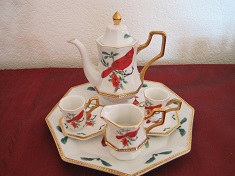
    child's tea setFor practice with this kind of writing: Write about a game you played as a child – Prompt #32, or An imaginary gift – Prompt #35 or an imaginary party – Prompt #64.

    Set your time for 12 minutes. Now, write. Just write.

  • 3Elements Review seeks submissions using three specific elements . . .

    3Elements Review was founded to spark imagination, to provide a unique creative challenge, and to allow writers and artists a bit of fun with our three element prompts.

    We aim to distinguish ourselves from the typical literary journal through our unique approach to the creative process. Each issue begins with the posting of three elements and ends with a journal filled with the imaginative ways in which each writer and artist transformed those elements. We provide both emerging and established writers and artists a platform to share their unique voices and visions with the world.

    CURRENT THREE ELEMENTS: Carnival, Residue, Maudlin

    Submissions due by June 1, 2014, September 1, December 1 and March 1

    Click here for 3Elements Review submission guidelines.

    Brief Submission Guidelines for 3Elements Review:

    We appreciate good writing in any genre. We especially like edgy writing that offers insight into darkness. We prefer character-driven stories as opposed to plot-driven ones.  We relish a piece with a great deal of heart and more than a little bit of Truth (note the capital “T”).

    We want to read a story that makes us feel edified or philosophical or amused or creeped out or angry or melancholy or inspired or, best yet, all of these things together. We want to read a story we simply can’t put down.

     3Elements Review is a themed literary journal, hence the three elements, and All THREE elements  given for the submission period must be included in your story or poem for your work to be considered for publication in 3Elements Review;  NO EXCEPTIONS WHATSOEVER.

    You can craft any story or poem that you would like, but keep in mind, the three given elements for the submission period become part of your story or poem and it is up to you, the writer, to expand upon those elements and breathe life into your piece. Please keep in mind, your story or poem doesn’t have to be about the three elements or even revolve around them; your story or poem can be about whatever you choose it to be.

    eArtwork and photography: If you decide to submit any artwork and/or photography, we only require that you capture or depict the essence of one element, however, creating something that represents all three elements will really impress us. In addition, when you submit artwork or photography, please describe your process and tell us what medium you used. Also, please give a brief explanation as to how you feel your artwork or photography represents the element(s), as this will accompany your piece should we choose to publish it.


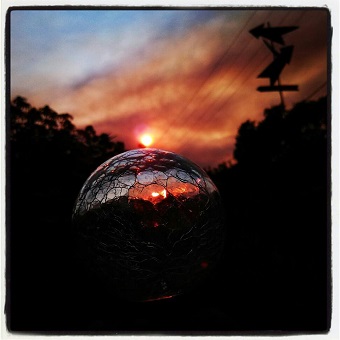
    “Smokey Sunset”       Photo by Laura Plunk Davis

  • Write short? Write long? Write strong!

    The following is an excerpt from “When every letter counts,” by Kevin Cullen (no relation to me that I know of). —  March 2014 issue of The Writer Magazine.

    Kevin writes:

    I have been in the newspaper game for more than 30 years, which qualifies me as a card-carrying old fart.

    I have tried to embrace new technologies and platforms pushed upon us by enthusiastic, young tech geeks who talk about Facebook and Twitter with the zeal of evangelicals. Online is where it’s at, even though we still  make most of our  money from the dead tree version.

    But what has all this meant for writing? Because, let’s face it, the biggest advantage all forms of written journalism have over the immediacy of TV and radio is the ability to deliver depth and strong, evocative writing.

    Writing short and writing long require different disciplines. It’s the differences between writing a poem and writing a short story. When you tweet, every letter counts. When you write for the web, enjoy the freedom.

    Note from Marlene: Ideas for strong and evocative writing posted on The Write Spot Blog. Click on titles below for inspiration for strong and evocative writing.

    Crafting scenes a reader can see — and sense

    Watershed Moment Prompt #57

    The Power of Place

    Essence of You Prompt #45

    Pen


    What to do?  Just write!


  • Two places to submit your poetry

    Sonoma County poet Nancy Dougherty has recently joined the editorial staff of California Quarterly, a journal devoted to poetry. Since this journal is small and currently off-line, the likelihood of getting published is pretty good.

    Nancy says, “The California Quarterly truly has a lot to offer in contests and as a link to other state poetry societies, which have similar journals and contests.”

    The California Quarterly is published four times a year. Submissions are accepted year around.

    Guidelines:  Submit up to 6 poems at one time, include name and address on all pages, self-addressed stamped envelope (SASE) for response. Submit unpublished poems only. Simultaneous submissions accepted.

    Send submissions to: CQ Editors, PO Box 7126, Orange, CA, 92863

    The California Quarterly is sponsored by the California State Poetry Society, a non-profit organization founded over thirty years ago. It is dedicated to the adventure of poetry and its dissemination. Although located in California, its members and contributors are from all over the U.S. and abroad. All those interested in poetry are welcome to join

    For information on membership, contests and publishing opportunities with California State Poetry Society (CSPS), please write to the above address.

    Another opportunity to publish your poetry:  “Digging Our Poetic Roots.” A project by Sonoma County Poet Laureate Katherine Hastings. For information: please go to The Write Spot News by clicking here (scroll down the News page until you get to the Poetry Corner).


  • Short may be the new long game.

    Jessica Strawser, editor of The Writer’s Digest magazine, writes about the benefits of writing short pieces in the March/April 2014 issue of the Writer’s Digest magazine.

    “Writing short is a too-often overlooked way to break out in any field of writing. Even if —perhaps especially if —your ultimate goal is to publish a book one day.”

    She continues, “. . . a diverse approach to getting your name ‘out there’ —whether through personal essays on popular websites, feature articles in leading glossies, or short stories in respected literary journals—is far smarter than focusing your efforts in one place.”

    So, if you want to write short pieces . . . go ahead!  Follow the prompts in this blog and post your writing here!

    Lola

  • Wordrunner eChapbooks now accepting submissions.

    Wordrunner eChapbooks: Small Fiction Collection

    Submissions for this fiction collection, to be published online in June 2014, will be accepted until May 31, 2014.

    Stories may be flash or longer, from 750 up to 4,000 words each, totaling a minimum of approximately 8,000 and a maximum of 18,000 words for the collection. We would like at least five stories, but no more than 20 (if flash fiction). They need not be linked, but it would be a plus if they belong together for some reason, be it theme, location or character/s. We will also consider novel excerpts for this echapbook. There is no fee to submit and authors receive token payment.

    Submit your best work only. Each story should be original and compelling. No genre fiction, please, unless a story is good enough to transcend genre. Click here for additional guidelines and submission link.

    Arlene Mandell.ScenesArlene Mandell‘s memoir Scenes From My Life on Hemlock Street  was first published by Wordrunner eChapbooks (December 2009) and  is now available in paperback and e-book in Turns: A Collection of Memoir Chapbooks from Telling Our Stories Press (June 2012). On Amazon or Smashwords.


    Jo-Anne Rosen

    Jo-Anne Rosen, Wordrunner eChapbook publisher,  prepares any sort of publication for print or electronic distribution. She provides pre-publishing services and a chapbook press for self-publishing authors, as well as website design, building and maintenance. For more information, visit www.wordrunner.com or contact Jo-Anne at publish@wordrunner.com.

  • You may have the da Vinci Disease . . .

    Have you heard of the da Vinci Disease?

    Here it is:  You have ideas of what to write about. But you never finish because you never start.  Or you start and can’t find a way to finish to your satisfaction.

    You may have a burning desire to write, but there’s never time or maybe you suffer from the da Vinci Disease.

    The following is excerpted from “The da Vinci Disease,” by Don Fry, March 2014 issue of the Writer Magazine.

    Leonardo da Vinci never finished anything because he thought he couldn’t achieve perfection.  We all know writers, including ourselves, who can’t (or don’t) finish their work. The root cause is usually a da Vincian rage for perfection, which takes many forms.”

    Don Fry’s list of why we don’t finish our writing. Italics are Marlene’s comments.

    We don’t start. ‘Nuff said.

    Too much gathering.  Some writers keep gathering information but never start actually putting words on the screen. They want perfect information. Raising my hand here. Guilty!

    Faulty Organizing. Many writers never finish because they can’t organize their information into what they regard as a perfect structure.  This isn’t about organizing your desk nor files, rather what you want to write and how. Guilty. Again.

    Drafting, drafting and more drafting. Many writers never finish drafting because they try to write a perfect first sentence. Gulp. Is there a miniature Don Fry sitting on my desk watching me?

    Endless Revising. Many writers simply cannot let go of a piece until they believe it is perfect.

    Don, I hear ya and I admit to all of these. So, please excuse me. I’m on deadline to finish a short piece I’ve started, gathered, organized and drafted.  Time for that final edit and then.  . . tap the send key.

    To read more about The Da Vinci Disease by Don Fry, click here.

    Leonardo da Vinci