Category: Just Write

  • You may have the da Vinci Disease . . .

    Have you heard of the da Vinci Disease?

    Here it is:  You have ideas of what to write about. But you never finish because you never start.  Or you start and can’t find a way to finish to your satisfaction.

    You may have a burning desire to write, but there’s never time or maybe you suffer from the da Vinci Disease.

    The following is excerpted from “The da Vinci Disease,” by Don Fry, March 2014 issue of the Writer Magazine.

    Leonardo da Vinci never finished anything because he thought he couldn’t achieve perfection.  We all know writers, including ourselves, who can’t (or don’t) finish their work. The root cause is usually a da Vincian rage for perfection, which takes many forms.”

    Don Fry’s list of why we don’t finish our writing. Italics are Marlene’s comments.

    We don’t start. ‘Nuff said.

    Too much gathering.  Some writers keep gathering information but never start actually putting words on the screen. They want perfect information. Raising my hand here. Guilty!

    Faulty Organizing. Many writers never finish because they can’t organize their information into what they regard as a perfect structure.  This isn’t about organizing your desk nor files, rather what you want to write and how. Guilty. Again.

    Drafting, drafting and more drafting. Many writers never finish drafting because they try to write a perfect first sentence. Gulp. Is there a miniature Don Fry sitting on my desk watching me?

    Endless Revising. Many writers simply cannot let go of a piece until they believe it is perfect.

    Don, I hear ya and I admit to all of these. So, please excuse me. I’m on deadline to finish a short piece I’ve started, gathered, organized and drafted.  Time for that final edit and then.  . . tap the send key.

    To read more about The Da Vinci Disease by Don Fry, click here.
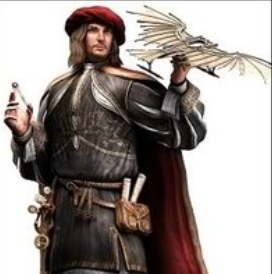
    Leonardo da Vinci


  • Hippocampus Magazine wants your story about All Kinds of Weather

    Hippocampus Magazine enthusiastically accepts unsolicited submissions in the following categories:

    • memoir excerpt – a self-contained portion (chapter or selection) of a larger, book-length work
    • personal essay – a short narrative reflecting on a particular life experience or observation
    • flash creative nonfiction or a work of creative nonfiction in an experimental format

    Here is an article that discusses the difference between memoir and essay. And here is another.

    2014 Theme: Weather & Acts of Nature

    From storms and sprinkles to earthquakes and extreme heat, Mother Nature can pack a punch or paint a pretty picture. Weather can be wacky and wild. And weather can be calm.

    Weather often plays a character in our everyday—and not so everyday—lives. We’re seeking tales in which the weather or even a natural disaster played a significant or supporting role.

    To be clear, we’re not specifically looking for stories just about bad weather or destruction; instead, we seek any personal essay or memoir excerpt related to the weather in some way. Maybe you dated a meteorologist? Perhaps you were stuck at an airport for a day and made an unlikely friend… Maybe the sun came out at JUST the right time… Perhaps there’s a story behind your umbrella…

    Also of note: we’re not looking for essays/articles/opinion pieces solely about why climate change does or does not exist—Hippo is not the venue for that.

    We’re open to submissions for this issue now through April 30; submissions should adhere to our usual guidelines.

    We like quirky, we like edgy, we like witty, we like smart, we like to be moved, we like pieces that stick with us.

    Have fun! We look forward to your weather stories.

    Colby.Evening Sky

    Photo by Colby Drake. Colby Drake Design.  Check out Colby’s Facebook Page.

  • See your story and tell it.

    Tips to writing deeply and comfortably.

    Stretch – either standing or sitting in a chair. Do whatever whatever stretching feels good to you.

    Sit easily in a comfortable chair.

    Take a deep breath in through your nose, exhale out through your mouth, like you are blowing out a candle.

    Take several deep breaths and whoosh out on the exhalations.

    Relax into your chair.  Smile.  Escort your inner critic out the door.

    Shed your ideas about what perfect writing means.

    Give yourself permission to write the worst stuff possible.

    Writing isn’t about talent, it’s about practice and going into another dimension.

    Creative writing is an act of discovery.

    Take another deep breath. Relax into your breathing. Exhale with a satisfying sigh.

    Rather than write for an audience, write from an instinctual level.

    Immerse yourself in writing. Let go of your worries and write. Just write to a satisfying inner desire to go to a meaningful place.

    Go deeper into the recesses of your mind and really write.

    Write from the well that stores the fears. Let the tears come. Let the stomach tie up in knots.

    It’s okay to write the story that is difficult to tell.

    Get through the barriers to go to a deeper level.

    See your story and tell it.

    When you are writing, if you run out of things to say, write “I remember. . .” and see where that takes you.

    Or write, “What I really want to say . . .”

    You can use the prompts on this blog to jumpstart your writing.

    beach filled heart

    Photo by Jeff Cullen. Click here to see Jeff’s portfolio on fotolia.

  • SmokeLong publishes flash fiction up to 1000 words

    SmokeLong Quarterly publishes flash fiction up to 1000 words.

    The SLQ aesthetic remains an ever-changing, ever-elusive set of principles, but it most likely has to do with these kinds of things:

    •  language that surprises
    • narratives that strive toward something other than a final punch line or twist
    • pieces that add up to something, oftentimes (but not necessarily always) meaning or emotional resonance
    • honest work that feels as if it has far more purpose than a writer wanting to write a story

    We have a special place in our hearts, more often than not, for narratives we haven’t seen before. For the more familiar stories—such as relationship break-ups, bar scenarios, terminal illnesses—we tend to need something original and urgent in the writer’s presentation.

    Click here for submission guidelines.

    Sonoma County author and writing teacher Stephanie Freele has been published in SLQ:   Breathing Oysters

    Have you, or someone you know, been published in Smokelong?  Let me know, and I’ll post on my Facebook Writing Page.

    Submit, so we can add your name to the list!

    Freele Stephanie Freele

  • One pearl is better than a whole necklace of potatoes.

    Constance Hale launches Sin and Syntax, How To Write Wicked Good Prose with:

    “The French mime Étienne Decroux used to remind his students, ‘One pearl is better than a whole necklace of potatoes.’ What is true for that wordless art form applies equally to writing: well-crafted prose depends on the writer’s ability to distinguish between pearls and potatoes. Only some words are fit to be strung into a given sentence. Great writers are meticulous with their pearls, sifting through piles of them and stringing only perfect specimens upon the thread of syntax. The careful execution of beautiful, powerful prose through beautifully, powerful words is guided by my five principles.”

    Hale’s five principles:

    • Relish Every Word
    • Aim Deep, But Be Simple
    • Take Risks
    • Seek Beauty
    • Find The Right Pitch

    Peruse Sin and Syntax to discover the pearls of wisdom of these principles and how to distinguish between words that are pearls and words that are potatoes. Read a review of Sin and Syntax, How To Write Wicked Good Prose by clicking here.

    IMG_1451

  • WriterAdvice seeks flash fiction, memoir, and . . .

    WriterAdvice seeks flash fiction, memoir, and creative non-fiction running 750 words or less. Enlighten, dazzle, and delight us. Finalists receive responses from all judges. First prize is $200. Submit to the 9th WriterAdvice Flash Prose Contest by April 18, 2014. Complete details at www.writeradvice.com

    advice

    Is Writer Advice’s Manuscript Consultation Service right for you?  Details here  Scroll down column.

  • The nervousness of writing — Francisco Goldman

    “When you’re beginning a book, or getting back into a book, as I am now, you have to learn to deal with the nervousness and stress of it. The blank page or the stalled page is incredibly intimidating. And you have to turn that nervousness – rather than into something that blocks you, rather than into something that makes you try to over-think, that makes you feel that you can’t proceed unless you have a clear idea of where you’re going – you have to harness that nervousness, almost like a natural force, and make it work for you. You have to trust that you’re just going to get inside the page and get inside the sentences, and you have to release the desire to feel in control and just follow the writing where it takes you and have faith that you’re eventually going to find the way.  — Francisco Goldman 

    January 2014 issue of The Writer magazine.“Writers on Writing: Find the power to overcome writing fears.”

    The Writer magazine article written by Gabriel Packard

    Francisco Goldman

  • Redwood Writers Anthology Accepting Submissions

    It’s a good idea to always have something ready to submit. You never know when a call for submission might be a perfect fit for your writing.

    Redwood Writers Anthology is open for submissions. . . deadline extended to April 1, 2014.

    Submission Guidelines  

    Members of Redwood Writers may submit up to two pieces in any genre, including short story, memoir, essay, flash fiction or poetry.

    You need to be a Redwood Writers Member to submit.

    Email your submissions to: anthology@redwoodwriters.org.

    Redwood Writers is a branch of the California Writers Club.

    tributaries-01

  • Put into written words . . .

    From the Hard Life to the Writing Life by Jay Baron Nicorvo

    Put into written words your understanding, and misunderstandings, of the world. — Jay Baron Nicorvo, Jan/Feb 2014 issue of Poets & Writers magazine.

    “The Miracle of Mentors: From the Hard Life to the Writing Life,” by Jay Baron Nicorvo.


    Book


  • Your writing will soar with Hemispheres Magazine

    United Airlines Hemispheres Magazine

    “Hemispheres is written for the affluent, curious, sophisticated citizen of the world. Blending long-form journalism with trend stories, think-pieces and service [articles].” — Writer’s Digest Magazine, February 2014.

    95% freelance articles, pays $.50 per word and up.

    Hemisphere’s Three Perfect Days series is gorgeous photography.  Scroll through for a mental mini-vacation.

    Pitch your story. Details here.

    Blue sky + white clouds