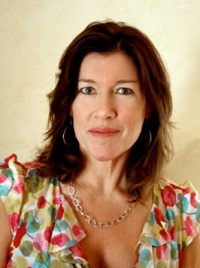
Author: mcullen

  • Freewrites: develop character, plot, setting, mood Prompt #228

    What kinds of writing prompts do you want? Let me know and I’ll try to create prompts that will inspire writing.

    Freewrites are a way to organize your thoughts, gather information, create characters, develop plot, set the scene, make discoveries, and more!

    What have you discovered while freely writing? Share your thoughts, ideas, creations, inspirations here, on The Write Spot Blog.

    Today’s writing prompts are oldies but goodies.

    Character Development

    Develop Character, Prompt #4

    Your Character Has a Secret #7

    Grow Your Characters #48

    Location

    Location, or place as character #8

    A place where you find satisfaction #25

    A room from your childhood #62

    Plot/Conflict/Problem

    The trouble started when . . . #3

    What happened here?. . . #23

    The problem . . . #50

    Memoir

    How to Write A Memoir

    Favorite Place from Childhood #11

    Best gift #28

    What games did you play? #32

    Write about a time you were lost #60

    Details prove it happened #71

    Mood, Tone, Pacing

    Setting the Mood #49

    The Power of Place

    valentines day blog hop 2016

    Valentine’s Day Blog Hop brought to you by Flight of Destiny author Francis H. Powell.


  • Valentine’s Day Blog Hop

    valentines day blog hop 2016

    The Write Spot Blog is fortunate to have a friend like Francis H. Powell. Even though we have never met in person, Francis is an important part of The Write Spot’s history. He invited us to join a Blog Hop last Halloween and last Christmas and now. . . drum roll. . . Valentine’s Day Blog Hop.

    Before participating I had heard about blog hops, but didn’t really know what they were. Here’s how this Blog Hop works. When you click on Valentine’s Day Blog Hop (in future Write Spot posts), you land on Francis’ Blog Hop Landing Page. Scroll down and click on a name. Here is a brief summary of talented and creative writers participating in this Blog Hop.

    Francis H. Powell, author of Flight of Destiny and creator of fabulous Blog Hops.

    Latoya Wilson has beautiful photos on her website. She hopes her writing offers a warm refuge.

    Tiffany Apan is a singer, songwriter, actress, award-winning producer, author of The Birthrite Series and other dark fiction.    

    Cheryllyn Dyess writes about a wide range of intriguing topics. She writes as Casey L. Bond

    Angela Chrysler has an unusual and tantalizing invitation into her website.

    Terri Bruce‘s adventure stories may be foreshadowed by her mesmerizing graphics and the invitation to her website: “Ordinary People. Extraordinary Words.”

    Linzé Brandon blogs about books, writing and the creative life of a writer married to a photographer at Butterfly on a Broomstick.

    Sarah Kohl writes about her adventurous experiences and travels on her blog.

    Marlene Cullen’s The Write Spot Blog is a place for writers to post freewrites from the listed prompts.

    Sundays – Book Reviews

    Mondays – Inspiration to Just Write

    Tuesdays – Quotes (watch for a new feature to be revealed soon)

    Wednesdays and Fridays – Writing Prompts

    Thursdays – Guest Bloggers

    Saturdays – Places to Submit

    Contact Marlene if you want to be a guest blogger and for posting book reviews.

  • Penny for your thoughts. Prompt #227

    Writing prompts are designed to spark your imagination and help you dip into your well of creativity. Using prompts, setting your timer for 15-20 minutes and writing freely, with no censorship, no editor sitting on your shoulder = a freewrite. Write whatever bubbles up for you. Write freely, write openly, write until your heart is content.

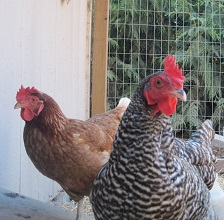
    ChickensToday’s prompt: Penny for your thoughts.


  • “Tin House is an invaluable respository . . . ” Stephen King

    Tin House. King quote

    Submissions to Tin House Magazine  are now open.

    Submissions accepted through February 28, 2016.  Tin House considers each submission for all upcoming issues regardless of theme. Summer and winter issues are not themed

    Submission Guidelines page includes a helpful FAQ’s column. Worth reading. Good advice for submissions to almost all magazines.

    Submit only one story or essay (10,000-word limit), or up to five poems at a time. Multiple submissions will be returned unread. Please wait until you hear from Tin House before submitting new work for consideration.

    “We shall do our best to respond within six months but, in some cases, this period may be longer. If you have not received a response from us within six months, we will be happy to receive e-mail inquiries and will do our best to respond.”

  • This Old Barn . . . Prompt #226

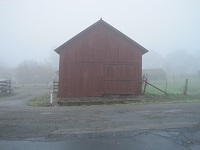
    Wilma's Barn

    Today’s Writing Prompt . . . This Old Barn.

    Or: If this barn could talk. . .

    What do you think this barn was used for? Did you grow up near a barn like this?

    Either write what really happened or make something up.

    This old barn . . .

  • I never thought of that .. . Prompt # 225

    Winter landscape with falling snowflakes, snow and hills

    Part Three of a three-part series of writing prompts inspired by Susan Bono’s Jumpstart Writing Workshop.

    A rewarding aspect of writing is when writers create scenarios that offer illumination for  readers . . . that  “aha moment.”

                           Inside a Snowflake

    Tiny snow droplets slide into the snowflake

    as it falls to the ground. if you listen, really closely,

    you can hear the sun crunching together.

    The weather is stormy—a snowstorm

    with little snowflakes inside the big snowflake.

    A girl lives in the snowflake, with golden hair in pretty braids

    with a ribbon on the bottom.

    At midnight she watches the snow fall outside the snowflake,

    and the icicles drip. the next day she goes out

    on the frozen lake and ice skates.

    Sparks of ice fly up behind her.

    By Emily Osborn, Grade 3, Poetry In The Schools

    I love this fun and creative perspective, “. . . little snowflakes inside the big snowflake.”

    Our unique ways of seeing things and capturing our thoughts in the written word can inspire readers, “Oh, I never thought of it like that.”

    But how do writers access those sparks of creativity? Just Write. Be  yourself. When you sit down to write, shed your inner critic, get in touch with your child-like world of discovery.

    Writing Prompt: Write about being inside something.

  • Tri-Quarterly – writing, art and cultural inquiry

    Tri-QuarterlyTriQuarterly is the literary magazine of Northwestern University. This web journal is edited by graduate students and supervised by faculty. TriQuarterly is “an international journal of writing, art, and cultural inquiry.”

    From now until May 12016, TQ welcomes submissions of fiction, creative nonfiction, poetry, short drama, short-short prose pieces, video essays, and hybrid work from established as well as emerging writers. TQ is especially interested in work that embraces the world and continues, however subtly, the ongoing global conversation about culture and society that TriQuarterly pursued from its beginning in 1964. TriQuarterly pays honoraria for creative work and publishes two issues a year.  Submission Guidelines.

  • Narrator is the last to know . . . Prompt #224

    This is Part Two of a three-part series of writing prompts inspired by Susan Bono’s Jumpstart Writing Workshop.   Part One: Something Missing . . . Prompt #223

    Susan talked about creating tension when the reader knows something that the narrator/character doesn’t know.

    pin


    Prompt: Create or recreate a scene where the narrator/character doesn’t know what’s going on.


  • Story of A Reluctant Memoirist

    Zoe Fitzgerald CarterGuest Blogger Zoe FitzGerald Carter, author of Imperfect Endings: A Daughter’s Story of Love, Loss, and Letting Go (Simon & Schuster), writes about being a reluctant memoirist.

    I never intended to write a memoir. As a reader, I’ve always preferred fiction to non-fiction and my book, Imperfect Endings, which is about my mother’s decision to end her life after struggling with Parkinson’s for many years, started off as a novel.

    I wanted to write a fictionalized account of my experience growing up as the youngest of three girls and explore how it felt to have two powerful older sisters fighting over my soul. My idea was to create a crisis in my characters’ lives as adults and then show how the old alliances and animosities from their childhood were re-ignited by this “current” event.

    At the time, I was struggling to make sense of my mother’s suicide and I thought, “Hmm… well there’s an interesting crisis.”

    After writing the first 50 pages, my agent suggested that I turn the book into a memoir, claiming that it would have more impact as a “true” story. (I think she also figured it would be easier to sell than a novel.) After much hemming and hawing, I decided to give it a shot.

    Despite my fears, as soon as I made the switch from fiction to nonfiction (and tossed out all the made-up stuff), the tone, language and pacing of the book seemed to fall into place. It may sound strange to say that writing a book about your mother’s suicide was enjoyableand there were parts that were difficult to re-livebut I did find writing “from life” more rewarding than I had expected.

    It was certainly easier than writing fiction, as much as I hated to admit it. Now that I was the character and these were my feelings, my experiences, generating new material was a breeze. Instead of making things up, I was excavating what already existed and using that material to fuel the writing process. I can’t say I became a fast writer, but I definitely got faster.

    Day after day, I would settle myself in my office or in a café and focus on an experience or time period that I wanted to capture. Once images and events began to drift up, I would scribble them down, especially if they seemed vivid or emblematic of a central issue or character. I would then take this material, flesh it out andif warrantedturn it into a fully developed scene.

    I came to think of this like translation. I was essentially taking emotion and memory and translating it into language. But being able to enter into an experience while also standing apart from it, observing and recording it, takes a certain dispassion. (No wallowing allowed!) It is fascinating to travel back to an important event or experience and reconsider it from different angles, but you also need to maintain a critical distance in order to turn it into art. This is especially true when you are deciding what to include and what not to include; what serves your story and what is superfluous.

    Once you have your story, the next hurdle is getting it out in the world. And I’m not just talking about the infuriating scramble to find a publisher. Writing memoir involves a HUGE degree of personal exposure. It is not for the faint of heart. (I had a number of heart-stopping anxiety dreams after my book was bought and sometimes wondered if having a publisher was worse than not having one.)

    But whenever I found myself fretting about having sold my soulnot to mention the souls of various family members—I would remind myself of why I wrote the book and whom I was trying to reach. So many people go through some version of my story and I liked to think that reading about how my family made these difficult end-of-life negotiationsimperfect as they weremight be useful and perhaps comforting for someone else. I certainly hoped so.

    Holding on to your personal, complex truth is especially important when your book is published and the story that you wrote while comfortably ensconced in your private writing bubble is suddenly blasted into the public domain. You no longer have any control over who reads itor how they will respond to it. And once you start the invariable mad dance of promoting your book, you can feel like you’ve turned your life – and even your self into a commodity.

    Which brings me back to my original assertion that I am a reluctant memoirist. And it explains why I am currently at work on a novel.

    You can take a memoir workshop with Zoe at Writers Grotto in San Francisco: “Taking Your Memoir to the Next Level.”

    Zoe FitzGerald Carter was born in France and grew up in Washington D.C. She is a graduate of Columbia Journalism School and has written for numerous publications including The New York Times, The San Francisco Chronicle, Salon and Vogue. Zoe teaches memoir writing at workshops and conferences. . . . scroll down for conference information. In addition to her novel on self-help culture, Twenty-One Days to A Perfect Life, she is working on a nonfiction book about race and elected kinship.
  • Something missing . . . Prompt #223

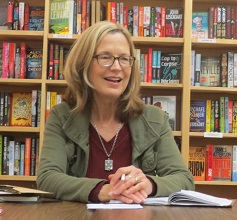
    Susan.Jumpstart.Jan 25.2


    I had the good fortune recently to “sit on the other side of the table.” I attended a Jumpstart Writing Workshop facilitated by Susan Bono.

    Susan talked about how there is tension between what the reader knows and what the narrator/character doesn’t know.

    Photo of Susan at Jumpstart Writing Workshop in Copperfield’s Bookstore, downtown Petaluma. Photo by Breana Marie.

    Susan read Shel Silverstein’s poem, “Something Missing.”

    I put on my socks,
    I remember I put on my shoes.
    I remember I put on my tie
    That was painted
    In beautiful purples and blues.
    I remember I put on my coat,
    To look perfectly grand at the dance,
    Yet I feel there is something
    I may have forgot—-
    What is it? What is it?. . .

    Do you know what the narrator forgot? If you don’t know, read the poem again.

    It rhymes with “dance.”   . . . Pants!

    Susan talked about how, in writing, there can be tension between what the reader knows and what the narrator/character doesn’t know. In the poem for example, the reader knows what the character doesn’t know . . . he forgot his pants.

    Susan next talked about “yearning for an answer.” I think she’s on to something. . . readers yearn for answers as do writers. When writing, especially freewrites, we can learn about ourselves and as we write, truths can be revealed. Or, we might see an old situation in a new way. That’s what happened for me while writing on this prompt.

    Writing Prompt: Write about the feeling of something missing.

    Part 1 of 3. The next two prompts will continue with this subject of reader knowing, narrator not knowing and what’s missing. Stay tuned.

    A reminder for making comments on The Write Spot Blog: There is no judging, no critiquing, no questions asked for clarification. With this type of freewriting, we are writing for ourselves, not for an audience nor for the entertainment of others. This type of writing can result in polished writing that is published, but that’s up to the writer to decide whether or not to share his/her writing. The first inklings of freewrites are kernels . . . ready to pop, or newly hatched, kind of like newborn babies seeing the world for the first time. Be kind with your comments.

    And be gentle with yourself, dear writer, you are doing important work.