Category: Guest Bloggers

  • Cavorting With Words

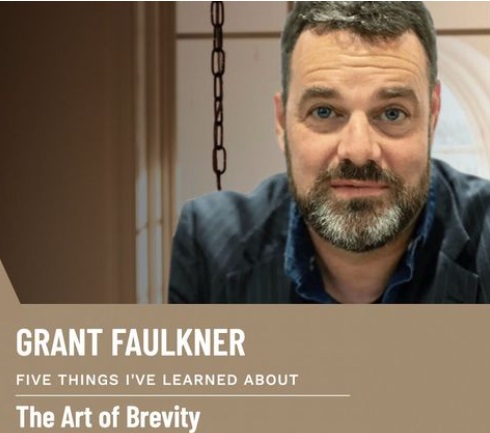
    Guest Blogger Grant Faulkner:

    Since it’s National Novel Writing Month, I wanted to share my thoughts on the creative process that is at its core: writing with abandon. This is a reprint of an essay that originally appeared in Poets & Writers.

    A few years ago I grappled with a simple question I had never before bothered to ask myself: Did I decide on my writing process, or did it decide on me?

    Despite an adult lifetime of reading innumerable author interviews, biographies of artists, and essays on creativity, I realized I’d basically approached writing the same way for years. And I didn’t remember ever consciously choosing my process, let alone experimenting with it in any meaningful way.

    My approach formed itself around what I’ll call “ponderous preciousness.” I’d conceive of an idea for a story and then burrow into it deliberately. I’d write methodically, ploddingly, letting thoughts percolate, then marinate—refining and refining—sometimes over the course of years. It was as if I held a very tiny chisel and carefully maneuvered it again and again through the practically microscopic contours of my story world.

    I distrusted the idea that anything of quality could be written quickly. A story, a novel, or even one of my pieces of flash fiction had to be as finely aged as a good bottle of wine in order for all of the nuanced tannins and rich aromas to fully develop. My writing moved slowly from one sentence, one paragraph, to the next, and I often looped back again and again with the idea that I needed to achieve a certain perfection before I could move forward.

    But as I hit middle age, the golden age of reckoning with all things, I decided I needed to shake things up, just for the sake of shaking them up. If I viewed myself as a creator, I needed to approach my own creative process with a sense of experimentation and outright dare.

    And, truth be told, my writing had veered toward being as much of a job as my day job. My publishing goals had stifled any sense of playfulness. My stories hewed to narrative rules as if I was trying to be a good citizen in a suburban neighborhood where I felt like an outsider.

    I thought back to the reason I became a writer in the first place: that ineffable impulse to explore matters of the soul, the need to put words to the hidden spaces of life, the desire to probe life’s mysteries. I concluded that my labored approach had smothered my verve. I wanted to cavort through words again, to invite the dervishes of rollicking recklessness back into creation.

    Cavorting with words

    Around this time a friend invited me to join him in National Novel Writing Month: the annual challenge to write a fifty-thousand-word novel during November. I knew about the event, but had never thought it was for me. The object was to write faster than I was accustomed to—to produce approximately seventeen hundred words per day for thirty days straight, a word count at least double what I was used to.

    I feared writing a novel littered with unconsidered words and loose connections. I feared writing something flimsy.

    Note from Marlene: You can read the rest of this article, posted 11/5/23, originally titled “Writing With Abandon,” at Grant’s Substack: Intimations: A Writer’s Discourse.

    Grant Faulkner:

    As a boy, I spent my allowance on all sorts of pens and paper, so there was never much question I would become a writer. I received my B.A. from Grinnell College in English and my M.A. in Creative Writing from San Francisco State University.

    It seems like I should have other degrees, such as an MFA in Novels about People Doing Nothing But Walking Around, a PhD in Collages and Doodles and Stick Drawings of Fruitless Pursuits, or a Knighthood in Insomniac Studies, but I don’t.

    I have published in many publications. My stories have been nominated for the Pushcart prize and included in such collections as W.W. Norton’s New Micro: Exceptionally Short Fiction and Best Small Fictions 2016.

    By day, I’m the Executive Director of National Novel Writing Month, Co-founder of the lit journal 100 Word Story, Co-founder of the Flash Fiction Collective, a member of the National Writing Project Writers Council, a member of Lit Camp’s Advisory Council, and a member of the Aspen Institute’s Aspen Words’ Creative Council. I also co-host the Write-minded podcast.
    Grant Faulkner Bookshop

  • Creativity Is A Practice

    Suzanne Murray writes about the rewards of engaging our creativity.

    There is a growing awareness that creativity is a capacity that everyone has, though they may not understand what is involved in accessing it.

    One of the main things that gets in the way of people embracing their creative gifts is a belief that creativity should be easy; that it should just flow out.

    They think they should be good at it immediately. If they are not and it’s not easy, there is a tendency to think there is something wrong with them and it’s never going to work.

    Yet creativity in whatever form you choose to pursue is a complex process that actually asks a lot of us.

    This is why is feels so good to engage since it helps us discover that we are capable of more than we thought possible, including working from expanded abilities. It is a muscle that we need to work with to develop, just like if we decided to run a marathon, we would understand the need to run daily for shorter periods to build up to the full distance.

    Creativity is a practice that you have to stay with even when doubts arise.

    It tends to progress in a stair step fashion. We spend time showing up to the work each day for weeks, maybe months and we don’t seem to be getting any better. Then one day we have crossed a threshold to a new level where we can do things we have been unable to. We will need to work on that plateau for a while before being boosted to the next level.

    Being creative also involves studying our chosen form of expression.

    Long before I wrote my first personal essay, the writing form that almost seemed to choose me, every time I went into a bookstore, I was drawn to the essay section. Those were the only books I read. I was learning to write in that form by reading it.

    So, when I started to write, my creative mind already had a sense of what to do. Sort of.

    I then had to practice, writing pages and pages that never went anywhere but taught me a lot. I learned to trust that things were cooking on the level of my subconscious and super conscious minds.

    The more I showed up to practice, the more I had a sense of what to do and how to work with the material on a conscious level. The more I stayed with it, the more the wonderful, magical state of flow would occur where I was definitely operating in an expanded state.

    Being creative feels like a beautiful dance. Engaging in the process feels good, so I never really thought about all the time and work I had to put in to become an accomplished writer. For me the act of creativity has always been its own reward. That has allowed me to stay with it through the doubts and slow going.
    Now more than ever we need to resist the distractions like social media and the internet that give us a sense of instant gratification, making it more difficult to go the distance with our creativity.

    Keep in mind that you can make great progress with small steps taken day after day.

    Try this: Pick a creative project. Then show up ten minutes a day to play with it.

    I did this recently in a form new to me, nature collage.

    I asked a painter friend about the best materials to use. Then with acrylic paint, glue and objects from nature, I let myself be intuitively guided in what to do. It took a bit before any of them turned out in a way pleasing to me. Yet each one taught me something.

    As you play with your project, resist the urge to judge. Put it away and look at a few days later when the critic has quieted down.

    Keep showing up, ten minutes day after day and see if you don’t feel the deep satisfaction that comes with opening to your creativity.

    Wishing you the deep satisfaction of being creative, Suzanne Murray.

    Suzanne’s website: Creativity Goes Wild

    Suzanne Murray is a gifted creativity and writing coach, soul-based life coach, writer, poet, EFT practitioner and intuitive healer committed to empowering others to find the freedom to ignite their creative fire, unleash their imagination and engage their creative expression in every area of their lives.

    Other posts by Suzanne on The Write Spot Blog:

    Guest Blogger Suzanne Murray and the power of commitment.

    Suzanne Murray: Using imagination for creativity

    Calm Your Brain

    Note from Marlene:  Just Write!

  • Show Up And See What Happens

    Photo by Marlene Cullen

    Guest Blogger Suzanne Murray writes about the power of commitment and practice.

    Whether it’s for writing, meditation, exercise, or anything you want to do but feel resistance to, establishing a practice can help you move forward in magical ways.

    It signals to the universe that you are committed.

    Having a practice means that you show up every day, no matter what.

    Release all expectations of outcome or where you think you want things to go.

    It doesn’t matter how good you are or what you accomplish or what happens with the practice.

    You sit down to meditate and your mind goes wild with chatter the entire time, that’s fine.

    You show up to write and find yourself whining on the page, that’s okay.

    The point is to show up and practice.

    A lot of things are happening when you show up consistently to something.

    You begin to forge the neural nets in your brain needed for the task and strengthen them so that whatever you are committed to actually becomes easier to do and you are able to increase your level of skill.

    In writing your subconscious mind is working 24/7 on whatever you give it to focus on, so showing up every day allows you to access new insights and ideas arising from your expanded mind.

    You commit and take the action. The universe responds in kind, to the power of your willingness and the force your commitment.

    Free from expecting that you need to accomplish something, you relax and open up to allowing.

    In this receptive state, your subconscious mind aligns with the workings of the Universe and you find support, synchronicities and inspired ideas coming to you.

    Establishing a practice helps you move beyond any resistance that has been in the way.

    When you release the need for instant gratification, you slip into a sense of satisfaction from the simple act of showing up for yourself.

    You learn to find joy in the practice itself and this allows you to expand your creative capacity.

    To begin, start small.

    When I coach writers who are having a hard time showing up, I ask them at first to commit to writing ten minutes a day.

    This helps cross the threshold of resistance and move past the voice that tells you that you don’t have enough time.

    Once you have established the habit of showing up you will find things flowing with greater ease.

    Wishing you ease in your creative practice.


    Suzanne Murray, a frequent contributor to The Write Spot Blog offers:

    Creativity Coaching

    Creativity Goes Wild Blog

    Emotional Freedom Technique Sessions

  • The Seasons of Being A Writer

    Guest Blogger Megan Aronson writes about the seasons and cycles of life and being a writer.

    “I’ve been lost and reclusive of late as I deal with the most recent iteration of my grief-growth cycle,” my friend Candace Cahill, author of Goodbye Again, wrote in an online writing group I belong to. “Learning—the hard way, mostly—new things about myself and the challenges still ahead.”

    My eyes hovered over her words as her thoughts echoed my own. I wasn’t the only one who’d stopped at the words “grief-growth cycle.” Soon the comments were flooded with replies like, “Grief-growth cycle. I feel that. Never thought of it that way before.”

    In two sentences, Candace had fully encapsulated the collective experience of being a writer. Continually turning ourselves inside out on the page and off, we each instantly recognized the “grief-growth cycle” as the intersection of life affecting our writing, and writing affecting our lives. I know this cycle: it courses through periods of personal doubt and professional rejection, retreating underground, nurturing the seeds of ideas for another creative phase, and harvesting acceptances and accolades.

    “Where are we at in the cycle right now, each of us?” I wondered as I read my friend’s comments.

    Lately, I’ve been thinking about the seasons of being a writer and how we cycle through them personally and professionally. I know from experience (and science) that when difficult life circumstances trigger my brain into fight or flight mode, the limbic system switches on its red alert button and my creative center is more difficult to access. I know stress can impact my creativity, and a broken heart can either open the flow for writing, or completely dam it. I’ve also seen how a round of rejections on my writing can paralyze me in life, sending me into a phase of reclusiveness that I must slowly nurse myself out of again. It can wreck my confidence not just as a writer, but as a mom, wife, and friend.

    Productivity is often praised over personal growth and satisfaction in our society. We’re pressured to relentlessly produce, hustle, grind, and go. But the writer’s life demands time not just to harvest—we also need periods of renewal, recovery, and growth.

    Recently, I’ve found comfort in Julia Cameron’s insightful and lesser-known book “The Sound of Paper.” After a series of challenges triggered another grief-growth cycle, I needed time to tend my personal and professional wounds. Julia gave me permission to embrace my place in the cycle with her powerful words: “I am resting, I am gathering steam,” she wrote. “I am in a low cycle, a time of dormancy, a period in which I will come to know exactly how much and how deeply I love the art I am not at the moment able to practice.”

    Last week, I ran into a writing friend and instantly recognized on her face the look of panic I’d also been wearing during my months of “dormancy.”

    “I haven’t been able to write,” she said, her eyes ablaze. “I’m caretaking my mom full-time. I can’t get myself to put a thing on the page.”

    I told her how I’d just barely escaped this space myself, and how, paradoxically, the only thing that had sped it along was not speeding it along at all. My heart and mind needed time to heal, to wander in the woods, to walk the stacks at the library and grab anything that piqued my interest. As we spoke, I remembered the existential angst I’d felt in her shoes. I wished I could have granted myself the peace of accepting my season of recovery, rather than fighting against it the whole way.

    I want to live the kind of artist’s life that flows gracefully through its seasons and honors the needs of my creative nature. When I’m incubating ideas for a new book, I live in curiosity—not producing, but gathering notes, ideas, life experiences, and reflections. An ideas file may be scraps and shards of random, unhinged scribbles, but those scribbles will become the words of an essay or book one day. I need time to be unhinged. I need time to wander and weed the corners of my mind and life. The time to harvest and produce will come again soon.

    Moving forward now, I wonder: Can I be brave enough to continually honor where I am in the grief-growth cycle? Can we as writers grant ourselves a week, a day, or even a month (gasp!) to heal from life experiences before we write again? Can we go dormant for a winter and simply germinate our ideas, or celebrate a spring of creating just for ourselves, not for the world’s consumption?

    I hope we can. I hope my recent experiences have taught me to let life inform my writing gracefully, with time to heal between the living and the writing, embracing the seasons as they come.

    I’m coming out of my winter now, grateful for its lessons. The panic is subsiding as new ideas are beginning to burst forth again. Another spring is coming.

    Originally posted as “The Grief-Growth Cycle of Being a Writer,” August 30, 2023, Brevity Blog.

    Megan Aronson is a writer and public speaker who lives in the red rocks of Sedona, AZ.

    Excerpted from Megan’s website:

    I’m a writer, a speaker, an advocate, a mom of four, a #YOLOGirl (You Only Live Once) and a survivor of…just about everything.

    In 2011, I wrote a piece called Grim Reaper Girl that went viral, sharing how empathy saved my life after a string of 12 deaths had left me feeling like death followed me everywhere.

    Over the next few years, the slew of tragedy continued at a relentless pace. In total, we lost 30 people in 8 years. We moved 4 times. We lost a baby, our home, my daughter’s best friend…and then I discovered my husband’s deadly painkiller addiction had escalated, and we became a miracle in the WE’LL BE COUNTING STARS story. 

    But my story is not a pity-party-table-for-one-please story. It’s one of triumph in tragedy. Little triumphs that came slowly and carefully while I fought for my life, my joy, and my love.

    I’ve written myself through grief upon grief, and brought myself back to life again and again. I am still doing it now, and along the way, I’m sharing my journey, because I have become a self-certified Heal-Thyself Specialist (it’s a fancy title, I know, I earned it with 14 years at The School of Hard Knocks. Did you get a degree from there, too?!).

    I’m here to tell you, I see you, I get you, I’ve been through it, too, and here’s how we pick ourselves up and keep moving forward again and again, with our broken, open hearts. I’m here to remind you how to open when you’re closed, to soften when you feel yourself turn hard like callouses.

    I’m here to encourage you to dare greatly, even when vulnerability makes you quake in your boots. I’m here to urge you forward into unfolding again and again.

    I’m also here to remind myself, and YOU, not to take ourselves or this thing called life too seriously!

    Megan’s work has appeared in The New York TimesHuffPostThe Rumpus, and Creative Nonfiction’s Tiny Truths. She is currently seeking a publisher for her memoir, We’ll Be Counting Stars, which tells the powerful “love vs. addiction” story she lived with her husband, Kory, a survivor of the opioid crisis.

  • Letting Go . . . An Essential Skill For Writers

    Guest Blogger Bella Mahaya Carter:

    Last week, I went to the dark side.

    I kept trying to get out of my low mood, which I created by misinterpreting a situation, making presumptions about other people’s opinions about me, and then listening to—and believing—the small voice inside my head ranting about what a terrible person I am. These thoughts looked real.

    They weren’t. They were expressions of fear.

    Having been beaten as a small child, I can sometimes be a hyper-vigilant people-pleaser, and when I sense others are unhappy with me, it can trigger the kid who feels unsafe.

    Last week, when I was in that low mood, I kept trying to do things to get out of it, but nothing helped.

    I finally realized there was nothing to do except sit with my uncomfortable feelings, be compassionate with myself, and wait for my mental storm to pass.

    There was nothing to do but recognize my mind was playing tricks on me and hijacking my well-being.

    Seeing this made letting go—and freedom—possible.

    Letting go is an essential skill for writers. We are not in charge. The more we can relax our ideas about what, how, or when we “should” write, the better we can receive what wants to be expressed through us on its own terms.

    When struggling, people often ask, “Why is this happening to me?” Why questions can become rabbit holes. The “why” doesn’t matter as much as how you respond to what’s happening.

    I find it more productive to ask “how” questions.

    Here are a few examples:

    • How can I find peace right now?

    • How can I feel good about myself?

    • How can I experience more joy?

    • How can I be free?

    • How can I liberate myself from my mind’s destructive habits?

    • How can I write this story?

    • How can I be more loving with myself and others?

    • How can I live with a spacious, open heart?

    I enjoyed exploring these questions in my journal and found the directive “let go” answered most of them. Let go of my illusions of control. Let go of needing to perceive myself as outstanding or correct. Let go of ruminating on the past and the future, which rival social media as attention thieves, taking me out of the present moment—our point of power. The place where life is unfolding now.

    And, yes, let go of fear. To the extent we are able.

    Faith is the most valuable if fear is the cheapest room in the house.

    Bella Mahaya Carter is passionate about the power of writing to heal and transform lives. “It took me decades to understand how to get out of my own way so that what wanted to be expressed through me could come forward. When I finally embraced this process, it was a game changer. Ever since, I’ve been helping other writers, artists, and healers navigate work and life from the inside out.”

  • Imagination and Mentors

    Imagination is everything. It is the preview to life’s coming attractions. – Albert Einstein

    Guest Blogger Suzanne Murray and imagination:

    I’ve been asking myself, how can I best help empower others at this time of great global change.

    The first answer that came in the flash of inspiration was the word imagination.

    Einstein regularly insisted that imagination is more important than knowledge.

    But the thing is, it’s not just for geniuses. It’s for everyone. We have been taught to favor the rational mind at the expenses of capacities that actually can help us in amazing ways. It’s easy to reclaim.

    Years ago, I learned an exercise from Jean Houston, noted author, visionary and one of the founders of the human consciousness movement. It involves working with an imaginary mentor to get advice on any question that we have for any area of our life. Using our imagination and intuitive mind give us access to a deeper wisdom and way of knowing beyond the capabilities of our linear mind.

    I have used this exercise for years in teaching writing and with creativity coaching. I have been amazed and delighted that my students get much better advice than I could have ever given with all my years of experience. Everyone in class could hear the wisdom coming through as we shared our answers.

    Most remarkable is that the answers actually sounded like they were coming from the individual asked. If someone asked Mark Twain, the response would sound like something Mark Twain would write.

    Tapping your imagination and writing in flow can give you access to expanded awareness and better answers you could think up.

    TRY THIS: Pick someone you think would give good advice. It could be Einstein, Plato or your grandmother. Imagine you have written him or her a letter asking a question you have about anything in your life. It helps to be specific.

    Then using the technique of free writing (writing as fast you can without censoring), write the response as if it is coming from your imaginary mentor.

    Really let go on this one. Don’t think. Just let the answer flow out of the pen or the keyboard for at least ten minutes.

    Then read the answer with an open curiosity as if you really have just received this letter in the mail. Be open, be objective. The more you play with this, the stronger the muscle of your imagination grows.

    OR TRY THIS: Go for a walk with your imaginary mentor and have a conversation with them in your imagination. The key is to play and be open. Let go of thinking that you have to figure out everything with your mind.

    Wishing you an abundance of health and creativity, Suzanne

    Suzanne Murray is a gifted creativity and writing coach, soul-based life coach, writer, poet, EFT practitioner and intuitive healer committed to empowering others to find the freedom to ignite their creative fire, unleash their imagination and engage their creative expression in every area of their lives.

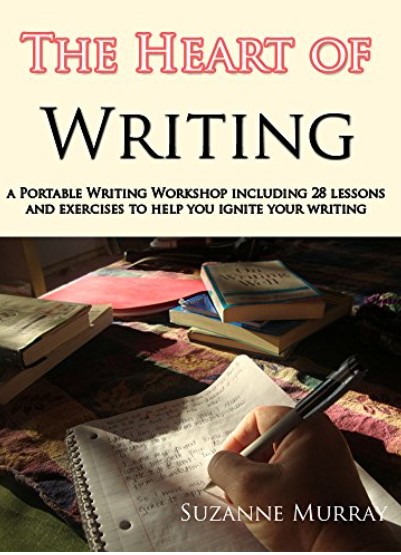
    Suzanne’s ebook, The Heart of Writing, will help: Jumpstart  the Process, Find Your Voice, Calm the Inner Critic and Tap the Creative Flow.
  • Recipe for Publishing Success

    Sue Fagalde Lick writes about the ups and downs of being published.

    I have three books coming out next year: A memoir, a full-length poetry book, and a poetry chapbook. Different genres, different subjects, different publishers. I didn’t plan it this way, but it’s happening. I have also had a run of acceptances for short pieces.

    I should be overjoyed. Isn’t this what I wanted?

    But I feel guilty boasting about my three books when other writers are not able to get even one acceptance. It’s the “people are starving overseas while I’m complaining about ice cream making me fat” conundrum.

    After years of mostly no’s, I’m reading proofs, approving cover designs, and preparing for “pub dates” like a real writer. How will I promote three books at once? What if something goes wrong between the signing of the contract and holding the books in my hands?

    I’ll deal with it. Just to have these editors say yes is a triumph.

    I have to remind myself that I earned this and that it’s okay to succeed. I submitted the memoir, which is about Alzheimer’s disease, for years. I entered contests. I pitched to agents and editors. Those who responded said it was swell and they had a loved one with dementia, but they didn’t think they could sell it. Until one, sub #59, said she could.

    Both poetry books were finalists in contests sponsored by publishers that feature Northwest poets. They didn’t win, but they caught the attention of editors who wanted to publish them. I have met both editors through my work as president of the Oregon Poetry Association. My name was not on my manuscripts, but I knew they published books like mine featuring poets from the Pacific Northwest, so my chances were good.

    I did the work, and now I’m reaping the results. Lords, that sounds like boasting, but it’s true. Like Thanksgiving dinner, I shopped, prepped, set the table, and got up at 5 a.m. to put the turkey in the oven. Now all the food is ready, and it’s time to share the meal.

    Can you make it in the writing world if you don’t grow up in a literary family, if you live in a tiny town in Oregon that doesn’t have a decent book store, if you don’t attend a prestigious university where your roommate’s dad just happens to work for Simon and Schuster, and you don’t win all the fellowships and prizes?

    You can—if you follow the recipe.

    * Write. Set yourself a writing time and keep to it religiously, even when it seems like every word is garbage.

    * Rewrite. The first draft is the raw clay you will shape into a finished piece. Sometimes you’ll need to take it apart and start over from scratch. Sometimes you’ll need to hire a professional editor to help you see what could be better. My memoir looks nothing like the massive manuscript I started with. The editor of the full-length poetry book took out 15 poems that “didn’t sing” and changed the title. Now the whole book sings.

    * Submit your work. Send it to multiple places at once. Keep track on a spread sheet, and when something is rejected, send it out again. And again. I received 98 rejections last year, but I also got some acceptances. Follow the submission guidelines regarding length, format, theme, etc. Send them exactly what they’re asking for.

    * Read what they publish before you submit. If your work would not fit, move on. If you wouldn’t buy their books, they probably wouldn’t buy yours, and you wouldn’t want them to.

    * Enter contests. The entry fees are high, but one win or acceptance because someone saw and liked your work will cover everything you have spent.  

    * Study your craft. After many years writing for newspapers and magazines, I earned my master of fine arts degree in creative writing at age 51. I continue to take workshops, read craft books, and trade critiques with other writers. There’s always more to learn.

    * Become a presence in the writing world. Post on social media. Ask questions and get discussions going. Comment on other writers’ posts, read and review their books. Attend their readings and book launches. Answer their questions and share connections.

    * Join and be active in writing organizations. Through my work with California Writers Club, Willamette Writers, the Nye Beach Writers Series, and Oregon Poetry Association, my name is out there, and I have met people who can help me not only get published but provide blurbs and reviews.

    * Volunteer. The editor of a journal I admire needed someone to sit at their table at the AWP book fair for a few hours. I said yes. When she wrote to thank me, she also asked me to write for her.

    * Keep at it. I started submitting my work to magazines and newspapers when I was in high school. Overnight success can take a lifetime.

    Don’t feel guilty if you succeed. Just enjoy it. And take an extra helping of stuffing.

    Originally posted on July 28, 2023 in Brevity’s Nonfiction Blog as, “Three Books at Once? Say What???”

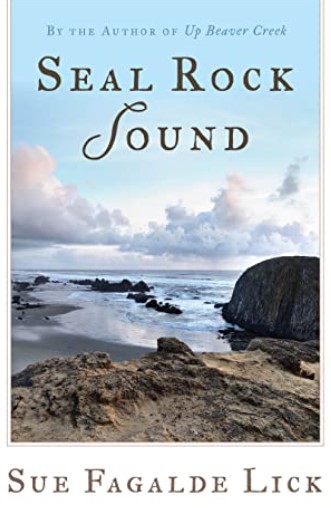
    Sue Fagalde Lick, a former journalist, is a writer/musician/dog mom living in the woods on the Oregon Coast. Her books include Stories Grandma Never Told, Childless by Marriage, Love or Children: When You Can’t Have Both, the novels Up Beaver Creek and Seal Rock Sound, and two poetry chapbooks, Gravel Road Ahead and The Widow at the Piano. Coming in 2024 to a bookstore near you: Blue Chip Stamp Guitar, Dining Al Fresco with My Dog, and No Way Out of This: Loving a Partner with Alzheimer’s.

    Don’t call her in the morning; that’s when she’s writing.

  • Beats Plunge Readers Into Scenes

    Guest Blogger Jan Pezarro shares what she learned about beats, using her experience with lung cancer to illustrate physical, emotional, and setting beats. I  hope you enjoy this entertaining and informative writing about different kinds of beats as much as I did. — Marlene

    Jan Pezarro:

     “A few beats missing here.”

    In the first year of my MFA program, after 40 years in business and on my way to fulfill a long-held ambition to write a book, my mentor added this comment to my submission. I was pretty sure she wasn’t referring to golden or purple beets, but neither did I know exactly what she meant by “beats.”

    My knowledge gap of storycraft tools and techniques was formidable. Lectures on structure, place, scene, and character sent me repeatedly to the internet for supplemental tutoring. The process reminded me of trying to read a text in the original Greek by translating each word in turn.

    My mentor’s margin note sent me scurrying back online, where I learned there are several kinds of beats.

    You may be familiar with the “Blake Snyder beat sheet,” a method for sequencing screenplay scenes, which Snyder describes in his groundbreaking book, Save the Cat! His fifteen beats offer screenwriters a template for tracking their heroes’ pursuit of their goals, from “Opening Image” to “Final Image” and all the plot events, wins, losses and subplots in between. Jessica Brody has since adapted Snyder’s beat sheet for novelists and memoirists in Save the Cat! Writes a Novel.

    But the kind of beats I’m focusing on these days relate to smaller units of storytelling—sentences or phrases—that help plunge readers into the scene. Action beats, for example, depict what the character is physically doing, emotion beats reveal the character’s feelings, and setting beats provide context and depth.

    Action seemed like a suitable jumping-off place. I went hunting for a place in my draft memoir where I could replace a dialogue tag (he said, she said) with an action beat.

    Original:

    If I was not sufficiently recovered from surgery, we would have to cancel the trip. “I should be OK with a September date,” I said. “That leaves two months for post-op recovery.”

    Revision:

    “I should be OK with a September date.” My shoulders slumped as I sighed in despair. But in the next moment, I straightened and looked at Andy. “It still leaves two months for post-op recovery.” I would just have to heal faster.

    Just writing the action beat took me back to the moment. I could feel the hopelessness that I would be unfit for travel, and the moment of resolve that I would make it work. The beat added to the wordcount but made the narrative more interesting and moved the plot forward.

    Next, I looked for opportunities to replace an emotion (sad, happy, angry, etc.) with an emotion beat that would reveal more about my character’s internal state.

    Original:

    “Have you ever experienced stigma because you have lung cancer?” Linda asked sadly. “It really hurts.”

    Revision:

    “Have you ever experienced stigma because you have lung cancer?” Linda hugged herself as her eyes filled with angry tears. “It really hurts.”

    The emotion beat disposed of a dreaded adverb and added insight into the motivation for Linda’s next action.

    A setting beat avoids halting the forward pace of the story by having a character take action within the setting, talking while observing the setting, or emotionally reacting to the setting.

    Original:

    The operating room looked like an ordinary room: four white walls with just a few cabinets and a long table covered with a gleaming array of medical instruments. The surgical team stood around a narrow bed in the centre of the room.

    Revision:

    The orderly wheeled my gurney into the operating room, maneuvering around a long table covered with a gleaming array of implements that looked like a buffet carving station. I didn’t recognize the room from what I’d seen in television medical shows.

    I turned my head to look at him. “It looks like an ordinary room, not an operating theatre.”

    The orderly arched a tweezed eyebrow and waved a hand at the assembled surgical team of ten. “What do you mean by an ordinary room?”

    Adding action beats and dialogue to the setting picked up the pace while providing additional detail about the orderly.

    Understanding and using beats with purpose has enriched my storytelling and breathed life into my characters. Best of all, I can’t wait to begin the revision process—to find places and spaces to achieve different effects and improve my scenes.

    All I had to do was get the beats in.

    Originally posted as “I Have The Beat,” in Brevity’s Nonfiction Blog, June 28, 2023

    Jan Pezarro uses the power of storytelling to entice consumers, influence politicians, and motivate employees. She is currently querying a series of essays exploring the psychological impacts of illness caused by personal behaviour. Jan is an MFA student at the University of King’s College in Nova Scotia and is 40,000 words into her first book, a memoir called Breathing Lessons: How To Outlive Lung Cancer With Medicine And Mindset. Read more on her website.

    #justwrite #iamwriting #iamawriter

  • Stressed? Sensory Awareness might be the answer for healing.

    Today’s Guest Blogger Jean Grant Sutton writes about why we are stressed.

     The Great ‘Post Covid’ Unwinding It has become so very clear to me of the havoc that has been wreaked on our world from the Covid Pandemic. Of course, for most of us the disruption to our financial stability is still having ripple effects. For those in small business or even those that lost jobs or needed to let their job go because of the lockdown may still be struggling to get back above water. 

    Where I am experiencing the most clarity of devastation is in our human nervous system.

    With the knowledge of physiology and how we are wired in our brainstem for survival, I personally feel and witness in others the huge contraction that was triggered by this threatening virus.

    Huge repercussions to many connected systems take place when the stress response is activated as it has been.

    This is called Stress Response Hyperstimulation.
    We know there was a huge stress response activation globally, we were put on lockdown, isolated and masking for most of 2 years.(Some people are still for their various reasons)

    What happens when the stress response is activated and hyper-stimulated is well documented in our health sciences. If affects all systems, organs, glands in various ways that can lead to so very many symptoms of dis-ease. 

    Heart palpitations, Chest pain, Dizziness, Lightheadedness, Muscle weakness, Numbness, Tingling, Weak limbs, Asthma, Anxiety, Chronic pain, Back pain, Chronic fatigue, Insomnia . . .  the list goes on. 

    I bring this to your attention to help support your understanding of the need to be sure to do whatever is necessary to help unwind the layers of stress in order to come back to homeostasis and equilibrium in your body/mind systems. 

    Doing a Daily Deep Relaxation like ‘savasana‘  the resting pose has shown to relax the central nervous system and return it to healthy ‘rest and digest’ functioning.  Consider creating a new habit for yourself. Every day take 7-10 minutes to lie down on floor and let the sensory awareness of your body prevail. The results may surprise you in how you feel. 

    Another resource for calming the nervous system: Sankalpa.

    “Sankalpa is your heartfelt mission, said in a short phrase or sentence, clearly and concisely expressed, using a present tense “I” statement. It is said to ourselves in the present tense because it is in the now, as it is really only now all the time. This sustains your inner felt sense of purpose, meaning, and value.”

    Jean Grant-Sutton’s approach to Integrative Yoga Therapy, is based on a vision of health as a unity of body, mind and spirit. She focuses on bringing balance, strength, flexibility and awareness to the body and mind. To raise awareness of the primary intention of yoga: awakening of Spirit–our essential nature.

    Jean’s yoga classes are both in person (Petaluma, CA) and online.

  • Just Walk!

    Guest Blogger Suzanne Murray suggests walking to inspire creativity.

    WALKING HELPS YOUR CREATIVITY

    When you are engaged in a project and feel the creative inspiration has dried up, take a break.

    Anything that occupies the consciousness mind in a physical way can open you to the flow of fresh ideas and insights. Doing the dishes or taking a shower are good ways. One of my favorites is taking a walk. You could simply stroll around the block or walk deep into nature.

    I have not been alone in my awareness that walking opens creative channels. There is a long list of well known creatives who walked to allow ideas and connections to flow. Charles Darwin, Virginia Woolf, William Wordsworth, Nikola Tesla, Aristotle, Sigmund Freud, Thomas Jefferson, Ernest Hemingway, Charles Dickens, Beethoven to name but a few.

    Scientific studies have now found that creative problems can indeed be solved by walking, especially in nature. While walking, the brain undergoes physiological changes that lower frustration and stress, increase your awareness and engagement with the world, allow for a natural meditative state and improve your mood. All of this helps you to experience more creative connections and flow.

    Walking on a regular basis has also been shown to be good for your brain. It promotes new connections between brain cells, reduces atrophy of brain tissue that can come with age, increases the volume of the hippocampus, part of the brain important for memory, and stimulates the growth of new neurons.

    Walking also allows you to balance two states that enhance creativity.

    Mindfulness, where you are present in the moment, and mind wandering or daydreaming, where you allow ideas, connections, dreams and visions for the future to come to us from the deeper realms of consciousness.

    Next time you are looking for some creative inspiration, take a walk.

    If you aren’t used to walking or don’t have a lot of time, simply start with a walk around the block.

    Find a park or a trail in nature and see how your muse opens up for you. Your body and health will love it too.

    Suzanne Murray is a writing coach, soul-based life coach, writer, poet, EFT practitioner and intuitive healer committed to empowering others to find the freedom to ignite their creative fire, unleash their imagination and engage their creative expression in every area of their lives.

    She writes about creativity and inspiration on her blog, Creativity Goes Wild.

    Fall in Love With the Creative Process,” more inspiration from Suzanne on The Write Spot Blog.

    You can follow Suzanne on Twitter at @wildcreativity where she tweets inspirational quotes for creativity and life.
    CREATIVITY COACHING

    Experience the pleasure and joy that comes from adding satisfaction and meaning and a sense of well- being to your life through creative expression. Suzanne offers practical, emotional and soulful strategies to help you fully uncover your creative gifts and support yourself in expressing them. “We will work through the issues that get in the way of your creativity including career concerns, blocks, limiting beliefs, relationship issues and the existential and spiritual questions that can arise from wanting and needing to create.”

    EFT (Emotional Freedom Techniques)

    Combining Western psychology with Chinese acupressure, EFT works to rewrite subconscious patterns and limiting beliefs that keep us stuck.