Category: Prompts

  • Finding balance . . .Prompt #442

    Balance is a tricky act.

    Like a pie crust, balance is sometimes tender and light, and sometimes fails.

    Sometimes we find balance. Then we totter. Then we regain balance. And totter again. And find balance once more.

    Write about finding balance.

    You can use any of these phrases for your writing prompt or use the image. Isn’t this a beautiful pie crust topping? Not something I made. But something I would enjoy eating!

  • When the flame flickers . . . Prompt #441

    When the flame flickers and goes out, sometimes the simplest thing is to let it go, other times just re-light it.

    You know what to do with these writing prompts, right? Don’t overthink them. Just write!

    Freewrites can open doors to discoveries.

  • Random Phrases . . . Prompt #440

    Choose a phrase and write whatever comes up for you:

    You can’t move forward from a stuck place.

    Let go of perceptions.

    Acceptance.

    If you are not part of the solution, you are part of the problem.

    What matters?

    Learn to let go.

  • Tapestry of Fortunes Inspired . . . Prompt #439

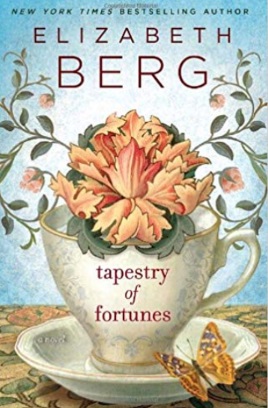
    I’m spending this summer re-reading Elizabeth Berg’s books. Perhaps I’m trying to recreate the summers of my pre-teen years. After morning chores, afternoons were mine to do what I wanted. I walked to the library every Saturday and checked out an armload of books. Starting with the letter A in the children’s section, I worked my way around the room. I don’t remember what letter I was on when I abandoned the children’s section for adult fiction, upstairs in the grand and austere room, seeped with old-world charm, burnished wood stair railings, mahogany wainscoting, heavy oak chairs, and of course stacks and stacks of books. Those were the days of hushed voices and the librarian whispering shhhhh, pointer finger over pursed lips.

    This summer, I’m enjoying the cool breeze from a portable fan while Berg’s characters march and dance through my head.

    Here is an excerpt from Tapestry of Fortunes from pages 7 and 8:

    {The main character, Cecilia Ross, is a motivational speaker. She is Atlanta in this scene, at the Oshaka Women’s Club.)

    “I’m standing at the window in the speaker’s room and looking through the slanted blinds at the women gathered on the lawn, chatting amiably, laughing, leaning their heads together to share a certain confidence. They’re pretty; they look like so many butter mints, dressed in pastel greens and pinks and yellows and whites. It’s a warm spring day after a rainy night, and the women who are wearing high heels are having trouble with them sinking into the earth.

    A fifty-something woman wearing a yellow apron over a print dress comes into the room holding a little gold-rimmed plate full of food: tea sandwiches, cut-up melon, cookies. ‘I have to tell you, I am really looking forward to hearing you speak. I hope you won’t mind my telling you this, but you said something in your last book that truly helped change my life: Getting lost is the only way to find what you didn’t know you were looking for.’”

    Prompt: Write about something you have looked for.

    Or write about getting lost in order to find what you were looking for.

    Or write about a warm spring day.

    Links to “Lost” writing prompts on The Write Spot Blog:

    Write about a time you were lost. Prompt #60

    Something lost or stolen from you or from your fictional character. Prompt #321

    Something that was lost or stolen. Prompt #326

    You can also write on any of the photos that accompany these writing prompts.

  • Comfort Zone . . . Prompt #437

    Comfort zone – write about a time you were out of your comfort zone.

  • Write Your Story. Prompt #436

    An article in the Mail Tribune, Medford, Oregon, September 14, 2006 described how Betty Henshaw wrote about her childhood in the Oklahoma hills and her family’s move to California. 

    Author Sandra Scofield read a collection of Betty’s work and said her history needed to be in the hands of a university press. Texas Tech University Press published her story and Betty did a book tour in 2006.

    Here’s an excerpt from that newspaper article.

    “The family hired an auctioneer and sold their cows, horses, pigs, chickens, farm tools, the potatoes in the barn and the home-canned fruits and vegetables. Mama kept her sewing machine.

    The next morning I helped herd the younger children into the truck before first light.

    Daddy and Robert had placed a feather mattress on the pickup bed. The babies crawled to the back, grabbed a pillow each, and rolled up in quilts.

    Sadness washed over me when we drove past the high school that morning.

    There’s an old tradition that Okies were supposed to sing and holler when they came over the 3,793 foot Tehachapi Pass near the south end of the Sierra Nevada.

    Mama said we were too tired to holler.

    It was a hardscrabble life. Laundry was done with a washboard after heating water in a kettle, and hung on an electric fence to dry. Sunday dinners might be beans and cornbread and fried green tomatoes. My sisters and I wore dresses Mama made of flour sacks on her Grandma Bristol’s old Singer sewing machine.

    Mama and my grandmother picked cotton to buy that machine.

    Today the machine sits in a place of honor in my living room, a piece of the past contrasting with the computer on the desk at the other end of the room.

    “It was hard,” Betty says, of leaving Oklahoma, “I left behind a part of myself.”

    Prompt: Write about your history, either fact or what you imagine could have happened. Or write about a something you inherited.

  • Write what is hard to admit. Prompt #435

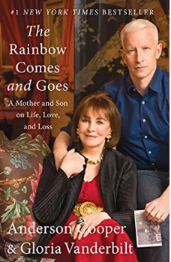
    “You don’t grow up missing what you never had, but throughout life there is hovering over you an inescapable longing for something you never had.” — Susan Sontag, excerpted from The Rainbow Comes and Goes by Anderson Cooper.

    Anderson Cooper continues:

    “As a child, you generally aren’t aware that your family is different from any other. You have no frame of reference.”  

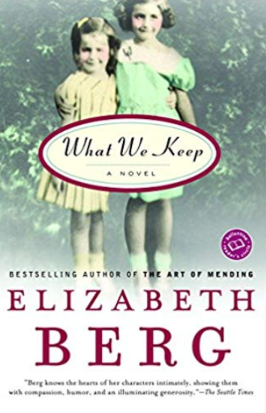
    The following is excerpted from What We Keep by Elizabeth Berg.

    “I am thinking of how right he was when he said that people want to be deceived. I have learned the truth of that notion over and over; but I never admitted to its obvious presence in my own life. After all, I claimed I did not need my mother. I said I had replaced her.”

    Prompt: Write about something you have been unwilling to admit or something you have been deceiving yourself about.

    Note: No one has to see your writing unless you share it. You can write and destroy your writing if it feels too personal to leave on paper, or delete on computer.

    Write Spot blog posts to help when writing on a difficult topic:

    How to Write Without Adding Trauma

    Why Write Your Story 


  • Flashbacks . . . Prompt #433

    A flashback is a scene set in a time earlier than the main story.

    Sometimes when you are telling a story, or writing a story, you need to backtrack and tell what happened previously.

    A flashback is a shift in a narrative to an earlier event that interrupts the normal chronological development of a story.

    From Make a Scene by Jordan Rosenfeld: “With flashback, you want to focus on action, information, and character interactions.”

    Flashback can also be thought of as backstory.  

    Use flashbacks to explain, enlighten, and inform.

    An example is What We Keep by Elizabeth Berg. The story takes place during a woman’s travels to meet her sister and mother. We learn what happened thirty-five years prior through flashbacks while the woman travels in space.

    Other examples of using flashback to tell a story:

    To Kill a Mockingbird: The whole story is a flashback told by Scout a few years after the scenes take place. The first sentence of the book indicates the timeframe. “When he was nearly thirteen, my brother Jem got his arm badly broken at the elbow.”

    Saving Private Ryan: The movie starts out with an elderly man walking in a cemetery in Normandy. He then has a flashback of WWII.

    Titanic is told from an elderly lady’s point of view. We move from present time of her telling the story and the resurrection of the ship to what happened years previously.

    Think for a moment about a movie or story you have read where flashbacks are used to tell a story.

    How to incorporate flashbacks into your writing: Use past tense. “She revealed . . .”     “We had just gone to . . .”

    Prompt: What is the most fearless thing you have done?  But . . . here’s the twist. . . start your story in the present time period. Then, go back in time to tell what happened.

    For example: Today, I’m afraid of spiders because of the time . . . 

    OR:

    I know I can accomplish such and such because when I was . . .  

    Go for it! Just write!

  • Ouch. Prompt #434

    Write about someone in your life who is consistently critical of you or what you do, and this could be yourself.

    I recently read a Facebook post by Prince Ea about the four letter word that ends all arguments: Ouch.

    Suggestion: As you write on this prompt, think of what words and actions hurt and add “ouch” to your writing. Frame your situation as experiences that had an “ouch” factor.

    Next, write what you wish you had said, or could have said, to lessen the hurt.

    Next, write a love letter to yourself. List your strengths, your qualities, your capabilities that make you uniquely you. Be generous with yourself. You deserve it.