Blog

  • The Forge Literary Magazine

    the-forge
    The Forge Literary Magazine publishes one prose piece per week selected by a rotating cast of editors.

    Forge accepts unsolicited submissions via Submittable. Less than 3,00 words are preferred, but Forge “will consider work of rare quality up to 5,000 words.”

    What to submit: Flash and micro prose. “Literary excellence is our only criteria.”

  • Write about a favorite movie. . . OR . . . Prompt #287

    Write about a favorite movie. Why do you like it?

    OR . . .   write about a movie you really didn’t like. Did you watch it to the end?  Why? Why didn’t you walk away?

    A note about freewrites:  You don’t have to write on the prompt exactly as it’s written. You can write about “Why didn’t you walk away?”  Write freely, with no attachment to the final product. Just write.

    favorite-movie-of-all-time

  • How to start your book . . . not with the weather, not with a dream . . .

    and not with “my name is.”  So . . . how could you, how should you begin your novel?
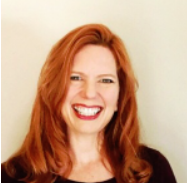
    bryn-donovanGuest Blogger, Bryn Donovan, writes about: What Happens on Page One: 30 Ways to Start a Novel.

    Note: This post contains spoilers for Star Wars: The Force Awakens.

    Note from Marlene:  Edited for brevity. Scroll down for link to original post.

    Bryn writes:

    Even when you have a basic idea of your story, sometimes it’s hard to know where to begin it.

    One of the best things you can do with your first five or ten pages is to get readers to care about what happens to your main character (or one of them.)

    In my opinion, and in the opinion of most editors, a prologue that only serves as backstory is generally a bad idea. It makes a novel feel like it’s taking too long to really get started. You can weave the backstory into the present-day action. Build some mystery and anticipation about past events.

    Many of us begin the story too soon in the first draft, with too much backstory.

    Ask yourself what happens in the story to jog your character out of her usual rut and take her in a different direction. A lot of people refer to that thing, that event that changes everything, as the “inciting incident.”

    (Something I have yet to do in my own stories is make the character’s own action lead to the change, rather than having her react to something. For instance, in my favorite movie of all time, Mad Max: Fury Road, Imperator Furiosa changes everything by deciding to rescue the sex slaves of a horrible dictator. And in Star Wars: The Force Awakens, Finn rewrites his own destiny and everyone else’s as well by having a crisis of conscience. This leads him to make a daring escape with an imprisoned Resistance fighter.)

    In Blake Snyder’s screenwriting book, Save the Cat (a terrific resource for fiction writers), he lays out an outline that establishes a baseline for the main character: Here’s what his life is like, here are some of his issues, and oh, in case you were wondering, here’s the theme, stated by some character or other. The inciting incident (or what he calls “the catalyst”) happens a little ways in.

    It’s also possible to have the inciting incident on the first few pages, or even in the first sentence. That’s really up to you. But you don’t want to go too long before that first big thing happens.

    As my friend Trish tells her improv students, Start on the Day Everything Changes.

    [Bryn lists ways not to start a novel. Please go to her blog for this list.]

    Here are 30 ideas of places to start… maybe one of them will work with your story! For some of them, I’ve given examples of novels that begin in that way.

    As with the plot lists in my Master Lists for Writers book, you’re not cheating by using one, because these are all really broad! Each one of them could go a bunch of different ways.

    The arrival of a letter, email, or package. The Thirteenth Tale, Diane Setterfield

    A main character in a frustrating situation.

    A main character in an awkward or embarrassing situation.

    The discovery of a dead body. Thief of Shadows, Elizabeth Hoyt

    The death of somebody in the family or the community. All The Pretty Horses, Cormac McCarthy; The Known World, Edward P. Jones

    ~This is a popular one, and understandably so, because an ending is a new beginning.

    The beginning or the middle of a disaster. All the Light We Cannot See by Anthony Doerr, kind of.

    ~It could be a bombing, a plane crash, or a tornado.

    The aftermath of a disaster.(Their Eyes Were Watching God, Zora Neale Hurston

    A kiss.

    A performance, or the conclusion of one. Bel Canto, Ann Patchett

    A main character in the hospital. Kindred, Octavia Butler

    A main character declaring that he is in big trouble. The Martian, Andy Weir

    A main character who’s clearly in big trouble. What Is the What, Dave Eggers

    ~She might be getting mugged or running from Nazi soldiers. Readers will start caring about her immediately.

    The arrival of a plane, ship, or train. The Count of Monte Cristo, Alexander Dumas

    ~The character might be on board, or she might be watching it come in.

    A scene at a party, a bar, or a nightclub. War and Peace, Leo Tolstoy; The Name of the Wind, Patrick Rothfuss

    A fight. The Warrior, Zoë Archer

    The character may be part of the fight, or just witnessing it.

    A character moving in to a new place.

    It could be a neighborhood or a dorm room.

    A broad statement about one’s life. One For the Money, Janet Evanovich

    ~One For the Money begins, “There are some men who enter a woman’s life and screw it up forever. Joseph Morelli did this to me — not forever, but periodically.” That’s a great hook.

    A dramatic moment in the middle or end of the story. The Secret History,Donna Tartt.

    ~You can begin in the moment and then backtrack to explain how they got there. For instance, the prologue of The Secret History begins, “The snow in the mountains was melting and Bunny had been dead for several weeks before we came to understand the gravity of our situation.”

    A trial in a courtroom.  Snow Falling on Cedars, David Guterson

    A job interview.

    ~ I really like this idea because you could get a lot of information across about your character naturally. She might be giving appropriate answers while her internal monologue tells you the rest of the story. Also, an applicant at a job interview is in a vulnerable position, which I think would create empathy for your heroine right away.

    A main character meets someone new. Wuthering Heights, Emily Brontë

    A street scene. Perdido Street Station, China Miéville

    ~Your character could be getting an errand done or going to visit somebody. For a novel that takes place in an historical, futuristic, or fantasy setting, this can be a good way to establish a sense of place as well as establish your character’s normal life and priorities.

    A main character in a triumphant situation.

    A character or characters getting dressed, shaving, putting makeup on, or doing their hair. The Makioka Sisters, Junichiro Tanizaki

    A big, happy occasion such as a wedding or a graduation.

    ~Of course, it might or might not be happy for your main character, who may be a participant or someone in the audience.

    One character teaching another how to do something.

    A visitor showing up at the door. The Big Sleep,Raymond Chandler.

    A main character coming across a significant object.

    A character committing a crime.

    A character or characters completing a task. Our Mutual Friend, Charles Dickens

    Originally posted on Bryn Donovan’s Blog, ” tell your stories ~ love your life.”

    For the complete blog post, please click on: “What Happens on Page One: 30 Ways to Start a Novel.”

    Bryn’s goal for her blog: “Share as many writing resources as possible, encourage people to remember how amazing they really are, and inspire myself and others to get as much out of life as we can. Hope you like it!”

     

  • Let’s go to the movies. Prompt #286

    lets-go-to-the-movies

    Write about going to the movies .  . . either as a child, teenager or adult.


  • Hayden’s Ferry Review

    Hayden’s Ferry Review has it all: Fiction. Nonfiction. Poetry. Art. International/Translation

    Hayden’s Ferry Review  is a semi-annual & international literary journal edited by the Creative Writing program at Arizona State University.

    “While we also focus on tradition, our main purpose is to introduce the world to up and coming writers.”

    Hayden's Ferry ReviewHayden’s Ferry Review looks for well-crafted work that challenges readers, takes risks, and engages emotionally and artistically.

    SUBMISSIONS ARE OPEN

    Note: Hayden’s Ferry Review does not accept submissions via mail or email.   Submittable  is the only way for work to be considered for publication.

    Hayden’s Ferry Review looks for “cutting edge classics, experimental nuance, and that one thing about your cousin Gina. Don’t pretend you don’t know what we’re talking about . . . “

  • Modeling— Becca Lawton’s Cool Writing Tips . . . Prompt #285

    Becca LawtonHere’s an entertaining idea from Rebecca Lawton’s Cool Writing Tips.

    Becca’s advisor at Mills College introduced “Modeling,” — an exercise “in which you select an excerpt of masterful writing … and fill in the blanks.”

    Rebecca Lawton writes, “Modeling is a sort of Mad Lib exercise, where each part of speech is swapped out for a word of your choice.”

  • Connecting to Nature and Creativity

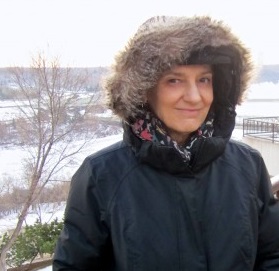
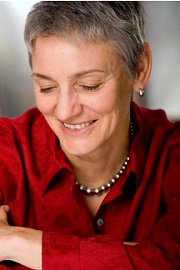
    Suzanne MurrayGuest Blogger Suzanne Murray writes about: Connecting to Nature and Creativity as a Gift for Ourselves and the World.

    Nature and creativity are doorways to the sacred. They can help us connect to the deeper parts of ourselves, the knowing of our hearts and souls. They can assist us in being more present in the moment and give us access to expanded capacities of intuition, inspiration and imagination. Connecting to the natural world, which is inherently creative, opens us to our own creative gifts, which allows us to bring forth new possibilities and solutions for our own lives and our troubled world.

    The ongoing tragedies in the world combined with instant access to these events through the news and social media can leave us feeling helpless and hopeless. Our psyches and nervous systems overwhelmed.

    Spending time in nature as well as creative play can be a balm for heart and soul and help us ground our lives in an expanded sense of self. Spending time in nature and creative play relaxes us, bringing us more into the moment where we can breathe more deeply and release our worry about the future. They can increase our sense of well being allowing us to connect to a sense of peace.

    I’ve been connecting to nature and creativity for most of my life and know the joy, satisfaction and comfort that both offer.

    Excerpt from Suzanne Murray’s August 17  Blog Post.

    Suzanne Murray shares her knowledge of connecting to nature and creativity in a one-day workshop, “Connecting to Nature and Creativity,” in Point Reyes on September 17.

    “We will explore a very special place I have known since I was a teenager to deepen our connection to nature and our creative capacities.”

  • What haunts you? Prompt #284

    Sit still for a moment. . . take a few deep breaths. Relax into your chair.

    For this writing experience, tap into what haunts you. As Rebecca Lawton says in Cool Writing Tips:

    ” See the detail of the memory with clear eyes and write it down as best you can remember it.”

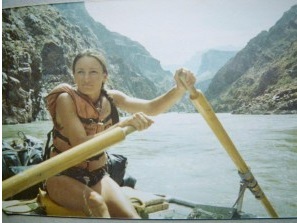
    Becca RowingThere will be a repeat series of Becca Lawton’s Cool Writing Tips. This will only be available for the month of September, 2016. Sign up now so you don’t miss a single inspirational tip.

    Write as if you were dying” features Rebecca Lawton as a guest blogger and highlights one of her Cool Writing Tips. I found her friendly style of writing about writing to be affirming and inspiring. I think you will, too.

  • Magic Carpet Ride . . . Prompt #283

    Lolita.miniGuest Blogger Becca Lawton’s post “Write As If You Were Dying” got me to thinking about how we spend our days. Most of our days are filled with things we have to do, accomplishing what needs to get done to pay bills, buy food, do the laundry, chores, clean whatever needs cleaning, and so on.

    What if, one day next week you could do anything you want. What would it be?

    This is different from  Prompt #164, “Write About A Perfect Day” where money and restrictions are not a factor.

    For this writing, be realistic, what could you do in a day that would be fun and something you could afford?

    This might be challenging for you . . . all the more reason to make the effort to sit down and Just Write.

    Okay, so what if that type of writing sounds like no fun at all and you might have to research if places are open, what the cost is, etc.

    What if you want to go on a flight of fantasy and write about it?  What if you had a magic carpet that could take you anywhere?

    Write about an ideal day where money and time constraints don’t matter.  You can do anything and everything you want. Distance and time do not matter. This is your Magical Day. What would you do?

    Whether writing about something you can realistically do or something that is total fantasy:  Write about your ideal day from beginning to end.

  • Write as if you were dying

    What would you write if you knew you would die soon?

    Today’s Guest Blogger, Rebecca Lawton, took the plunge and explored what it means for our work to be “so essential that we must complete it before we leave this earth.”

    Becca’s Cool Writing Tips during the month of August were such a success, she’s repeating the series in September. So, if you missed out in August, you have another chance to be inspired by Becca Lawton’s Cool Writing Tips.

    Becca opened the second week of Cool Writing Tips with this provocative quote from Annie Dillard:

    Write as if you were dying. At the same time, assume you write for an audience consisting solely of terminal patients. That is, after all, the case. What would you write if you knew you would die soon?

    Becca responds as if she were having an intimate conversation with Annie:

    Ms. Dillard, I’m so glad you asked that question. Now if I could only answer it.

    “What would you write if you knew you would die soon?” is a good question, but it’s one I find myself turning from, wanting to say, “Next!”

    Because to answer the question of what we’d write if we knew we’d die soon acknowledges that we will, in fact, die.

    And, the truth of the matter is, we will. Someday. Die. Hopefully not today or anytime soon, but sometime. And, given that fact, what should we write today?

    When I was writing my first novel I was also raising a child and working for a consulting firm that took the biggest part of my days. I’d rise early to steal a few hours before changing hats to care for my daughter and then go off to work. As I drove to the office, my characters still spoke to me, making their case that they needed my attention, and now.

    I’d promise to get back to them and then immerse myself in my consulting work. I’d only begin tuning into the novel again on my way home.

    Often—almost every day —I worried that I wouldn’t live long enough to see my novel finished. The thought that I might not finish this important life’s work terrified me. Not even when I was running the biggest rapids in the United States every day had I so considered death a possibility. Not even when I realized how quickly my daughter was growing did I feel immortal. No—it was the writing.

    That we find our work so essential that we must complete it before we leave this earth strikes me as a positive sort of feeling, if paranoid.

    Because, if we can’t really face the question as posed in Anne Dillard’s quote, maybe we can at least check  in with ourselves about how we’re spending our time. We can ask ourselves, “Would I keep slaving away at this thing if I knew it was the last thing I’d ever write (or paint or design or photograph?) If no, then why don’t I regroup?”

    We’re all terminal—but that’s okay. As Annie Dillard says, let’s assume that’s who our audience is. Because that is also who we are. And if we let that simple fact keep us honest and on track, I believe it will.

    Becca LawtonRebecca Lawton is the award-winning author (and co-author) of seven books. Her  path as a writer and fluvial geologist started with her first career, rowing rafts on the Colorado in Grand Canyon and other Western rivers.

    Some of her writing stems from observations in the field as a guide and researcher. Her essays and stories have been published in Aeon, Brevity, Hakai, More, Orion, The San Francisco Chronicle Magazine, Shenandoah, Sierra, Thema, Undark, and many other journals and anthologies.