Blog

  • Literary Agent Mary C. Moore has personal experience with The Rejection Form

    Mary C. MooreGuest Blogger Mary C. Moore (literary agent) writes about the rejection form letter.

    I recently wrote a short story, my first in over a year. Inspiration struck and I listened.

    Unlike novel writing, short stories are short-term rewarding because you reach “the end,” while you are still loving that muse whispering in your ear. I was particularly excited about this story, as I knew exactly which magazine I was going to submit it to. A few years ago, said magazine had rejected another story of mine, but with glowing praise and a request to see more of my work. I kept that in mind, because this magazine is a professionally paying market and one that would be quite a feather in my writing resume. Thus after some furious late nights, anxious waiting for the beta reads to come back, and a lot of editing, I sent off my beautiful 3k-word gem to this magazine.
    Another rather sweet aspect of short stories is these days most magazines use submission software. This means you can stalk, I mean track, your submissions. And, at least in the SciFi/Fantasy professional market, many of them have fairly quick turn around times. This is in part because they don’t allow simultaneous subs in part because the stories are shorter. Altogether it’s a much quicker and less frustrating process than novel submissions.

    So a week full of checking the website later, there it was, that email. I took a deep breath and opened it to find… a form rejection letter.

    The range of emotions that followed is one every writer is familiar with. But there was one more.

    Understanding. Working for a literary agency, I’ve sent out hundreds of form rejection letters over the years. And recently I opened up my own inbox to queries. In the beginning I tried to make each response a bit personal, a note here, a comment there. I knew what it was like to be on the other side, and that experience pushed me to communicate personally as much as I could, especially if the writing had potential. However, I discovered, to my dismay, that the majority of personal rejections were not appreciated, in fact they were often responded to with a “could you clarify this?” or “can you take this further?” or “what can I edit to change your mind?”

    My personal notes were not received as the compliments they were meant to be, but rather as an opening for an editorial conversation. One that I had to ignore. It made me feel guilty, not continuing the conversations, but there is not enough time in an agent’s schedule to answer every author question that floats through our inbox. I was also spending more time coming up with ways to make the reason I was passing on the project sound nice and encouraging and editorially useful, rather than focusing my energy on considering each submission carefully. Which made me reluctant to open my inbox. I had burned out. Thus more and more I found myself responding with a form rejection, both in the interest of time and clear communication. My defense of the form rejection:

    • It’s a clear answer.
    • You receive said answer faster.
    • It’s less emotional.
    • It helps prevent slushpile burnout, so the agent/reader can focus on what’s important, considering the submission itself, rather than coming up with something to say in response to it.
    • The form rejection helps to keep expectations in check.

    I know most authors who don’t do their research don’t understand this, because they don’t see the other side. I can’t count the number of times I’ve heard writers say, “it couldn’t be that hard to respond to a query!” Let me tell you, yes, yes it can.

    Every once in a while, if the writing jumps out at me, or if I’ve met the author in person, I will still respond personally, but for the most part I’ve become a fan of the form rejection. Sure you could argue that if I hadn’t gotten that personal response back in the day, I wouldn’t have been as eager to submit to the magazine, but I also wouldn’t have had as high of hopes. At least you can take comfort in the knowledge that I’m getting them as good as I’m giving them. We all just have to keep on keeping on. My so-called gem of a short story is already sunk into another slushpile.

    Originally posted 1/4/16, “In Defense of the Form Rejection,” on Mary C. Moore’s Blog.

    Mary will be the Writers Forum presenter on May 19, 2016

    Mary C. Moore has been with Kimberley Cameron & Associates since 2012. Mary specializes in science fiction and fantasy, although she does appreciate a wide breadth of the literary canon. She started reading at an early age, and her love of reading continued, as she earned her B.S. in biology from the University of California San Diego. She was a veterinarian’s assistant, then a field biologist, and then a zookeeper.

    Mary’s passion for writing and books caused her to veer off her original path and drew her to publishing. She graduated from Mills College, Oakland with an MFA in Creative Writing and English and after freelancing for two years as an editor and writer in non-literary sectors, she began an internship with Kimberley Cameron & Associates and found she loved working as a literary agent as much as she loved writing.
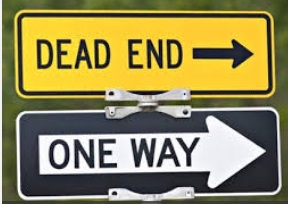

  • Dead End . . . Prompt #252

    Dead EndToday’s Writing Prompt:

                    Dead End

                    OR:

                    One Way


  • “I really don’t believe in a wasted draft.”

    Tea ObrehtNovelist Téa Obreht:

    “I don’t believe in a wasted draft . . . Even work you consider to be your worst is good for something. Every effort teaches you about your desires and tendencies, or guides you toward some new possibility . . . every line you wrote . . . has value.”

    Téa Obreht, author of The Tiger’s Wife,  interviewed by Gabriel Packard, “Writers On Writing,” The Writer magazine, May 2016

  • Find the right magazine for your article.

    Rachael Herron wrote an article, soon to be published in Vogue magazine. Not about “fashion, beauty, culture, living, runway, met gala.”

    Rachael’s article is about clearing out craft supplies.

    Imagine that.

    What a brilliant idea! I imagine most crafters would benefit from an article about how to organize material and/or encouragement to let go of scraps of fabric, wisps of ribbon, etc.

    Do you have a special skill, a hobby, a special interest? Write about it. Think about a magazine that might seem an unusual fit. Tweak your essay to fit the magazine’s demographics. Research the magazine’s mission statement, purpose, intent, masthead.

    Do you have a pet peeve, an obsession, a unique collection? Turn your thoughts into an article, then research and submit!

    Browse magazines at the library. Search online for potential magazines.

    Find the right magazine for your piece:

    Every Writer

    Wikipedia List of American Magazines

    How a Freelance Writer Should Submit an Article to a Magazine by David Kirk
    Magazines that accept freelance articles.

    All Indie Writers.

    The Write Life’s list of where to publish personal essays.

    Share your ideas and your publishing success stories here, on The Write Spot Blog.

    Not only does  Rachael Herron write, she knits. And she writes about knitting.

    Herron.3 covers

  • Elevator Pitch. . . Prompt #251

    Rachael HerronThis has been Rachael Herron Week on The Write Spot Blog. It’s been fun highlighting her and her work.

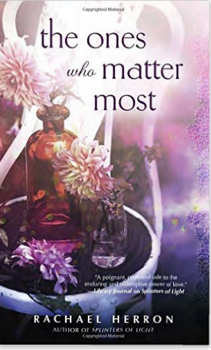
    Today’s writing prompt is inspired by her latest book, The Ones Who Matter Most.

    “What begins as one woman’s search for truth becomes a deep bond forged between the unlikeliest of people. Their surprising journey reveals how strangers can quickly find themselves to be family, and how kindness can bridge even the widest of gaps.”

    Choose something from this synopsis, or elevator pitch, to write about. Perhaps:

    Write about a kindness offered to you, or something kind you did for someone.

    Or, write about a surprising journey.

    Or, write about a stranger.

    Write about what a search revealed.

    Write about family.

    Note: An “elevator pitch” is a short summary of a book or project that can be explained in the time it takes an elevator to go from ground floor to the 30th floor.

  • My endings are always asymptotes. —Rachael Herron

    A conversation with Rachael Herron, author of Herron. The Ones Who Matter MostThe Ones Who Matter Most.

    “How did you get the idea for this book?”

    “The original idea for any of my novels usually gets buried so deep that by the time I’ve finished writing, I can barely remember what the first ideas was. This book, though, was different. The first scene was my original idea.”

    “Do you always know the endings of your novels when you start them?”

    “I wish! I know writers who know their endings and aim for them like marksmen. Rather than apples to be hit with arrows, though, my endings are always asymptotes. I write toward them forever, getting closer and closer but never quite getting there. Usually I have to revise the whole book (minus the ending) a few times until I figure out what should really happen.”

    Excerpted from the Conversation Guide at the end of Rachael Herron‘s book, The Ones Who Matter Most.

  • Something surprising found in a desk drawer. Prompt #250

    Desk DrawersWrite about something surprising found in a desk drawer.

    Today’s writing prompt is inspired by the catalyst for Rachael Herron‘s latest book, The Ones Who Matter Most. A secret in a rolltop desk drawer leads a woman on a search that changes her life and the lives of another family.

    “What begins as one woman’s search for truth becomes a deep bond forged between the unlikeliest of people, and the discovery that there are many ways to make a family—as long as you take care.  . . ”

    — quote from the back cover of The Ones Who Matter Most.

  • Writers are incorrigible thieves. — Rachael Herron

    The excerpt below is from the Conversation Guide at the back of The Ones Who Matter Most.

    Question: What might surprise a reader of The Ones Who Matter Most?

    Author Rachael Herron answers:

    Writing the scene in which Abby is scrabbling through the rolltop desk’s drawers was a special treat. Writers are incorrigible thieves, stealing bits and pieces of their lives to provide sparkle and heft. We can’t help populating our books with parts of ourselves. I share Abby’s optimistic naiveté as much as I do Fern’s ruthless practicality.

    But beyond the stolen personality pieces, we steal actual objects.

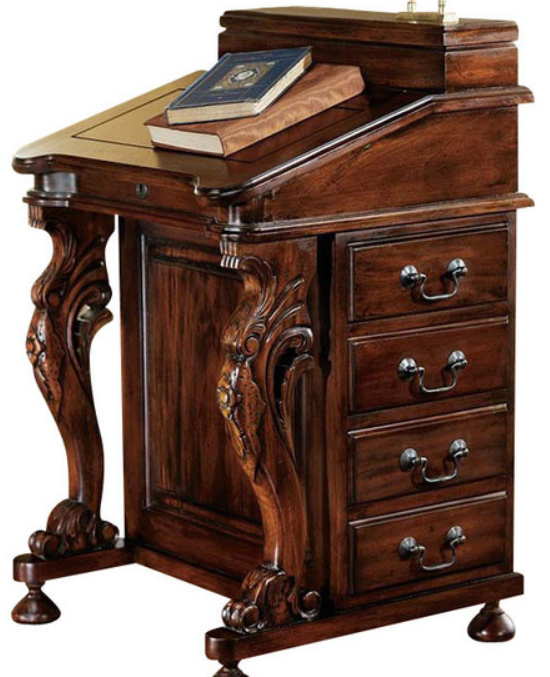
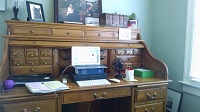
    Herron's deskThat’s my desk in Scott’s office. As Abby explores the many small drawers, Abby wonders why they aren’t being made useful. They could hold hair bands and gum and those wonderful yellow Paper Mate pencils. In my office, those drawers do hold those things. Found in an antiques store in a defunct chocolate factory in Oakland, my desk waited for me to stumble over it.  As my eye fell on it, a solo spotlight hit its polished oak highlights and a heavenly choir sang one high, perfect note. I hadn’t been looking for a rolltop desk, especially not one as unwieldy as a drunk cow. It was in my office the next day.

  • Writing settles my soul —Rachael Herron

    Today’s “Just Write” post is an excerpt of Holly Robinson’s interview of Rachael Herron. (Edited for brevity. Click on Huffpost link below to read entire interview.)

    Holly Robinson writes:

    One of my favorite things about being a writer is having the chance to meet other writers whose books I admire. I probably admire few books as much as I do Splinters of Light, my new friend Rachael Herron’s powerful, poignant, and surprisingly comic novel inspired by a People magazine article about the impact of early-onset Alzheimer’s on a woman and her family.

    In the hands of another writer, this topic could be dreary and depressing, but Rachael spins a story of resilience and love that leaves you believing in the healing power of family and forgiveness. Splinters of Light is a reading experience you won’t soon forget. Here’s a look at how Rachael works — she’s a prolific author of romance novels, women’s fiction, memoir and essays.

    Give us a peek at your workspace. (I’m imagining lots of animals milling about, baskets of yarn, an unfinished sweater.) Do you have any special foods or drinks that keep your butt in the chair as you write?

    I recently found the desk of my dreams, a roll top behemoth with cunning pigeon-holes and drawers for everything. I literally have a drawer for lip balm, one for beach glass, one for hair ties (all very important in the writing process, of course). I do have baskets of yarn around and usually have a cat or two on my lap, but what keeps me in my chair is having nothing else in front of my gaze but my computer and a mug of coffee with cream. Moving my desk away from the window was one of the best things I ever did for myself, productivity-wise.

    Splinters of Light is both one of the most joyful and one of the most devastating novels I’ve ever read, partly because you do such a wonderful job of tapping into the worst fear we all have as parents: that we will somehow fail our children. What was the inspiration for this novel, and for the brave, wonderful, and touchingly resilient character of Nora Glass?

    The inspiration for the novel came from, of all places, a People magazine article about a young teen-aged boy taking care of his mother who’d been diagnosed with early-onset Alzheimer’s. This was before Still Alice, before many of us had ever heard of this disease, and I was transfixed by the thought of a parent having to teach their child how to be an adult so long before it was time. Nora herself comes from a good mix of my sisters and my mother, the strongest, bravest women I’ve known.

    You do a stellar job of writing from the point of view of a resentful but loving teenager in Splinters of Light. Was that difficult?

    Should I admit it was easy? I’m forty-two, but I was a terrible teenager. When I was turning seventeen, Ellie’s age in the book, I thought I hated my mother. I couldn’t stand to be in her presence. Everything she said grated on my nerves, and I couldn’t understand how we could possibly be related. Of course, when I turned nineteen or twenty, she suddenly “became” much smarter and more interesting (go figure!), and by the time I was twenty-five, she was my best friend and stayed that until the day she died. I really regret what a pain in the ass I was to a phenomenal woman. Ellie is, in a small way, an apology for that (and maybe a beacon of hope to mothers of teen girls—they do snap out of it).

    You’re originally from New Zealand. How did you end up living in the U.S.? And what do you think being an “outlander” contributes to the fiction you write set in the U.S.?

    Actually, I’ve always been a half-and-halfer. My mom was Kiwi, my dad an Arizonan. I have dual citizenship, and I had the New Zealand accent until I was seven (I still remember embarrassing myself in first grade for asking for the cello-tape). Living on the imaginary border gave me a really good place to stand growing up. My mother never became an American, and national holidays like Thanksgiving were celebrated, of course. But we also pulled the thrippence out of the flaming plum duff on Christmas and I knew more about Maori myth than Native American. My parents let us choose our identity, and I’m happy to say that all three of us girls are proud of both heritages.

    Prior to Splinters of Light, you authored a memoir. Was the process of writing nonfiction very different from your fiction writing process? Which do you prefer?

    Nonfiction is so much easier! You’re limited to the truth (or as close as you can come to it, years later) so the only big choice is how you frame the storytelling. For that book, I chose to look at my life as seen through the sweaters I’d knitted, from the first one I attempted at eleven in an attempt to bond with my entrepreneurial father to the dress I failed to knit for my wedding. I love creative nonfiction, but I have to confess, while novels are more difficult, I find a bigger sense of satisfaction in their completion.

    As a writer who previously wrote a series of successful romance novels as well as a memoir before producing Pack Up the Moon and Splinters of Light, both of which I would describe as “literary” or “women’s fiction” (if I had to use typical publishing categories), how do you describe your work?

    Oh, god. I never know what to say. Writing literary women’s fiction has always been my goal—and what I’m probably best at—so I lead with that. But then I usually fade out and mumble something lame like, “I guess I write mainstream? And, um, romance. And um, memoir. Um. Do you need more coffee?”

    With all of the different types of writing you’ve done, you must have met some challenges and hurdles along the way. What has kept you going through times of self doubt?

    Publishing is not for the faint of heart, that’s for sure. Hard times come fast and often, but two things have kept me going. First, I’ve always known this was what I was meant to do, even before I was actually doing it. I spent my teens and twenties yearning to write and not getting the work done. Writing is the only thing that settles my soul, whether it’s fiction or just a private journal entry. I could never let that part of myself go. Second, my writer friends have been my rock. The most important thing for a new writer to do (besides writing) is to make writer friends who are at the same stage in their careers. Nothing is more valuable.

    Did getting an MFA help you on your writing journey? Would you recommend that path to other aspiring writers?

    Nope, I rarely recommend it even though I don’t regret getting mine. It was lovely to be in the ivory tower for those two years. But what I needed to learn about writing I didn’t learn there. School can’t teach you how to finish a book. It can’t teach you how to find your core story. It can’t teach you how to get back up and start over after your first publisher drops you. It can’t teach you how to cultivate real, rich relationships with your readers. I only learned how to do this by writing, every day, for many years after I got that MFA.

    If you could list three unbreakable rules for writers, what would they be?

    Write as much as you can every day. Even if that’s just a sentence. Write.
    Read. Read every day, read everything. Don’t be snobby.
    Be generous and gracious, giving of yourself, your knowledge, your time, and your words. In this profession, what goes around comes around in an almost insta-karma way. Be good.

    Interview originally posted on Huffpost Books  3/3/2015

    Novelist, journalist and celebrity ghost writer Holly Robinson is the author of several books, including The Gerbil farmer’s Daughter: A Memoir and the novels Beach Plum Island and Haven Lake. Her articles and essays appear frequently in The Huffington Post, More, Parents, Redbook and dozens of other newspapers and magazines.

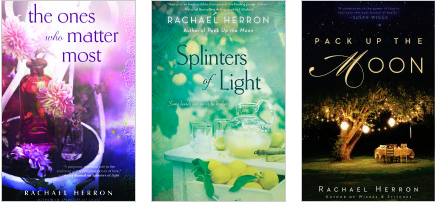
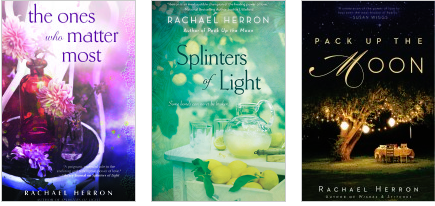
    Rachael Herron’s Beautiful Book Covers.

    Herron.3 covers


  • Brick . . . anthology of enthusiams

    Brick features literary nonfiction about arts and culture: book reviews, personal essays, memoirs, interviews and letters.  That’s you: Essayists and Memoirists.

    For today’s place to submit, I was looking for something fun. Excited to find Brick.

    Brick has been called many things: an “anthology of enthusiasms” (Michael Ondaatje), “the best literary publication in North America” (Annie Proulx), and “more fun than any other literary magazine around” (Robert Hass). Brick is where the world’s best-loved writers have wide, lively, personal discussions about art, culture, and the written word.

    Brick was founded in London, Ontario, in 1977 by Stan Dragland and Jean McKay. From 1985 until 2013, Michael Ondaatje led the magazine and helped to establish its international reputation, leaving a legacy of intellectual curiosity and passion for the written word.

    Brick’s mandate: to create a beautiful product filled with the most invigorating and challenging literary essays, interviews, memoirs, travelogues, belles lettres, and unusual musings we can get our hands on.

    Brick is published twice a year and distributed to bookstores worldwide.

    Brick Submission Guidelines

    Brick accepts unsolicited manuscripts of non-fiction only: book reviews, personal essays, memoirs, interviews.

    Suggestion: Familiarize yourself with Brick and the kind of writing Brick publishes before submitting.

    Brick does not set a word limit, it is suggested that submissions not exceed 5,000 words.

    Brick accepts submissions both by mail and online through Submittable  For online submissions, a modest fee of $3.00 is charged to cover our costs.

    “Brick is an unpredictable, original, yet reliable feast which I’ve enjoyed year after year. Nobody who cares about books or life could be disappointed in it.” — Alice Munro

    Brick