Blog
-
Favorite summer activity. Prompt #172
 What is your favorite summer activity?
You can write about what you like to do now or a favorite activity when you were younger. If you are writing fiction, what does your fictional character like to do in the summer?
Writing Prompt: Favorite thing to do in the summer.
-
Give up perfectionism.
“The most important thing that I have learned, or that I’m trying to learn, is to give up perfectionism, because when you keep trying to make the story do all the things you want it to do, you keep failing, and you end up going around and around in circles. You end up confusing yourself and your talent, and you begin to view things as a failure, even though they’re not failures.”
 Akhil Sharma, interviewed by Gabriel Packard, The Writer magazine July 2015.
Akhil Sharma is the 2015 Folio Prize winner and professor of creative writing.
-
Writing has been a freeing force
Do you want to write true stories, but worry about hurting people’s feelings?
Megan Kaplon, in an interview with Helen Macdonald, author of H is for Hawk:
“When working on academic projects, she (Helen Macdonald) experiences anxiety about being correct, about saying the right thing, but writing memoir has been a freeing force.”
“When it’s yourself, you feel the truth inside yourself. . . It becomes something utterly manifest when you know you’re writing something from the heart.” – Helen Macdonald
Quotes from “Giving sorrow words,” The Writer, July 2015
 Marlene’s Musings: In my opinion, you cannot go wrong when writing from the heart. Sometimes, when writing memoir, it’s wrong to write for an audience. Write for yourself. And if you find an audience, then hooray! But first, write from your heart. You can use these guidelines when writing about difficult subjects.
Some of my favorite memoirs, where, I think, the authors wrote from a sacred heart place.
What Have We Here, Susan Bono
You Can’t Catch Death, Ianthe Brautigan
Imperfect endings, Zoe Fitzgerald Carter
Captive Silence, Alla Crone
I Give You My Word, Janice Crow
Ellevie, Marcelle Evie Guy
A Life in Stitches, Rachael Herron
Grief Denied, Pauline Laurent
To Have Not, Frances LefkowitzYour Turn: Who are your favorite memoirists, or authors who write true stories?
-
The Big Brick Review is ready for your submission.
 The Big Brick Review wants original, non-fiction pieces up to 555 words by July 31, 2015.
Submission must be in the form of a personal essay, prose, excerpt, or ramble that builds on the narrative of our lives, finding new insight to old struggles…old insight to new struggles…and all shades-of-gray in between. Pieces that include the concept of ‘building’ (which authors can interpret as creatively as they choose (it’s a noun! it’s a verb!)) are especially favored. For more info, visit Submissions Guidelines.
Marlene’s Musings: Go for it! What do you have to lose?
-
When you set the mask aside . . . Prompt #171
From Write From the Heart by Hal Zina Bennett, one of my all-time favorite books.
During a trip to Disneyland, a priest became fascinated with the costumed figure of Mickey Mouse. Every time Father Sean turned around, there was Mickey Mouse shaking hands with people, talking with kids, keeping everyone’s spirits up. And Father Sean began asking himself, “I wonder who that person is under that costume? What are they like at the end of the day, when they take off their Mickey Mouse suit?”
Instead of being who we really can be, we take on masks like the Good Little Girl, or we become the Black Sheep of the Family or the Rebel. Early on, we learn that if we are to be loved and cared for we’d better buckle under and be what is safe for us to be.
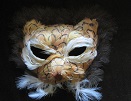 Prompt: Who or what is the character deep inside you? When you set the mask aside, who are you?
 -
Bella Mahaya Carter writes about courage, love, and intuition
Guest Blogger Bella Mahaya Carter writes about courage, love, and intuition.
In fall 2014, I attended Hay House’s I Can Do It! Conference in Pasadena, California. It was a spur-of-the-moment decision to attend what was being advertised as a “mind, body, and spirit retreat.” The conference featured luminaries in the fields of self-help, personal growth, and spirituality. Looking back over that experience, I felt like a kid in a candy store with a twenty-dollar bill in my pocket.
I’d been scared to go. I was just coming off a year of grief and debilitating anxiety. I’d felt like I couldn’t breathe, and an irrational thought that I’d quit breathing and drop dead in public haunted me. So the thought of being at a venue with three thousand people unnerved me. Why was I going? I asked myself. What was I looking for? What did the words I Can Do It! mean to me? I wasn’t sure, but I felt drawn to the event, and I knew I had to face my fears and go.
The conference helped me identify three staples in my life that have a big impact on my writing: courage, love, and intuition.
As a poet and memoirist, I have to dig down deep inside myself and come to terms with the good, the bad, and the ugly. I have to make peace with my terror, accept what hurts, and understand that a broken heart is an open heart. There’s strength in vulnerability. I often tell my students people don’t care about you, per se, but if your writing is honest and closely observed, they will care about your writing because they’ll see themselves and their own lives reflected in your words. We all have challenges. We all struggle. We all long for freedom from our fears. I love that the root of the word “courage” means heart. It was the first staple I identified, and I want to live more from my heart than from my head. I want to release fear and be guided by love.
Love was the second staple of my writing life. Anita Moorjani, a Hay House author who had a remarkable near-death experience and then wrote Dying To Be Me: My Journey From Cancer, To Near Death, To True Healing, said at the conference, “Love yourself as if your life depends on it—because it does.” Loving yourself means staying by yourself no matter what. It means being your own best friend. It means believing in yourself when nobody else does. It means giving up the idea that you must win the approval of others.
“Don’t dance for the people whose approval you don’t have,” Anita said. “Win your own approval by following your heart.” She also said that many people seek approval from the one person who won’t give it to them. Boy, could I relate. I spent my childhood trying to gain the approval of my stepfather, who couldn’t see or appreciate my gifts. Then, as a young writer, I sought the approval of my father-in-law, whose response to my work was that I should write male characters, because “Not everybody wants to read about women all the time.” If only I’d realized these men were not my audience—and never would be! I wish I’d trusted myself more as a young writer. I wish I’d validated myself, and honored my instincts and intuition. I’ve come a long way, but I’ve learned that valuing and appreciating myself is an ongoing and ever-deepening practice.
Attending the Hay House Conference, even though I wasn’t sure exactly why I was going, and despite my fears, was a sign of growth. I followed my heart and my gut and—as is usually the case when people listen to and act from these body parts—was rewarded. One highlight for me was attending a talk by David Kessler, an expert on grief, death, and dying, who happens to be an old friend. Our kids went to kindergarten together. It was wonderful to reconnect with him after many years, and hear him validate that much of what I’d been going through in my grieving process was normal.
Sometimes we don’t know why we’re drawn to a place or to a project, or to a situation or event. Following my intuition was the third staple in my writing life. This requires trust and faith. I often tell my students that even though they may not be sure where they’re going with their writing, when they follow their instincts, when they listen to that small voice inside, and to the voices of their characters, the work eventually reveals itself. All we have to do is pay attention, though sometimes paying attention is difficult. Distractions uproot us like seaweed in a turbulent sea.
In retrospect, I know exactly why I went to the Hay House conference, and what I hoped to gain from the experience. Inner peace topped my list. And I wanted to feel like myself again, like the person I’d been before my mother died. I wanted to move forward with the writing and teaching careers I’d spent my entire adult life building. I wanted stability, strength, and clarity. I wanted to heal, and to live a calm, inspired, and courageous life. I wanted to quit feeling sorry for myself, stop feeling like a victim, and find some joy. I can do it, I thought driving home from the conference that Sunday night in November—I am doing it!
Marlene’s Musings: Bella wrote a fabulous article called, “8 Tips for Taking Care of Yourself while Writing Painful Memories,” in SHE WRITES. Definitely worth reading these important tips.
 Bella Mahaya Carter is a poet, author, teacher, and coach. In 2008 Bombshelter press published her poetry book, Secrets of My Sex. Her poems, stories, essays, and articles appear in dozens of print and online journals. Bella is currently writing a memoir, The Raw Years: A Midlife Quest for Health and Happiness. A practicing Spiritual Psychologist, whose mission is to heal herself and others through creative work, Bella serves clients around the world with her transformational classes, workshops, and coaching. She’s a featured columnist at SHE WRITES, an international online organization serving over 25,000 writers, and maintains her own blog, Body, Mind, Spirit: Inspiration for Writers, Dreamers, and Seekers of Health & Happiness. Visit her online: www.bellamahayacarter.com.
 -
Memory is a trickster . . . Prompt #170
Today’s prompt is inspired by Your Mythic Journey by Sam Keen and Anne Valley-Fox.
“We love the present tense. Be here now. Yesterday is gone and best forgotten: our tradition is to have no tradition. We aren’t Europeans buried in ancient tombs and cathedrals and medieval ruins. We were born yesterday and we will be young forever. Over thirty is over the bridge. Age embarrasses us; remembrance is a function of senility. We exile the aged to Sun City leper colonies so they won’t impair our illusion of endless summer.
But history is not so easily dismissed. Repressed memories, national or personal won’t stay down. To be alive is to have a past. Our only choice is whether we will repress or re-create the past. Childhood may be distant, but it is never quite lost; as full-gown men and women we carry tiny laughing and whimpering children around inside us. We either repress the past and continue to fight its wars with new personnel or we invite it into awareness so that we may see how it has shaped the present.
The moment you begin to tell your stories you may find that memory is a trickster who picks and chooses scenes. What happened to you in the past has yet to be determined. Ninety-nine times you tell the story of the way you were whipped for stealing apples you didn’t steal. Then in the hundredth telling, you remember that you did steal them and the whole scene changes. Your memories of what happened to you in 1953 will be different in 1975, and again in the year 2000.”
Getting ready to write
Get comfortable. Rotate your head in a circle. Now rotate the other direction. Roll your shoulders. Now the other direction. Take a deep breath in. Hold. Whoosh it out. Take deep breaths as you write.
Go back to a time when you were little… 6 or 7 or 9.
A time when the world was still fresh to you. Filled with new sights, adventures and exploring.
Think of a first time experience, whether it was the first time you sat on cool grass, or sat on Santa’s lap, or splashed in a river, or decorated a tree, sat on a warm rock, or ate watermelon, or candy.
Think of a first time experience.
What do you see?
What do you hear?
What do you smell?
How do you feel?
Prompt: Write about a first time experience.
And when you’re ready, here’s another prompt. Write whatever comes up for you.
Prompt: This is what really happened . . .
-
Things falling apart is a kind of testing . . .
 Pema Chodron, When Things Fall Apart: “Things falling apart is a kind of testing and also a kind of healing. We think that the point is to pass the test or to overcome the problem, but the truth is that things don’t really get solved. They come together and they fall apart. Then they come together again and fall apart again. It’s just like that. The healing comes from letting there be room for all of this to happen: room for grief, for relief, for misery, for joy.”
Marlene’s Musings: Add room for writing. Part of your healing journey can be to write your way through and out of grief.
Your problems may seem to expand and shrink as you remember and write. One day things may seem dreary and impossible. Another day (maybe even an hour later), life may look brighter.
Click here for ideas how to write about difficult topics without adding trauma.
-
How to write without adding trauma.
This week we’ll discuss how to write the hard stuff without experiencing trauma while you write.
Notes and guidelines
Whenever a writing prompt is suggested, feel free to write whatever you want. You never have to stay with the prompt. Don’t stop and think, just follow your mind and write wherever it takes you. What’s on your mind is more important than the suggested prompt.
Keep writing, don’t cross out, don’t erase, don’t stop and think . . . keep your pen moving.
If you get stuck: Rewrite the prompt. Literally, write the prompt and see where that takes you.
Or write, “What I really want to say.” And go from there.
If you don’t like where you’re going, start over. Start over by rewriting the prompt. Or just start writing about something different.
When we have an emotional situation, we tend to replay it in our minds. Perhaps we want the negative situation to go away so we try to ignore and suppress what happened.
But we don’t forget. Sometimes, what we resist, persists.
You can use writing to shift your perspective. Sometimes you can’t change the situation that’s causing you pain. You can change how you look at it.
We all experience grief, trauma, sadness. And we have our unique ways of handling those stresses. There is no one right way to handle our life difficulties. What is right for one person, may be wrong for someone else. One way might be to write.
And please, if you feel you need professional help. . . seek that out.
Louise DeSalvo, Writing as a Way of Healing
“The therapeutic process of writing goes something like this: We receive a shock or a blow or experience a trauma in our lives. In exploring it, examining it, and putting it into words, we stop seeing it as a random, unexplained event. We begin to understand the order behind appearances.”
Marlene’s Musings: The key is to write about these events and the emotions surrounding them and not re-traumatize ourselves while we’re writing.
It seems to me, it’s like this: While you are sleeping, you have a dream or a nightmare; your body reacts as if the situation is true . . . you might perspire, your heart beats faster, your breathing is shallow. Then you wake up and phew. . . it was just a dream.
Same thing when you write about a difficult situation or experience you have had, you might have a physical reaction. You might become tense or anxious. Tears might appear. This is all very normal.
Have A Plan
Have a plan for when you experience discomfort while writing. Do some deep breathing. Look away from your writing. Have something nearby to focus on. If you need a time-out while you are writing . . . look at your focal point. It can be a favorite decorative item, a rock, a shell, paperweight, candle. Choose something that is soothing and relaxes you.
You can get up, walk around, look out a window. Then get back to your writing.
Another plan for taking care of yourself while writing is to have a saying or a mantra. Something you tell yourself that is calming. It might be the word “breathe.” Or it might be “look up.” Something to momentarily take your mind off your writing and back into the present.
Louise DeSalvo talks about becoming present to your pain. Don’t deny its existence. Let yourself feel it. Record your pain honestly, without hypocrisy, dishonesty, sentimentality or idealization. If we write about our pain, we heal gradually. Instead of feeling powerless and confused, we move to a position of wisdom and power.
“When we feel empowered, we don’t need control. We walk in grace.”
Let’s get ready to write.
Just as an athlete limbers up before practice, let’s stretch and then relax into our writing.
Roll your shoulders around. And around the opposite direction.
Roll your head and your neck. Roll back the other way.
Sit comfortably in your chair. Your chair is firmly supporting you. Rest your hands comfortably in your lap, or on your thighs or on the table.
Take a deep breath in, hold and let go. Let go. Let go of your worries. Let go of your concerns.
Feeling completely supported and totally comfortable.
As we go through this relaxation, take deep breaths as you need to and really whoosh out on the exhale.
Wiggle your toes. Rotate your ankles in circles.
Relax your legs. Let go of the calf muscles. Let go of any tension in your legs. Just let go.
Relax your thighs. Let the chair take the weight of your thighs. Let go of any tension in your thighs.
Deep breath in. Hold and release. Let go of any concerns you have. Let your worries fly away.
Relax your stomach. Release and relax.
Deep breath in and as you exhale, let go of any tension that might be lingering. Just let go.
Let’s do some writing.
Write whatever comes to your mind. Don’t stop and think, just follow your mind and write wherever it takes you. Set your timer for 12-15 minutes and Just Write. There are two possible writing prompts below. Choose one for each writing period or, you can write on both at the same time. Just take a break by looking up, breathing and remember:
Writing can help us look at what happened in a new light. We can’t change what happened, but we can change how we view it.
 Prompt: Disappointment
Prompt: Write a letter to someone, alive or not, saying what you really want to say. A letter you probably won’t send.
A Prayer For The World
Let the rain come and wash away
the ancient grudges, the bitter hatreds
held and nurtured over generations.
Let the rain wash away the memory
of the hurt, the neglect.
Then let the sun come out and
fill the sky with rainbows.
Let the warmth of the sun heal us
wherever we are broken.
Let it burn away the fog so that
we can see each other clearly.
So that we can see beyond labels,
beyond accents, gender or skin color.
Let the warmth and brightness
of the sun melt our selfishness.
So that we can share the joys and
feel the sorrows of our neighbors.
Let the earth, nourished by rain,
bring forth flowers
to surround us with beauty.
And let the mountains teach our hearts
to reach upward to heaven.
—Rabbi Harold Kushner