Blog

  • Silence

    Silence

    By Kathy Guthormsen

    A blanket of pristine snow glistens on the grass, while windows glow from warm fires inside

    Ice frosts peaked rooves, softening their lines

    The village waits in silence


    A brightly lit Christmas tree sits in the square

    Streetlights glow under a darkening sky

    The village waits alone


    There are no people singing carols

    No children laughing and building snowmen before going inside for cookies and milk

    The village waits alone in silence


    Fretful silence

    Fearful silence

    Frantic silence


    Pregnant silence

    Palpable silence

    Potent silence


    Reflective silence

    Ruminating silence

    Resilient silence


    Tacit silence

    Tactful silence

    Total silence


    Silence between heartbeats

    Silence between breaths

    Silence between impulse and response


    The villagers shelter cautiously behind closed doors, alone

    Some have been taken by an insidious virus

    And grieved for in silence


    The villagers are gone

    But the village awaits their return

    In hopeful silence


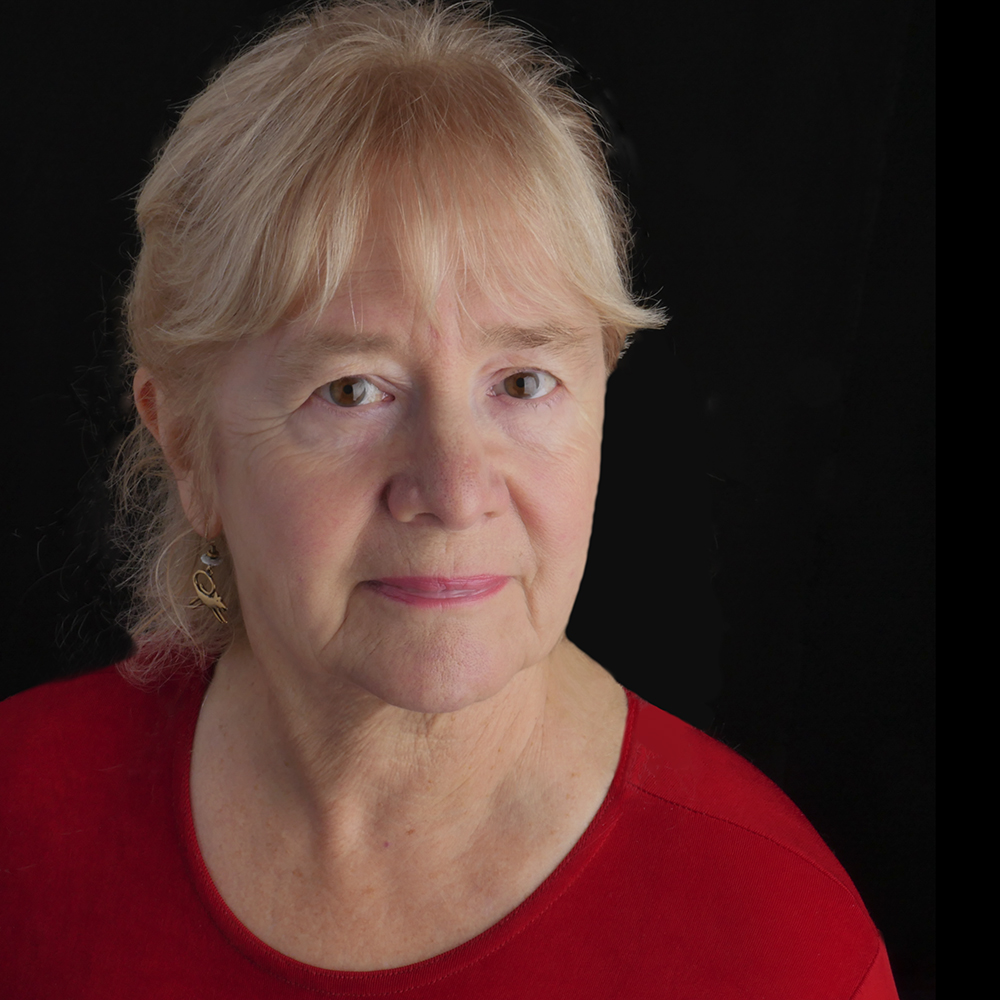
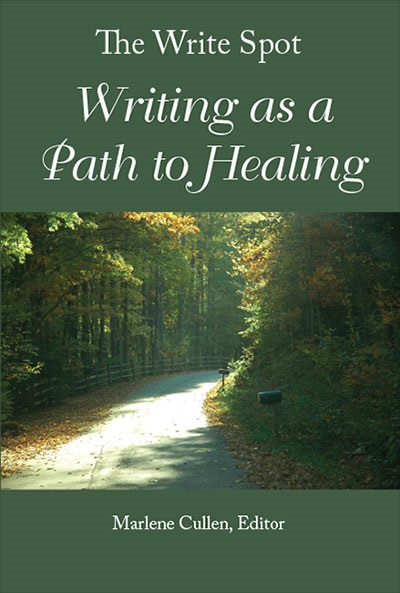
    Kathy Guthormsen’s work has been published in The Write Spot: Memories, The Write Spot: Possibilities, and The Write Spot: Writing as a Path to Healing, all available on Amazon.

    Her Halloween story, Run, was published in the Petaluma Argus Courier in October2020.

    Kathy lives in northern California with her husband, one psychotic cat, a small flock of demanding chickens, and a pond full of peaceful koi. She maintains a blog, Kathy G. Space, where she occasionally posts essays, short stories, and fairy tales.

  • Details Add Zing

    Guest Blogger Lisa Alpine shares tips to spice up your writing.

    I encourage you to infuse your writing with detailed imagery, passionate feeling, poetic depth and evocative sensual description. Here are some writing suggestions I use when teaching Spice Up Your Writing at workshops globally.

    These writing tips will show you how to weave poetic description into your prose; cultivate the five senses in describing a place or experience; and develop emotional imagery.

    1: Pick a scene from an event in your life that you know has a heart or seed of a story only you can write. Now blurt and spew! Messy is okay. You can clean it up later. Sometimes graceful, sometimes awkward, sometimes downright ugly. Tell the story. Understand what is really going on by exploring and uncovering the deeper currents of the river of life.

    2: Set the scene. Describe the weather, doors & windows, environment, horizon. God is in the details. What type of tree? What color the sea? Name everything.

    3: Sensual awakening using all six senses: smell, sight, taste, sound, touch, & intuition. Don’t ignore the 6th sense –even if it doesn’t make sense—it can lead into the heart of what is really going on.

    (See Note from Marlene for links to posts about using the sixth sense and intuition for writing inspiration.)

    How do you write about sensual interaction in a real way? It could describe the touch of a baby’s cheek against yours; or the physical sensation of your lover’s weight on you. It might be the reaction to the smell on a bus. By the way—smell is the hardest sense to describe accurately—yet the most evocative.

    4: Building tension. Like thunder in the distance, good suspense keeps us hanging on with tension and release, pain and epiphany. Not just emotional content, but placement and description of objects and sensations, even weather descriptions can lead into the deeper places by scene setting and nuance.

    A nerve is exposed and it hurts, it zings with sensation—it calls attention to it. Listen to these electrical zings. The story is there in the current lines that jolt you awake.

    5: Add emotional qualities. What is interesting about the word feeling is that it covers both the sensual and tactile experiences along with the gamut of emotions.

    6: Dig beyond generic descriptions so that your writing comes uniquely alive for readers and immerses them in the story.

    Give yourself an hour to work a scene with these suggestions and see if it opens up your writing and captures the essence of what flows underneath the obvious so that your story pops and zings, cries and sings.

    Lisa Alpine is a renowned dance teacher, travel writer, and author of Dance Life: Movin’ & Groovin’ Around the Globe, Wild Life: Travel Adventures of a Worldly Woman and Exotic Life: Travel Tales of an Adventurous Woman.

    Her award-winning, dynamically delicious stories grace the pages of many anthologies, including Travelers’ Tales Best Travel Writing.

    When not wrestling with words, exploring the ecstatic realms of dance, swimming with sea creatures, or waiting for a flight, Lisa divides her time between Mill Valley, California and the Big Island of Hawai’i, where Pele’s lava licks at the edges of her writing retreat.

    Note from Marlene:

    The Sixth Sense.

    Trust Your Intuition for Creative Writing

  • Quotes for a rainy day

    Are you a planner or a worrier?

    What is the difference?

    I’m a worrier, trying to be a planner. I imagine what could go wrong so I can plan for when that happens. I suppose I should say “if” it happens. My worries seldom happen. Instead, things happen that I could never have imagined.

    But, as Leo Buscaglia said, “Worry never robs tomorrow of its sorrow, it only saps today of its joy.”

    A therapist said to me, “Worry is modern man’s voo-doo.”

    I get that.

    “Worry is like a rocking chair: it gives you something to do but never gets you anywhere.”– Erma Bombeck

    Well, as I sit and rock, I could plan what I would do if my worries came true.

    “When I look back on all these worries, I remember the story of the old man who said on his deathbed that he had had a lot of trouble in his life, most of which had never happened.” – Winston Churchill

    So where does that leave us? Some writers play the “what-if” game all the time. They get some of their best ideas that way.

    I think we need to know when our worry-thinking disables us and when our worry-thinking helps us.

    It’s good to have a plan if an immediate evacuation becomes necessary, such as having a to-go bag ready to go at a moment’s notice. And having an emergency kit easily accessible is a good plan.

    Being positive can help worriers. Not dwelling on “something bad is bound to happen.” But rather, be prepared.

    Part of that preparation might be positive thinking for mental health.

    “The best and most beautiful things in the world cannot be seen or even touched – they must be felt with the heart.” — Helen Keller

    In times of difficulty, or chaos, “look for the helpers,” as Mr. Rogers said.

    “Nothing is impossible, the word itself says ‘I’m possible’!” Audrey Hepburn

    “Try to be a rainbow in someone’s cloud.” — Maya Angelou

    What’s your takeaway today?

    Are you going to worry or are you going to plan?

    I’ll probably do a little of both.

    The Write Spot: Writing as a Path to Healing has a wonderful self-care section, positive planning for mental health and physical well-being.

  • Innovative Technique for Creative Writing

    Today’s guest blogger, Mary Mackey, is a gem in a treasure chest filled with innovative inspiration for writers.

    Mary shares her unique perspective on accessing creative writing.

    Your unconscious is packed with ideas, metaphors, visions, plots, dreams, colors, characters, emotions—in short, everything you need to write a great visionary novel. But how do you get to it? How do you step out of the social agreement we call “reality,” and dip into this incredibly rich resource?

    You could go to sleep and try to mine your dreams, but even if you dreamed an entire novel, the moment you woke up, you would forget most of it within seconds, because you hadn’t processed the ideas into your long-term memory. Worse yet, when you dream, you are not in control, so you can’t do specific things like talk to one of your characters or work out a specific plot problem. Granted, some people manage lucid dreaming, but lucid dreaming is not a practical writing technique for a number of reasons. For example, you cannot always go to sleep when you need to.

    Many years ago, I started looking for a technique that would allow me to be asleep and awake at the same time. What I came up with, after much trial and error, was a form of creative trance that allows me to delve into my unconscious whenever I want to, get the material I need for my poems and novels, bring that material up to my waking reality, remember it, and write it down.

    Developing this technique wasn’t easy. Besides relying on my own imagination, I drew on many sources such as self-hypnosis, theta cycle sessions, neurophysiology, Proust’s Remembrance of Things Past, and the Surrealist technique of Automatic Writing.  As you might expect, I had many failures, but in the end I came up with a deceptively simple technique, which has proved extremely effective. Since I taught myself how to use creative trance, I have written many novels, collections of poetry, and screenplays. Better yet, I have avoided writers’ block.

    I’ve used my creative trance technique weekly, sometimes daily, for many years. As with all things that are visionary and out of the range of ordinary consciousness,  it can’t be completely described in words, only experienced. So, since I cannot sit down with you and personally guide you through the process step by step, I am going to give you a chance to get a feel for it by taking you into the heart of  my creative process as I worked on my most recent novel, The Village of Bones.

    The Village of Bones is Visionary Fiction, but even in my novels which are not visionary (such as my bestseller A Grand Passion, the story of three generations of women involved in ballet), I created most of the original storyline in a voluntarily induced creative trance.

    Unlike A Grand Passion, The Village of Bones presented a special problem. On one hand, it was meticulously researched historical fiction firmly based on archaeological evidence, yet at the same time, it was set in Prehistoric Europe in Goddess-worshiping cultures that were filled with myths, visions, and prophecies.

    With this contradiction in mind, I put my phone in Airplane Mode, sat down in a comfortable chair, picked up a pen (I find computers get in the way), opened my notebook, closed my eyes, took several deep breaths, and counted backwards to ten, imagining as I did so that I was walking down a flight of stairs. By the time I got to the bottom, I was in a light trance. The word “light” is important. I was neither awake nor asleep. Instead, I was poised on the threshold between my conscious mind and my unconscious mind, ready to move in either direction. 

    On this particular day, I had some work planned. Sabalah, my main character, was in big trouble. She was caught in a storm, her boat had turned over, and she was drowning. As she struggled to stay afloat, she going to have a vision of the Sea Goddess that might or might not be a hallucination. There were no surviving statues of this particular Neolithic Sea Goddesses as far as I knew, so my task for this afternoon was to envision the Sea Goddess so I could describe her.

    I started with the Goddess’ name which I had created the previous day: “Amonah, Amonah, Amonah,” I silently chanted. “Come to me.. A vague, shadowy form began to materialize behind my eyelids. 

    Before I go on, I want to be clear about what was happening. As I thought the word Amonah, I didn’t believe I was conjuring up a real spirit, channeling a mystical force, or having a religious experience. I believed, and still believe, that I was simply unlocking the resources of my own consciousness and my own imagination using the very practical tool of creative trance. I don’t claim to know where these visions come from, but I am convinced that under the right conditions, anyone can have them.

    The form grew brighter and more distinct. I saw a woman walking toward me across the waves. Walking on water. Interesting. Since question/answer is the key to this technique, I settled down and began to ask myself questions.

    “What color is her hair?” I asked myself. “Black, brown, blonde?” Suddenly the word “seaweed” came into my mind. Instantly, the woman’s hair turned green.

    “What kind of jewelry is she wearing? Diamonds, topaz, garnets?” No, she’s wearing pearls, and something else, something reddish, something like . . . coral!

    “What color are her eyes?” For a moment her eyes shifted back and forth between brown and green. Then, suddenly they glowed. “Skin color?” All colors. No colors. She’s a Goddess. She is all of us.

    “What’s she wearing?” Not skinny jeans for sure. (Odd thoughts sometimes interrupt the flow of the trance). Long dress. Yes. She’s wearing a long dress. Wave-like. Blue of course like the sea.

    “What does she smell like? Wind, salt, kelp?” Like flowers.  She smells like flowers. “What kind of flowers?” Roses.

     “How much does she weigh?” She weighs nothing. She’s a spirit.

    For a long time, I sat there asking specific questions and waiting for answers most of which came in the form of wordless images. For some reason, I never could figure out how tall She was. My unconscious wouldn’t give that one up. But by now the Sea Goddess Amonah looked real to me. I could see Her distinctly right down to the coral rings on Her toes.

    Slowly I began to count backwards from ten to one, moving out of the trance as I climbed back up the stairs toward waking consciousness. On every step, I paused and made myself visualize Amonah again, and I commanded myself: “Remember. Remember.”

    This final command to “remember,” is perhaps the most important part of a creative trance. If I couldn’t carry a complete image of Amonah back into the waking world, I’d have to start all over again.

    When I got to ten, I opened my eyes just wide enough to see my notebook. Grabbing my pen before the last bits of trance faded away, I quickly wrote everything down paying no attention to grammar, spelling, or logic. I even wrote down the silly bit about the skinny jeans.

    The result was not something I could use immediately. What you get out of your own unconscious is raw material. After creativity comes craft. Over the course of the next year, I polished this description of Amonah. I worked wide-awake, using all the techniques of novel-writing that I had learned over the years. I read the passage out loud over and over again. Searched for better words. Took out commas and put them in again. Here is the result:

    A woman emerged from the wall of crashing waves and walked across the sea toward Sabalah. Sabalah abruptly stopped crying and stared at the woman, stunned. This was impossible! . . .The woman kept walking, stepping over the waves as if they were furrows in a field of wheat. Her flowing dress was blue as a summer sea; her hair long and green, twined with seaweed and pearls. Her skin was dark and light at the same time, her eyes so bright, they glowed like the last flash of the sun when it falls into the sea at midsummer. . .  A sweet scent suddenly filled the air like the perfume of roses blown across water.

    “Don’t be afraid,” the woman said. “I am Amonah, Goddess of the Sea,” and water is my path. I can walk above or beneath it as I wish.

    Sitting down beside Sabalah, Amonah let Her feet dangle in the water. They were bare except for toe rings of rose-colored coral. She must have weighed nothing, because the end of the mast didn’t tilt the way it would have it a flesh-and-blood human being had sat there.

     The Village of Bones was formed from scores of similar visions, as were all the poems I wrote that year, and even part of one of the screenplays which I co-wrote with director Renée de Palma.

    Using creative trance is a gentle, pleasant way to create the raw materials for a work of fiction. It is not like meditation because your goal is not transcendence. It is not like many forms of self-hypnosis because you are not trying to lose weight, stop smoking, or change your behavior in any way. It is not like prayer, because you are not seeking a closer relationship with God. Creative trance is a tool, a key if you will, that lets you unlock the riches you already have stored in your own unconscious.

    Yet its power should not be underestimated. So let me leave you with a warning: If you decide to go deeply into your own unconscious, you have to be ready to deal with what you find there. Creative trance is not therapy. If you are upset, unhappy, depressed, or anxious, wait until you have a calm mind and specific writing goals and can set firm limits on what you will accept from your unconscious.  

    When you are in a creative trance, you should always be in control. If your Goddess appears before you with a hairdo made of snakes, you should be able to instantly turn those vipers into cobwebs and seaweed. Nothing you experience should harm you, scare you, or make you uncomfortable for more than a few seconds. A creative trance should be enjoyable from start to finish.

    In The Village of Bones, the Goddess Earth gives Her people six commandments. The First Commandment is: “Live together in love and harmony.” The Sixth is: “Enjoy yourselves, for your joy is pleasing to Her.”

    Resources:

    Syllabi for courses in Women’s Visionary Fiction, Women’s Visionary Poetry, and Women’s Visionary Film can be found on Mary Mackey’s Educators Page.

    Mary Mackey, Ph.D. is a New York Time best-selling author who writes novels, poetry, and film scripts. A Professor Emeritus of English at California State University, Sacramento, she is the author of fourteen novels and eight collections of poetry including The Jaguars That Prowl Our Dreams, winner of the 2019 Erich Hoffer Award for Best Book Published by a Small Press and a 2018 Women’s Spirituality Book Award; and  Sugar Zone, winner of the 2012 PEN Oakland Josephine Miles Award.

    Garrison Keillor featured her poetry four times on The Writer’s Almanac. Her novels have made The New York Times and San Francisco Chronicle Bestseller Lists and been translated into twelve languages.

    Her visionary novel The Village of Bones: Sabalah’s Tale is a prequel to the three novels in her best-selling  Earthsong Series (The Year the Horses Came, The Horses at the Gate, and The Fires of Spring).

    Mary welcomes your questions and comments at www.marymackey.com  where, you can sample her work, read her interview series People Who Make Books Happen, learn more tricks for avoiding Writers Block, and sign up to get the latest news about her fiction and poetry.

    Mary’s literary papers are archived at the Sophia Smith Special Collections Library at Smith College in Northampton, MA.

    Note from Marlene: The creative trance that Mary describes might also be accessible with meditation. Katie Holmes, data scientist & chief editor for OutwitTrade has compiled stories on the benefits of meditation.

  • Character Sketch . . . Prompt #556

    Prompt #554, Character Idiosyncrasies, on The Write Spot Blog, suggests ideas to write about a fictional character, or someone you know. You can do all that for this prompt. Plus, you can fill out the answers for yourself, as if filling out a questionnaire.

    Character Sketch . . . fill in the details about your character.

    5 positive traits

    5 opposite traits

    3 least favorite things

    3 favorite things

    What does this person love?

    What is this person looking for?

    What is this person afraid of?

    What is most important to this person?

    What is this person’s secret?


    Prompt inspired by Stefanie Freele’s June 2012 Writers Forum talk, “Developing Character.”

    Please join us on February 10 and February 18 for Zoom Writers Forum talks about story telling by Kate Farrell, editor of Story Power.

  • Photos Develop Characters . . . Prompt #555

    You can use photos to develop ideas for creating characters.

    Turn your imaginary characters into believable characters.

    Use photos to establish physical characteristics

    Look at images in magazines or in photo albums or online.

    Choose an image for a character you want to develop.

    Write a character sketch, just as an artist would draw with charcoal. Flesh out what your character looks like.

    Add details that make your character unique and memorable: body shape, statuesque, angular, plump, scars, tattoos, piercings, lanky, a hulk, petite, piercing violet eyes, honey brown eyes, disarming smile, large ears, moles, hair style.

    Craft your character’s personality

    Analyze photos to build a personality for this character.

    Is your character touching anyone in the photos?

    Are they leaning towards anyone?

    Note how their looks imply character traits: stoic, friendly, menacing, open-minded, pleasant, formidable, playful, serious.

    A furrowed brow might indicate stress. Crow’s feet at the sides of the eyes could indicate someone who laughs often, or is frequently outdoors in the sun.

    Expand your analysis

    What feelings do you get when you look at your character in the photo?

    Does their facial expression match their physical posture?

    Imagine what happened right before the picture was taken.

    Conjure up what happened right after photo was taken.

    Who took the photo?

    What is the photographer’s relationship to the person in the photo?

    Images in school yearbooks

    What do their photos and captions in their yearbooks say about them?

    What is revealed in these photos? Is your character in any clubs or active in sports?

    On the debate team? The newspaper or yearbook staff?

    Bring your character to life

    Look into the eyes of the character in the photo. What is the story behind the story?

    What do their clothes say about them? Where did they shop for clothes? Did they make their own clothes?

    Of course, jobs and hobbies are also important to invent a character.

    How do they spend their time?

    How do they spend their free days?

    If they had a million dollars, how would they spend it?

    Speculate

    How much schooling did they have?
    What did they have for breakfast?

    Favorite snack?

    Favorite color?

    Use these ideas for starting points to produce original characters.

    More prompts on character development.

  • History Through The Lens of The Teller

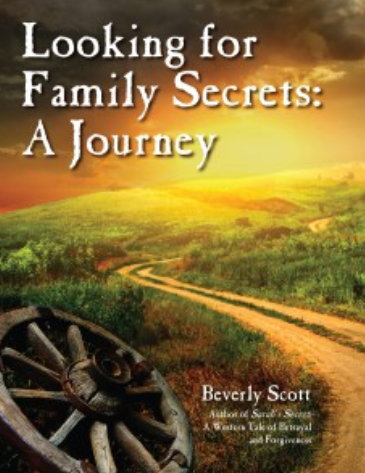
    Guest Blogger, Bev Scott, has an interesting perspective on bias of our history. She brings up provocative questions.

    The following is based on a session Bev attended at the Historical Novel Society Conference in June 2017 by James J. Cotter, titled “The Lone Ranger was Black: Reintegrating Minority Viewpoints into Historical Fiction.”

    “The title intrigued me,” wrote Bev. “Was the Lone Ranger modeled after Bass Reeves, the first black U.S. deputy marshal who worked thirty-two years in the Arkansas and Oklahoma territories in the late 1800’s?  He may have been.”

    History Is Biased

    The conference session addressed the issue of bias in our history. That bias impacts authors of historical fiction. Today we no longer view history as “the truth.” Rather, history is a story told through the lens of the teller. Did you love the Lone Ranger when you were growing up? I did. Audiences assumed he was a courageous (and white) lawman.  That’s how the story was told.

    Readers of historical fiction express their fondness for this genre because they like a particular historical period. Plus, they enjoy learning from fiction set in an historical context. Readers also expect accurate history in the stories they read. So, historical fiction writers have a responsibility to the historical record. But what record?

    Finding Alternative Viewpoints

    And so arises the key question for authors of historical fiction. How do we tell stories and develop characters with lives extremely different from our own given the bias of historical sources? How do we find alternative viewpoints? And, how can we do justice to the painful experiences of non-dominant characters in our stories?

    Consider the story of Custer’s Last Stand or the Battle of the Little Bighorn. The Lakota Sioux and Cheyenne people believed they were betrayed. The U.S. government ignored their treaty rights after gold was discovered on native lands. White Americans believed the Indians were wild, bloodthirsty and stubborn, refusing to move to the reservation. Many of us learned only the white American history version growing up.

    Bass Reeves and The Lone Ranger

    When we watched and admired the fictional Lone Ranger as children, we accepted how he was portrayed. Yet, he probably reflected the real-life story of Bass Reeves, a former slave. Reeves gained fame through his exploits and imposing stature of 6’2.” The first black lawman west of the Mississippi, he cut a striking figure on his large gray (almost white) horse. Reeves wore his trademark black hat and twin .45 Colt Peacemakers cross-draw style. Bullets never touched him, although he brought in 3000 criminals alive and 14 dead, whom he killed in self-defense. 

    Reeves earned the name “the Indomitable Marshall.” He left silver dollars behind as his calling card. Similar to the fictional Lone Ranger, Reeves developed friendships with Native Americans and learned their languages. He also used disguises to capture those he pursued. The racism in our culture probably prevented the Lone Ranger hero from being portrayed as a black lawman.

    “Who WAS that Masked Man?” Was it Bass Reeves?

    Multiple narratives combine to become a complete historical narrative. We often learn only one limited narrative part. For example, most stories about homesteaders portray them as white. They settle on the prairie, risk their lives and battle extreme conditions. Yet, in researching my historical novel, Sarah’s Secret, I discovered a little-known town in Kansas called NicodemusThis town drew freed slaves to homestead in the surrounding area after the Civil War.

    Offering an Opposing Voice

    As writers of historical fiction, we have an obligation to readers to offer an accurate portrayal of both our characters and the historical context. Our discussion in this conference session emphasized the importance of deep knowledge and experience of the culture in which our story is set. And further, writers must recognize the historical biases of the sources we are using. This is especially important if the writer is writing in a cultural context other than her own.

    Writing historical fiction gives an opportunity to balance the bias of history by including an opposing voice of the non-dominant group in the story. Since my protagonist, Sarah was traveling north by wagon through Kansas to return to Nebraska and her family, I chose to add such voice. Thus, Sarah and her children unexpectedly encounter a black family in the middle of Kansas living near Nicodemus.

    Sarah follows a narrow path with her seriously ill daughter to find help. She discovers a welcoming family descended from former slaves. Luckily, the family shares their modest home for several days while Sarah nurses her daughter back to health. Her sons have fun with the son of the family. The plot gives an opportunity to include an opposing voice to traditional bias. Sarah tells her concerned son stories about her own and her father’s rejection of slavery. She tells of their support for the Union in the Civil War and her family’s generosity toward “Negro” families when she was a child.

    Originally posted on Bev Scott’s blog on July 11, 2017, with photos that are not included in this post.
    Bev Scott will be one of the Writers Forum‘s presenters on February 18, 2021.

  • Winter Solstice 2020

    Winter Solstice 2020

    By M.A. Dooley

    To re-build beauty we split the wood

    Don’t split the hairs, it does no good


    To build more beauty, we light the flame

    The kindling catches, we say the names


    Of those we love who went beyond

    They shaped our lives, they’re never gone


    Reflection first, then put it away

    Forgive, don’t forget, make up one day


    Let go the work, the world of greed

    The rules of day, the ego needs


    Gathered in darkness wait for the light

    Beauty glows on faces this fire lit night


    The circle round holds hearts and dreams,

    Tears fall for loves no longer seen


    The year was wrought with judging and pain

    Hindsight 2020 the last refrain


    Awake on the longest night, the fire

    Releases suffering and unmet desires


    This invocation is for you,

    You represent your sisters too


    For mothers, daughters we hold you dear

    For fathers, sons not shaped by fear


    We stand for sacredness of life, for living

    The year’s behind us without misgiving

     
    We stand together and hold our place
    Embrace salvation of the human race
     
    We are so close to being one
    Let’s end this year with love and fun.

    M.A. Dooley is a fourth generation Californian who spent her childhood in the Santa Cruz Mountains. M.A. Dooley is an architect in partnership with her husband. They have three sons. Among a multitude of athletic interests, she loves to ski and dance. Her work has been published in Sunset, Trends, San Francisco Magazine, the San Francisco Chronicle, The Press Democrat, and in Poems of a Modern Day Architect published by ARCHHIVE BOOKS, 2020.

  • Character idiosyncrasies . . . Prompt #554

    How do writers develop characters? How do writers get to know their characters beyond their looks, their desires, and where they went to school?

    For this prompt, you can write about your main character, a supporting character, or you can write about someone you know.

    If you are writing about something that really happened, you can use that incident and those involved as your characters. When you write about real people, they become “characters” in your story.

    Here’s how it works:

    Interview your fictional character as a journalist would, but not at the age they are in your story. If they are older, interview a younger version of your character.

    If your character is young, imagine what he or she might be like as an older person.

    For your real-life person, have an actual interview, if you can.  If not, imagine what they were like as a child, a pre-teen, a teenager.

    Activities

    Here’s a trick to really get to know your fictional characters: Write about how they spend their time. Did they undergo training or schooling for their job? Do they go out with friends? How did they meet these friends? What does their family do when they get together?

    Write about how your characters spend their time. Do they collect odd items? Did they join clubs in school? What does your character do when she or he is alone?

    Give your character an unusual job or hobby. Either something you know about, or something you can research. An internet search reveals thousands of job and hobby possibilities for your characters.

    Ideas for jobs and hobbies at Happy DIY Home.

    An example of an unusual activity: Parkour.

    “Parkour can be defined as an activity involving movement through an area, typically urban in nature, in an efficient and creative way. Those who practice it are known as traceurs (French for ‘trace’) and will jump, climb and vault over obstacles in their path in order to get from A to B as quickly as possible.” — Parkour: The Ultimate Guide For Beginners, Sport Fitness Advisor

    Describing an activity is a way to add the sensory detail of kinesthetics to your writing—motion in writing.

    Prompt: Interview your fictional characters to discover their idiosyncrasies.

    For more about character development and adding sensory detail to writing:

    Flesh out your characters. Prompt #131

    Character development – discovering characters. Prompt #132

    Sensory Details – Kinesthetic, motion in writing.

  • Writer’s Block = Argh!

    Today’s Guest Blogger is Lisa Alpine.

    Originally published on her blog, Lisa Alpine, Dancing Through the World of Words, Lisa shares her thoughts about how to crawl out of the swamp of writer’s block.

    Stuck again in the swamp of writing defeat and word avoidance even though I love writing my stories. What’s up?  I’ve been a writer for 35 years. Holy moly. Can’t I just sit down and write? Why do silly menial chores seem suddenly inviting?

    But I have found, once I chain myself to the blank page and force words to be birthed, with a story in mind, I thrash but the engine thrums and starts. Those dang words begin to flow. I’m ready. I’m willing. I’m psyched. The story emerges—but only after a hell-of-a struggle.

    And I have a method:

    I make an agreement with myself that I will write for one hour with no interruption. I set a timer. I turn the phone off. I don’t check email.

    After the hour is up, I give myself the option to go outside in the garden and look at birds, bees, weeds, whatever. The important task is to move and get circulation back in my derriere.

    I allow myself 15 minutes of distraction then it is back to the chair for another hour commitment—still not checking email or voicemail. Both of those are alluring rabbit holes.

    Oh boy—another hour of diligent word-sculpting achieved! The carrot of the garden or yoga—some form of movement—is grabbed for another 15 minutes.

    The intrigue of my story—as it comes into focus on the page—draws me back. I’m over the hump and the opposite effect takes place. I need to force myself to walk away from the page(s) and keep my life rolling forward.

    Try this daily—or a few times a week. Your writer brain will hum with activity and the story will call you back to complete it.

    Give it a try and see what happens for you.

    Note from Marlene:

    Lisa Alpine will be a Writers Forum presenter, along with Kate Farrell and Mary Mackey, on February 10, talking about “Storytelling for the Armchair Traveler.”

    Please join us for this free Zoom event.

    Lisa is a contributor to Story Power. A copy of Story Power will be given away at both the February 10 and the February 18 Writers Forum events.

    Lisa Alpine is a renowned dance teacher, travel writer, and author of Dance Life: Movin’ & Groovin’ Around the Globe, Wild Life: Travel Adventures of a Worldly Woman and Exotic Life: Travel Tales of an Adventurous Woman.

    Her award-winning, dynamically delicious stories grace the pages of many anthologies, including Travelers’ Tales Best Travel Writing.

    When not wrestling with words, exploring the ecstatic realms of dance, swimming with sea creatures, or waiting for a flight, Lisa divides her time between Mill Valley, California and the Big Island of Hawai’i, where Pele’s lava licks at the edges of her writing retreat. Read her timely posts about travel, dance, writing, culture, and inspiration.