Tag: just write

  • Sensory Detail – Sound

    GramophoneI cranked up the music to prepare this post and was reminded of the sixties and seventies when I worked downtown San Francisco Monday through Friday. Saturdays were house cleaning days. I centered my Swan Lake record on the turntable and turned up the volume. By the time I was dusting and cleaning downstairs, I was rocking to West Side Story. To finish, I blasted Hair. Odd combinations, I know. But they worked for me . . . a satisfying way to completely clean the house and do laundry.

    Sound. . . how do we incorporate sound in our writing?

    But first, why do we want to use sensory detail in our writing? Sound can evoke strong memories: screeching tires, whining four-year-old, grinding gears when learning to drive a stick shift, songs from our teenage years, wedding songs, hymns, sing-song rhymes. When we employ sound in our writing, we transform language into sensory stimulation that the reader hears in his/her mind and transports the reader to the world we have created in our writing.

    Poet Major Jackson says it this way, in the September 2015 issue of The Writer magazine:

    I aim to write poems in which language changes into feeling. With hip-hop and rap music, the expressive medium of my generation, I learned to stylize language and to make language an experience for the reader — whether through an idiosyncratic simile or through an insistent use of repetition or some heretofore encountered combination of rhymes.

    Right on . . . and sensory stimulation in writing offers readers a way to vicariously experience other worlds viscerally.  It’s that visceral reaction writers seek . . . the strong emotional reaction when reading.

    Notice all the sensory detail in the following excerpt from In the Time of the Butterflies by Julia Alvarez:

    Usually, at night, I hear them just as I’m falling asleep.

    Sometimes, I lie at the very brink of forgetfulness, waiting, as if their arrival is my signal that I can fall asleep.

    The settling of the wood floors, the wind astir in the jasmine, the deep released fragrance of the earth, the crow of an insomniac rooster.Their soft spirit footsteps, so vague I could mistake them for my own breathing.

    Their different treads, as if even as spirits they retained their personalities. Patria’s sure and measured step. Minerva’s quicksilver impatience. Mate’s playful little skip. They linger and loiter over things. Tonight, no doubt, Minerva will sit a long while by her Minou and absorb the music of her breathing.

    Some nights I’ll be worrying about something, and I’ll stay up past their approaching, and I’ll hear something else. An eerie, hair-raising creaking of riding boots, a crop striking leather, a peremptory footstep that makes me shake myself awake and turn on lights all over the house. The only sure way to send the evil thing packing.

    But tonight, it is quieter than I can remember.

    Notice:  Specific words that evoke sound: hear, crow of a rooster, soft footsteps, breathing, creaking

    Phrases that evoke sensory detail: the settling of the wood floor, the wind astir, a crop striking leather,

    And of course, the sense of smell: wood floor, jasmine, fragrance of the earth.

    Your turn: What sounds evoke powerful memories for you? House cleaning sounds (vacuum cleaner)? How about: nursery rhymes, rock ‘n roll, thunder, gum snapping, crunchy foods, sirens, bells, whistling, animal noises, engine revving.

    What about water: Running water, gurgling stream water, waves as they lap to shore and recede to the ocean. Or maybe it’s more of a stormy day and the water rushes toward the sand dunes, crashes into rocks and hurries back to the sea.

    How about: Squawking sea gulls, the calliope of a merry-go-round, music boxes?

    Remember songs from movies, television theme songs, commercial jingles?

    What sounds bring up strong memories?

    Choose a prompt and write for 12-15 minutes. Put sound sensory detail in your writing. Just Write!
  • Random word freewrite, using sensory detail . . . Prompt #176

    Use these words in your freewrite: cook, chant, winter, smear, blue. Try to incorporate sensory detail.

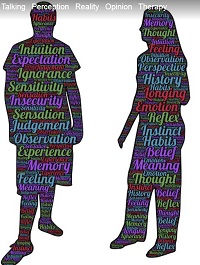
    You know the five senses: see, hear, feel, smell, taste . . . and that elusive sixth sense.

    The sixth sense is known by various perceptions: common sense, telepathy, intuition, imagination, psychic ability and proprioception (the ability to sense stimuli arising within the body regarding position, motion, and equilibrium).

    Proprioception is further intriguing with this definition: The unconscious perception of movement and spatial orientation arising from stimuli within the body itself. In humans, these stimuli are detected by nerves within the body itself, as well as by the semicircular canals of the inner ear.

    Example of proprioception: Right now I know my ankles are crossed under my blankets.  (Thank you, Kathy, for this example).

    Sensory detail word peopleWikipedia definition of sixth sense: a supposed intuitive faculty giving awareness not explicable in terms of normal perception. “Some sixth sense told him he was not alone.”

    Thank you to my Facebook Friends for helping with the definition for the sixth sense. . . Karen, Kathy, Sarah, Rich, Katie, Terry, Ransom, Brian, Robin, Jordan, Elizabeth, Ginger and many more . . . many thanks!

  • Don’t think . . . then you can add, embellish.

    Don’t think. Just write. Then you can add, embellish . . .

    “I don’t think about . . . things when I’m writing. I really try to shut off the thinking part of my brain. . . Don’t think . . . until you edit. And then you can add, embellish, and the next thing you know, if you’re very honest, all of the other stuff comes with it if it didn’t come before.” Sandra Cisneros, August 2015 The Writer magazine

    HeartMarlene’s Musings: Yes! Your first bit of writing could be a freewrite. . . where you write freely. Then you can go back and revise, edit. . . add, embellish . . . make any changes you want. But first get it all down. Write from your heart, from your gut. Just write!

  • Sensory Detail

    Readers want to see the action and feel emotions. Readers want to be transported into other worlds. In a way, we want magical things to happen when we read: to be carried away, transformed. Writers can achieve these seemingly wondrous events by using sensory detail in writing.

    When including sensory detail, think of body parts: eyes, ears, nose, tongue, body and some add a sixth sense: mind.

    Verbs that describe the senses: see/sight, hear/sound/auditory, smell, taste, feel/touch, intuit.

    The sixth sense can be described as telepathy, intuition, perception, imagination. . . those traits that use the mind to create and understand. Some people believe the sixth sense is the ability to problem solve; using our minds to read and interpret signals, to pick up or sense energy.

    You can access any of these sensory details in your writers tool kit to create vivid and memorable writing.

    For the next few weeks, we will explore sensory detail on The Write Spot Blog.

    Sight. . . Seeing . . . is perhaps the most common sensory detail to write about. It’s easy to describe physical details: blue eyes, brown hair. So, how about going a little deeper? Perhaps more specific, or unusual. . . something the reader isn’t expecting, but believable. Something to make the reader sit up and take notice:

    She had bright auburn hair, pink cheeks, and wore crimson fingernail polish. She also wore high-heeled pumps and a red-and-white-striped dress. She looked and smelled like a peppermint drop. —To Kill a Mockingbird, Harper Lee

    You can use simile to create memorable details, like Sandra Cisneros does in Caramelo:

    Doubt begins like a thin crack in a porcelain plate. Very fine, like a strand of hair, almost not there. Wedged in between the pages of the sports section, in the satin puckered side-pocket of his valise, next to a crumpled bag of pumpkin seeds, a sepia-colored photo pasted on thick cardboard crudely cut down the center.

     Do you see the crack in the plate?

    There is also texture in this excerpt: porcelain, the fine strand of hair.

    With the mention of “sports section”. . . can you see the newsprint and feel the weight of the newspaper?

    The puckered side-pocket invites a visual image as well as texture. Can you “see” (imagine) the color of the satin side-pocket even though it’s not mentioned?

    Being specific with details adds to the ability of the reader to see the activity/action (scene).

    Cisneros could have written “a crumpled bag of chips,” but that’s vague. I bet you can feel that crumpled bag and maybe you can hear it. You can probably see the pumpkin seeds. Perhaps you salivate at the thought of what the pumpkin seeds taste like.

    Even if you have never seen a sepia-colored photo pasted on thick cardboard, you can imagine it. You can see this specific color (sepia) and feel the texture of the cardboard. In your mind’s eye, you might even imagine who is in the photo.

    Cisneros covered all the senses: sight, sound, taste, feel, and if you are extraordinarily sensitive, you might smell the salt in the seeds, or you might smell the musty valise, you might even imagine/smell the paste that was used to stick the photo onto the cardboard. I think she includes the intuitive sense with the word “doubt” and “wedged” (what does this hint or say to you?) and the cut cardboard (perhaps cutting someone out of the photo?).

    Simile — A simile is a figure of speech that compares unlike things by using the words like or as:

    Doubt begins like a thin crack in a porcelain plate. Very fine, like a strand of hair . . .

    Your turn: Notice sensory detail in what you are reading. Post your findings here, on The Write Spot Blog.  And try using sensory detail in your writing.  Just Write!

    Suitcase.notecards

  • Awards . . . Prompt #174

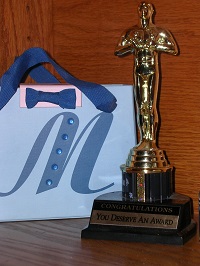
    You deserve an awardYou can write on this prompt from your point of view or from someone else’s point of view. You can also write as your fictional character would respond.

    Write about an award you have received. Perhaps a certificate, a leather/letter jacket in high school, lapel pins, crowns, diplomas, trophies.

    Is there an award you didn’t receive and thought you should have?  Did your fictional character deserve an award and didn’t get it?  How did he/she respond?

    Writing Prompt: Awards

  • One Year From Now . . . Prompt #173

    Writing Prompts OvalToday’s writing prompt: One year from now . .

    Write whatever pops up for you. No thinking, no judging, no editor on shoulder . . . just write!

  • Baby shoes for sale. Never worn.

    “Baby shoes for sale. Never worn.”  Hemingway wrote this six-word tale that has become the ultimate short, short-story.  The reader can fill in the blanks. I wonder how many variations of a theme these few words have inspired.

    Grant FaulknerGrant Faulkner honed his skills to write short, 100-word essays and writes in the August 2015 issue of The Writer magazine:

    “A flash writer has to paint characters in deft brushstrokes, with the keenest of images in such limited space. Shorts require immediacy; they’re a flicker of light in the darkness, a prick, a thunderclap . . . Paring down my writing and focusing on what goes unsaid and unexplained help me build suspense.”

    Faulkner says, about Hemingway’s six-word story, “The story moves by implication– the empty space around those few words invite the reader to fill them, transforming the reader into a co-author.”

    If this type of writing appeals to you, start writing now. Faulkner’s 100 word story will accept submissions after September 15. Hone your short story skills now and be ready to submit.

    Just Write!

  • More random words Prompt #173

    LolaWhat can you write, using these words:

    whisper, eternity, soar, frantic, thousand, chain, live, lie

    Post your freewrite on The Write Spot Blog.

  • Favorite summer activity. Prompt #172

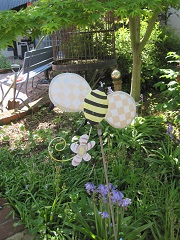
    Summer Bee.Sandy Baker yardWhat is your favorite summer activity?

    You can write about what you like to do now or a favorite activity when you were younger.  If you are writing fiction, what does your fictional character like to do in the summer?

    Writing Prompt:  Favorite thing to do in the summer.

  • How to write without adding trauma.

    This week we’ll discuss how to write the hard stuff without experiencing trauma while you write.

    Notes and guidelines

    Whenever a writing prompt is suggested, feel free to write whatever you want. You never have to stay with the prompt. Don’t stop and think, just follow your mind and write wherever it takes you. What’s on your mind is more important than the suggested prompt.

    Keep writing, don’t cross out, don’t erase, don’t stop and think . . . keep your pen moving.

    If you get stuck: Rewrite the prompt. Literally, write the prompt and see where that takes you.

    Or write, “What I really want to say.” And go from there.

    If you don’t like where you’re going, start over. Start over by rewriting the prompt. Or just start writing about something different.

    When we have an emotional situation, we tend to replay it in our minds. Perhaps we want the negative situation to go away so we try to ignore and suppress what happened.

    But we don’t forget. Sometimes, what we resist, persists.

    You can use writing to shift your perspective. Sometimes you can’t change the situation that’s causing you pain. You can change how you look at it.

    We all experience grief, trauma, sadness. And we have our unique ways of handling those stresses. There is no one right way to handle our life difficulties. What is right for one person, may be wrong for someone else. One way might be to write.

    And please, if you feel you need professional help. . . seek that out.

    Louise DeSalvo, Writing as a Way of Healing

    “The therapeutic process of writing goes something like this: We receive a shock or a blow or experience a trauma in our lives. In exploring it, examining it, and putting it into words, we stop seeing it as a random, unexplained event. We begin to understand the order behind appearances.”

    Marlene’s Musings: The key is to write about these events and the emotions surrounding them and not re-traumatize ourselves while we’re writing.

    It seems to me, it’s like this: While you are sleeping, you have a dream or a nightmare; your body reacts as if the situation is true . . . you might perspire, your heart beats faster, your breathing is shallow. Then you wake up and phew. . . it was just a dream.

    Same thing when you write about a difficult situation or experience you have had, you might have a physical reaction. You might become tense or anxious. Tears might appear. This is all very normal.

    Have A Plan

    Have a plan for when you experience discomfort while writing. Do some deep breathing. Look away from your writing. Have something nearby to focus on. If you need a time-out while you are writing . . . look at your focal point. It can be a favorite decorative item, a rock, a shell, paperweight, candle. Choose something that is soothing and relaxes you.

    You can get up, walk around, look out a window. Then get back to your writing.

    Another plan for taking care of yourself while writing is to have a saying or a mantra. Something you tell yourself that is calming. It might be the word “breathe.” Or it might be “look up.” Something to momentarily take your mind off your writing and back into the present.

    Louise DeSalvo talks about becoming present to your pain. Don’t deny its existence. Let yourself feel it. Record your pain honestly, without hypocrisy, dishonesty, sentimentality or idealization. If we write about our pain, we heal gradually. Instead of feeling powerless and confused, we move to a position of wisdom and power.

    “When we feel empowered, we don’t need control. We walk in grace.”

    Let’s get ready to write.

    Just as an athlete limbers up before practice, let’s stretch and then relax into our writing.

    Roll your shoulders around. And around the opposite direction.

    Roll your head and your neck. Roll back the other way.

    Sit comfortably in your chair. Your chair is firmly supporting you. Rest your hands comfortably in your lap, or on your thighs or on the table.

    Take a deep breath in, hold and let go. Let go. Let go of your worries. Let go of your concerns.

    Feeling completely supported and totally comfortable.

    As we go through this relaxation, take deep breaths as you need to and really whoosh out on the exhale.

    Wiggle your toes. Rotate your ankles in circles.

    Relax your legs. Let go of the calf muscles. Let go of any tension in your legs. Just let go.

    Relax your thighs. Let the chair take the weight of your thighs. Let go of any tension in your thighs.

    Deep breath in. Hold and release. Let go of any concerns you have. Let your worries fly away.

    Relax your stomach. Release and relax.

    Deep breath in and as you exhale, let go of any tension that might be lingering. Just let go.

    Let’s do some writing.

    Write whatever comes to your mind. Don’t stop and think, just follow your mind and write wherever it takes you. Set your timer for 12-15 minutes and Just Write. There are two possible writing prompts below. Choose one for each writing period or, you can write on both at the same time. Just take a break by looking up, breathing and remember:

    Writing can help us look at what happened in a new light. We can’t change what happened, but we can change how we view it.

    candle resizedPrompt: Disappointment

    Prompt: Write a letter to someone, alive or not, saying what you really want to say. A letter you probably won’t send.

    A Prayer For The World

    Let the rain come and wash away

    the ancient grudges, the bitter hatreds

    held and nurtured over generations.

    Let the rain wash away the memory

    of the hurt, the neglect.

    Then let the sun come out and

    fill the sky with rainbows.

    Let the warmth of the sun heal us

    wherever we are broken.

    Let it burn away the fog so that

    we can see each other clearly.

    So that we can see beyond labels,

    beyond accents, gender or skin color.

    Let the warmth and brightness

    of the sun melt our selfishness.

    So that we can share the joys and

    feel the sorrows of our neighbors.

    Let the earth, nourished by rain,

    bring forth flowers

    to surround us with beauty.

    And let the mountains teach our hearts

    to reach upward to heaven.

     —Rabbi Harold Kushner