 Today’s writing prompt: One year from now . .
Write whatever pops up for you. No thinking, no judging, no editor on shoulder . . . just write!
Today’s writing prompt: One year from now . .
Write whatever pops up for you. No thinking, no judging, no editor on shoulder . . . just write!
“Baby shoes for sale. Never worn.” Hemingway wrote this six-word tale that has become the ultimate short, short-story. The reader can fill in the blanks. I wonder how many variations of a theme these few words have inspired.
 Grant Faulkner honed his skills to write short, 100-word essays and writes in the August 2015 issue of The Writer magazine:
“A flash writer has to paint characters in deft brushstrokes, with the keenest of images in such limited space. Shorts require immediacy; they’re a flicker of light in the darkness, a prick, a thunderclap . . . Paring down my writing and focusing on what goes unsaid and unexplained help me build suspense.”
Faulkner says, about Hemingway’s six-word story, “The story moves by implication– the empty space around those few words invite the reader to fill them, transforming the reader into a co-author.”
If this type of writing appeals to you, start writing now. Faulkner’s 100 word story will accept submissions after September 15. Hone your short story skills now and be ready to submit.
Just Write!
 What can you write, using these words:
This week we’ll discuss how to write the hard stuff without experiencing trauma while you write.
Notes and guidelines
Whenever a writing prompt is suggested, feel free to write whatever you want. You never have to stay with the prompt. Don’t stop and think, just follow your mind and write wherever it takes you. What’s on your mind is more important than the suggested prompt.
Keep writing, don’t cross out, don’t erase, don’t stop and think . . . keep your pen moving.
If you get stuck: Rewrite the prompt. Literally, write the prompt and see where that takes you.
Or write, “What I really want to say.” And go from there.
If you don’t like where you’re going, start over. Start over by rewriting the prompt. Or just start writing about something different.
When we have an emotional situation, we tend to replay it in our minds. Perhaps we want the negative situation to go away so we try to ignore and suppress what happened.
But we don’t forget. Sometimes, what we resist, persists.
You can use writing to shift your perspective. Sometimes you can’t change the situation that’s causing you pain. You can change how you look at it.
We all experience grief, trauma, sadness. And we have our unique ways of handling those stresses. There is no one right way to handle our life difficulties. What is right for one person, may be wrong for someone else. One way might be to write.
And please, if you feel you need professional help. . . seek that out.
Louise DeSalvo, Writing as a Way of Healing
“The therapeutic process of writing goes something like this: We receive a shock or a blow or experience a trauma in our lives. In exploring it, examining it, and putting it into words, we stop seeing it as a random, unexplained event. We begin to understand the order behind appearances.”
Marlene’s Musings: The key is to write about these events and the emotions surrounding them and not re-traumatize ourselves while we’re writing.
It seems to me, it’s like this: While you are sleeping, you have a dream or a nightmare; your body reacts as if the situation is true . . . you might perspire, your heart beats faster, your breathing is shallow. Then you wake up and phew. . . it was just a dream.
Same thing when you write about a difficult situation or experience you have had, you might have a physical reaction. You might become tense or anxious. Tears might appear. This is all very normal.
Have A Plan
Have a plan for when you experience discomfort while writing. Do some deep breathing. Look away from your writing. Have something nearby to focus on. If you need a time-out while you are writing . . . look at your focal point. It can be a favorite decorative item, a rock, a shell, paperweight, candle. Choose something that is soothing and relaxes you.
You can get up, walk around, look out a window. Then get back to your writing.
Another plan for taking care of yourself while writing is to have a saying or a mantra. Something you tell yourself that is calming. It might be the word “breathe.” Or it might be “look up.” Something to momentarily take your mind off your writing and back into the present.
Louise DeSalvo talks about becoming present to your pain. Don’t deny its existence. Let yourself feel it. Record your pain honestly, without hypocrisy, dishonesty, sentimentality or idealization. If we write about our pain, we heal gradually. Instead of feeling powerless and confused, we move to a position of wisdom and power.
Let’s get ready to write.
Just as an athlete limbers up before practice, let’s stretch and then relax into our writing.
Roll your shoulders around. And around the opposite direction.
Roll your head and your neck. Roll back the other way.
Sit comfortably in your chair. Your chair is firmly supporting you. Rest your hands comfortably in your lap, or on your thighs or on the table.
Take a deep breath in, hold and let go. Let go. Let go of your worries. Let go of your concerns.
Feeling completely supported and totally comfortable.
As we go through this relaxation, take deep breaths as you need to and really whoosh out on the exhale.
Wiggle your toes. Rotate your ankles in circles.
Relax your legs. Let go of the calf muscles. Let go of any tension in your legs. Just let go.
Relax your thighs. Let the chair take the weight of your thighs. Let go of any tension in your thighs.
Deep breath in. Hold and release. Let go of any concerns you have. Let your worries fly away.
Relax your stomach. Release and relax.
Deep breath in and as you exhale, let go of any tension that might be lingering. Just let go.
Let’s do some writing.
Write whatever comes to your mind. Don’t stop and think, just follow your mind and write wherever it takes you. Set your timer for 12-15 minutes and Just Write. There are two possible writing prompts below. Choose one for each writing period or, you can write on both at the same time. Just take a break by looking up, breathing and remember:
Writing can help us look at what happened in a new light. We can’t change what happened, but we can change how we view it.
 Prompt: Disappointment
Prompt: Write a letter to someone, alive or not, saying what you really want to say. A letter you probably won’t send.
Let the rain come and wash away
the ancient grudges, the bitter hatreds
held and nurtured over generations.
Let the rain wash away the memory
of the hurt, the neglect.
Then let the sun come out and
fill the sky with rainbows.
Let the warmth of the sun heal us
wherever we are broken.
Let it burn away the fog so that
we can see each other clearly.
So that we can see beyond labels,
beyond accents, gender or skin color.
Let the warmth and brightness
of the sun melt our selfishness.
So that we can share the joys and
feel the sorrows of our neighbors.
Let the earth, nourished by rain,
bring forth flowers
to surround us with beauty.
And let the mountains teach our hearts
to reach upward to heaven.
—Rabbi Harold Kushner
I facilitate writing workshops in Petaluma, CA called Jumpstart. We use prompts to spark our imagination. For this type of free-writing, you can respond from your personal experience or from someone else’s personal experience.
You can write as your fictional character would respond to the prompt. You can use these prompts to get deeper into your fictional character’s mind.
The idea for this prompt is inspired by the poem, “What I Like and Don’t Like,” by Philip Schultz.

 “Write from your heart. You’ll hear that a lot, but what it means is to write from what moves you, what frightens you, what makes you deeply sad, what makes you ecstatic. Remember to write from that place where the real you exists.” John Kelly, Writer Magazine, July 2015
Photo by Jeff Cullen. Click here to see Jeff’s portfolio on fotolia.
You can use the prompts on The Write Spot Blog to write about your personal experiences, or experiences that others have had, or to write fiction. If you are working with a fictional character, respond to the prompt as your fictional character would. Don’t have a fictional character? Maybe now is the time to create one.
You can take actual events from your life and fictionalize them. Your fictional character could be based on an actual person, or a combination of many people.
Have you been wanting to write? Perhaps this is the summer for your writing. How about this. . . let’s all (me, too) take the month of July to write 15-20 minutes a day. If you have more time, write longer. But let’s commit to a minimum of 15-20 minutes every day.
What to write about? Whatever is on your mind. Need some ideas . . . some prompts to get started?
Click on Prompts . . . Choose a prompt. Set your timer and Just Write!
 Ready? Set? Let’s go.
Photo by Kent Sorensen
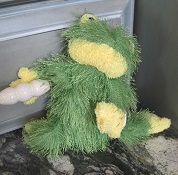 Prompt: Take Your Fill-In-The-Blank To Work Day
Take your dog, cat, frog, aunt/ant to work day.
From the June 2015 Costco Connection: Summer is typically a time when many businesses see a drop-off in customers, so they create ways to engage customers.
Here are some specially designated days and, of course, you can write on any of these. Have fun. . . Let your imagination take over.
June 1: Flip A Coin Day
June 3: Repeat Day
June 4: Hug Your Cat Day
June 8: Best Friends Day
June 10: Iced Tea Day
June 18: National Splurge Day
June 19: Sauntering Day
June 26: Take Your Dog to Work Day
You can search the internet for all kinds of “official” days.
Just Write!