
Something you will never forget . . . Prompt #266

  • Something you will never forget . . . Prompt #266

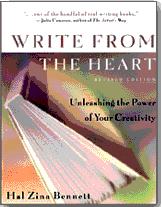
    Today’s prompt is inspired by Hal Zina Bennett, Write From The Heart

    Pink lemonadeFor some people, summer means sipping cool drinks. For others, summer might mean sitting around a campfire after a day of hiking, swimming, exploring. Summer might mean telling stories —tall tales or short ones— while lounging on a porch, a patio or a boat deck. There is a rhythm to summer, unlike any other time of year.

    Summer ’round the campfire brings out story tellers. The shaman storyteller of ancient times, embraces his own life experience, tells stories to the community that gathers in a circle around him, a fire blazing at its center. In the telling of what most deeply touched his life, the shaman helps others to see that they are not alone. And in the process both storyteller and listeners are healed.

    Imagine now, that you are sitting ’round a campfire, very comfortable with the folks you are sitting with. It’s story telling time. Each person tells a story about a time that was so meaningful, it is something they’ll never forget.

    Prompt: Write about something you will never forget.   Remember: first thoughts are where the energy is. If you can, start writing where your first thoughts take you. If that becomes difficult, write about another time, another story. And when you are finished writing, please take a few minutes to do some clearing (described below).

    Right after writing: Take a deep breath in. Hold for a moment. Let it out. Shake out your hands. Another deep breath in. Let it out.

    Again: A deep cleansing breathe in. Hold and release.

    If you wrote about something that leaves you feeling wonderful, keep it. Hold it close to your chest.

    If you wrote about something that leaves you feeling uncomfortable . . .  release it. Gather your thoughts and your words. Send them up in the campfire smoke. Send those thoughts up with the smoke.

    We’re going to replace the space that those thoughts occupied with an image that comforts you.

    Choose an image that is comforting to you. Any image you like, as long as it soothes. Give it a color.

    Fill the space in your heart with this image and the color.

    Take a deep breath in. Hold for a moment. Let it out. Stretch. Another deep breath in. Hold and release. Congratulate yourself. Even if you didn’t write, you may have thought about what you could have written. Maybe, when you have time, you will write on this topic: Something you will never forget.
  • Essential Wound Prompt #194

    Write From The Heart by Hal Zina Bennett is one of my all-time favorite books on writing.

    The following is an excerpt from Write From The Heart.

    “I am convinced that every essential wound, by its very nature, has the potential for opening each of us up to the full potential of our very soul. I do not mean to be Pollyannaish about it, either. It’s not a matter of the universe providing us with the challenges we supposedly need for our spiritual growth. I tend to believe in the universe’s ‘benign indifference,’ as Camus once put it, and that God is something like a courageous and loving parent who gives us all we can take in, then lets us go on to live our lives the best we know how. I think that must have been what Joseph Campbell was talking about, too . . . ‘the world is a match for us and we’re a match for the world. And where it seems most challenging lies the greatest invitation to find deeper and greater powers in ourselves.’

    Our own perceptions of the world, the inner vision of what we think life is about, gets challenged in every essential wound. Our true creativity comes about when we think life is about, get challenged in every essential wound. Our true creativity comes about when we start trying to sort all that out, asking what the wound mirrors back to us, what it tells us about ourselves, what we need to let go of, and what we need to learn to embrace. When we do that, we take ourselves out of the role of victim. We see that there’s an alternative to the way we ordinarily look upon our grievances — that we can literally mine even our worst errors for the treasures they contain. When we look at our wounds in this way, we invariable discover turning points, breakthroughs that carry us beyond the limits of everyday thinking. And we can go forth to tell the stories that are truly important to tell, that reveal the hidden truths of our lives and the lives of others, thus building spiritual bridges between our own consciousness and theirs.

    write from the heartThe essential wound is a particular kind of experience that happens off and on throughout our lives and goes to the very core of our being. These wounds are important to writers for the same reasons that peak experiences are — they are the resources that lend authenticity to our writing. Essential wounds have an added element in that they reveal our humanness. They reveal that we each create our own inner worlds, mental models of the way we believe things should be. The wound occurs when something happens to reveal the difference between how you see the world and the way the world really is. You may feel shattered, hurt, disappointed, or depressed, but if you keep your eyes open those moments can lead to dramatic revelations.”

    Prompt: Write about an essential wound.

  • Guest Blogger Hal Zina Bennett – Transforming Your Inner Critics

    Guest Blogger Hal Zina Bennett writes about our inner critics.

    Most of us writers are plagued by inner critics, those still small voices that speak from within, asking unsettling questions such as: “What makes you think you’re a writer?” Or, “This is drivel.” Or, the classic, “Don’t leave your day job.” Everyone has these inner critics, though some of us find their voices louder or more cutting than others. In their most insidious form, we feel these inner critics as our own self-judgments, not truths that we must accept. The author Storm Jameson put it well: “There is as much vanity in self-scourgings as in self-justification.” We write a few lines or pages that upon our review are “just terrible.” Instead of just rewriting or editing them, we point to them as evidence that we really can’t write.

    It’s difficult to accept that these inner critics, who stop us in our creative tracks, are within us; they may have originated through events that happened in our past but today exist only in our minds. To free yourself of these inner critics’ influences only when you own them, fully acknowledging that you yourself are creating them today. If you can own your inner critic, you have a choice — to cling to their judgments or not. Try to push them away and they only grow stronger, arguing like willful children or belittling parents. You can let them go, let go of your attachment to them. How? Start by making them characters in a story or in vignette you write in your journal. Describe them in detail, the more detail the better. Give the color of their eyes, the color of their hair, their body type, their voice, their stench.

    C. G. Jung encountered a form of inner critic in what he called the animus. His experience, reported in Memories, Dreams, Reflections, was that the animus, or inner critic, has its most powerful impact on our emotional life only when it remains unconscious and unnamed. As long as it is unconscious and unnamed, we experience it as inseparable from us. We can feel quite attached to their harsh criticisms.

    Jung found that by “personifying” them we essentially “strip them of their power.” They still exist in our psyches but are better able to take their harsh judgments with a grain of salt. As writers, we can even use them as seeds for characters in our stories.

    If you’re plagued by a particularly bothersome inner critic, recreate them as a character in a story. Satirize them, if you wish. The more you’re able to give them a reality on paper, the more you will be able to accept them as having a right to own opinions, their own distorted pictures of you. The more real they become on paper, the greater will be your choices about accepting or rejecting what they say about you. I’m convinced that some of the world’s most memorable villains were created in this way—and in the process their creation has defused their power as inner critics.

    Hal Zina Bennett is a bestselling author of more than 30 published books, including Write Starts: Prompts Quotes and Exercises to Jumpstart Your Creativity, from which this article was excerpted.

    Bennett.Write Starts

    Permission has been granted for use of the requested passage from the book Write Starts. Copyright © 2010 by Hal Zina Bennett. Reprinted with permission of New World Library, Novato, CA. www.newworldlibrary.com.