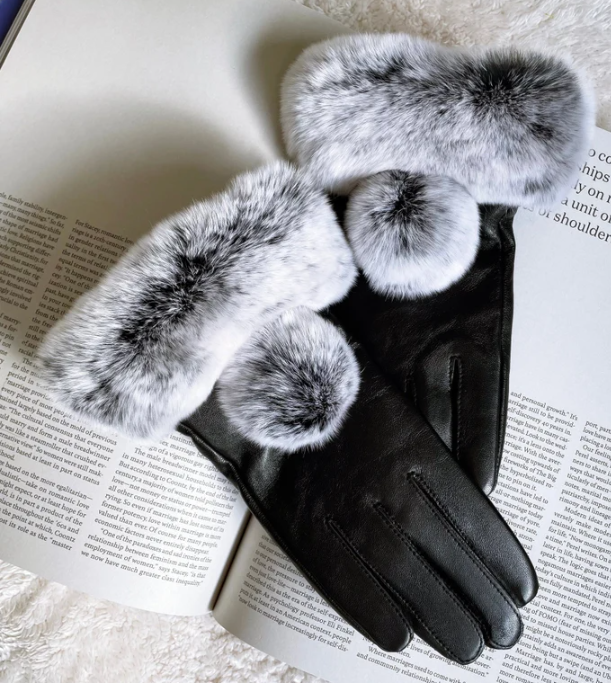
I lost my gloves—the ones I bought in Venice last year. I loved them. LOVED THEM. How could I love a pair of gloves? They had a soft, fluffy pompom on the top. I liked to stroke them. It was like petting a kitty. Sadness. And upset with myself for losing them.
So I lost a pair of gloves. How could I feel this deep emotion for a pair of gloves? It’s the attachment to my experience in Venice and my love for the friend I was with.
Loss is a recurring theme in my writing. At times, I struggle to manage the intense feelings that accompany loss. There’s a burning sensation in my belly that I want to go away. I find myself thinking, “No, no, no,” while tears begin to flow. It’s not about the lost gloves; it’s about the impermanence of life.
To cope, I have established a gratitude practice, focusing on appreciating the little things. Friendships are crucial in supporting me through my feelings and creating a safe place for expression. I have friends with whom I can laugh after the tears have flown.
Meditation and journaling help me process my emotions and provide a calming effect. I also have a favorite playlist that serves as a therapeutic outlet, allowing me to reflect and connect with positive memories.
Change and loss are a part of life. Aging brings about losses with a decline in health. You may slow down and cannot do everything you did when you were younger. Retirement brought changes. You are adjusting to a new routine or lifestyle you may not have anticipated. Give yourself time. What are some of your passions that can still provide you with a fulfilling life? Focus on them.
We can be prepared for change and build resiliency as we age. Prepare for the practice of accepting what is.
As Frank Ostaseski writes in “Five Invitations,” Welcome everything, push away nothing. It doesn’t mean you have to like it. Then focus on what you can do.
Embrace the joys. As the song goes, “Accentuate the positive, eliminate the negative, and don’t mess with mister in between!”
Sharon Ziff, RN, spent twelve years as a Hospice Nurse where she learned about end-of-life issues and the importance of the preparations to die with dignity.
Sharon is certified in the “Authentic Presence: Contemplative End of Life Care Training,” a specialized program, and is committed to providing the Community Education Project called “Let’s Speak About Death.”
Rebecca’s writing and her workshops are magical, showing what happens when we let go and are open to making discoveries.
Magic by Rebecca Evans:
I am an AI Rebutter.
I am a Long-Hand-Writer Endorser.
I pen pages each morning in a journal, jot a list of tasks to (almost) complete, scaffold essays and poems across composition notebooks. In separate journals, I copy beautiful lines from artists I love, wishing to transfer talent by osmosis.
For me, magic begins within this first planting.
I lean into an unfolding. Instead of writing towards an idea or theme or popular topic, I follow the words where they lead. It is from this space in my first drafts, I discover seedlings. Tiny sprouts. Sometimes one piece feels as though it could be in conversation with a piece of work I developed earlier. Other times, I might recognize the start of the poem. I rarely see the entire piece, near completion, in that first long-hand written scratch. And when I do, I most likely have been working out that essay or poem in my head and heart for some time. Perhaps decades.
From these drafts, I transfer work—out of my notebooks and into my computer. I sort them, temporarily name them, file them, hope to return and flush them out and into some semblance of literary art. Some of them make it out alive. Many appear dormant. They are not. These are transplanted seeds now contained and, in their incubation, like a compost-covered perennial, they rest until ready to bloom.
Every artist holds a process of their own. This is mine. And this early delicate care is critical for my art. This is the beginning. The revision and the polishing—the places I thin and prune or add nutrients—come much later. THAT process requires highlighters and research and sitting with my art as if I’m with an old friend from far away.
The argument I’ve heard from my writer-friends who use Artificial Intelligence seems reasonable. One friend shares that she uses AI to get the first draft down and save time. And I think, Oh! She wants quantity. She’s writing for a page number, not the process of art. Another writer explains that AI works with her initial idea and AI helps expand her thoughts into a draft that is further along, something she can begin editing. And I think, Ok, she’s looking for a short cut.
I know I sound judgey and each writer has the right to produce a product for the world to enjoy by whatever means.
And yes, I’ve heard the AI argument trickle: Well, I built the foundation, which is my idea, with a new medium—the computer. And from there I revise. And, isn’t true art in the revision?
I couldn’t agree more. As we polish, we begin to see the shape, the story line, the narrative arc, the angel in the stone. Someone, somewhere taught me this same concept, Art is in the revision.
I repeat this to my writing students. I say this aloud to myself.
Yet when I hear this phrase resurrected in the context of an AI defense, it feels as if my child is misquoting me.
If you extend the argument that generative AI is still your work, your heart-art, and working with a draft generated for you is still your art, then I believe you’ve lost your artist’s way.
If you share your idea with another writer and paid writer to write your first draft, yet you polish the draft, are you still the artist?
Isn’t this now a collaborative?
Perhaps your name is on the byline, but the piece is ghostwritten.
Aren’t you editing AI’s work?
My worry for future artists is their need for instant-gratification. Our society pressures this fast-paced finishing, pushing artists to produce more and produce it as quickly as possible. I think we lose something special in our hyper-production mentality. It’s the difference between delicately placing a spotless ladybug on a rose bush, allowing her to do her job, versus spraying that rose with chemicals that harm us—you, me, our soil, our air—to quickly rid the buds of aphids.
We’re losing the slow-infusing, benefits of nature.
The investment of curation has been replaced. We’ve the cut-and-pasted Happy Holiday text message sent to the masses instead of our soft-curly strokes of the handwritten card. We’ve lost the home-made bread aroma, the gathering ‘round a table for a game, the random phone call, the old-fashioned family portraits.
Time is our greatest commodity. The way we use time defines us. This sets our tone, our day, our hearts. We will feel the dew of grass beneath our feet? We will stop and smell the roses…or anything? The micro moments are where we live and absorb the world. The pause is often the loudest note in a song. The space between the first long-hand under- or over-written draft becomes the pulse of the poem.
I want the entire art experience. I want this whether I’m the artist or the audience. I want to feel the duende in the flamenco, the fire in the cello, the tears in the writer. I want to feel this as I create—one slow step to the next. This intentional early movement helps me discover me, helps me understand the way I’m ingesting the world around me. Helps me.
Rebecca Evans, memoirist, essayist, and poet, writes the difficult, the heart-full, the guidebooks for survivors. She teaches writing in the Juvenile system and co-hosts the Writer to Writer radio show. She’s also disabled, a military veteran, and shares space with her sons and Newfoundlands.
Her work has appeared in Narratively, The Rumpus, Hypertext Magazine, War, Literature & the Arts, The Limberlost Review, and more.
She’s earned two MFAs, one in creative nonfiction, the other in poetry, University of Nevada, Reno at Lake Tahoe.
She’s co-edited the anthology, when there are nine, a tribute to Ruth Bader Ginsburg (Moon Tide Press, 2022).
She’s penned a memoir in verse, Tangled by Blood (Moon Tide Press. 2023) and has a book-length poem forthcoming in 2024.
A writer and writing teacher I admire, Rebecca Evans, talked about an Entry Point as an opener when writing.
Rebecca asked us to think of comfortable things.
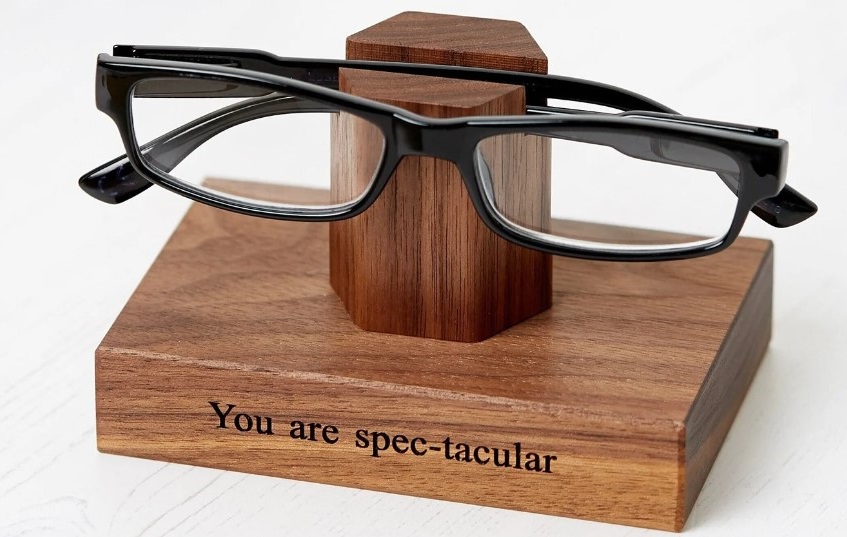
Things you’re wearing and you don’t even know you’re wearing, like eyeglasses.
I thought that was interesting because I don’t like wearing my glasses. I usually take them off as soon as I get home from going out.
About a week after Rebecca’s workshop, as I drove to my first errand, things looked blurry. I couldn’t read signs clearly.
I thought, “I need to get my eyes checked.”
I accomplished my errands. Got home. And did my usual, took my glasses off first thing.
That’s when I noticed . . . I was not wearing my distance glasses. I was wearing my computer glasses.
I guess the moral is things can be comfortable without our even noticing it.
Or, maybe the moral is . . . pay attention.
Either way, let’s find an entry point for writing.
Find something comfortable on your body. It could be a tattoo, a scar, something you are wearing. Just notice an item of comfort.
Now look around, find something to look at that brings comfort, or a sense of peace, a sense of all is right with the world.
If none of that works, think of a phrase, a word or a sound, that brings comfort to you.
If you can’t find anything right now, don’t worry. Something will come to you.
If you did find a comfort point, use that as your focal point. If the writing gets difficult, look at that comfort item or think of your comfort word . . . use that as a reminder to breathe. As a reminder that you are okay. In the here and now, you are okay.
If the writing gets difficult, you can tap on your chest, just above the breast bone, with the tips of your fingers. This is a calming and centering activity.
While you are writing, if you run out of ideas of what to write about, and there is more time to write . . .
Rewrite the prompt.
Literally, rewrite the prompt.
Or:
What I really want to say.
I have been doing meditations online with Alister Gray.
Here are some thoughts from his meditation.
These are ideas we can use as an entry point into our writing.
~ Let go of resistance
~ Drop into a level of awareness
~ The power of acceptance
~ Experience inner freedom
Acceptance is accepting all there is in the present moment. Allow it to be.
Clarity and wisdom guide us into the next moment.
Let acceptance in. Let acceptance be your super power.
Acceptance is a gateway to a peaceful place, a grounding place.
Acceptance of yourself, including your flaws, past experiences, what you think is unlovable.
Realize your true nature. Your wholeness of who you are.
Drop in to the super space of awareness which is unconditional love for yourself, including what you have labeled as bad.
Writing can help us to heal . . . so we can navigate life consciously.
Take a moment to take this in.
Feel it. Let it settle.
While you write:
Notice what emotions come up. Let the tears come.
Accept whatever comes up.
Accept whatever path you are on.
Before starting to write:
Stretch.
Take a few deep breaths.
There are two writing prompts.
Prompt #1: Acceptance.
Write for 15-20 minutes. Longer, if you have time. Save time for an exit point.
Rebecca talked about an exit point, closure, after writing.
Don’t carry your hard writing to the next thing you are doing. Writing is your sacred place.
Think of your item of comfort . . . either a real thing, or a word, a mantra.
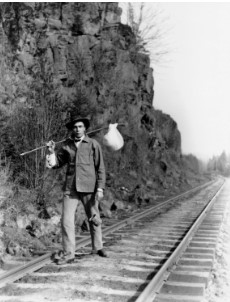
If you were to be a hobo, carrying all your belongings in a kerchief tied to a stick, what would you have in the sack?
Or maybe you would have a knapsack.
Research shows:
A female hobo is a boette.
A hobo is a migrant worker in the United States.
Hoboes, tramps and bums are generally regarded as related, but distinct:
A hobo travels and is willing to work; a tramp travels, but avoids work if possible; and a bum neither travels nor works.
Be careful when you call a vagrant or homeless person a hobo — although this is exactly what the word means, it is a somewhat offensive term.
Why yes, perhaps I went down the rabbit hole with researching!
Thanks to Rebecca Evans for this “hobo with a kerchief on a stick” prompt idea. When she mentioned that in a conversation, I immediately saw the image of someone carrying a sack on a stick and thought “Great prompt!”
We tell stories. But before we tell them, we hold them, think them, sometimes, we thank them. We recall and carry and live with them in our bodies. We embody them. Sometimes, they embody us.
Some of our stories are built from sandbox and rhyme-singing childhoods. Others, built from bullies beneath the monkey bars. Many are the stories told to us, about us, some true, though most are not. And still others, the most difficult ones, are born from experiences.
Someone one asked how long it took to write my memoir. 55 years. Yes. All of my years, because I lived through the experiences first. The truth is that we don’t just live through our experiences. We also don’t “get through” or “get over” the tough stuff—grief, loss, trauma.
They live in us.
If we’re lucky and wield pens, we push them out and onto the page. This might be why many of us write: Not with the goal of publishing, but to make sense of the past, to understand and know ourselves.
We live in flesh and filament built on our stories. Once written, the stories are not necessarily purged and all returns to normal. (What is normal after all?) Perhaps, our wound is re-opened and we’ve released a bit of poison or pleasure. And, much like caring for any opened gash, we should rinse, cleanse, and heal the body.
Sometimes the wound has lived so long, it’s layered in scar tissue: fibrous cells and collagen rushing to the injury—trauma, surgery, disease—building, no, over-building a thick wall of protection.
Some days I think I’m made only of scar tissue.
I try to remember that this tissue started as necessity, perhaps even survival.
Scar tissue forms in one direction, limiting movement, which, again, offers protection. After a time, joints and flesh stiffen, and now, on top of injury, there is new pain and discomfort. If left unattended, we wade through life much like mummies tightly swathed and cocooned, and, inaccessible. Inaccessible to rich experiences.
Scar tissue is not only a physical response. I believe scar tissue exists spiritually and emotionally too. Whether physical, emotional, or spiritual, the same principles apply. If we cannot move properly, we become a barrier in our own existence. We cannot extend, stretch, touch vulnerability and beauty. There comes the moment scar tissue no longer serves but hinders our human experience.
To heal, you need to work through scar tissue. If you’ve experienced the joy of breaking apart scar tissue with a physical therapist, you’ll respect the tearing it takes repairing, regaining adequate range of motion in the body. Or close to adequate.
My grandmother used to say, “The way in which you heal determines the quality of your future life.”
I should have listened to grandma more.
Writing is much like a physical therapist, breaking emotional scar tissue. The page offers safe and trusted space, (like a therapist’s office) taking us through our limited range, moving through stiffness and discomfort. Eventually we find ease. We also find that where there are wounds and scars, there is permanent alteration. In our joints. In our hearts.
We also become our own therapists in our writing practice and, because of this, we must approach our writing life with mindfulness. We must learn to care for the writer.
I combine at-desk rituals that I’ve woven into my writing life. Here’s a few you might consider, and remember, check with your doctor/therapist/guide. These are not meant as prescriptions nor replacements for medical or emotional treatment. Any type of wellness/fitness advice should be taken into consideration with your individual and medical/emotional limits:
STRETCH ten minutes every hour you sit at your desk.
STRETCH your neck and your piriformis. We carry tension in these two areas, and you can easily incorporate seated stretches. Find simple, kind movements and do them. Do them often.
NOTE: The piriformis is a flat gluteal muscle. Think where the thigh bone inserts into the hip bone. Many with piriformis flare ups experience sciatica as well.
SECOND NOTE: When we say something (or someone) is a pain in the neck or a pain in the butt, well, there’s much truth to this. If it (or they) bring you stress, it (or they) may also encourage physical pain in your body.
THIRD NOTE: It’s fun to say, “That’s (you’re) a pain in my piriformis.” Sometimes just saying that phrase relieves stress.
END ON A HIGH. Hemmingway offered this writing advice to avoid writing yourself out. Stop your writing at a place of high interest. My END ON A HIGH relates to writing something light, something easy on the heart towards the end of your practice. The deeper and darker you write, the more important this might become.
You can also END ON A HIGH listening to lovely music. (I prefer cellos). Or dancing. Or walking in nature. Or reading someone else’s lighter work. Or watching comedy. Or . . . you get the idea.
In Jewish culture, it is customary to place a bit of honey on the letters of the alef-bet when a child first learns Hebrew. The child licks the honey, associating the sweetness of letters with the delight of learning. As writers, we can model other cultural practices of gentleness and delightfulness in learning and rewarding.
I’m aware these ideas push against the more frequent writerly advice, “Sit. Write. And write some more.” For many writers, the process might be more than producing a poem, an essay, a book. Writing sometimes feels like birthing or surgery. So caring for oneself as if recovering becomes critical if we want to continue writing (and healing).
This is no easy feat for many of us. I’m no different. For the last twenty-plus years, I’ve been a decent caretaker, just not for myself. I’ve spent most of my life punishing my body—starvation, extreme fitness, binging, purging, and other forms of subtle torture. Maybe this was my attempt to release my most haunting stories. Maybe I thought I could starve out my memories. Or beat them down.
Even as I offer writer-care suggestions, I should add, go gentle on yourself as you discover how to do this. The harder you’ve lived, perhaps the nicer you must be. I’m not sure. I’m still learning.
I’m a memoirist, poet, and essayist. In addition to writing, I mentor high school girls in the juvenile system and teach poetry for those in recovery.
In my spare time, I co-host a radio program, Writer to Writer, offering a space for writers with tips on craft and life.
I’m also a decorated and disabled War Veteran, a Jew, a gardener, a mother, a worrier, and more.
I have a passion for sharing difficult stories about vulnerability woven with mysticism.
I’ve earned two MFAs, one in creative nonfiction, the other in poetry. I live in Idaho with my sons, my Newfie, and my Calico.
My poems and essays have appeared in Narratively, The Rumpus, Entropy Literary Magazine, War, Literature & the Arts, The Limberlost Review, and a handful of anthologies. I’ve co-edited a forthcoming anthology of poems, when there are nine, a tribute to the life and achievements of Ruth Bader Ginsburg (Moon Tide Press, June 2022).
I’ll be offering free workshops that revolve around caring for the writer. These will begin in July. Find out more at my website, Rebecca Evans, Writer, in the Musings and Movement section.
Note from Marlene:
“The Write Spot: Writing as a Path to Healing” offers more ideas for self-care when writing about difficult topics. Available at your local bookseller and as both paperback and ebooks from Amazon.
Rebecca Evans taught an amazing class about writing monologues, which sent me on a search for “monologue submissions.” Scroll down for information on Rebecca’s June 16, 2022 writing workshop.
“The detour that leads to an unexpected adventure. The vacation where everything goes wrong. The annoying stranger who turns into an amazing guide. Forward Theater is looking for original scripts about travel, whether to places far away or destinations close to home. Even a trip across the street can expand your horizons.
Here is your chance to create a tale of the connection, joy, fear, beauty, exploration, and discovery that can only happen when you get out in this world.
As you consider what to write, please be as creative as possible. It can take the form of comedy, spoken word, drama, farce, autobiography, or pure fiction. Our goal is to produce a wildly diverse evening of theater, so let your imagination run free!”
Deadline: October 1, 2022.
Guidelines for 2023 Monologue Festival Out in This World
THE ROSETHEATRE COMPANYseeks short comedic monologues for the creation of a curated digital film & audio series titled IN CHARACTER.
Selected monologues will be produced and released by The Rose for use across digital platforms, including audible, Instagram, and You Tube channels.
We’re looking for compelling, well-told and entertaining first-person stories. Non-traditional pieces (stand-up, literary, poems, music, sketch, spoken-word) are welcome provided they meet The GUIDELINES.