A December Memory . . .

Prompt #859
Write a December memory.

Make a list of things that are hard for you to do.
or
Write about one of those things that are hard, and yet you do it anyway.

Excerpt from an excellent post by Dan Blank:
“As a writer, it can be difficult to find a clear path that leads you to your goals.” “One of my biggest concerns is that someone has a vision for what they want to write and create, and they justify giving it up. That it’s too hard to publish, so they don’t. That they receive too many rejections, so they give up. That they read marketing is impossible nowadays, so they stop trying.” You don’t have to struggle alone. Dan Blank has answers. “We struggle alone. We succeed together.” The Creative Shift by Dan Blank, November 7, 2025
“As writers, we’re often trained to seek momentum—significant events, turning moments, the big emotional payoff. Especially in memoir, there’s pressure to magnify the trauma or spin a grand arc of triumph. But when I sat down to write, what called to me weren’t the headlines. It was the folds in between.” — Mary Monoky, “What Stillness Taught Me About Story,” August 6, 2025, The Brevity Blog

Write about something someone thinks about you, but it’s not true.
A misconception.
Just Write!
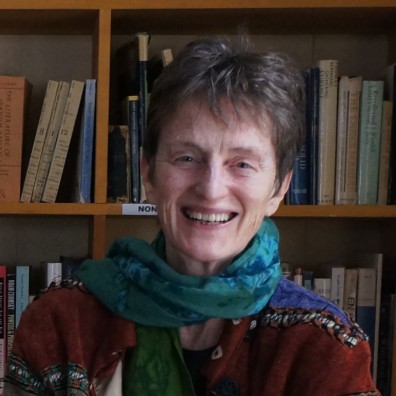
Charlotte Wilkins
We had an interesting discussion in my Jumpstart writing group the other day about being an introvert and how hard it is sometimes to be around people.
Well!
As writers and readers, it’s important to support authors. One possibly easy way is to attend author events.
Charlotte Wilkins offers suggestions on how to be a successful participant at author events.
“I attended the two book readings to support these authors, yet I’m the one who learned so much from them: relax and be yourself; having a sense of humor about yourself puts your audience at ease; read short snippets that makes the listener wonder what’s to come (Woodson says you must have intention in every line to pull the reader forward); be generous with your responses; hope for the best, prepare for the worst; and stick a couple of questions in your pocket just in case. It seems literary citizenship is a win-win.”
“Literary Citizenship: What’s in It for You” by Charlotte Wilkins, Brevity Blog, December 19, 2024
By the way, I keep a note on my desk, “I am an introvert who can act like an extrovert.” From “A Reformed Introvert,” by Laurie Neveau, Chicken Soup for the Soul, July 19, 2025

Playing With Abstract Poetry
Abstract poetry is a form of poetry that prioritizes the auditory and emotional impact of words over their literal meaning or conventional grammatical structure.
Prompt 1 – The Warmup
Write for 2 minutes about something troubling or sad.
Write for 2 minutes about something using the opposite emotion: joyful, hopeful.
Write for 2 minutes on something from nature, something from the natural world.
Keep that writing nearby for Prompt 2.
Why write an abstract poem
“Science has shown that when we engage in play, we increase brain activity in the prefrontal cortex, where creative thinking happens.
“You are not striving for perfection. You’re striving for perfectly unpredictable.” — “Words Gone Wild,” by Dr. Finnian Burnett, Writers Digest, Nov/Dec 2025
Prompt 2
Write an abstract poem, using only the words you have written in Prompt 1. Write for 15-20 minutes. It doesn’t have to make sense. It shouldn’t make sense!
Intro to Prompt 3
Homophonic: Words that sound alike, spelled the same, different meaning
Rose (flower) and rose (past tense of rise).
Or, sound alike but different letters: carat, carrot, caret (blinking cursor)
Examples
Dylan Thomas, Under Milk Wood: “The shops in mourning” where mourning can be heard as mourning or morning.
Thomas Hood, Faithless Sally Brown, birth & berth and told & toll’d
Homophones of multiple words are known as oronyms.
Examples of oronyms:
ice cream and I scream
depend and deep end
this sky and this guy
some others and some mothers
night rain and night train
my newt and minute
Prompt 3 Mistranslation
This exercise is homophonic translation: Changing text in one language into another language, with no attempt to preserve the original meaning.
Translate one of the following poems any way you want. You can use the method of what it sounds like. Or what the shapes of the letters suggest to you. There is no wrong response.
Your translation does not have to make sense. Have fun with this!
1. Můj manžel a já jsme stáli společně v nové nákupní centrum
která byla čistá a bílá a plná možností.
Byli jsme chudí, takže jsme rádi projít obchody
protože to bylo jako chůze přes naše sny.
V jednom jsme obdivovali kávovary, modrá keramika
mísy, opékače topinek velký jako televize.
2. my eggenoot en Ek het gestaan saam in die nuwe winkelplein
wat was skoon en wit en vol van moontlikheid.
ons was arm so ons gehou van om te loop deur die stoor
sedert hierdie was soos stap deur ons drome.
in een ons admireer koffie vervaardiger se, blou pottery
bakke, toaster oonde as groot as televisies.
Credit to writing teacher Terry Ehret, who first introduced me to abstract poetry and homophonic mistranslation.
Contact Marlene if you want the languages and translations for these poems.
Just Write!
“Forget about inspiration and get into the habit of writing every day. Habit has written far more books than inspiration has. If you want the Muse to visit you, she needs to know where you are: so stay at your desk.”
— Philip Pullman
“Forget about inspiration and get into the habit of writing every day. Habit has written far more books than inspiration has. If you want the Muse to visit you, she needs to know where you are: so stay at your desk.” —Philip Pullman
Quote in “Write it All Down” by Cathy Rentzenbrink.
#justwrite #amwriting #iamawriter

Ethan Gilsdorf on Zooming In and Lingering:
“In personal essay, memoir and creative nonfiction, we want to bring to our pages a sense of verisimilitude, of intruding upon someone else’s circumstances, of grasping someone else’s fleeting take on the world.”
How to do this?
Gilsdorf suggests:
“The language of cinematography is a useful analogy: in a wide or medium shot, the viewer is distant from the subject; in close-ups and extreme close-ups, the frame of reference is tight.
In writing, this means: rather than quickly cutting away, or keeping the viewer far removed, like a drone hovering high above, we can zoom in on the subject of our attention, or pan across it, slowly.
We can train our writerly efforts to pause. To not skip over— but to linger, loiter, dawdle, stay put, wait.”
Excerpted from “Stay a Little Bit Longer: The Art of Zooming In and Lingering,” The Brevity Blog, March 17, 2025
“Be brave with it. Be brave with the thing that you are most scared to talk about, that is the thing you need to be able to talk about. There are so many tragedies in you and joy in you that need a voice, and you would be so surprised to see that when you voice that thing you are so scared of how many people across the world will go, ‘Hey, I feel like that too. Thank you for putting a voice to how I feel.’”
— Nikita Gill
Quote in “Write it All Down” by Cathy Rentzenbrink.