Relax To Enhance Your Creativity

  • Relax To Enhance Your Creativity

    The Write Spot Blog is all about writing: Writing Prompts to inspire you; Just Write tidbits to motivate you; Quotes to let you know others are in the same boat as you; Places to Submit to get your work out there; Book Reviews to share authors’ work; Guest Posts for all kinds of writing-related things.

    Today’s Guest Blog Post by Suzanne Murray talks about increasing your creativity by relaxing. Sounds easy, doesn’t it? But what about cortisol, adrenaline, and epigenetics? Factor those in, and it becomes apparent that relaxation isn’t as easy as drifting in a hammock.

    Fortunately, Suzanne Murray offers strategies to help us learn to relax. 

    HOW CREATIVITY CAN HELP US RELAX

    We all know that relaxation makes us and our bodies feel good whereas stress causes us to tense up and feel less that optimum. New scientific research shows just how important relaxing our bodies and minds is.

    The emerging science of epigenetics shows that our genetic expression is not permanently fixed at birth, but actually evolves as we grow and learn. Environmental factors including nutrition, stress and our emotional responses can affect how our genes express themselves without changing the basic blueprint of our DNA, the genetic material in our cells.

    When we are stressed our genes produce hormones associated with fight or flight like adrenalin and cortisol that are associated with aging and making us more susceptible to disease. When we are relaxed and feeling good our genes produce chemistry that boosts our immune system and helps with cellular repair and growth. 

    A study looking at mindfulness practices like meditation, yoga, breath work, and other relaxation techniques, showed that we can actually “turn on” disease-preventing genes and “turn-off” disease-causing genes through relaxing. Research on the energy psychology modality EFT (Emotional Freedom Techniques), an easy to use self-help strategy that combines western psychology with Chinese acupressure, found that an hour session of EFT lowered cortisol levels by 24 percent.

    I’d like to add creativity to ways we can relax as well as develop more of our potential.

    Creativity is really a form of mindfulness since it puts us in the flow of the moment and feels good. Adult coloring books have been shown to reduce stress. I like doodling or free writing where you just let the words flow out of the pen with no thought to what you are writing.

    Bringing play to whatever process you are working with and letting go of attachment to outcome is important.

    Stress so often stems from the fact that our mind has leapt ahead with worry about the future or is chewing over something that happened in the past. When we do things that bring us into the moment we naturally relax.

    Find what works for you. Play with it and see if you feel better.

    Suzanne Murray is a gifted creativity and writing coach, soul-based life coach, writer, poet, EFT practitioner and intuitive healer committed to empowering others to find the freedom to ignite their creative fire, unleash their imagination and engage their creative expression in every area of their lives. She works with simple, powerful techniques to help clear whatever gets in the way and creates a safe and sacred space for your creative and soulful life to blossom. She provides an experience of the joy and beauty that comes from embracing your gifts and expressing them in the world. With a lifelong connection to the natural world, she enjoys sharing the grace and wonder that Nature can bring to your life and creativity

     Writing and Creativity in Nature
    One Day Workshop Point Reyes CA
    April 22, 2017, 10 am to 4 pm

    Spending time in nature is good for our health, enhances our creative capacities and increases our general sense of wellbeing. It can help us enter the flow. Join me for this one day workshop where we will work with our creativity in the beauty of nature.

    EFT (Emotional Freedom Techniques)

    I’ve been working with EFT in new ways that allow us to laser in on the issue and shift it at the core. We often make significant shifts in a single session. Sessions are available by phone and Skype


    Original posted on Suzanne’s April 2, 2017 Blog


  • The bigger the issue, the smaller you write.

    “The bigger the issue, the smaller you write. Remember that. You don’t write about the horrors of war. No. You write about a kid’s burnt socks lying on the road. You pick the smallest manageable part of the big thing, and you work off the resonance.” —Richard Price

  • The thing that bugged me . . . Prompt #315

    Today’s Prompt:  The thing that bugged me.

    Set your timer for 15 minutes.

    Write whatever comes up for you.

    Just write!

  • Why should you use strong verbs?

    Action words

    “A French research team found that action words (kicked, stomped, raced) fire up the motor cortex, which governs how the body moves. Even more specific, describing body parts, such as an arm or a leg, activates the part of the brain that controls arm and leg movement. Using evocative language also wakes up a part of the brain called the hippocampus, which activates long-term memories and plays a significant role in how a reader’s mind turns language into a meaningful experience.” Writer’s Digest, Sept. 2016

    And that’s why it’s important to use strong verbs.

    Make a list of strong verbs and action words. 

    Keep your list handy.  Use it like a thesaurus when you are stumbling for that strong verb that’s on the tip of your tongue, within your grasp, but not quite accessible.

    Or, use a thesaurus.

    To learn more about using strong words to convey emotion, action and memorable characters, click on the following topics. You will end up on another page, here on The Write Spot Blog.

    Use sensory detail and be specific  

    How to be a better writer  

    Vex, Hex, Smash, Smooch  

    Just write!

  • Practical jokes . . . Prompt #314

    Write about a practical joke you pulled off, or a practical joke that was played on you.

    A practical joke is a mischievous trick played on someone, generally causing the victim to experience embarrassment, perplexity, confusion or discomfort.”  Wikipedia


  • It was fun . . . Prompt #313

    Today’s writing prompt:

    It was fun, until it wasn’t.


  • Use emotions in your writing.


    “Readers covet an emotional experience above all else. When you write scenes, use all the methods you can to help your readers feel the emotions you want them to have—sadness, anger, confusion, mistrust, love, lust, envy, greed and so on. If you want readers to hate your character, show him being despicable to someone who doesn’t deserve his wrath or to someone he supposedly loves. The more you draw readers in to the emotional experience, the more they will engage, and the more likely they’ll want to read your next book.”

    Excerpted from the September 2016 issue of Writer’s Digest magazine

    There are over 300 prompts on The Write Spot Blog. Choose one and practice incorporating emotions in your writing. For example:   Physical gestures can reveal emotions . . . Prompt # 211 

    Just write!


  • What is it you really want? Prompt #312


    What is it that you really want? 

    Write whatever comes up for you.

    Could be serious, playful, wishful, fun.

    Just write!

  • House Image…  Prompt #311


    Think of a house or an apartment you lived in – either where you grew up or one that comes to you most strongly: a place that seems most pertinent or the place you want to discover more about.

    Use a pen or pencil and draw a blueprint of the house or apartment.

    Sketch the floor plan, include doors (front, back, side), stairs, and each room within the house.  Let your hand and mind be the guides. Don’t worry about getting it exactly correct.

    Use color to explore

    When you feel done with the blueprint, use color to explore the house/apartment and your feelings.

    Color the rooms, or outline the rooms, using the actual or basic color of the walls, the rugs and furniture.

    When you feel done with coloring, write whatever comes up.

    Examples

    The house was yellow I hated that color. It made me think of . . .

    The red front door stood out like . . .

    My pink/blue room was a sanctuary. I could . . .

    I liked the green kitchen best. This is where I . . .

    You can also write opposites:

    The house was yellow. I loved that color. I never realized until now . . .

    The red front door blended in. I never thought . . .

    My pink/blue room was hellish. I could never . . .

    I disliked the green kitchen the most. This is where I didn’t . . .

    Go where your mind wants to go.  Just write.

  • Figuring out the important thing

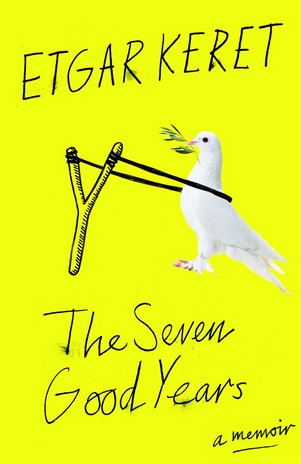
    “Writing essays is like therapy because you’re figuring out: What was the important thing in that incident? ”   —   Etgar Keret

    Keret, an “acclaimed Israeli writer . . . known for his unique and distinctive writing style” began writing essays after the birth of his son.

    “. . . because I’m sensitive about family issues. . . It never stops me from writing it, but it might stop me from publishing it.”  He wrote personal essays to “have a literary tombstone” for his father.  He is able to create work that is “moving and deeply affecting in only a few pages.”

    Excerpted from the February 2017 issue of The Writer magazine.

    Your turn: No pressure to write the next great American novel, just write what you know, what you experience. Write about your trip to the grocery store where you observed an act of kindness or had a weird encounter. Write about your ordinary-to-you holiday event . . . something you will find later and be glad you captured those exquisite moments that you had forgotten:  The funny story your grandfather told, your sweet aunt and her infectious laugh, the annoying presents you received from your equally annoying cousin/uncle/sister/friend. Write the good stuff, the bad stuff and the in-between stuff. Just write.