Imagine you are . . . Prompt #180

  • Imagine you are . . . Prompt #180

    Palm treeImagine you are on a tropical paradise vacation.

    Sitting on the lanai, hearing the waves lap against the shore.

    Smell the ocean breeze.

    Feel the soft wind on your face.

    See the light curtain billow in the gentle breeze.

    Settle back in your rattan chair, cool refreshing drink nearby.

    Hear the ice clink against the side of your glass as you sip your refreshing drink.

    Hear the gentle wind chimes.

    Breathe deeply, enjoying the fragrance of fresh, tropical flowers – the heady scent of orchids, plumeria, roses. Perhaps pink, climbing roses.

    OrangesSee a piece of fruit. . . an orange. Feel the bumpy, heavy skin. Peel it. Feel the texture of the orange free of its heavy skin. See the uniform sections connected into a symmetrical arc of segments . . . .a globe. Carefully, slowly pull on one of the segments. So slowly that you see the burst of juice that squirts out. Inhale. Smell the refreshing fragrance that erupts as the orange is broken into segments.

    Prompt: Write about a favorite time that involved family, friends or food.

    Or: Write about a vacation.

    Just Write!

  • There was a smell of Time in the air . . .

    Excerpt from The Martian Chronicles by Ray Bradbury:There was a smell of Time in the air tonight.

    What did Time smell like? Like dust and clocks and people. And if you wondered what Time sounded like, it sounded like water running in a dark cave and voices crying and dirt dropping down upon hollow box lids, and rain. Time looked like snow dropping silently into a black room or it looked like a silent film in an ancient theatre one hundred billion faces falling like those New Year balloons down and down into nothing. That was how Time smelled and looked and sounded.

    HourglassMarlene’s Musings: I love the idea of writing what Time smells like. . . sounds like . . . looks like. . .

    Your Turn: Choose an item, an object, a thing, that interests you. . . what does it smell like? sound like? look like?

  • Food! Spices! Prompt #179

    Picture the house you grew up in. Or, any house where you have lived.

    Walk into the kitchen. See the table and chairs, the counter, the cupboards.

    Open a cupboard door. . . or walk into a pantry.

    Take a deep breath. Notice the smells.

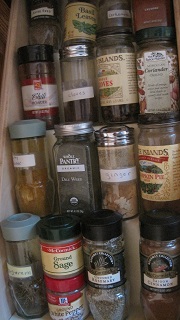
    Open the spice cabinet. Inhale and . . . what are those many and mysterious smells?

    SpicesPrompts, multiple choice:

    What food reminds you of the kitchen in the house where you grew up? Memories surrounding that food?

    OR: What nourishes you?

    Or: I grew up with . . .

  • Silverstein wrote for the ear

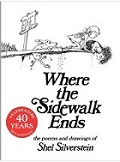
    Where the sidewalk endsShel Silverstein’s Where the Sidewalk Ends “resonates because Silverstein wrote for the ear. Purposeful rhythm. Calculated pace. Challenging riffs. Delightful melodies. Words selected as much for their sound as their meaning.” —Jack Hamann, “For the ear — Writing with rhythm,” The Writer, July 2015


    Tips to make writing stronger, inspired by Jack Hamann, “For the ear.”

    • Vary pace – “bookend longer sentences with short, rhythmic declarations.”
    • Use a thesaurus.
    • Use alliteration (see below).
    • Give weak verbs the boot.
    • Omit unnecessary words, especially “the.”
    • Read aloud. You’ll notice places that need tweaking.

    Alliteration is a stylistic device in which a number of words, having the same first consonant sound, occur close together in a series: But a better butter makes a batter better.

    Marlene’s Musings: Have fun with this. Choose a prompt and write. Then, revise, using the tips above.

  • Sensory Detail – Smell

    How do you put the sensory detail of smell in writing? Let’s sniff out ideas.

    Take a deep breath and imagine the smell of:

    fresh lemons

    watermelon

    chocolate

    coffee

    fish – cooked, or freshly caught

    roast turkey right out of the oven

    popcorn – movie popcorn with melted butter

    How would you describe these smells to someone who cannot smell or who never smelled these particular scents?

    What does a crunchy red apple smell like? Does a red apple smell the same as a green apple? Does an apple smell different if it’s crunchy or mushy? If it’s cold, it might have that earthy smell of a river. Or an apple might smell like a hot summer afternoon in an orchard. Can you put apple smell into words?

    If you can, walk through an orchard or a field where the earth has recently been plowed. Inhale. Describe that earthy smell.

    What does a river smell like?

    Describe fresh cut lawn.

    What about describing smells for other things? What does” old,” ancient” and “calm” smell like?

    Here are some ideas:

    old . . . smells like parchment paper

    ancient . . . smells like musty book

    calm . . . smells like summer rain candle

    But what does parchment paper, musty book and rain candle smell like? Can you describe these smells?

    How about adding sounds:

    “old” sounds like coughing and wheezing

    “ancient” sounds like rattling breath

    “calm” sounds like church . . . sitting in church

    The following is from The Martian Chronicles by Ray Bradbury:

    There was a smell of Time in the air tonight. . . What did Time smell like? Like dust and clocks and people. And if you wondered what Time sounded like, it sounded like water running in a dark cave and voices crying and dirt dropping down upon hollow box lids, and rain. Time looked like snow dropping silently into a black room or it looked like a silent film in an ancient theatre one hundred billion faces falling like those New Year balloons down and down into nothing. That was how Time smelled and looked and sounded.

    A glorious line about smell:  “The air took on its mossy evening smell.” — Elizabeth Sims, September 215 Writer’s Digest.

    Your turn: How do you infuse smell in your writing? Tell us. We want to know.

    Lemons                        River                 red apple

  • What if? Prompt #178

    What if you start from reality and then use “worst case scenario” to do some writing?

    Here’s how it could work: Recall a time when you desperately wanted something. Could be a good grade on a test, or a good health check-up, or the biopsy comes back negative, or a divorce, or the cute guy/girl to notice you, or a good job, or any job.

    Just choose a moment when you really wanted something. Now, shift . . . as you write about this desire, this longing. . . the narrator becomes a character in a story. We’re no longer talking about “you.” We’re focusing on A Character Who Wants Something.

    Down the rabbit holeNext, as you write, throw in some curve balls, some roadblocks. Give that character an obstacle to overcome. . . the worst case scenario. What is the worst thing that could happen?

    For example, the character fails an important test, doesn’t get into college, can’t get a job, becomes homeless. . . keep going. . . what is the worst thing that happens?

    Or, the biopsy comes back negative. It’s cancer. Lots of doctor appointments. Sleepless nights. The character feels betrayed by his/her body. Lots of decisions. Surgery? Chemotherapy? Radiation? Keep going. What happens?

    What if He wants a divorce, but She doesn’t. There are children involved. The divorce happens. He happily dances off into the sunset. What if She falls apart? She can’t function. Can’t get up in the morning. Gives her children cereal for dinner with orange juice because there is no milk. What if she sinks lower and lower and then . . . what happens?

    Prompt: Start with something real, creating a character who has a problem, a need, a desire. Then. . . what if?

    Inspired from July/August 2015 issue of Poets & Writers magazine, “Preparing for the Worst,” by Benjamin Percy.

  • Write a note . . . Prompt #177

    Hand & PenToday’s writing prompt: Write a note to someone alive or not, to someone currently in your life or from your past. Start with one of these lines:

    I forgive you . . .

    I love you . . .

    I will always remember . . .

    This is a note you may or may never send.

    You can write about something that happened to you, something that happened to someone else or write from your fictional character’s point of view.

    You can also write to a “thing” . . . to a body part, to something mechanical, to any Thing that was meaningful.

    Just write.

  • Sensory Detail – Sound

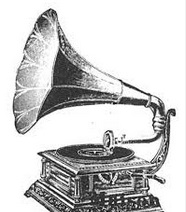
    GramophoneI cranked up the music to prepare this post and was reminded of the sixties and seventies when I worked downtown San Francisco Monday through Friday. Saturdays were house cleaning days. I centered my Swan Lake record on the turntable and turned up the volume. By the time I was dusting and cleaning downstairs, I was rocking to West Side Story. To finish, I blasted Hair. Odd combinations, I know. But they worked for me . . . a satisfying way to completely clean the house and do laundry.

    Sound. . . how do we incorporate sound in our writing?

    But first, why do we want to use sensory detail in our writing? Sound can evoke strong memories: screeching tires, whining four-year-old, grinding gears when learning to drive a stick shift, songs from our teenage years, wedding songs, hymns, sing-song rhymes. When we employ sound in our writing, we transform language into sensory stimulation that the reader hears in his/her mind and transports the reader to the world we have created in our writing.

    Poet Major Jackson says it this way, in the September 2015 issue of The Writer magazine:

    I aim to write poems in which language changes into feeling. With hip-hop and rap music, the expressive medium of my generation, I learned to stylize language and to make language an experience for the reader — whether through an idiosyncratic simile or through an insistent use of repetition or some heretofore encountered combination of rhymes.

    Right on . . . and sensory stimulation in writing offers readers a way to vicariously experience other worlds viscerally.  It’s that visceral reaction writers seek . . . the strong emotional reaction when reading.

    Notice all the sensory detail in the following excerpt from In the Time of the Butterflies by Julia Alvarez:

    Usually, at night, I hear them just as I’m falling asleep.

    Sometimes, I lie at the very brink of forgetfulness, waiting, as if their arrival is my signal that I can fall asleep.

    The settling of the wood floors, the wind astir in the jasmine, the deep released fragrance of the earth, the crow of an insomniac rooster.Their soft spirit footsteps, so vague I could mistake them for my own breathing.

    Their different treads, as if even as spirits they retained their personalities. Patria’s sure and measured step. Minerva’s quicksilver impatience. Mate’s playful little skip. They linger and loiter over things. Tonight, no doubt, Minerva will sit a long while by her Minou and absorb the music of her breathing.

    Some nights I’ll be worrying about something, and I’ll stay up past their approaching, and I’ll hear something else. An eerie, hair-raising creaking of riding boots, a crop striking leather, a peremptory footstep that makes me shake myself awake and turn on lights all over the house. The only sure way to send the evil thing packing.

    But tonight, it is quieter than I can remember.

    Notice:  Specific words that evoke sound: hear, crow of a rooster, soft footsteps, breathing, creaking

    Phrases that evoke sensory detail: the settling of the wood floor, the wind astir, a crop striking leather,

    And of course, the sense of smell: wood floor, jasmine, fragrance of the earth.

    Your turn: What sounds evoke powerful memories for you? House cleaning sounds (vacuum cleaner)? How about: nursery rhymes, rock ‘n roll, thunder, gum snapping, crunchy foods, sirens, bells, whistling, animal noises, engine revving.

    What about water: Running water, gurgling stream water, waves as they lap to shore and recede to the ocean. Or maybe it’s more of a stormy day and the water rushes toward the sand dunes, crashes into rocks and hurries back to the sea.

    How about: Squawking sea gulls, the calliope of a merry-go-round, music boxes?

    Remember songs from movies, television theme songs, commercial jingles?

    What sounds bring up strong memories?

    Choose a prompt and write for 12-15 minutes. Put sound sensory detail in your writing. Just Write!


  • Random word freewrite, using sensory detail . . . Prompt #176

    Use these words in your freewrite: cook, chant, winter, smear, blue. Try to incorporate sensory detail.

    You know the five senses: see, hear, feel, smell, taste . . . and that elusive sixth sense.

    The sixth sense is known by various perceptions: common sense, telepathy, intuition, imagination, psychic ability and proprioception (the ability to sense stimuli arising within the body regarding position, motion, and equilibrium).

    Proprioception is further intriguing with this definition: The unconscious perception of movement and spatial orientation arising from stimuli within the body itself. In humans, these stimuli are detected by nerves within the body itself, as well as by the semicircular canals of the inner ear.

    Example of proprioception: Right now I know my ankles are crossed under my blankets.  (Thank you, Kathy, for this example).

    Sensory detail word peopleWikipedia definition of sixth sense: a supposed intuitive faculty giving awareness not explicable in terms of normal perception. “Some sixth sense told him he was not alone.”

    Thank you to my Facebook Friends for helping with the definition for the sixth sense. . . Karen, Kathy, Sarah, Rich, Katie, Terry, Ransom, Brian, Robin, Jordan, Elizabeth, Ginger and many more . . . many thanks!

  • Don’t think . . . then you can add, embellish.

    Don’t think. Just write. Then you can add, embellish . . .

    “I don’t think about . . . things when I’m writing. I really try to shut off the thinking part of my brain. . . Don’t think . . . until you edit. And then you can add, embellish, and the next thing you know, if you’re very honest, all of the other stuff comes with it if it didn’t come before.” Sandra Cisneros, August 2015 The Writer magazine

    HeartMarlene’s Musings: Yes! Your first bit of writing could be a freewrite. . . where you write freely. Then you can go back and revise, edit. . . add, embellish . . . make any changes you want. But first get it all down. Write from your heart, from your gut. Just write!