Sonoma Festival of Light and Rhymed Verse

  • Sonoma Festival of Light and Rhymed Verse

      Submissions now requested for presentation at the

    SONOMA FESTIVAL

      of

    LIGHT and RHYMED VERSE

    Poems due by: May 6, 2017


    Festival takes place: May 21, 2017

    Time: 1:00 pm-4:30 pm

    Location : Trinity Episcopal Church Courtyard, 275 East Spain St., Sonoma, Ca.

    Quatrain submissions in one or all of three categories:

    4 line

    16 lines

    24 lines

    Please include biography in three lines or less.

    For more information, please contact:  Patricia Bradley   bradley2006 -at – gmail.com

  • Smaller stories within larger stories – set the scene. Prompt #319

    Whether you are writing memoir or fiction, it’s all composed of people and things that happened. It’s smaller stories within larger stories.

    Today’s prompt is in two parts.

    Part 1:

    Make a list of people and factors that shaped you, during your childhood, teen years, young adult years. What has happened in your life that makes you who you are? We’ll be using these lists later.

    During your childhood/early years:

    Who helped shaped you? Who was influential in your life?  Who was important in your young life?    Family, family friends, teachers, your friends.

    Where did you grow up?

    Did you walk to/from school?

    What did you do after school?

    Who was home when you got there?

    What were weekends like?  Be brief. You can expand later.

    Anything else you want to add – important people and events in your childhood.

    During your teen years.

    Who was important during your teen years?  Family, family friends, teachers, your friends.

    Where did you live?

    Did you walk to/from school?

    What did you do after school?

    Who was home when you got there?

    What were weekends like?  Be brief. You can expand later.

    Anything else you want to add – important people and events during your teen years.

    During your young adult years:

    Who was important in your life during your young adult years?

    Where did you live?

    Did you work, go to school, volunteer?

    Did you have hobbies?

    What did you do for entertainment?

    Anything else you want to add – important people and events in your young adult life.

    Part 2: Write.

    Choose something from one of your lists and expand upon it. Write as much as you have to say about it. Use sensory detail:  What you saw, heard, felt, tasted, smelled. Write with vivid details so this scene can be seen.

    Note: You can expand these lists and use them any time to inspire your writing.

  • The missing piece. . . Prompt #318

       Write about . . .

                       The missing piece.


  • Success in writing means . . .

     If you have attended a Jumpstart Writing Workshop, you may have heard me say, “There are two kinds of writing I like. One is when the writing speaks to universal truths—something we can all relate to. The other is when the writing speaks to me personally.”

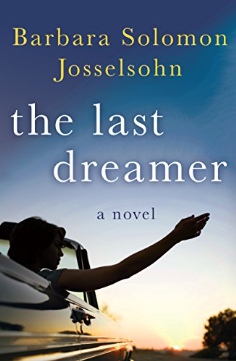
    This excerpt from “The Review Rat Race,” a “5-Minute Memoir” by Barbara Solomon Josselsohn expands upon that thought.

    “To me, success meant having readers who felt that my novel articulated something important, something they had felt deeply inside but had never been able to express or fully understand before my book came along.” —Barbara Solomon Josselsohn *

    That often happens in Jumpstart . . . the writing touches us deeply as the writer articulates in ways that we hadn’t been able to express or understand prior to hearing their freewrite.

    * Excerpt from January 2017 issue of Writer’s Digest Magazine.

  • Details are critical

    When telling stories, details matter. You know that. Details, especially sensory details, enhance your story and allow your reader to:

    ~ Fully enter the world you are creating

    ~Suspend disbelief

    ~ Connect emotionally with your characters

    “All you need to build your setting is in the world around you. Observe, observe, observe.” Elizabeth Nunez, January 2017 Writer’s Digest magazine.

    Elizabeth Nunez:

    “. . . like me, you probably wanted to be a writer because you found a lot of joy and pleasure by making up stories in your head. I love living in my imagination—so much so that when I was younger, my siblings would say: ‘Divide everything Elizabeth tells you in half. One half is true and the other is make-believe.’”

    Can you relate to that? I bet you can!

    “The emotions and conflicts your characters experience can be made more vivid by the setting you choose.”

    Nunez gives examples of stories enhanced by setting:

    The Sea by John Banville, which opens with “a strange tide, a morning under a milky sky, a bay that swelled and swelled, rising to unheard-of heights. With that beginning, the mood is established for Banville’s moving story about a man who loses his beloved wife to cancer and retraces his past to a seaside cottage, hoping for respite from his grief.”

    Middlemarch by Georg Eliot contains “a setting that contrasts with . . . character’s emotions.”

    “When the two lovers finally come together, there is not brilliant sunshine, but instead a burst of thunder and lightning. The effect is to convey to the reader the intensity of the passion between the two characters.”

    How to set your story in a place you have never been?  The obvious answer is to go there. If that isn’t possible, research using tools that give detailed descriptions:  Google Earth to see the site, Wikipedia to learn about weather, geographical, historical details. Access newspapers and magazine articles for information using microfiche records (available at libraries).  Interview people who lived there. Watch movies. Use your creative imagination to research as much as possible. But don’t spend all your time researching. Remember to take time to write!

    Blog posts about using sensory detail:

    Imagery and sensory detail ala Adair Lara Prompt #277

    33 Ideas You Can Use for Sensory Starts Prompt

    Sensory Detail – Smell

  • Relax To Enhance Your Creativity

    The Write Spot Blog is all about writing: Writing Prompts to inspire you; Just Write tidbits to motivate you; Quotes to let you know others are in the same boat as you; Places to Submit to get your work out there; Book Reviews to share authors’ work; Guest Posts for all kinds of writing-related things.

    Today’s Guest Blog Post by Suzanne Murray talks about increasing your creativity by relaxing. Sounds easy, doesn’t it? But what about cortisol, adrenaline, and epigenetics? Factor those in, and it becomes apparent that relaxation isn’t as easy as drifting in a hammock.

    Fortunately, Suzanne Murray offers strategies to help us learn to relax. 

    HOW CREATIVITY CAN HELP US RELAX

    We all know that relaxation makes us and our bodies feel good whereas stress causes us to tense up and feel less that optimum. New scientific research shows just how important relaxing our bodies and minds is.

    The emerging science of epigenetics shows that our genetic expression is not permanently fixed at birth, but actually evolves as we grow and learn. Environmental factors including nutrition, stress and our emotional responses can affect how our genes express themselves without changing the basic blueprint of our DNA, the genetic material in our cells.

    When we are stressed our genes produce hormones associated with fight or flight like adrenalin and cortisol that are associated with aging and making us more susceptible to disease. When we are relaxed and feeling good our genes produce chemistry that boosts our immune system and helps with cellular repair and growth. 

    A study looking at mindfulness practices like meditation, yoga, breath work, and other relaxation techniques, showed that we can actually “turn on” disease-preventing genes and “turn-off” disease-causing genes through relaxing. Research on the energy psychology modality EFT (Emotional Freedom Techniques), an easy to use self-help strategy that combines western psychology with Chinese acupressure, found that an hour session of EFT lowered cortisol levels by 24 percent.

    I’d like to add creativity to ways we can relax as well as develop more of our potential.

    Creativity is really a form of mindfulness since it puts us in the flow of the moment and feels good. Adult coloring books have been shown to reduce stress. I like doodling or free writing where you just let the words flow out of the pen with no thought to what you are writing.

    Bringing play to whatever process you are working with and letting go of attachment to outcome is important.

    Stress so often stems from the fact that our mind has leapt ahead with worry about the future or is chewing over something that happened in the past. When we do things that bring us into the moment we naturally relax.

    Find what works for you. Play with it and see if you feel better.

    Suzanne Murray is a gifted creativity and writing coach, soul-based life coach, writer, poet, EFT practitioner and intuitive healer committed to empowering others to find the freedom to ignite their creative fire, unleash their imagination and engage their creative expression in every area of their lives. She works with simple, powerful techniques to help clear whatever gets in the way and creates a safe and sacred space for your creative and soulful life to blossom. She provides an experience of the joy and beauty that comes from embracing your gifts and expressing them in the world. With a lifelong connection to the natural world, she enjoys sharing the grace and wonder that Nature can bring to your life and creativity

     Writing and Creativity in Nature
    One Day Workshop Point Reyes CA
    April 22, 2017, 10 am to 4 pm

    Spending time in nature is good for our health, enhances our creative capacities and increases our general sense of wellbeing. It can help us enter the flow. Join me for this one day workshop where we will work with our creativity in the beauty of nature.

    EFT (Emotional Freedom Techniques)

    I’ve been working with EFT in new ways that allow us to laser in on the issue and shift it at the core. We often make significant shifts in a single session. Sessions are available by phone and Skype


    Original posted on Suzanne’s April 2, 2017 Blog

     

  • No matter how hard I tried . . . Prompt #316

    The best way to respond to a writing prompt is to just write. You can set a timer for 12 or 15 minutes. Twenty minutes, if you have that much time to write. The length of time isn’t important. The important part is to let go of your inhibitions, your fears and your worries. Just write.

    Today’s writing prompt:  No matter how hard I tried . . .

  • The bigger the issue, the smaller you write.

    “The bigger the issue, the smaller you write. Remember that. You don’t write about the horrors of war. No. You write about a kid’s burnt socks lying on the road. You pick the smallest manageable part of the big thing, and you work off the resonance.” —Richard Price

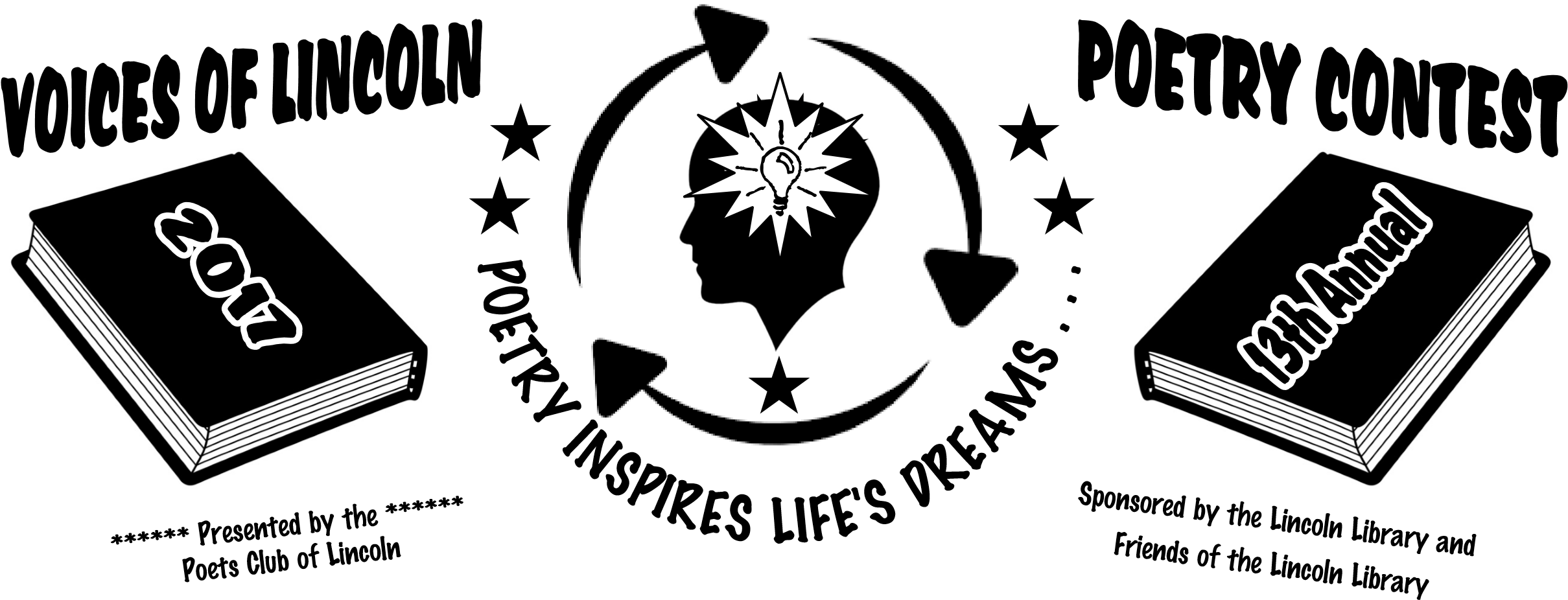
  • Voices of Lincoln – Poetry Contest 2017

    POETS WANTED


    You do not have to live in Lincoln, CA to enter the Voices of Lincoln Poetry Contest.

    Five (5) categories include: Love Is All Around Us,  Dreams Do Come True,  On The Street Where I Live,  Gone But Not Forgotten,  and  A Second Chance.

    You may submit a maximum of three (3) poems: One poem for each category.

    Poems may be in rhyme, free verse, Haiku, or other accepted poetry forms and of any length, up to a maximum of 60 lines.

    Young Poets, 18-years of age or under, are encouraged to submit poems and will compete in a special “Young Poets” category.

    Entry Form and Contest Rules

    Contest Deadline: Poems must be received no later than Saturday, July 22,    2017.  Early submissions are appreciated.  Questions—contact Alan Lowe at    slolowe – at – icloud.com