Category: Guest Bloggers

  • Guest Blogger Jane Merryman titillates with ‘What’s in a Title?’

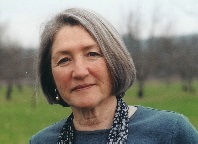
    Jane MerrymanWhat’s in a Title by Guest Blogger Jane Merryman

     Naked Lunch

    A Crack in the Edge of the World

    The Borrowers

    Book titles. Delicious. They provide entertainment in themselves, never mind what’s between the covers. The words on the front offer promise, titillation, or confusion. Of course, some titles are strictly workaday: Wildflowers of North America; The History of England from the Accession of James II; Math Formulas and Tables. But other titles are delightfully misleading, some are curiously ironic, others are satirical or even nonsense.

    A Moveable Feast

    Fezzes in the River

    Manhattan Transfer

    The title may or may not be an exact pointer to what’s inside, but it’s definitely a label that fixes itself in mind and memory. Take Pride and Prejudice—it has a lilt to it. But do you really want to plod through several hundred pages of unillustrated text enumerating the consequences of a couple of vices, or would you rather read about landing a husband? From its title, you don’t know how much you might or might not enjoy reading this book.

    As a librarian I’ve spent many hours “reading the shelves,” an actual entry on the official list of library chores. I select a block of shelves and check every book, making sure it’s filed correctly by Dewey Decimal Number, author’s last name if it’s fiction, or subject’s name for biographies. This exercise affords plenty of time to savor the mystique of the title, pushing aside what I know of the work itself. I’ve read The Great Gatsby, but to someone who hasn’t (yet), what is a gatsby? No matter, the alliteration is the hook.

    One Hundred Years of Solitude sounds as if it could get soporific really fast, but it doesn’t. Men Are Like Streetcars, Memoirs of a Geisha, and The Plague all live up to their promise. War and Peace appears to have taken on too much. A Thousand Acres seems more do-able. Nine Stories is something I could definitely finish.

    Some titles tell you right away that Things Fall Apart, The Mambo Kings Play Songs of Love, and Friday the Rabbi Slept Late. At times they advise you to Play It As It Lays, to Go Tell It on the Mountain, or that You Can’t Go Home Again.

    My Family and Other Animals, Chocolat —these titles make us smile in agreement. The Lexus and the Olive Tree, A Clockwork Orange, Up the Down Staircase, A Wrinkle in Timethese fill us with consternation.

    The Naked and the Dead is one of those titles that leads us somewhat astray since it’s about the fully clothed and the living. Seeing Through Clothes might disappoint some readers with its lengthy footnoted discussion of the history of garments and fashion. Some books seem to be wanting to tell us about royalty—The African Queen, All the King’s Men, and The Prince of Tides—but they never make it to the palace.

    Authors can lift their titles from other works, such as the Bible, Shakespeare, and famous and not-so-well-known poets, and give them a resonance that sticks with us. We have East of Eden and The Sun Also Rises, For Whom the Bell Tolls, The Winter of Our Discontent, and The Grapes of Wrath. In nursery rhymes writers found When She Was Good and When the Bough Breaks. A book of travel essays went to a play to find its title, The Kindness of Strangers, which helps explain its contents, but are the others so transparent?

    Birds figure in many titles: The Maltese Falcon, The Painted Bird, Lonesome Dove, and Wild Swans. And of course mockingbirds, eagles, swallows, and blackbirds are all roosting on the library shelves, too. Little Birds, though, is not at all about ornithology.

    Titles beckon—invite us to go on a Forbidden Journey, to take The Road from Coorain, to venture Beyond the Khyber Pass, and catch The Polar Express. They offer to take us to a special place, anywhere from The House on Mango Street, to Under the Volcano, to Hiroshima, or suggest that we stroll down Revolutionary Road, Half Moon Street, and Lonely Avenue. Bridges turn up uncommonly often in titles—bridges to Terabithia, of San Luis Rey, at Toko-Ri, over the River Kwai, and on the Drina—and lead us on fraught, hardly light-hearted journeys.

    Need I go on? Haven’t you been tempted to read a book just because its title played with you? There’s a world—a universe—out there in books. Their titles might tell us exactly what is inside, what information we will tap into, what kind of adventure we will take off on. Some merely hint at the experience to come. Others don’t give us a clue, even after we’ve read the whole thing from foreword to appendix. But that doesn’t matter. Reading a shelf of titles is a pleasure in itself without even opening the books. Take Chocolat—’nuf said.

    In my opinion, though, all books should bear the subtitle Great Expectations.

    Jane Merryman specializes in copy editing: correcting grammar, spelling, punctuation, usage, and, as we say in the profession, infelicities.

  • Guest Blogger Clara Rosemarda – writing with depth and clarity

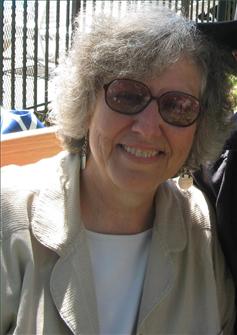
    ClaraGuest Blogger Clara Rosemarda reveals how to write with depth and clarity.

    Clara writes:

    Many years ago I took voice lessons from a master teacher. He worked with people
    who believed they were tone deaf. I was one of those people. My voice seemed flat as the ground I walked on, and I was too embarrassed to sing unless I was in a group large enough to swallow the sound of my voice.

    My teacher, robust and powerful, sat opposite me on the floor of his music studio. With full-bodied fingers born to make music he plucked the strings of his tambura going up and down the scale. Then he sounded a note and had me repeat it. At first I couldn’t reproduce the exact sound, but after a few tries and great concentration, I was able to. He told me I had a good voice which was a surprise to me. Once I got the hang of it, whenever I missed a note, he looked straight at me with his burning brown eyes, and asked where I had gone. Then he’d have me try again, and again, until I finally got it.

    These few lessons taught me that the problem was not with my voice, but my inability to stay focused and present. Although I was capable of deep concentration in many other areas, the life-long belief that I couldn’t sing disrupted my ability to listen and to replicate what I heard. Frightened that I would get it wrong, I tried to think my way through instead of trusting that if I listened I would be able to repeat the sound.

    Even though I don’t plan on giving a recital in Carnegie Hall or anywhere for that matter, I do enjoy singing now for the pure pleasure of it. Most importantly, I no longer consider myself tone deaf. I have developed the ability to concentrate when I’m singing, to listen deeply, and to be present with the sounds. When you are of two minds, neither one can be used to its fullest.

    The same is true with writing. When your mind is concentrated on a single thought or image, when you ARE the writing, and not jumping ahead of yourself, or thinking of HOW you are writing, you will write with depth and clarity.

    In the initial creation, all that is required is that you put pen to paper and keep your hand moving. Stay with your original thought, rather than allowing the editor to sit on your shoulder telling you not to say that, or how stupid this is, or what makes you think you’re a writer? To sound a clear note, you cannot be of two minds; your mind must be fully present and focused on a single point.

    EXERCISES:

    1. “His reflection in the mirror … ” Write for 1 0 minutes.
    2. “Walking through … ” Write for 15 minutes.
    3. “When I woke up that morning … ” Write for 20 minutes.
    4. Read these pieces aloud to yourself, listening mindfully, as if someone else had
      written them. What did you, the reader, hear that you didn’t hear as you were writing?

    CLARA ROSEMARDA M.A. is an evocative writing teacher, poet, memoirist, intuition counselor, and workshop leader. She has been in private practice in Santa Rosa, California for over thirty years where she works with beginning as well as mainstream writers. Clara teaches workshops at Santa Rosa Junior College and internationally. In her private sessions as well as her teaching she helps people connect to and act from their most authentic selves. She was co-creator and coordinator of the popular writers’ program, The Writer’s Sampler, of the Sebastopol Center for the Arts. Her prose and poetry are published in literary journals and anthologies. She is co-author and co-editor of the anthology, STEEPED: In the World of Tea (Interlink Publishing, 2004). Clara has two poetry chapbooks: “Doing Laundry” (a letterpress limited edition, Iota Press, 2013) and “Naked Branches” (WordTemple Press, Small Change Series, 2014).

    Note from Marlene:  If you have a chance to take a workshop with Clara. . . do it!  I did and it was a transformative experience.

  • Avoid clichéd characters. . . and more, from Guest Blogger Daryl Hajek

    Guest blogger Daryl Hajek discusses a writer’s journey.

    I was taught to learn to read and write at a young age, even before kindergarten. My parents had told me, because of my deafness, they were determined that I was going to learn to read and write. That was the beginning of my journey into reading and writing.

    As Stephen King says, “Read a lot, write a lot.”  I do this by reading two or three books (or ebooks) concurrently, but that’s a quirk of mine.  I also write at least one hour a day, up to eight hours, depending on my mood or how I’m feeling.

    Learn as much as you can about writing.  Take a writing course or two.  Get how-to books on writing.  Join a book club.  Network with other authors/writers online via social media.

    Get a professional editor which is an absolute must, no exceptions whatsoever.  Otherwise, unedited works show and may cause long-term regrets and embarrassments.  It’s most important to learn from your editor, as well.  I gained a healthy bit of edification from my editor such as eliminating redundancies and not repeating the same descriptive adjectives or adverbs in your narration, especially within the same sentence or paragraph.

    Keep expositions to a minimum so as not to drag the story down and bore the reader.

    Omit  the following dead/boring/over-used words:  was, actually, literally, quite, virtually, got, things, stuff, just, really, very, a lot, and action verbs ending in “-ing,” such as “running,” “skating,” “dancing,” and so on.  Instead, use action words like “he ran,” “she skated,” “they danced,” and so forth.  The reason is that these words weaken the author’s writing (in the narration), but it’s okay to use them in character dialogue because that’s how people talk.  Equally, leave out clichés, idioms, and slang from the narration except for character dialogue.

    Another thing to cut from writing are speech tags, such as “Gary muttered quietly,” “Melissa said bitterly,” and “Carl barked angrily.”  They also make for weak writing.  Stick with the traditional “he said/she said” way of writing.  In fact, “he said/she said” is practically invisible to the reader’s eye.  If the author needs to use speech tags, I’d recommend using them sparingly.

    Avoid clichéd characters, such as the typical black-cloaked villain with those smoldering eyes or the golden-haired Miss Goody-Two-Shoes.  Rather, make your characters realistic, like the average person, such as the guy next to you.  But, don’t make those characters boring.  Give each character a little something intriguing, add a certain idiosyncrasy (i.e., a nervous tic) or a condition (i.e., deafness or Asperger’s Syndrome).

    As a first-time deaf author of general mainstream mass-market fiction, if I can do it, so can you!

    Daryl Hajek is the author of Blood Blossom.  He is currently at work on his next novel.

  • Guest Blogger Amanda McTigue talks about marketing your book

    So, you’ve got your book written, or almost written, or you have an idea for a book, but you’re stuck dead in your tracks because you detest the marketing aspect of the book business

    Amanda McTigue says, “No doubt about it: we writers love to write, hate to sell. How could it be otherwise? We’re the odd balls who’d rather spend vast quantities of time alone in our imaginations. And yet these days, we’re told not only must we craft (and sometimes publish) our works, but also find readers to read them: a daunting challenge compounded by our own dread. What’s a writer to do?”

    Amanda shares resources on one of our least favorite challenges: marketing yourself and your book.

    “The Psychology of Writer Promotion. How to Promote Yourself,” Chuck Wendig

    “Book Marketing 101,” Jane Friedman

    “Five Mistakes You’ll Make on the Way to Publishing Success,” Carmen Amato via Jane Friedman

    71 Ways to Promote and Market Your Book,” Kimberley Grabas

    15 DIY Tools to Promote Your Book,” Writer’s Store

    Amanda McTigueAuthor, playwright, stage director and storyteller, Amanda McTigue has also worked for decades as a creative marketing consultant for such clients as Walt Disney Entertainment, Paramount Entertainment and design firms such as Thinkwell and The Hettema Group in Los Angeles. Her novel, “Going to Solace,” was cited by public radio KRCB’s “Word by Word” as a Best Read of 2012. She also makes regular appearances at Petaluma’s “West Side Stories” and “Get Lit.” She’s busy completing short stories and a second novel. Click here for Amanda’s Resource page.

    Amanda will be the March 19, 2015 Writers Forum presenter.

  • Guest Blogger Mona Mechling, In memory of Karen Batchelor

    Mona first posted “In memory of Karen Batchelor” on her blog, Envelope of Random Things.

    Karen BatchelorIn memory of Karen Batchelor

    A year ago a talented, amazing woman left us too soon. I always felt she was a mentor to me, not just in my writing world, but about life in general. In memory of her I want to post what I call my mission statement. Ok, other writers out there, let’s send the world some stories! I can only hope that somehow I might continue her legacy in that way.

                                           Mona’s Mission Statement

    MonaMy mission is to be a mentor to upcoming writers struggling to find their way with the craft of writing. I hope to do this as a testament to the mentors who were there for me. I will do this by being an example of how crucial it is to continue in my quest for knowledge of the process of the written word and the power that is behind a great story. If this gets me to work more fiercely and with more dedication, then I know all is how it should be and the cosmos has willed it to be so.

    Mona Mechling considers herself a dark Erma Bombeck. As a preteen, she began writing poems and short stories that went into a drawer. Her first published story was one in Vintage Voices when she was fifty. Life, family and friends are her inspiration.

  • Guest Blogger Ted A. Moreno – You Don’t Need Silence to Be Quiet

    The following is from Ted A. Moreno’s 12/16/14 email, “You Don’t Need Silence to Be Quiet.”

    Sit back, relax and enjoy.

    Ted writes:

    Last night I sat in a filled auditorium and watched as my 9 year old daughter, along with scores of other elementary school kids, gave her first band performance. They played 5 notes.

    When the curtain rose, she was right in my line of vision, wearing the white shirt and black pants her mom had picked up for her that afternoon. She sat with her clarinet, Taylor Swift hair, and sparkly eyes. She spotted me and returned my thumbs up sign with a huge grin.

    And even though the auditorium was filled with hooting parents calling out their kids’ names, I felt a stillness within. It hadn’t been a really good day, too busy, but right then and there it got a whole lot better.

    It wasn’t really all about pride for my daughter or happiness that my $22 a month clarinet rental was paying dividends. It went deeper than that.

    I got quiet and present to my life.

    This was my life: a wife, a 7 and a 9 year old, a home, music, business. It didn’t look like what a lot of other people have, but that didn’t matter. At that moment, it was perfect.

    Call it grace, luck, an auspicious alignment of the stars, whatever you want. I just got out of my way and allowed some little bit of peace in.

    You don’t need silence to be quiet inside, you just need to allow yourself the chance to connect with it. You see, it’s always there waiting for your attention. And what that is, is essentially, you.

    Stop. Sit. Quiet. Give it to yourself because no one else will. Turn off the TV, put away the electronic gizmos, stop thinking. Listen, first outside, then inside. What’s the message waiting for you? In the sound of rain or the traffic or the barking dogs?

    Even if you are in the middle of all the noise and hurry and haste, you can still be quiet. Breathe. Ask yourself, “What’s happening here?” Look and feel and get it. Step back from what is experienced and connect with the That which Experiences.

    Even though it’s all moving all the time, the only constant is your awareness. It really is the only thing that is ever True. See for yourself.

    Let me know how it’s going. I’d love to hear from you.

    Ted A. Moreno, Success Performance Coach and Certified Hypnotherapist
    626.826.0612

    Click here for Ted’s website.

    From Marlene:  Ted’s hypnotherapy work is extremely effective and therapeutic. He listens carefully, offers helpful feedback and suggestions that aid in getting to the heart of the situation. He is extremely perceptive, kind and understanding. If you think hypnotherapy might work for you . . . Ted’s your guy.

  • Guest Blogger Ted A. Moreno . . . and the jewels deep within.

    Ted A.  Moreno.2Today’s Guest Blogger, hypnotherapist Ted A. Moreno, writes about reflection and the passage of time . . .

    We’re still enjoying 80 degree temps here in Southern California. But it’s obvious that fall has arrived and that summer is on its way south.

    Can you feel it? The morning chill, the early darkness, the long shadows of late afternoon. Leaves releasing themselves for the slow descent to the ground.

    Autumn has always been my favorite time of year. Something about the shorter days and chillier nights make me pensive, perhaps because I was a winter baby.

    For me, this is a time of introspection, of going within. It’s as if the fading fall light casts a different perspective that makes me take a step back to examine my life.

    I’m getting more present to the fading away of a younger me. Remembrances of younger days seem to be visiting me lately. Not only the good times but the tough times.

    At this stage of the game, they show up now only as fleeting images that seem to have no relevance anymore. They are dead, and increasingly, less useful to me.

    Maybe the reason they come is to be released, to say goodbye.

    (You may know that the title of today’s post is from the movie, “Monty Python and the Holy Grail.” You may also know that November 1st is Dia de Los Muertos, Day of the Dead.)

    Like the fall and regrowth of the leaves every year, a human life is a cycle of bringing in and letting go, taking in and releasing, expansion and contraction.

    Perhaps one of the more powerful things one can do at this time of transition is to see what no longer has life, bless it, and release it on its way.

    Whether the dead are memories, beliefs, or ways of being that are no longer vital to who we are today, we can trust that letting them go is part of the very process of life, even if that letting go forces us to feel.

    Let the passage of time wash away what needs to be cleansed. Weep if you must for what is dead and passed but let it go, you can’t hold the tide.

    Stay awake and present during this time of coming darkness. The light of your awareness can allow you to see what the receding tide of time leaves uncovered: the jewels deep within.

    Like the tide, feelings will also come and go. The happiness or sadness you felt back then is gone and dead. Why try to revive it?

    What we can do is stand, fully rooted in our awareness and aliveness, and watch as the swirl of time and circumstance and people and feelings flow around us.

    Note from Marlene: If you want to work on an aspect of your life that you think hypnotherapy might help . . . writer’s block? can’t sleep? anxiety? fears? . . . Ted A. Moreno is your hypnotherapy-guy-to-go-to. (Whoa. . . Say that three times!). He lives and works in Southern California and does extraordinary hypnotherapy over the phone.

    Ted A. Moreno is a hypnotherapist, success performance coach, published author, educator and sought-after speaker who helps his clients become free from fear and anxiety, procrastination and bad habits such as smoking.

    He is a Certified Hypnotherapist, Certified NLP Practitioner, and holds the Master Certification as a Therapeutic Imagery Facilitator. Ted is an Honors Graduate of the Hypnosis Motivation Institute and a recipient of the Director’s Award from HMI, awarded for exceptional professional achievement during clinical residency. Ted’s book, “The Ultimate Guide to Letting Go of Negativity and Fear and Loving Life” is available on Amazon.com.

    Originally content from Ted A. Moreno’s October 28, 2014 newsletter.

  • Guest Blogger Jean Grant-Sutton and glorious messy imperfections

    Sutton.Jean.1Guest Blogger Jean Grant-Sutton writes:

    This time of year I am reminded so pertinently of the glorious messy imperfection of life.

    I see it in an amass of leaves on the ground that are so exquisitely beautiful in their array of color, but they make for a lot of clean up and clutter in the yard.

    Great in the compost to make nutritious soil — glad for that.

    I take comfort in reality.

    Life is made up of much glorious messy imperfection.

    I feel like I’m one of them

    And I continue to practice acceptance for that.

    It takes courage to be imperfect.

    Click here for a great article by Roger Allen on this topic. I hope you enjoy it. Sutton autumn

    Integrative Yoga Therapist, Jean Grant-Sutton loves to share writings that stem from an understanding of life based on the ancient art and science of Yoga. She writes to connect and relate with others about the journey of being  a human being.

    Jean Grant-Sutton ERYT/1000, CMT is a teacher and educator of yoga. She is currently the Yoga Program Director at P.O.S.T. Wellness by Design in Petaluma Ca. Her many years of practice and experience as a retreat leader, studio owner and director of teacher trainings award her the talent to construct  transformative experiences in her classes. She skillfully brings depth, clarity, ease, and joy to this ancient bodywork practice. Click here for more information about Jean Grant-Sutton and yoga integrative therapy.

  • Guest Blogger Angela Ackerman gets physical

    Angela AckermanHere’s what Guest Blogger Angela Ackerman has to say about writing physical descriptions.

    I’m going to be totally honest here. There is little I detest more than trying to describe how my character looks. The reasons are numerous. I think it sounds boring. It slows the story. It reads like a list or sounds clichéd, etc, blargh de blargh.

    I write in first person, to boot, making it even more difficult to create natural-sounding character description without using the dreaded MIRROR technique. After all, every time a writer uses a mirror to describe their character’s physique, somewhere in the world a zombie dies. Think about that. Right now, Zombies are dying. I can’t add to this terrible crime. Can you?

    But then I read Word Painting and realized I was looking at it all wrong. Physical description doesn’t need to be a dry, tasteless blob of facts to help the writer see our character. It can be seasoned and textured, and doled out bite by savory bite.

    Let’s Get Physical–The Problems

    When introducing a character, there are a few basics most stick to: sex, hair, eyes, build. Which is fine to start, depending how you go about it. A description like Melvin the bellhop had brown hair, green eyes and was a bit on the skinny side can be summed up in one word: BLAND. This is the ‘just the facts’ approach, and can often read like a list.

    Another common mistake is the ‘throw in some adjectives’ approach: Melvin the attentive bellhop from our luxury hotel, had gleaming, oiled brown hair, haunting green eyes and a crisp uniform that fit his lean frame perfectly.

    Oh dear. Can you hear the zombies screaming, Clarrise? The issue with relying solely on modifiers to liven up the physical description is that they often end up hitting on clichés or sounding overwritten.

    Let’s Get Physical–The Solutions

    1) Choose description that is apt and characterizes rather than conveys information.

    The bellhop’s well-oiled brown hair suggested an abundance of cowlicks needing to be tamed.

    This here not only paints a picture, it tells us something about Melvin. He takes pride in how he looks, and will go to lengths to appear professional.

    2) Select a few attributes that stand out and work together to create a full picture.

    The bellhop approached us with steps as crisp as his starched maroon uniform. His gold nametag, exactly level with his lapel, announced his name: Melvin. He smiled as he took our bags, and then with a cock of his eyebrow, enquired if we were ready to go up to our room.

    Again, the crisp steps and starched uniform provide an apt comparison. His smile softens the starchiness, and his cocked eyebrow, along with him asking, not telling the hotel guests to come with him, provides the image of a smooth professional who knows how to make customers feel catered too. You’ll notice no hair, no eyes, no build is described. Can you see Melvin anyway?

    3) Actions speak louder than words

    Which is easier to describe–a character in motion with a goal in mind, or one standing still? The answer is obvious. This ties back to the show-don’t-tell line of thought. A character is defined by what he does, and through those actions, the reader can begin to understand what it is that he wants, needs and feels. By showing a character interacting with the setting, we understand more about who he is and can ‘see’ him better.

    A Melvin scanning the lobby for debris, returning empty glasses to the bar and offering help to a flustered businessman wrestling with his oversized laptop case will be seen differently than a Melvin standing near the elevator, eyes straight ahead, waiting for his name to be called to the front desk for assistance.

    4) Create a realistic, personal environment

    Good character description does not rest on the character alone, but also through the places they spend their time and the objects they surround themselves with. Know the setting well and spend time building it, because characters don’t exist in white boxes of nothingness. Think of your bedroom or bathroom, and the personal touches that make it different from a friend’s bedroom or bathroom. The things your character touches, the things they view as important…these are also items that will help build a concrete picture of your character.

    5) Remember to use more than SIGHT to describe

    Sight is only one way to get an image across. The other senses like smells, sounds or touching can also reveal a lot about a character and create intimacy ties between the character and the reader through recognition. Use them to characterize! Our pal Melvin would probably steer clear of heavy scents, careful to always consider both his guests sensitivity to strong colognes and to maintain his background role. Yet I could imagine standing next to him in the elevator and catching a whiff of clean soap, or perhaps a touch of aloe from his hair gel.

    6) Description is best in manageable pieces.

    A certain amount of detail is needed to intro a character, but really all that is needed is a line or two. Further characterization, tics and mannerisms will be revealed as you show them in action, so don’t hamper the scene with clumps of physical description. Drop tidbits here and there, and remember to allude to important details more than once. If we described Melvin as pale skinned and it’s a defining detail because he’s really a vampire, mention it again in a different way down the road. Does a patron note the whiteness of his arm against his dark uniform as his sleeve rides up? Does his face appear to fade somewhat as he stands in front of the pearl-toned wallpaper? A reminder will reinforce the image we need then to see.

    Do you have any tips and tricks that help you describe your characters?

    Originally posted April 26, 2010  “Writers Helping Writers

  • What killed it for me. — Becca Puglisi

    Guest Blogger Becca Puglisi, co-founder of Writers Helping Writers,  talks about clichéd characters.

    It’s hard to come up with characters who are believable yet don’t sound like every other character out there. It’s especially easy to fall into this trap with certain archetypes, like witty sidekicks or wise old mentors. Unfortunately, a recent book that I started had a whole cast of clichés: the jaded, super-sarcastic teen girl hero; the loving but confused single parent; a villain in the form of a Queen Bee Mean Girl. As for the love interest and sidekick…I didn’t stick around long enough to meet them.

    But even one clichéd character may be too much; you don’t want to give readers a reason to lose interest or roll their eyes when they’re introduced to a character they’ve seen a dozen times. Character creation is one of our passions at Writers Helping Writers, thanks to the research and practice we put in while writing our negative trait and positive trait thesaurus books. Here are some tips we’ve learned on how to write believable and interesting characters without repeating the stereotypes:

    Explore the character’s backstory to discover her wounds. It’s easy to throw together a bunch of attributes and flaws when creating characters. But traits develop organically out of a combination of factors: upbringing, environment, basic needs, morals, past wounds, personal values, etc. It is this unique combination of elements that results in a truly unique character. To avoid recreating a character who already exists, delve deeply into her backstory. Doing so will give you the information you need to figure out exactly who she is today.

    Once you’ve explored the character’s backstory, use that information to choose a combination of flaws and attributes that make sense, but are unique. For example, it makes sense for a character who was once the victim of a home invasion to be over-protective and paranoid. For me, the mention of those flaws instantly brings to mind an image—a stereotype that I’ve seen a million times. Paranoia is a logical result of this kind of traumatizing experience, but what if you combined it with other flaws or attributes to turn the stereotype on its ear? Maybe your character was raised in a very proper household where any kind of emotional extreme was taboo. So now you’ve got a genteel, mannerly character who’s scared of her own shadow—but has to hide her fears out of a desire to maintain the right image.

    Creating unique characters is really just a matter of digging into their history and coming up with traits that make sense for them. For help in this area, we created a number of related resources on our Tools for Writers page, including the Reverse Backstory Tool, the Attribute Target Tool, and the Character Pyramid Tool.

    Explore the positive side of negative traits, and vice versa. Clichéd characters are seen as clichés because they’re easy to read. They’re cardboard. One-dimensional. Which is ironic because character traits are anything but.

    Look at John Bender, from the movie The Breakfast Club. He’s hostile, and embodies many of the expected negative associations that go with that trait: he’s volatile, verbally abusive, and has trouble connecting with others. But hostility also has some positive aspects that John exhibits. He’s fearless and uninhibited, often saying what other people are too timid to say themselves. The positive sides of this flaw make him more than just an angry character. They make him interesting and somewhat endearing because people value fearlessness and admire those who speak their minds. We want to evoke those endearing feelings in our readers, so make sure to explore both sides of your character’s defining traits and you’re sure to come up with someone unique and compelling.

    Don’t forget the quirks and idiosyncrasies. Certain character types—like adventure heroes and detectives—easily fall into stereotypes. If you want your hero to be different, give him something interesting that will make him stand out from the crowd. Indiana Jones? Afraid of snakes. Captain Jack Sparrow is a cowardly pirate. And for those of you who remember Kojak, what comes to mind when you hear that name? Bald guys and lollipops, right? Mission accomplished.

    A word of caution regarding quirks, though: if they’re thrown in off-handedly, they can feel clumsy and contrived. Find something that makes sense for your character based on his backstory and personality and you’ll have something that is believable rather than gimmicky.

    Add an inner goal. Another reason detectives and adventurers tend to resemble each other is because they all have the same goal: to find the treasure or solve the case. But what if your character also has an internal goal—something he needs to overcome or wants to achieve that will result in personal growth?

    In The Bone Collector, Lincoln Rhyme is an ex-forensics specialist on the trail of a serial killer in New York City. This is his outer goal: to find the killer. Just like any other detective story, eh? Except that Lincoln Rhyme is a paraplegic. That’s enough to make him interesting, but there’s more: it’s made clear from the beginning of the story that the thing Rhyme wants more than anything is to die. He’s made plans for his “final transition” and is seemingly at peace with it because he thinks this will make him more happy and fulfilled.

    By adding an internal goal, Deaver adds a dimension to his main character that makes him different from other detectives. Keep this in mind for your own heroes. For more information about internal goals and motivations, check out Michael Hauge’s Writing Screenplays That Sell.

    Becca PuglisiCharacter creation is tricky, but with a little extra backstory digging and these tips, there’s no limit to the number of unique and resonant characters that we can create. Happy writing!

    This post is the fourth in a series entitled “What Killed It For Me,” where Becca explores the reasons she stopped reading certain books and shares techniques to help writers avoid these pitfalls. The rest of the series can be found here.

    Becca Puglisi is passionate about learning and sharing her knowledge with others. This is one of her reasons for writing The Emotion Thesaurus, The Positive Trait Thesaurus, and The Negative Trait Thesaurus. A member of SCBWI, she leads regional and online workshops and can be found at Writers Helping Writers.