Category: Quotes

  • Cast off the fear

    “I was terrified about writing stories about where I came from because I was embarrassed. Truly great writers are not afraid to bare their souls. Sometimes you may feel like: ‘I shouldn’t have put that in there, I don’t want people to think it’s about me or look at me differently.’ Toss those thoughts aside. That’s a mental block. Don’t think about it. Just do it. As long as you write from a place of purity, and it comes from your heart, you can’t go wrong.”—K’wan Foye, interview with Alicia Anstead, October 215 issue of The Writer.

    Kwan Foye

  • Writing as an organic process. . .

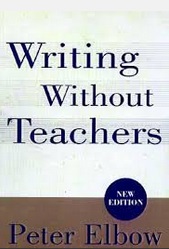
    “Think of writing as an organic, developmental process in which you start writing at the very beginning – before you know your meaning at all – and encourage your words gradually to change and evolve. Only at the end will you know what you want to say or the words you want to say it with.” –Peter Elbow

    Peter Elbow

  • “The publishing world is always changing.” Jane Smiley

    “As long as there’s a persistent audience for reading novels, then there’s going to be some way for them to be published.” —Jane Smiley, interview by Adrienne Crezo, Writer’s Digest September 2015

    Jane’s daughter works at Book Country, an online writing community where you can share your work-in-progress and receive feedback from community members.

    “Connect with fellow writers on the discussion boards and learn from accomplished authors and editors on the blog.”

    Book CountryInformation at Book Country, “Treat Your Book Like a Start-up

  • Start at the height of desire — David Lavender

    Many of us have heard “start your story in the middle of the action, or the height of the conflict.”

    David Lavender suggests “start at the height of desire.”

    You need not worry about being dull if you can present within the first few hundred words a definite character in the grip of a definite emotion.

    “But introducing a character and his motives to an audience must be done deftly and without explanation. For example, if setting up a boy-loves-girl story, Lavender says, ‘I must show the boy immediately engaged in wanting the girl. I must do it with unobtrusive little touches. I must bring it out through the way he acts and what he says, being at all times careful not to let the reader guess that he is having something explained to him.’” — Nicki Porter, August 2015 The Writer magazine

    Argue

  • Silverstein wrote for the ear

    Where the sidewalk endsShel Silverstein’s Where the Sidewalk Ends “resonates because Silverstein wrote for the ear. Purposeful rhythm. Calculated pace. Challenging riffs. Delightful melodies. Words selected as much for their sound as their meaning.” —Jack Hamann, “For the ear — Writing with rhythm,” The Writer, July 2015


    Tips to make writing stronger, inspired by Jack Hamann, “For the ear.”

    • Vary pace – “bookend longer sentences with short, rhythmic declarations.”
    • Use a thesaurus.
    • Use alliteration (see below).
    • Give weak verbs the boot.
    • Omit unnecessary words, especially “the.”
    • Read aloud. You’ll notice places that need tweaking.

    Alliteration is a stylistic device in which a number of words, having the same first consonant sound, occur close together in a series: But a better butter makes a batter better.

    Marlene’s Musings: Have fun with this. Choose a prompt and write. Then, revise, using the tips above.

  • Start at the height of desire — David Lavender

    Many of us have heard “start your story in the middle of the action, or the height of the conflict.”

    David Lavender suggests “start at the height of desire.”

    “You need not worry about being dull if you can present within the first few hundred words a definite character in the grip of a definite emotion.”

    “But introducing a character and his motives to an audience must be done deftly and without explanation. For example, if setting up a boy-loves-girl story, Lavender says, ‘I must show the boy immediately engaged in wanting the girl. I must do it with unobtrusive little touches. I must bring it out through the way he acts and what he says, being at all times careful not to let the reader guess that he is having something explained to him.’”  — Nicki Porter, August 2015 The Writer magazine

  • Don’t think . . . then you can add, embellish.

    Don’t think. Just write. Then you can add, embellish . . .

    “I don’t think about . . . things when I’m writing. I really try to shut off the thinking part of my brain. . . Don’t think . . . until you edit. And then you can add, embellish, and the next thing you know, if you’re very honest, all of the other stuff comes with it if it didn’t come before.” Sandra Cisneros, August 2015 The Writer magazine

    HeartMarlene’s Musings: Yes! Your first bit of writing could be a freewrite. . . where you write freely. Then you can go back and revise, edit. . . add, embellish . . . make any changes you want. But first get it all down. Write from your heart, from your gut. Just write!

  • Give up perfectionism.

    “The most important thing that I have learned, or that I’m trying to learn, is to give up perfectionism, because when you keep trying to make the story do all the things you want it to do, you keep failing, and you end up going around and around in circles. You end up confusing yourself and your talent, and you begin to view things as a failure, even though they’re not failures.”

    Akhil Sharma Akhil Sharma, interviewed by Gabriel Packard, The Writer magazine July 2015.

    Akhil Sharma is the 2015  Folio Prize winner and professor of creative writing.

  • Things falling apart is a kind of testing . . .

    Pema ChodronPema Chodron, When Things Fall Apart: “Things falling apart is a kind of testing and also a kind of healing. We think that the point is to pass the test or to overcome the problem, but the truth is that things don’t really get solved. They come together and they fall apart. Then they come together again and fall apart again. It’s just like that. The healing comes from letting there be room for all of this to happen: room for grief, for relief, for misery, for joy.”

    Marlene’s Musings: Add room for writing. Part of your healing journey can be to write your way through and out of grief.

    Your problems may seem to expand and shrink as you remember and write. One day things may seem dreary and impossible. Another day (maybe even an hour later), life may look brighter.

    Click here for ideas how to write about difficult topics without adding trauma.

  • All sorrows can be borne . . .

    My Journal.1“All sorrows can be borne if you put them in a story or tell a story about them.” Isak Dinesen

    Excerpted “From The Editor,” Alicia Anstead, editor-in-chief, July 2015, The Writer Magazine, writing about trauma and loss.

    Marlene’s Musings:  Sometimes our writing explores fun journeys. Other times our writing takes an unexpected turn and drifts into a gully where sadness could be overwhelming. Next week I plan to post how to write about difficult subjects without re-traumatizing ourselves. Stay tuned!