Category: Quotes

  • “The key to a good essay is conflict, and . . . Victoria Zackheim

    “The key to a good essay is conflict, and the story’s (and character’s) arc. People have to change during the story, whether fiction or non-fiction. — Victoria Zackheim, interviewed by Chris Jane in JaneFriedman.com.

    Victoria Zackheim is the author of the novel The Bone Weaver and editor of six anthologies:

    He Said What?

    Women Write About Moments When Everything Changed

    The Other Woman

    Twenty-one Wives, Lovers, and Others Talk Openly About Sex, Deception, Love, and Betrayal

    For Keeps: Women Tell the Truth About Their Bodies, Growing Older, and Acceptance

    The Face in the Mirror

    Writers Reflect on Their Dreams of Youth and the Reality of Age

    Exit Laughing: How Humor Takes the Sting Out of Death

    and the upcoming FAITH: Essays from Believers, Agnostics, and Atheists (Feb. 2015).

    Victoria’s play, The Other Woman, based on her first anthology, will be featured in OneNight/OnePlay, and her play Entangled, an adaptation of the memoir Entangled: A Chronicle of Late Love, is in development at Z Space in San Francisco.

    Victoria’s first screenplay, MAIDSTONE, is now in development. She is story developer and writer of Where Birds Never Sang: The Story of Ravensbruck and Sachsenhausen Concentration Camps, aired nationwide by PBS.

    Victoria teaches Personal Essay in the UCLA Extension Writers’ Program. Victoria was a 2010 San Francisco Library Laureate.

    Note from Marlene: I have taken classes by Victoria. She is an amazing teacher, well worth the price (and it wasn’t that expensive!).

    Want to challenge yourself?  Take one of your characters (fiction or non-fiction) and do what Victoria suggests . . . give him or her a conflict.  Spend thirteen minutes on a freewrite. See what happens.  Need a boost?  Take a look at Prompts 132 and 133 for ideas on character development.

  • Make characters want something right away . . . Kurt Vonnegut

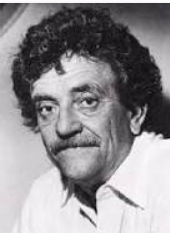
    Vonnegut“Make characters want something  right away — even if it’s only a glass of water. Characters paralyzed by the  meaninglessness of modern life still have to drink water from time to time. …  When you exclude plot, when you exclude anyone’s wanting anything, you exclude  the reader, which is a mean-spirited thing to do.” — Kurt Vonnegut


  • Making a pronouncement, judgment or criticism about someone else . . .

    “Making a pronouncement, judgment or criticism about someone else reveals little about them, but reveals much about you.”   — Ted A. Moreno

    Note from Marlene: I agree with Ted. Watch what you say and how you act, because your words and your actions reflect more about you than about the other person.

    However. . . this can also be used as a way to reveal your character’s traits (fictional character or real person). I know this isn’t what Ted had in mind . . . but it’s such a profound idea. . . I thought sharing it here, on a writing blog . . . might also be helpful as a way to reveal characters’ personalities.

    Watch for tomorrow’s blog post, where we’ll explore this concept as a method for character development.

    Ted A. MorenoTed A. Moreno, C.Ht.

    Creator of the Moreno Method for Life Transformation

    Hypnotherapist and Success Performance Coach

     Check out Ted’s book:

    “The Ultimate Guide to Letting Go of Negativity and Fear and Loving Life”

    Offices in South Pasadena and Covina

    (626)826-0612 / (909) 257-8260

    Phone Sessions Available

    Ted A. Moreno helps people quit smoking, let go of fear and anxiety, and create personal and business success.

  • Listen honey . . . — Ellen Britt

    Listen honey, stop complaining about what you don’t have and start being grateful for what you DO. Then take action to make the most of it! — Ellen Britt

    Ellen BrittDr. Ellen Britt is an award-winning online marketing strategist, Amazon best-selling author and founder of PinkCoatTails.com, featuring Fabulous Finds and Delicious Deals for women online entrepreneurs. She has produced and hosted more than a dozen telesummits and has interviewed some of today’s most well-known and respected names in marketing and self-development. Connect with Ellen and her Pink Coattails community on Facebook by clicking here.

  • “First thoughts have tremendous energy.” Natalie Goldberg

    Natalie Goldberg says . . .   “First thoughts have tremendous energy. It is the way the mind first flashes on something.” Natalie Goldberg, Writing Down the Bones.

    Natalie GoldbergNat’s quote perfectly describes what a free write can do . . . opens us up to ideas and thoughts that lie within us.  Try it. Go to the prompts category here or here and choose a prompt. Then write . . . freely. Just Write!

  • An author is an amateur who never quits. — Richard Bach

    I love discovering new things about writers.  You might remember Richard Bach as the author of Jonathan Livingston Seagull.

    I enjoy Richard’s Bach’s musings. . . here’s the beginning of his September 7, 2014 blog post:

    “I AM SO SLOW!

    All my life there have been bright and clear events, all of them happening in plain sight, but I haven’t noticed them, till all of a sudden now.  They’ve never been secrets, they’re like friendly dogs, going for walks with me year after year, and I never noticed.”

    You might enjoy posts by Richard Bach.

    Jonathan Livingston SeagullOctober 25, 2014 was the publication date of the New Edition of Jonathan Livingston Seagull.  It’s the complete edition, with Part 4, written immediately after Part 3,  years ago, but never published with the first parts.


  • Sweet memories are woven from the good times

    Sweet memories are woven from the good times. Author unknown.

    scarvesFrom Marlene: Your writing comes from memory, imagination, good times and bad. Share your memories through your writing. Create good times for readers. Weave your words, like threads on a loom, into a pattern that others can enjoy. Share your story.

  • “The biggest difference between a writer and a would-be writer . . .”

    Sol Stein“The biggest difference between a writer and a would-be writer is their attitude toward rewriting. . . . Unwillingness to revise usually signals an amateur.” — Sol Stein

  • Art connects us.

    Strayed.1“It’s a very deep experience for so many people to read ‘Wild’ and feel what they feel, because of course they’re not feeling it about my life, but about their own. And that’s what art does. It reminds us that we are more alike than different and that our common humanity connects us really profoundly.” — Cheryl Strayed, author of “Wild.”

  • ” . . . it’s not the most gifted. . .” — Norman Mailer

    Norman Mailer“In writing, as in so many pursuits, it’s not the most gifted but the most determined who succeed.” — Norman Mailer