“Even after a poem has hardened into print, it may continue to represent a risk, a chance, a surmise, or a hypothesis about itself.”
— Mary Kinzie
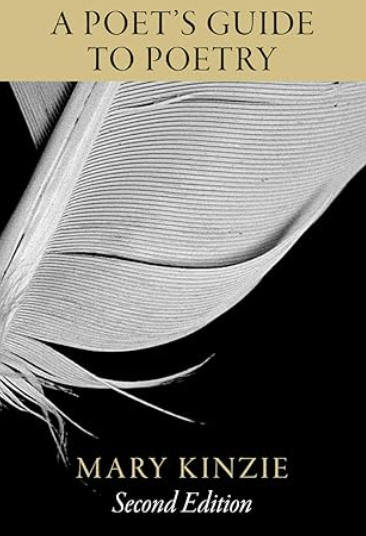
Mary Kinzie. A Poet’s Guide to Poetry, U Chicago Press
Thank you, Sonoma County Poet Laureate, Dave Seter, for letting me know about Mary Kinzie.
Dave’s response to Mary’s quote:
“What this means to me is, a piece of writing is never truly ‘done’ so instead of worrying so much about whether it is ‘done,’ we should share our writing with each other even when it feels a little raw, because there is power in the original idea and sometimes it takes time for the words to catch up with the idea.”
“Writing sheds light where there is darkness. It brings people a greater understanding of themselves and each other and the world. It connects them and brings them together. It makes our world warmer and brighter and more hopeful.”
Note from Marlene: Grant Faulkner’s musings on his Substack page are golden comfort to a writer’s soul, offering unique perspectives that inspire writing.
For example, his essay on “Surrender as Action Verb.”
“When we surrender ourselves to our art, we allow ourselves to soften. Surrender invites us to give ourselves up to something larger, to meld with wonder and awe. Surrender creates intimacy and expansiveness at the same time. It sparks curiosity, exploration. It’s the equivalent of going to sleep: by sinking into an unconscious state, we allow dreams to fill us. We give up trying to change and control things. The rigidities of expectations, desires, and aspirations melt away.
Think what would change if you allowed yourself to surrender in a conversation. What if you committed to listening, to let another’s words and spirit rise up and take you instead of focusing on your point of view, your needs. What if you decided not to try to win the next argument you find yourself in? What if you decide not to be the star of the conversation?”
Excerpted from “Surrender as Action Verb” on Grant Faulkner’s August 18, 2024 Substack: Intimations: A Writer’s Discourse.
“Alternate versions of past events are common, because it is human nature, especially where childhood memories are concerned, to move ourselves—over time—to the center of a story. We are hardwired to see the world through our own points of view, and increasingly so with the passage of time. Memory is a river, not a block of cement.” — “But My Sister Remembers It Differently: On Working with Contested Memories,” by Dinty Moore, Aug. 15, 2024 Brevity Blog.
“It is your brain connecting dots so quickly that you are not aware of the connections until you look backward to figure out why you know what you know, or did what you did.” — “The Secret Sauce for Writers: Intuition,” by KimBoo York on Jane Friedman’s September 4, 2024 Blog
“Always remember one thing. If you respectfully ask for help, you give the other person a chance to be a good guy. You’re giving as well as getting. Don’t ever apologize or embarrassed to be part of that process.” — Hap Glaudi
Excerpt from “A Sportcaster’s Advice,” Chicken Soup for the Soul.
Note from Marlene: I love the concept of “give the other person a chance to be a good guy.”
“ . . . our primary drive as humans is to be understood, be seen, and writers use words, these tools of precision and imprecision, to make ourselves understood, to make life understandable—to try rather, to endlessly try.” —Grant Faulkner
To read more about Grant Faulkner and why he started his Substack platform “Intimations: Writer’s Discourse,” click on Intimations.
“. . . the urge to be a writer is a generous act at its core: we want to share our story with others, to give them a world that will open doors to insights and flights of the imagination.” — Grant Faulkner
As a boy, I spent my allowance on all sorts of pens and paper, so there was never much question I would become a writer. I received my B.A. from Grinnell College in English and my M.A. in Creative Writing from San Francisco State University.
It seems like I should have other degrees, such as an MFA in Novels about People Doing Nothing But Walking Around, a PhD in Collages and Doodles and Stick Drawings of Fruitless Pursuits, or a Knighthood in Insomniac Studies, but I don’t.
“Coming out of your comfort zone is tough in the beginning, chaotic in the middle, and awesome in the end . . . because in the end, it shows you a whole new world.” — Manoj Arora
“Because in a busy, noisy world, it is our connections with one another that truly elevate our days.” Real Simple editor Leslie Yazel Sept. 2017
I love finding quotes with the word, or the idea of, connections in them.
I have been fascinated with the idea of connections for a long time. And so it isn’t a surprise that one of the books in The Write Spot series has the theme of connections.
Here’s an excerpt of the updated Connections description:
Ready to share your experiences but not sure how to start? Use this book of evocative essays and writing exercises to unlock your unique voice.
Connections is a vastly diverse set of stories, vignettes, and poems. Choosing selections penned by interconnected individuals such as mothers and granddaughters, sisters, and best friends, Cullen deftly highlights emotions and feelings to help spark your own adventure in tale-spinning. And by joining these fascinating women on a journey through traditions and yearnings as old as time, you’ll gain insight into the deep worth of sharing your own path through life.
The Write Spot to Jumpstart Your Writing: Connections is the poignant second book in The Write Spot series on how to be a successful wordsmith. If you like well-crafted thoughts, tender-hearted reflections, and journeys through history, then you’ll love Marlene Cullen’s inspirational collection.