-
Five on the Fifth
~ Online literary magazine
~ Publishes five short stories on the fifth of each month:
Horror
Fantasy/Science Fiction
General Fiction
Non-fiction
Flash Fiction
-
Literary Juice
Sara Rajan founded Literary Juice as an outlet for authors to share their most honest works without having to conform to conventional narrative guidelines.
LJ encourages writers to break all ties with convention and free their inner weird-sad-happy-freaky-romantic selves!
“We accept all genres of prose, poetry, and, more recently, art. Lately, we’ve done away with all artistic boundaries. There are no rules here. We have no direction. Sometimes we don’t even know where we’re going. We go up. Down. Sideways. All over the place. Welcome to the Mad Hatter’s literary circle.”
-
Flyway Magazine
Flyway: Journal of Writing & Environment is an online journal publishing poetry, fiction, nonfiction, and visual art that explores the many complicated facets of the word environment – whether rural, urban, or suburban; whether built or wild – and all its social and political implications.
Submission Period: October 1 to May 1. Visual art: year-round.
In addition to publishing issues on a rolling schedule, Flyway sponsors a yearly Sweet Corn Prize in Poetry and Fiction and a Notes from the Field Nonfiction Award.
“We are interested in work that explores the intersection of human experience and the environment, broadly interpreted: work that focuses on ecology, science and the environmental imagination, certainly, but also work that focuses on place, on natural and built environments, and on the ways that people interact with their environments. We are looking for work that surprises, moves, haunts, or affects the reader in some significant way.”
Authors of all walks of life should feel encouraged to send us stories, poems, essays, and art celebrating the diverse characters and settings all around us.
-
Epoch Magazine
EPOCH is an open forum for literary fiction, poetry, essays, screenplays, cartoons, graphic art, and graphic fiction.
Reading Period: September 15 to April 15
Guidelines: Submissions by mail only, addressed to the appropriate editor: e.g. Fiction Editor, Poetry Editor, Essay Editor. Screenplays, cartoons, graphic art, and graphic fiction should be so labeled on the envelope.
Good Luck
-
Write Memoir in Voice of Narrator
Whether you tell your story chronologically, or with flashbacks, or with intercutting, it’s important to write your memoir in the voice of the narrator. Examples of these different ways of telling a story are used in The Write Spot Anthology: Discoveries.
“Maintaining a solid narrative structure is critical to ensure readers move in step with the sequence of life events. . . When they [readers] can follow your progression as a character, they can also fully enter your story.” —Dorit Sasson, “Refresher Course,” The Writer, February 2016
Note from Marlene: When writing about something that happened in childhood, use appropriate age-based language. Show character growth by using adult language when writing about the character as an adult.Examples of narrative structure, character growth and details on how to use intercutting in your writing can be found in The Write Spot Anthology: Discoveries.
-
Helen – Literary and Arts Magazine
Helen – A Literary and Arts Magazine is published biannually in innovative print options and digital media. In Spring 2016, Helen moved from a traditional print form to a more innovative structure. Most writing is published online except for the micro prose printed on poker chips to celebrate their hometown of Las Vegas, Nevada.
“Our goal is to inspire and support emerging writers in all genres.”
They also publish a weekly blog series called “Friday Night Specials.”
-
Personal Essay As Therapy
“One reason we choose to write essays instead of another kind of nonfiction piece is because we can use the personal essay as a kind of therapy. Sometimes the act of writing gives us the opportunity to work through the conflict and come up with another way of looking at the situation.
As the writer explores her problem, owns it, and then comes up with a resolution that will change how she relates to her problem in the future, the reader will be looking at her own life and doing the same thing. That’s why the essayist must be committed to the process of discovery and must be as honest as she possibly can be about what she uncovers.
More than any other piece of nonfiction, the personal essay has to be written and rewritten and rewritten, often many times, to get to the heart of what it is we really want to say.” — Gloria Kempton, “Making a Point,” August 2006 Writer’s Digest Magazine
Note from Marlene: So true! Much of writing is re-visioning, re-thinking, re-writing. My essay in The Write Spot Anthology: Discoveries about how I spent my summer in 1974 was originally written that autumn. I spent the next 43 years revamping it. Yeah, that’s a lot of rewriting, but it got better with each twist and turn. It took that many years to fine tune my writing and to realize what the message was. I’m not suggesting you need 43 years to tweak your writing to where you like it. I am suggesting that you Never Give Up.Just write!
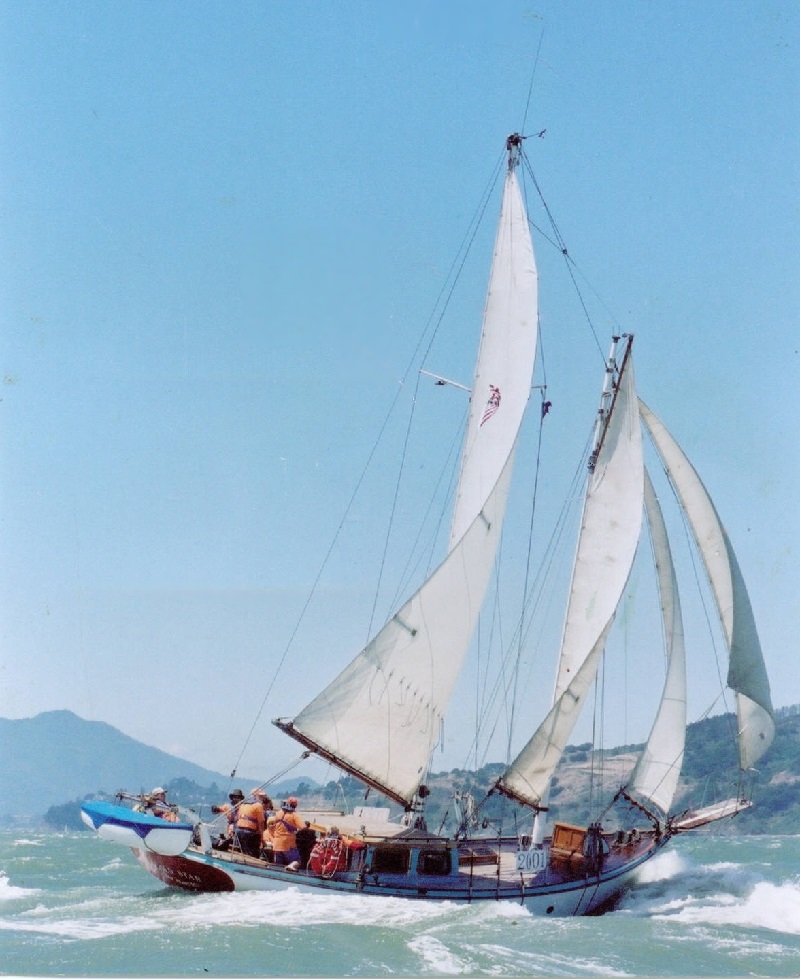
Photo: The Schooner Gold Star, my home for most of the summer in 1974.
-
Wordrunner: Rites of Passage
Wordrunner is accepting fiction, memoir and poetry, with the theme rites of passage for an echapbook anthology to be published March 2018.
The rites of passage theme includes any kind of passage through life, time or space.
Submissions will be open from December 1, 2017 through January 31, 2018. *
Submit up to three poems or a short story, novel or memoir excerpt, or personal essay (1,000 to 5,000 words). There are separate categories for each genre (poetry, fiction, nonfiction). Note that really long poems are not suitable for this venue. Send us your best.
*Note from Marlene: Polish your writing now, so you will be ready to submit during the submissions timeline.
Payment: $100 for collections, $5 to $25 for poems, stories and essays published in the annual anthology.
Submission fee: $2 for poems; $3 for prose
All rights revert to authors.
-
Thumbnail sketches
Figure drawing classes often start with timed gesture drawings of initial poses lasting as short as five seconds before the model moves. Gradually the time increases to 10, 15 and 30 seconds. By the time you get to a minute, it feels as if you have all day to capture the pose on your sketch pad. The idea is to keep you free, dexterous and more focused on process than product. Such short bursts also keep you from taking yourself too seriously—otherwise, you’d quickly become frustrated. —“Train Your Eye for Better Writing,” by Tess Callahan, Writer’s Digest September 2017Tess suggests you can do the same with writing. “At odd moments throughout the day, in a diner or in transit, jot down gestures, expressions or snatches of overheard dialogue. . . . Whether or not these little moments make it into whatever story you are writing, they will deepen your awareness of human expressions, inflections and gaits.”
Most visual artists don’t start on a big canvas without doing countless thumbnail sketches that help sharpen their skills and drive their vision. Writers can benefit from the same.—Tess Callahan