Creative Nonfiction literary magazine

  • Creative Nonfiction literary magazine

    Creative Nonfiction Literary magazine publishes nonfiction prose such as “long-and-short-form nonfiction narratives [and] columns that examine the craft, style trends and ethics of the nonfiction writing life, [as well as] interviews with established writers.”—Writer’s Digest, July/August 2016 issue.

    Lee Gutkind, Founder and Editor of Creative Nonfiction:

    “In some ways, creative nonfiction is like jazz—it’s a rich mix of flavors, ideas, and techniques, some of which are newly invented and others as old as writing itself. Creative nonfiction can be an essay, a journal article, a research paper, a memoir, or a poem; it can be personal or not, or it can be all of these.

    The words ‘creative’ and ‘nonfiction’ describe the form. The word ‘creative’ refers to the use of literary craft, the techniques fiction writers, playwrights, and poets employ to present nonfiction—factually accurate prose about real people and events—in a compelling, vivid, dramatic manner. The goal is to make nonfiction stories read like fiction so that your readers are as enthralled by fact as they are by fantasy.”

    “We look for a balance of style with substance—suspenseful, information-rich, well-written, lively narratives that tell us something and that might help change the way readers understand the world. . . We would love to see more diverse voices, reflecting a wider variety of experiences. We’re also happy to see work with strong research or elements of reportage.” —Writer’s Digest excerpt from Standout Markets, July/August 2016 issue.

    Writer’s Digest Exclusive Online Tips for Submitting to Creative Nonfiction features tips such as: Keys to breaking in: Try our daily Twitter challenge: we feature the best #cnftweets in the print magazine and online.

    Creative Nonfiction


  • Enter Writer Advice Contest And Receive Feedback.

    If you want your writing to be published, you have to submit.

    If you want to be a better writer, you need feedback.

    You can get both when submitting to Writer Advice contests.

    B. Lynn GoodwinB. Lynn Goodwin, founder of Writer Advice, reads every manuscript submitted. She will give you excellent feedback, tell you what’s working and identify anything that trips her up.

    I first met Lynn in a writing workshop in Berkeley, CA, summer of 2007. I admired her writing then and admire her editing skills now.

    Lynn’s tips on how to win a contest:

    Entice. Grab attention. Make the reader want to know more. Give reasons for the reader to care.

    Due by September 1: Scintillating Starts:  Middle Grade, Young Adult, or New Adult novels. 1000 words or less. Fee: $15. First prize: $160. Second prize. $50.

    Due by December 1: Scintillating Starts: Fiction, memoir, or creative non-fiction. 1000 words or less. Fee: $15. First prize: $160. Second prize. $50.

    Click on Contest Guidelines for complete rules for submitting to Writer Advice contests.

  • EatingWell Welcomes Freelancers

    EatingWell magazine is looking for articles about cooking, nutrition science, and the origins of food and social issues related to food networks, and welcomes ideas from new writers.

    “EatingWell’s voice is journalistic and authoritative; it speaks to both men and women. We cover nutrition with a newsy, science-based approach.”

    Before submitting, become familiar with EatingWell magazine and departments. “It’s difficult for us to contract with someone to write a story—no matter how brilliant the idea is—if it doesn’t fit into a specific department in the magazine. Send us ideas for specific sections in the magazine.”

    “You increase your chance of scoring an assignment with us if you 1) develop your pitch following the format for past columns, and 2) explain why the proposed topic should be covered in a specific issue.”  Go to EatingWell Submission Guidelines for examples and pitching tips.

    EatingWell welcome freelancers.
    “In this front-of-book section, we feature seasonal picks and the latest trends in food and health (think: food policy, sustainable agriculture, wacky healthy new eating practices, etc.). While some of the Fresh section’s regular elements are written in-house or by regular contributors, much of the section is open to freelancers. Items generally range from 150 to 350 words. This is a section in which we like to try out new writers. Writers interested in contributing to the Fresh section should have a strong background in science, health and/or food reporting.

    FRESH Food: These pages are dedicated to celebrating food. Could be a restaurant, a farm find, a seasonal food, a great farmers’ market or something trendy in the food/drink market. Sustainable agriculture and food origins pieces could fit into this section.

    We’ll occasionally run something like “Local Hero in the News,” highlighting an individual (or group) who has a timely or newsy event or movement that promotes values of sustainable agriculture, food justice, nutrition education, food safety, environmental consciousness, animal welfare (as it relates to food) and/or healthful eating practices in his or her (or their) local community. Tell us about the results: What has this person/group accomplished? Who have they helped? What makes them unique?

    FRESH Life: Here we will be getting more into how food and eating intersect with lifestyle, such as travel, beauty, books (not diet or cookbooks) and gifts.

    FRESH Thinking: This page covers several facets of one current food-related issue, controversy or movement.”

    Note from Marlene: If writing for EatingWell interests you, do go to their website for more ideas of what they are looking for, plus contact information.

    EatingWell

  • The California Sunday Magazine

    California Sunday MagazineThe California Sunday Magazine is looking for freelance writers, photographers and illustrators.

    From their website:

    The California Sunday Magazine roams across California, the West, Asia, and Latin America, telling stories for a national audience. We also produce a live event series, Pop-Up Magazine. We explore science, business, entertainment, politics, technology, art, social issues, sports, food, and more. We’re curious about everything. We publish stories regularly on the web and in print — delivered monthly with select Sunday copies of the Los Angeles Times and the San Francisco Chronicle.

    Interested in working with us? Check out our job openings.

    Writers

    We’d love to hear your story ideas. We’re not hiring staff writers or contributing writers yet. But we look forward to working with a wide network of independent, freelance writers. Our rates for reported features will be competitive with national print magazines. And you’ll work with exceptional editors. Send a note to writers@californiasunday.com to receive our Contributor Guide.

    Photographers and Illustrators

    Photographers and illustrators are welcome to share their work for consideration. We are open to seeing a variety of work as we assemble a roster of talented contributors and hope to be a meaningful outlet for artists for a long time. Send a note to artguidelines@californiasunday.com to receive our Contributor Guide for photographers and illustrators, as well as very occasional emails that will let you know if we’re developing a special issue or looking for work on a particular theme.

  • Real Simple Life Lesson Essay Contest

    What was the most dramatic change you have ever had to make?

    “Maybe you had to move cross-country after being relocated for a job, opening up new possibilities along with fears. Or maybe you needed to sell your house or leave an apartment before you expected to. How did that situation influence the rest of your life? If one unavoidable shift changed your world—for good and bad—in enduring ways, write it down and share it with Real Simple.”

    Send your typed, double-spaced submission to lifelessons@realsimple.com.

    1,500 words maximum.

    Deadline: 11:50 pm, September 19, 2016.

    Read the 2016 Winning Essay How I Made My Best Friend During the Worst Tragedy of My Life, by Diane Penney.

    Real Simple

  • Weave journal discoveries into stories

    If you “keep a journal,” you can weave some entries into stories. Give your fictional characters  personality traits, attitudes or habits discovered in journal writing.

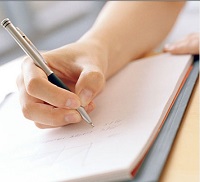
    Hand writing in journalEach day write about what surprised you, what moved you, what inspired you. Even if you think you have nothing to say, sit down and start writing.

    Write about the worst thing that happened to you and the best thing that happened to you each day.

    Just write!

    Inspired from an article in the December 2000 issue of Good Housekeeping, “The Question Journal,” by Rachel Naomi Remen, M.D., author of My Grandfather’s Blessings: Stories of Strength, Refuge, and Belonging.

  • Voices of Lincoln Poetry Contest 2016

    Poetry


    The 12th Annual Voices of Lincoln Poetry Contest has five categories:

    Things My Parents Taught Me

    The Best Gift I Ever Received

    It Happened One Night

    If I Were Rich And Famous

    You Can Count On Me

    You may submit a maximum of three poems, no more than one in each of three of the five contest categories.

    Poems may be in rhyme, free verse, Haiku or other accepted poetry forms and of any length, up to a maximum of 60 lines.

    You do not have to live in Lincoln, CA to be eligible.

    Young Poets, 18-years of age or under, are encouraged to submit poems and will compete in a special “Young Poets” category.

    Entry Forms and Contest Rules

    Entry Forms must be received no later than Saturday, July 23, 2016.  Early submissions are appreciated. If you have questions, please contact Alan Lowe, Contest Coordinator, at slolowe@icloud.com

  • The Condolence Note – What To Write

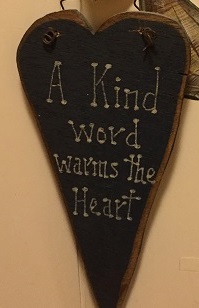
    A Kind Word Warms The HeartI was taught to write thank you notes. They’re pretty easy. “Dear Aunt Margaret, thank you for the sweater. I’m going to wear it to school.” Doesn’t matter if the sweater fit or not, or was the right color. Receive a gift. Write a thank you note.

    Condolence notes are harder. Sometimes we just don’t know what to say. Here are some ideas.

    Dear Friend, My sincere condolences at the loss of Henry. I miss him every day. Thinking of you with much love.

    Dear Elsie, I can only imagine how hard this must be. Please let me know what I can do.

    Hello Art,  How are you doing? You’ve had to deal with so much.   I’ll be near your house on Thursday. May I bring a meal? If you feel like visiting, we can have tea.

    Dear Aunt Susie, I am so sorry that Uncle Frank passed away. I remember how he always made me laugh.  I hope you are doing well. I think of you all the time. With love, Ann

    Dear Lucy, I just heard about George. I wanted to write earlier, but I was too upset and I didn’t know what to say. He meant so much to me. I miss him every time I have (name of food) or see (name of place).

    Hello Sam, I can’t believe it has been six weeks since Trudy passed away. I’m sorry I didn’t write sooner. I think of you often and hope you are doing well. Let’s have a phone visit when you are ready.

    Write from your heart. It doesn’t have to be a long letter. A short note will do, as long as it’s from the heart. Just write.

  • Green Hills Literary Lantern – Submit!

    Saturdays are “Places to Submit” on The Write Spot Blog. Today’s feature is the Green Hills Literary Lantern.   Check out the submissions page.

    ” Green Hills Literary Lantern is published annually, in June, by Truman State University. Historically, the print publication ran between 200-300 pages, consisting of poetry, fiction, reviews, and interviews, and was printed on good quality paper with a glossy, 4-color cover.  The digital magazine is of similar proportions and artistic standards. All views, conclusions, or opinions are those of the authors of the pieces and not necessarily those of the editorial staff or publishers. GHLL is indexed by the Index of American Periodical Verse (Lanham, MD:  Scarecrow Press) and The American Humanities Index.”

    Green Hills Literary Lantern

  • Which Oz character are you?

    Dorothy and friendsAs you know, there are two sides to every story (sometimes more, depending on the number of characters involved).  Let’s look at The Wizard of Oz, the movie version, with different perspectives,   different points of view.

    The Wizard: Wise and knowing? Or a fraud?

    Dorothy: Sweet and innocent? Or a spoiled orphan?

    Uncle Henry: Owner and Farm Manager? Or just a guy doing what he likes to do?

    Auntie Em: Home Sweet Home and apple pie? Or bossy?

    Hunk the farmhand/Scarecrow:  Simple minded? Or observant and resourceful?

    Hickory the farmhand/Tin Man: A hunk of machine parts? Or kind and sensitive?

    Zeke the farmhand/ Cowardly Lion: A coward? Or a leader?

    Miss Gulch/Wicked Witch of the West: Mean and ornery? Or misunderstood?

    Glinda The Good Witch of the South: Too good to be true? Or conniving (why didn’t she tell Dorothy about the shoes when they first met?)

    Toto: Just a frolicky little dog? Or pesky?

    The Winged Monkeys: Horrible? Or loyal?  Horrible and loyal?

    When developing fictional characters, consider their strengths and their weaknesses; their triumphs and their faults.  Make them feel real, like the characters in The Wizard of Oz.

    By the way, which Oz character do you identify with?

    The Wonderful Wizard of Oz Character List

    7 Theories Of What The Wizard of Oz Is Really About