Let’s discuss and write!

  • Let’s discuss and write!

    Hello and welcome. Do you have a writing question or a topic you would like to see discussed on The Write Spot Blog? Perhaps I can research and discover answers. Also, you are welcome to contribute as a guest blogger. ~600 words something inspirational or informational for writers. Have you read a book that you love and want to tell others about? Send an email to me. Let’s talk.   ~Marlene

  • Analog: Science Fiction and Fact

    “When the weather outside is frightful, the perfect thing to do is curl up inside with some science fiction and let it transport you to warm alien lands.” — Analog: Science Fiction and Fact

    Analog: Science Fiction and Fact (ASF) is “considered the magazine where science fiction grew up.” When editor John W. Campbell took over in 1938, he brought to Astounding [original name] an unprecedented insistence on placing equal emphasis on both words of ‘science fiction.’ No longer satisfied with gadgetry and action per se, Campbell demanded that his writers try to think out how science and technology might really develop in the future, and, most importantly, how those changes would affect the lives of human beings.”

    Campbell chose the name “Analog” in part because he thought of each story as an “analog simulation” of a possible future, and in part because of the close analogy he saw between the imagined science in the stories he was publishing and the real science being done in laboratories around the world.”

    Submit: “Analog will consider material submitted by any writer, and consider it solely on the basis of merit. We are definitely eager to find and develop new, capable writers.

    We have no hard-and-fast editorial guidelines, because science fiction is such a broad field that I don’t want to inhibit a new writer’s thinking by imposing Thou Shalt Nots. Besides, a really good story can make an editor swallow his preconceived taboos.

    Basically, we publish science fiction stories. That is, stories in which some aspect of future science or technology is so integral to the plot that, if that aspect were removed, the story would collapse. Try to picture Mary Shelley’s Frankenstein without the science and you’ll see what I mean. No story!

    The science can be physical, sociological, psychological. The technology can be anything from electronic engineering to biogenetic engineering. But the stories must be strong and realistic, with believable people (who needn’t be human) doing believable things–no matter how fantastic the background might be.”

    Fact articles: Should be about 4,000 words and deal with subjects of not only current but future interest, i.e., with topics at the present frontiers of research whose likely future developments have implications of wide interest. Illustrations should be provided by the author in camera-ready form.

      e^(pi i) = -1    *

    *This equation was used in an episode of The Simpsons, when Homer gets sucked into the third dimension.

  • Fourth Genre: Explorations in Nonfiction

    The editors of Fourth Genre: Explorations in Nonfiction invite you to “submit writing that is lyrical, self-interrogative, meditative, and reflective, as well as expository, analytical, exploratory, or whimsical. They encourage submissions across the full spectrum of the genre. The journal encourages a writer-to-reader conversation, one that explores the markers and boundaries of literary/creative nonfiction.”

    Personal essay subjects can be about nature, environmental, travel, memoir, and more.

    General submission dates: August 15 – November 30.

    Fourth Genre Steinberg Essay Prize submission dates:: January 1-March 31

    Click here for guidelines.

    Fourth Genre


  • Fourteen Hills Press ready for your submission


    Since its inception in 1994, Fourteen Hills: The SFSU Review contributes to a vibrant literary tradition on the West Coast centered in the San Francisco Bay Area. Its commitment to presenting a diversity of experimental and progressive work by emerging and cross-genre writers, as well as by award-winning and established authors, has earned it a reputation for literary excellence. Being independent means its aesthetic is dynamic and fluid, ever changing to meet the needs of the culture and the historical moment as the staff perceive them. As an international literary magazine, Fourteen Hills has developed a reading audience that goes beyond the San Francisco Bay Area to the international community.

    Staffed exclusively by graduate students in the creative writing program at San Francisco State University with the oversight of a faculty advisor, Fourteen Hills publishes original poetry, fiction, literary nonfiction, and cross-genre work created by writers in the US and abroad. It also welcomes and prints representative contributions from visual artists.

  • How to flesh out villains.

    Do you have a villain in your story? Is this scoundrel executing gruesome acts? Is it hard for you to get into the head and heart of the “bad guy?” Does he or she have a heart?

    Here’s an idea about how to flesh out your baddie. . . so that he/she is someone you can live with for the duration of your writing.

    Do a freewrite. The antagonist was once a child. What were his/her passions as a teenager? What games did they play as children? What delighted this child? Write about his/her first car.

    Choose a prompt and write as if you were answering from the villain’s point of view. Imagine you are a neighbor or a relative of the undesirable person. Write about the mean person from someone else’s point of view.

    What is the turning point, or the chain of events that changed this innocent toddler into a dreadful creature?

    Probably not much of this brainstorm writing will make it into the final cut, but it will help you understand this despicable creature and make him/her come alive.

    Remember: There usually is a wicked character in stories. . . that’s what gives stories their heft, their meatiness.

    An example is Anna Quindlen’s “Every Last One.” We meet an individual who is charming, likable . . .lovable. Then an event changes everything and everyone. Use a book of your choice as your textbook. Study how the author developed the character of the “bad” guy.

    Count DraculaNo one was born bad. How did they get that way? You are the puppet master . . . create and control your characters, even the evil ones. Just write!


  • Big Brick Review – ready for your submission

    The Big Brick Review Annual Essay Contest open for submissions from now until February 17, 2016.

    The Big Brick Review seeks personal essays that build on the narrative of our lives, finding new insight to old struggles . . . old insight to new struggles . . . and all shades-of-gray in between.

    The Big Brick ReviewFor 2016, the contest theme captures the color of brick and is loosely based on the concept of ‘red/read’—which authors can interpret as creatively as they choose (it’s an adjective! it’s a verb! It means different things in different contexts!).

    Essays must be narrative non-fiction (that is, they must explore a truth of a human experience as interpreted/experienced by the author) and will be judged on overall strength of writing, compelling content/theme, and interesting style/voice. For more info, visit Contest.

  • The Sixth Sense

    We have previously talked about the five senses: sight, hearing, smell, touch and taste.

    Today, we’ll talk about the sixth sense.

    The sixth sense can be described as telepathy, intuition, perception, imagination. . . those traits that use the mind to create and understand. Some people believe the sixth sense is the ability to problem solve; using our minds to read and interpret signals, to pick up or sense energy.

    NBA Hall of Famer Kareem Abdul-Jabbar started reading Sir Arthur Conan Doyle’s Sherlock Holmes series during his 1969 rookie road trips. He was “fascinated by Holmes’ remarkable ability to see a world teeming with subtle but revealing clues where others saw only the mundane.” September 27, 2015 Parade

    Kareem realized that Holmes used his power of observation to pick up clues missed by others. Kareem did the same with basketball. He observed players’ moves and habits and used that information to better his game.

    Both Sir Arthur Conan Doyle’s Holmes’ character and Kareem Abdul-Jabbar problem solved by picking up signals, interpreting them, and with intuition, solved the mystery, won the game.

    So how can you incorporate the sixth sense in your writing? Use your imagination and skills to create a world and characters who use their sixth sense. Remember the movie, The Sixth Sense? If you haven’t seen it, I highly suggest watching it as a tool for developing characters.

    Use Holmes and his sixth sense as an example for fleshing out your fictional characters or to inspire writing about real people.

    Authors and books whose characters use powers of deduction to solve mysteries :

    Steve Hockensmith, Holmes on the Range series.

    Kareem Abdul-Jabbar and Anna Waterhouse, Mycroft Holmes

    More ways you can use the sixth sense in your writing. Your characters can embody these traits. From Yahoo Answers:

    Clairvoyance 
    The art of ‘seeing’ with senses beyond the five we normally use. Clairvoyance is often called the ‘sixth sense’ or E.S.P. Clairvoyance is like a second level of thought, one step higher than the normal level of thinking that we all do. Clairvoyants see beyond what we normally see.

    Clairaudience 
    The ability to hear beyond the normal range of hearing like messages in thought forms from an spirit who exists in another realm. Many of us become aware of this skill when we are in danger and that ‘little inner voice’ sends a warning.

    Clairsentience 
    Clairsentience is the ability to feel things that something’s there but it isn’t seen. A lot of people have this ability but do not know that they possess it A tickling sensation on the hand or face during meditation. A pressure on the top of the head when talking or connecting with a Spirit. Hairs on the back of the neck standing on end when a spirit is near. A floral smell… A movement as a flick of white, purple, or blue light. Seeing shadows in the periphery of your field of vision

    Empathy 
    Empathy is the ability to feel emotional, mental, physical and spiritual energy level and can be read as images or feelings, an empathetic person can find they are able to sense things with a person that others cannot sense.

    Sixth SenseClick here for more Yahoo Answers about the sixth sense.

  • Wordrunner eChapbooks

    Wordrunner eChapbooks has published 25 online chapbooks — 10 fiction, 5 memoir and 5 poetry collections, each featuring one author, and 5 themed anthologies by multiple authors. Wordrunner is pleased and proud to be showcasing these diverse and talented writers.

    Theme for next submission is “Devices” (technology’s impact on our lives and relationships):  Fiction, memoir and poetry.

    There is no fee to submit and authors are paid.

    Submissions will open from November 15 through January 15, 2016.

    Guidelines will be posted after November 15, 2015. Note from Marlene:  Start writing now, so you have time to revise, edit and submit.

    Jo-Anne Rosen is the publisher/editor of Wordrunner. Jo-Anne’s fiction has appeared in many publications.  Two of her stories were performed at the New Short Fiction Series in Hollywood, California, on October 12, 2014.

    Jo-Anne is a book and web designer and a small press publisher. Jo-Anne established Wordrunner Publishing Services in the 80s, a print chapbook service in the 90s, and Wordrunner eChapbooks in 2008.

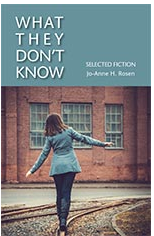
    Jo-Anne will read from her short story collection, What they Don’t Know, on Monday, October 12, 2015, 6:00-8:00 p.m at Gaia’s Garden in Santa Rosa, CA, along with Susan Bono, Wind Hughes and Mara Lynn Johnstone.  For reservations: email Jeane Slone: info@jeaneslone.com

    About Chapbooks

    A few hundred years ago, chapbooks were pamphlets of popular tales or ballads, hawked in the streets for pennies. 21st century echapbooks are the contemporary equivalent with the potential for reaching many more readers than do limited print editions.

    Donations

    If you share enthusiasm for the stories, poems and memoirs on this site, as well as the conviction that authors should be paid for their work, please consider supporting Wordrunner with a donation.

    Why should you donate? Wordrunner does not charge a fee for submissions nor subscriptions, nor are there any advertisements on this site. Simply excellent and engaging reading.

    “If you share our enthusiasm for the stories, poems and memoirs we’re publishing, as well as our conviction that authors should be paid for their work, we hope you will consider supporting us with a donation.”

    Another way to support Wordrunner is by purchasing the Kindle or Smashwords version of the echapbooks. Links to these may be found on the e-Store page.

    Rosen.What They Don't KnowNote from Marlene: Jo-Anne Rosen is a tireless supporter of writers, writing classes/workshops, writing events. . . all things writerly. She collects, formats and produces Sonoma County Literary Update. If it’s about writing and it’s in Sonoma County, Jo-Anne has it listed here.

  • Vary sentence structure

    Have you heard about varying length of sentences?

    Here’s what Mary Gordon says about that:

    “One of the things that I try to do is to have a paragraph that begins and ends with a sentence of approximately the same length and verbal structure. . . . in the middle, the sentences tend to be longer and more complex.

    It allows for a kind of velocity to happen . . . A shorter sentence you actually have to read more slowly . . . If you are a writer, you have more power than the greatest tyrant in the world because of punctuation. You get to tell people how to breathe . . . a sentence that has very little punctuation, you actually have to read more slowly because you’re not stopping to breathe. So it’s a slowing down and then a kind of build up – a crescendo and then a decrescendo . . . ”

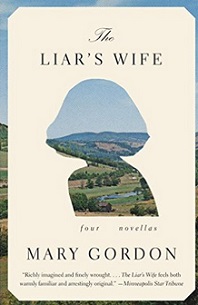
    Excerpt from The Liar’s Wife by Mary Gordon:

    “The late sun sparkles on the river. She has not given up the habit of trying to find the right words for the color of the sky. Pearl grey, she thinks, and then changes from pearl to oyster, the inside of an oyster shell. And all at once, there is something like a rip in the matte greyness, and light pours through, as if someone had slit a great cloth bag of sugar, and the sugar had spilt out. Only one tree is singled out by the light, and that one called a maple sugar. It amuses her to say to herself, ‘the sugar light falls on the sugar maple,’ and then she wonders if she thought of sugar because of rationing. She believes that she spends an inordinate amount of time thinking about the food she can’t have. She has been told the sacrifice is honorable, and she believes it, and is glad to do it. Only sometimes she yearns, ashamed, for the taste of sugar.

    Mlle Weil says: ‘the tree looks like a torch thrown down by an angel.’

    Once more, in relation to Mlle Weil, Genevieve finds herself abashed and she feels she must accuse herself. She is thinking of angels and I of sugar.”

    From an interview by Alicia Anstead, The Writer, September 2015

     Gordon.Liar's WifeNote from Marlene: I love how Genevieve struggles to find the right word for the color of sky. I ponder the perfect description for stars in the dark sky. I’ve heard “diamonds spilled from a velvet pouch.” I love that. Wish I had thought of it.

    However you parse your words. . . Just write!


  • Joyland – Regional Literary Magazine

    Joyland is a literary magazine that selects stories by region. Each regional editor works with authors with some connection to their area. Living in the respective city or region for any amount of time is qualification enough for submission. If you’re unsure, send to the region nearest you.

    Joyland publishes short fiction, novel excerpts, and literary non-fiction between 1200 and 10,000 words ( slightly under or over is fine).

    Joyland Submission Guidelines

    Rejection Guidelines

    Published work by RegionsJoyland