Category: Just Write

  • Valentine’s Day Blog Hop

    valentines day blog hop 2016

    The Write Spot Blog is fortunate to have a friend like Francis H. Powell. Even though we have never met in person, Francis is an important part of The Write Spot’s history. He invited us to join a Blog Hop last Halloween and last Christmas and now. . . drum roll. . . Valentine’s Day Blog Hop.

    Before participating I had heard about blog hops, but didn’t really know what they were. Here’s how this Blog Hop works. When you click on Valentine’s Day Blog Hop (in future Write Spot posts), you land on Francis’ Blog Hop Landing Page. Scroll down and click on a name. Here is a brief summary of talented and creative writers participating in this Blog Hop.

    Francis H. Powell, author of Flight of Destiny and creator of fabulous Blog Hops.

    Latoya Wilson has beautiful photos on her website. She hopes her writing offers a warm refuge.

    Tiffany Apan is a singer, songwriter, actress, award-winning producer, author of The Birthrite Series and other dark fiction.    

    Cheryllyn Dyess writes about a wide range of intriguing topics. She writes as Casey L. Bond

    Angela Chrysler has an unusual and tantalizing invitation into her website.

    Terri Bruce‘s adventure stories may be foreshadowed by her mesmerizing graphics and the invitation to her website: “Ordinary People. Extraordinary Words.”

    Linzé Brandon blogs about books, writing and the creative life of a writer married to a photographer at Butterfly on a Broomstick.

    Sarah Kohl writes about her adventurous experiences and travels on her blog.

    Marlene Cullen’s The Write Spot Blog is a place for writers to post freewrites from the listed prompts.

    Sundays – Book Reviews

    Mondays – Inspiration to Just Write

    Tuesdays – Quotes (watch for a new feature to be revealed soon)

    Wednesdays and Fridays – Writing Prompts

    Thursdays – Guest Bloggers

    Saturdays – Places to Submit

    Contact Marlene if you want to be a guest blogger and for posting book reviews.
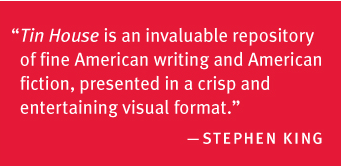
  • “Tin House is an invaluable respository . . . ” Stephen King

    Tin House. King quote

    Submissions to Tin House Magazine  are now open.

    Submissions accepted through February 28, 2016.  Tin House considers each submission for all upcoming issues regardless of theme. Summer and winter issues are not themed

    Submission Guidelines page includes a helpful FAQ’s column. Worth reading. Good advice for submissions to almost all magazines.

    Submit only one story or essay (10,000-word limit), or up to five poems at a time. Multiple submissions will be returned unread. Please wait until you hear from Tin House before submitting new work for consideration.

    “We shall do our best to respond within six months but, in some cases, this period may be longer. If you have not received a response from us within six months, we will be happy to receive e-mail inquiries and will do our best to respond.”

  • Tri-Quarterly – writing, art and cultural inquiry

    Tri-QuarterlyTriQuarterly is the literary magazine of Northwestern University. This web journal is edited by graduate students and supervised by faculty. TriQuarterly is “an international journal of writing, art, and cultural inquiry.”

    From now until May 1, 2016, TQ welcomes submissions of fiction, creative nonfiction, poetry, short drama, short-short prose pieces, video essays, and hybrid work from established as well as emerging writers. TQ is especially interested in work that embraces the world and continues, however subtly, the ongoing global conversation about culture and society that TriQuarterly pursued from its beginning in 1964. TriQuarterly pays honoraria for creative work and publishes two issues a year.  Submission Guidelines.

  • weirderary . . . encourages creativity

    weirderaryweirderary is an online literary magazine dedicated to high quality creative work. “We publish writing, comics, art, and hybrid pieces, favoring fresh and uncommon forms, subjects, and points of view. Over here, “weird” is a compliment, not a pejorative. weirderary comes out three times per year: March, June, and October 17th.”

    Accepting submissions now and up to March 1, 2016.

    The genius of weirderary: Jessica Thompson, TJ Murray, and Colleen Kolba.

    “Send us your weirdest stuff, whether in content or form. We want the unusual. We want to be surprised. We appreciate humor, but that doesn’t only mean light-hearted and goofy. Feel free to go dark. Get serious, just do it in a form or from a perspective we don’t see very often. Cross genre lines and experiment. Send us the work you don’t know how to define.”

    Submit by email: submit-at-weirderary.com. Put the category and title of what you’re submitting in the subject line. If you’re submitting more than one item, please send a separate email for each piece.

    A partial list of  submitting guidelines:

    In your email, please tell us the word count (if applicable) and whether or not the submission was previously published.

    We prefer previously unpublished work, but will occasionally accept published work if it is an exceptionally good fit.

    Categories:

    FLASH (fiction or non): max 498 words

    FICTION: max 2,976 words

    NONFICTION: max 2.333 words

    POETRY: bring it

    COMICS: yes, please

    ART: def go for it

  • Mystery Writing Magazines

    Since The Write Spot Blog has been featuring Agatha Christie this past week, it seems right to post ideas where you can submit your mystery writing. At the end of this post, link to the writing style of Agatha Christie.

    Ellery Queen’s Mystery Magazine welcomes submissions from both new and established writers. They publish “every kind of mystery short story: the psychological suspense tale, the deductive puzzle, the private eye case—the gamut of crime and detection from the realistic (including the policeman’s lot and stories of police procedure) to the more imaginative (including ‘locked rooms’ and ‘impossible crimes’). We need hardboiled stories as well as ‘cozies,’ but we are not interested in explicit sex or violence. We do not want true detective or crime stories.” With the exception of a regular book-review column and a mystery crossword, EQMM publishes only fiction.

    EQMM is especially happy to review first stories by authors who have never before published fiction professionally. First-story submissions should be addressed to EQMM’s Department of First Stories.

    Partial list of Submission Guidelines:

    Three general criteria are employed in evaluating submissions:

    Strong writing, an original and exciting plot, and professional craftsmanship.

    Almost any story that involves crime or the threat of crime comes within purview. However, like all magazines, EQMM has a distinctive tone and style and you can only get a sense of whether your work will suit them by reading an issue. To receive a sample copy send a check or money order for $5.00 to Ellery Queen’s Mystery Magazine, Attn: Sandy Marlowe, 6 Prowitt St., Norwalk, CT 06855.

    EQMM uses stories of almost every length. 2,500-8,000 words is the preferred range. Shorter stories are also considered, including minute mysteries of as little as 250 words.

    EQMM uses an online submission system  that has been designed to streamline the submission process and improve communication with writers.

    For information about standard formatting, see William Shunn’s Guide to Proper Manuscript Format.

    Sleuth.WomanThere are a variety of places that want your mystery writing:

    Alfred Hitchock Mystery Magazine

    In Reference To Murder

    The Review Review (not a typo) – views on publishing

    For ideas on how to write mystery stories, take a look at Freelance Writing: The writing style of Agatha Christie.

  • Take a step. Start the journey.

    Hey there. . . Hi!        If you are a first-time visitor, Welcome! I’m glad you are browsing The Write Spot Blog. Welcome to all readers and subscribers. I’m always happy to have readers and contributors participate in The Write Spot Blog.

    “We” is me — a one-woman show. It’s just me, Marlene, offering inspiration and writing prompts to spark your writing.

    Prompts are posted on Wednesdays and Fridays. Use these prompts however they best work for you. One suggestion is to set your timer for 15-20 minutes. Sometimes the best writing gets done with the pressure of a deadline. Write fast and furious.

    Do not expect “perfect” writing. No one will read your freewrite, unless you invite them to. Freewrites come from within you and burst out during this time of writing freely. Sometimes when we’re writing freely, our mind takes a 90 degree turn and pretty soon we’re off, writing about something completely unrelated to the writing prompt. That is absolutely fine. This is the best kind of writing. This type of mind wandering is perfect writing.

    The Write Spot Blog is a place where you can experiment with different types of writing: serious, personal, humorous, reflective, personal essay, fiction, non-fiction, poetry, playwriting, screen writing, letter writing.

    It’s a place where you can work on your writing and play with writing. You can be yourself (memoir/personal essay), you can be someone else (fiction), you can be a reporter (non-fiction/ essay).

    As you observe the world and its quirky inhabitants, explore your findings through writing. Work out your problems by writing. Write about your feelings. Write what you observe. Write about your day, your family, friends, your job, your wishes, your dreams, write about your frustrations. Make up stuff. Just write!

    How to use writing prompts.

    How to get into the mood to write.

    Natalie Goldberg talks about writing practice.

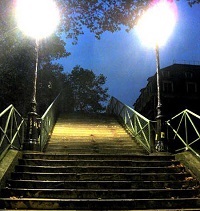
    Jim C. March Paris stairsTake a step. Start the journey. Explore by writing.

    Paris stairs by Jim C. March

    http://jamescmarch.com/JimPhotos/index.html


  • Alaska Quarterly Review encourages new and emerging writers

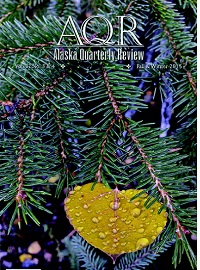
    Alaska Quarterly ReviewAlaska Quarterly Review is a literary journal devoted to contemporary literary art, publishing fiction, short plays, poetry, photo essays, and literary non-fiction in traditional and experimental styles. The editors encourage new and emerging writers, while continuing to publish award winning and established writers.

    Guidelines

    FICTION: Short stories and novel excerpts (generally not exceeding 50 pages).

    POETRY: Poems (up to 20 pages).

    DRAMA: Short plays (generally not exceeding 50 pages).

    PROSE: Literary nonfiction (generally not exceeding 50 pages).

    PHOTO ESSAYS: Query before submitting.

    All manuscripts must be typed and accompanied by a self-addressed, stamped envelope (SASE).

    Unsolicited manuscripts are read between August 15 and May 15.
    AQR responds to e-mail queries, but cannot review electronic submissions.
    Identify simultaneous submissions in cover letter.

  • How many povs can be in one scene?

    The question often pops up: How many points of view can be in one scene?

    The easy answer: One point of view per paragraph.

    The expanded answer: “If you have more than one character within a scene whose points of view are relevant, then you’ll need to use the omniscient pov.” Jordan E. Rosenfeld, Make A Scene.

    The omniscient narrator is all-knowing, able to move in and out of the thoughts of all the characters and to comment on events before and after the scene has happened.

    Jordan, an authority on writing,  expands upon the idea of changing pov within a scene: “. . . you must make omniscient clear right away from the first paragraph in the scene. If the readers believes that he has only been able to see inside character A’s head, and then you suddenly leap into character B’s head, the reader will feel confused and possibly irritated.”

    For a reminder about what a scene is, Jordan says, “A scene should largely take place in one location.”

    When you use omniscient pov and hop from one character’s head into another character’s head, you are able to describe the scene (action, thoughts, feelings) from different characters points of view. This can be tricky. Just make sure the reader knows which character is observing the scene.

    First: Just Write. Then, during the revising/editing stage, check that points of view are clear and consistent.

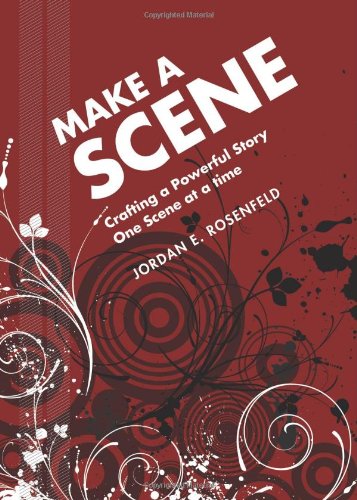
    Make A Scene.RosenfeldFor more details about scene, points of view and examples, check out Make a Scene: Crafting a Powerful Story One Scene at a Time, by Jordan E. Rosenfeld.

  • The Sun Magazine

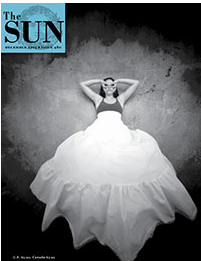
    The Sun magazine“The Sun is an independent, ad-free magazine that for more than forty years has used words and photographs to evoke the splendor and heartache of being human. Each monthly issue celebrates life, but not in a way that ignores its complexity. The personal essays, short stories, interviews, poetry, and photographs that appear in The Sun’s pages explore the challenges we face and the moments when we rise to meet them.”

    “We publish essays, interviews, fiction, and poetry. We tend to favor personal writing, but we’re also looking for provocative pieces on political and cultural issues. And we’re open to just about anything. Surprise us; we often don’t know what we’ll like until we read it.

    We pay from $300 to $2,000 for essays and interviews, $300 to $1,500 for fiction, and $100 to $200 for poetry. We also give contributors a complimentary one-year subscription to The Sun. We purchase one-time rights. All other rights revert to the author upon publication.”

    Submission Guidelines

  • Another POV choice: Free Indirect Speech

    POV = Point of view.

    Point of view is . . . simply. . .  from the point of view of whoever is telling the story.

    Writers get to choose who tells the story. It’s a very simple concept, made difficult by the many choice of who gets to tell the story: first person, second person, third person (limited, close, omniscient).

    Here’s another point of view choice: The Free Indirect Style.

    I’m posting about the free indirect style of point of view because I’m fascinated with learning new things and also because a friend, whom I admire and is an excellent writer said, “I have found that I use it [free indirect point of view] a lot in my writing, and always have, without even knowing that’s what it was.  It’s a very “natural” voice for me and, I think, one that’s easy to read.”

    Ready? Here we go:

    “Free indirect speech is a style of third-person narration which uses some of the characteristics of third-person along with the essence of first-person direct speech.”  Wikipedia

    There are two kinds of indirect speech:  free and normal.

    “What distinguishes free indirect speech from normal indirect speech is the lack of an introductory expression such as ‘He said’ or ‘he thought’.

    Free indirect discourse can also be described as a ‘technique of presenting a character’s voice partly mediated by the voice of the author, or, in the words of the French narrative theorist Gerard Genette, ‘the narrator takes on the speech of the character, or, if one prefers, the character speaks through the voice of the narrator, and the two instances then are merged.’ Randall Stevenson, Modernist Fiction.” Wikipedia

    Examples  (Wikipedia):

    Quoted or direct speech:

    He laid down his bundle and thought of his misfortune. “And just what pleasure have I found, since I came into this world?” he asked.

    Normal indirect speech:

    He laid down his bundle and thought of his misfortune. He asked himself what pleasure he had found since he came into the world.

    Free indirect speech:

    He laid down his bundle and thought of his misfortune. And just what pleasure had he found, since he came into this world?  Wikipedia

    Is your head spinning? Mine is!

    Reading examples of the free indirect style of pov might help:

    Jane Austen was one of the first practitioners of free indirect speech with Emma.

    The Irish author James Joyce also used free indirect speech in works such as “The Dead” (see Dubliners), A Portrait of the Artist as a Young Man, and Ulysses.”   Wikipedia

    No matter what point of view you choose. . . just write!

    The Write Spot Blog is part of the Festive Spirit Blog Hop, hosted by Francis H. Powell. To read posts by participating bloggers, click on Francis H. Powell’s Home Page. Scroll down, choose a name, click on one and you will magically be transported to creative blog posts.

    Festival of Spirits Blog Hop