Write authentically about difficult subjects

  • Write authentically about difficult subjects

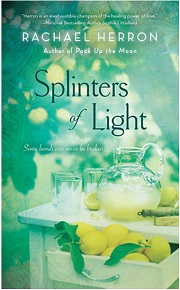
    Splinters of Light.180I recently read an outstanding novel, Splinters of Light, by Rachael Herron, “a poignant and beautiful novel about love, loss, and the unbreakable bonds of family—particularly those between mothers, daughters, and sisters.” — Amazon

    In this full-of-heart novel, the mother has early onset Alzheimer’s disease. I wondered how Rachael could write so authentically and intimately about something she didn’t have personal experience with. This is the gift of a writer who knows how to research and turn that information into a compelling story.

    I asked her how she wrote so authentically about early-onset Alzheimer’s disease (EOAD). Her answer:

    “I love immersing myself in the worlds I write about, but I’ll admit this was a hard one. Because there’s no cure for early-onset Alzheimer’s, there are really no happy endings. So I had to read about and research families that were breaking apart, but still focus on the happy parts of the love that remained. Luckily, it was easy to find. Memories are precious, and almost every family has precious stories of love. I borrowed the feelings, not the particulars, and imagined myself in each scene. I’m so pleased if it worked.”

    Herron’s dialogue is spot-on, from the mother and her age-range friends to the teenage daughter and her friends. Rachael responds, “I love writing dialogue — if it rings right to my ear when I read it out loud, then I’m satisfied.”

    Excerpt from the Conversation Guide in Splinters of Light:

    Q. How did you get the idea for Splinters of Light?

    A. I was sitting on my couch, my feet up on the coffee table, the cat on my stomach, reading a People magazine that featured an article about a teenage boy who was taking care of his forty-six-year-old mother as her EOAD progressed.

    Note from Marlene: Notice how specific Rachael is. . . sitting on couch, feet up on coffee table, cat on stomach, People magazine, ages of boy and mother. These specific details enable readers to “see” this scene.

    More from Rachael: “That boy’s story—that glossy page-and-a-half write-up—was something I couldn’t let go. . . I began to play with ideas, slipping them around in my mind much the same way Nora does with the sea glass in her pocket.

    As this book took shape in my mind, the characters became real and the plotline began to twist its way through my imagination like a river twists to the sea. At the same time, I was deeply aware that I had to get it right. I was entering a conversation that I needed to be part of . . . the truth is that we are the ones responsible for raising awareness for Alzheimer’s disease, and this book is my method of doing that, of opening the dialogue.”

    Note from Marlene: I think Rachael Herron does a fantastic job of opening the dialogue on this difficult subject. I encourage you to read Splinters of Light . . . for this important topic and for the gorgeous writing.

    Your Turn:  Do you have something difficult you want to write about?  Go for it!  Sit down and start writing. You can always toss what you have written. No one ever has to see it, unless you invite them.  Just write!

  • Two-Minute Memoir, Psychology Today

    Two-Minute Memoir focuses specifically on a personal story of growth.

    Typically told in first person, the selected essays should have a beginning, middle and end. Like most good essays, selected essays feature important internal change or revelation.

    As mentioned in the March/April 2015 issue of Writer’s Digest magazine: “Write something unusual.”

    Not the usual: mental illness, grief, divorce, falling in love, etc . . . unless there is something “distinctive or unusual about the story to make it work.”

    How to submit:

    Past your 1,500 word essay (or fewer words) in an email to: jennifer.blyer -at- psychologytoday.com

    Include a brief introduction and a one-sentence summary.

  • Narrative Winter 2015 Story Contest

    Do you have some writing ready to submit? Could you get it ready real fast?

    Narrative Magazine’s Winter 2015 Contest ends Tuesday, March 31 at midnight, PST

    This contest is open to all fiction and nonfiction writers: shorts, short stories, essays, memoirs, photo essays, graphic stories, all forms of literary nonfiction, and excerpts from longer works of both fiction and nonfiction.

    Entries must be previously unpublished, no longer than 15,000 words, and must not have been previously chosen as a winner, finalist, or honorable mention in another contest.

    Narrative is looking for works with a strong narrative drive, with characters we can respond to as human beings, and with effects of language, situation, and insight that are intense and total. We look for works that have the ambition of enlarging our view of ourselves and the world.

    Narrative welcomes and looks forward to reading your pages.

    Submission Fee: There is a $23 fee for each entry. And with your entry, you’ll receive three months of complimentary access to Narrative Backstage.

    Awards: First Prize is $2,500, Second Prize is $1,000, Third Prize is $500, and ten finalists will receive $100 each. All entries will be considered for publication.

    All contest entries are eligible for the $4,000 Narrative Prize for 2015 and for acceptance as a Story of the Week.

    Submission Guidelines: Please read Submission Guidelines for manuscript formatting and other information.

  • Make characters real and likable.

    Play around with different ways to describe characters in stories.

    Here are examples of how to make characters real and likable and how to capture readers’ interest.

    What we keep.112What We Keep by Elizabeth Berg

    “My mother was dressed in her beautiful yellow summer robe, the tie cinched evenly into a bow at the exact center of her waist, but her auburn hair was sticking up in the back, an occasional occurrence that I always hated seeing, since in my mind it suggested a kind of incompetence. It was an unruly cowlick, nearly impossible to tame — I knew this, having an identical cowlick of my own — but I did not forgive its presence on my mother. It did not go with the rest of her looks: her deep blue eyes, her thin, sculptured nose, her high cheekbones, her white, white skin — all signs, I was certain, of some distant link to royalty.”

    Splinters of Light.112Splinters of Light by Rachael Herron

    “When my daughter kissed me at midnight that year, I missed my old life a tiny bit less than I had the previous New Year’s. Paul was becoming more and more adept at dodging phone calls from his first daughter as he busied himself with his new family, but his leaving us meant I got this little girl all to myself. A girl with his blonde eyebrows and my concern for wrongs to be righted. A little girl who liked to suck the rinds of our homegrown lemons (making faces all the while) as much as she liked to lick the honey spoon I handed her in the kitchen.”

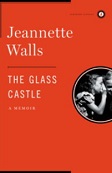
    The Glass CastleGlass Castle by Jeannette Walls

    “I was sitting in a taxi, wondering if I had overdressed for the evening, when I looked out the window and saw Mom rooting through a dumpster. It was just after dark . . . I was stuck in traffic two blocks from the party where I was heading.

    Mom stood fifteen feet away. She had tied rags around her shoulders to keep out the spring chill and was picking through the trash while her dog, a black-and-white terrier mix, played at her feet. Mom’s gestures were all familiar—the way she tilted her head and thrust out her lower lip when studying items of potential value that she’d hoisted out of the Dumpster, the way her eyes widened with childish glee when she found something she liked. Her long hair was streaked with gray, tangled and matted, and her eyes had sunk deep into their sockets, but still she reminded me of the mom she’d been when I was a kid, swan-diving off cliffs and painting in the desert and reading Shakespeare aloud. Her cheekbones were still high and strong, but the skin was parched, and ruddy from all those winters and summers exposed to the elements. To the people walking by, she probably looked like any of the thousands of homeless people in New York City.”

    Note from Marlene:  It occurs to me that this might be what it’s like for an actor to get into character: inhabit another personna. . . make that character alive.

    Your Turn . . . think of a real person. . . write about his or her mannerisms, quirks, habits, weave in physical description. Bring this person to life on the page. Just Write!

  • Zoetrope All-Story

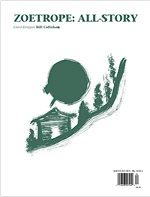
    About: Zoetrope: All-Story is a staff of two, assisted by a small team of brilliant and generous volunteers, who are collectively dedicated to reading and responding to the 12,000 submissions All-Story receives annually. To aid in this commitment, writers should submit only one story at a time and no more than two stories a year.

    Zoetrope.1Submit: Before submitting, non-subscribers should read several issues of the magazine to determine if their works fit with All-Story. Electronic versions of the magazine are available to read, in part, at the website; and print versions are available for purchase by single-issue order and subscription.  http://www.all-story.com/

    Zoetrope: All-Story considers unsolicited submissions of short stories and one-act plays no longer than 7,000 words. Simultaneous submissions are accepted. First serial rights and a one-year film option are required.

    All-Story does not accept submissions via e-mail. Mail manuscripts to:

    Zoetrope: All-Story
    Attn: Fiction Editor
    916 Kearny St.
    San Francisco, CA 94133

    Zoetrope: All-Story invites writers to take advantage of the Virtual Studio, a free online writers’ workshop sponsored by All-Story and its publisher, Francis Coppola. Writers are encouraged to support the small and independent publications to which they submit; magazines such as All-Story depend on subscriptions to survive, ensuring forums for publication of new and emerging writers.

    Start your engines now: The Zoetrope: All-Story 2015 Short Fiction Contest opens July 1, 2015; for details, please visit the website this summer.

  • Lorian Hemingway Short Story Competition

    The Lorian Hemingway Short Story Competition invites writers of short fiction to enter the 2015 contest.

    “The competition has a thirty-five year history of literary excellence, and its organizers are dedicated to enthusiastically supporting the efforts and talent of emerging writers of short fiction whose voices have yet to be heard.”

    Prizes and Publication:

    The first-place winner will receive $1,500 and publication of his or her winning story in Cutthroat: A Journal of the Arts. The second – and third-place winners will receive $500 each. Honorable mentions will also be awarded to entrants whose work demonstrates promise.

    Eligibility requirements:

    • Stories must be original unpublished fiction, typed and double-spaced, and may not exceed 3,500 words in length. There are no theme or genre restrictions. Copyright remains property of the author.
    • The literary competition is open to all U.S. and international writers whose fiction has not appeared in a nationally distributed publication with a circulation of 5,000 or more. Writers who have been published by an online magazine or who have self-published will be considered on an individual basis.

    Submission requirements:

    Deadlines and Entry Fees:

    The entry fee is $15 for each story postmarked by May 1, 2015 and $20 for each story postmarked by May 15, 2015.     Footprints in sand                                                               Photo by Breana Marie

  • Redwood Anthology – Journeys

    Submission Deadline for the 2015 Redwood Anthology:  March 1, 2015

    Theme:   Journeys

    Eligibility: Members of the Redwood Writers Branch of the California Writers Club. You can join Redwood Writers Branch, no matter where you live. Click here for membership information.

    RW AnthologyThis year marks the 10th anniversary of Redwood Writers anthologies. The theme is Journeys. There are many types of journeys: travel adventures, life passages, heroes’ journeys, pilgrimages, odysseys, and flights of fancy. All journeys begin in one place and end in another, having elements of challenge, change, and transformation.

    Note: Submissions are required to reflect the theme, which may be interpreted broadly.

    If your piece is selected, you will be assigned an editor to work with you through the publication revision/editing process.

    Submission Guidelines

    • Each Redwood Writers member may submit up to 2 pieces in any genre. For example, you may submit 1 poem and 1 prose piece, 2 prose pieces, or 2 poems.
    • Prose pieces may include flash fiction and nonfiction, short stories, memoir vignettes, essays, interviews, and journalistic pieces up to 2,000 words.
    • Poems are limited to 50 lines (about 2 pages).
    • Only original, previously unpublished work which reflects the theme will be accepted.
    • Standard formatting required: 1-inch margins on all sides; double-spaced, 12 pt. Times New Roman font. Poems may be single-spaced.
    • Document formats accepted: Microsoft Word (doc and docx) and Rich Text Format (rtf).
    • All work should be proofread and polished to the best of your ability. Typos, misspellings, and grammatical errors will reduce the likelihood of piece(s) being selected for publication.

    Submission Method

    We will not be accepting submissions by email. Instead, we will utilize a new, easy-to-use online submission form.

    If you have any questions about the theme, submission guidelines, or submission method, please contact Amber Lea Starfire at amber – at – writingthroughlife.com.

  • The Past – from different perspectives.

    The following is inspired by Your Mythic Journey by Sam Keen and Anne Valley-Fox.

    Chapter 4, “The Past” It’s Still Happening.

    “We love the present tense. Be here now. Yesterday is gone and best forgotten: our tradition is to have no tradition. We aren’t Europeans buried in ancient tombs and cathedrals and medieval ruins. We were born yesterday and we will be young forever. Over thirty is over the bridge. Age embarrasses us; remembrance is a function of senility. We exile the aged to Sun City leper colonies so they won’t impair our illusion of endless summer.

    But history is not so easily dismissed. Repressed memories, national or personal won’t stay down. To be alive is to have a past. Our only choice is whether we will repress or re-create the past. Childhood may be distant, but it is never quite lost; as full-grown men and women we carry tiny laughing and whimpering children around inside us. We either repress the past and continue to fight its wars with new personnel or we invite it into awareness so that we may see how it has shaped the present.

    The moment you begin to tell your stories you may find that memory is a trickster who picks and chooses scenes. What happened to you in the past has yet to be determined. Ninety-nine times you tell the story of the way you were whipped for stealing apples you didn’t steal. Then in the hundredth telling, you remember that you did steal them and the whole scene changes. Your memories of what happened to you in 1953 will be different in 1975, and again in the year 2000.”

    Lola.200 Prompt:  Think of an incident that one or more people might see very differently.

    Tell the story beginning with the words, “This is how I see what happened…”

    Prompt: Write the story from the other person’s perspective.

    No matter whether you use these prompts or not . . . Just Write!

  • Ukiah Haiku Festival 2015

    Ukiah Haiku

    THE THIRTEENTH ANNUAL

    ukiaHaiku festival 2015  – A celebration and competition devoted to the haiku form of poetry

    Postmark Deadline for Submissions: Saturday, March 22, 2015

    Awards will be presented in the following categories:

    General Topics (Regional*)

    1) Children, grades K-3
    2) Children, grades 4-6
    3) Youth, grades 7-9
    4) Youth, grades 10-12

    Haiku about Ukiah (Regional*)

    5) Haiku about Ukiah, grades K-6
    6) Haiku about Ukiah, grades 7-12
    7) Dori Anderson Prize** — Haiku about Ukiah, Adults

    Haiku en Espanol, Temas Generales (Sumisiones Regionales*)
    8) Para menores de 18 anos
    9) Para mayores

    International, General Topics, Adult:

    10) Jane Reichhold International Prize***

    *Regional categories are open to residents of Mendocino, Humboldt, Lake, and Sonoma Counties in northern California. Winners in the regional categories receive a certificate, publication in a booklet of winning haiku, and a copy of the booklet.

    **The Dori Anderson Prize honors the memory of Dori Anderson, former head librarian of the Ukiah Branch Library, who originally suggested the idea of the ukiaHaiku festival.

    ***The Jane Reichhold International Prize is named in honor of internationally renowned haiku poet Jane Reichhold. The Jane Reichhold International Prize Category is open to submissions from the entire planet.

    Winners in the Jane Reichhold International Prize Category receive monetary awards: $100 first place, $50 second place, $25 third place, plus a certificate, publication in a booklet of winning haiku, and a copy of the booklet.

    ukiahaiku Submission Guidelines:

    ~ Haiku submitted are to be previously unpublished original work by the author submitting.

    ~Entrants may submit up to three haiku per category. Each entrant, however, may win only one award per category.

    ~Submit each haiku using either a printed form or the online submission form.

    ~All category submissions are free of charge.

    ~ Do not include a title.

    ~ Authors retain copyright to their work.

    Haikus are judged anonymously. If submitting on paper, the Haiku Submission Form will be folded in half to allow anonymous judging. Your name MUST NOT appear on the half of the form with your haiku poem. If submitting via the online Haiku Web Submission Form, your submission will be printed out in a way to ensure anonymous judging.

    Mail submissions to:

    ukiaHaiku festival
    Post Office Box 865
    Ukiah, California 95482
  • Failure is necessary to find “wondrous and magical moments”

    “A rough draft is inherently an experiment, or, rather, a series of experiments. each novel, each piece of writing, is a new thing with different possibilities that demand to be explored. Many of these experiments will fail, but failure is necessary to find those wondrous and magical moments of success.” — “More Ideas Faster, Writing With Abandon” by Grant Faulkner, Jan/Feb 215 Poets & Writers magazine.

    Grant FaulknerGrant Faulkner is: Executive Director of National Novel Writing Month, co-founder of 100 Word Story, writer, tap dancer, alchemist, contortionist, numbskull, preacher. Click here to read more about Grant Faulkner.

    Note from Marlene: Click here for ideas of what to write about. Choose a writing prompt, set your timer for 12-15 minutes and Just Write!