Every Day Fiction

  • Every Day Fiction

    Every Day Fiction is a magazine that specializes in fine fiction in bite-sized doses. Every day, they publish a new short story that can be read during lunch hour, on transit, or over breakfast.

     Every Day Fiction is looking for very short (flash) fiction, of up to 1,000 words. “There’s no such thing as too short — if you can do the job in 50 words, have at it! — but our readers prefer pieces that tell or at least hint at a complete story.”

  • POV is like a photographer’s lens

    POV – choosing a point of view is one of the first things to decide when writing your story. In “Fiction in Focus,” January 2014 issue of Writer’s Digest magazine, Tanya Egan Gibson compares pov with how photographers frame their subjects.  She writes, “frame your story, focusing readers’ attention and leading them through the storytelling picture you’ve created, scene by scene.”

    Gibson writes that using pov as a lens allows you to you to go deep in describing your characters and their actions, making your manuscript stronger.  For example, “the way a character sees the world tells the reader a great deal about them. If your protagonist sees rainbows, puppies and waterfalls as gloomy, menacing and boring, your reader will come to the conclusion that the character is  depressed, without you having to come out and say so. This follows the old adage of showing, rather than telling.”

    You have probably heard what Gibson says about scene, “Every scene in your novel needs to be moving the story forward. Characterization and description can take you only so far before your reader will grow restless, it’s how your character’s observations and interactions cause her to act that will propel the reader through your scenes.”

    Here’s a part of the article I especially like, “. . . your character should be doing more than reacting. . . once your protagonist has stumbled onto the coven of vampires in her basement, we want to see her scanning the room and figuring out what to do next instead of just idly thinking about how sparkly their capes are.”

    Gibson’s article ends with, “Using pov as a lens through which to craft your scenes makes your resulting novel draft tight, coherent and engaging. . . . the sensory details in a scene function as far more than decoration. Your readers will be engaged because they will assume, correctly, that every component of your literary ‘photo’ has been included in the frame for a reason.”

    Tanya Egan Gibson is the author of How to Buy a Love of ReadingVisit Tanya’s interactive website, and discover how reading has inspired folks to write their “reading love stories.” You can send Tanya your response to the question, “How has reading saved you?”

    Your turn:  Write  a scene in first person point of view. Something simple like a picnic in the park.  Then step back, frame the picture with a wider lens. Write the same scene from a third person point of view.

  • Erma Bombeck Writing Competition

    Erma Bombeck Writing Competition is now open!  
    Competition closes February 17, 2014 at 8 A.M. (EST)

     Capture the essence of Erma’s writings and you could win $500 and a free registration to the Erma Bombeck Writers Workshop!

    Personal essay must be 450 words or less.   Submission guidelines click here.

    erma_hdrlogo


  • WRITER ADVICE – 9th FLASH PROSE CONTEST

    B. Lynn Goodwin’s Writer Advice seeks flash fiction, memoir and creative non-fiction running 750 words or less. Enlighten, dazzle, and delight us. Finalists receive responses from all judges.

    DEADLINE:  April 18, 2014.


  • Blood Lotus online literary journal publishes gray area . . .

    Blood Lotus is an online literary quarterly established in 2006 and run by editors who refuse to believe everything has already been written, and who want to promote your best writing as proof.

    Blood Lotus accepts poetry, fiction and gray area.

    Every other Monday, we’ll post a poem/group of poems or a short story by a featured author for a two-week period. We hope this format will cast more of a spotlight on our deserving authors and generate more conversation on our blog. To that end, we’ll also offer commentary on every published piece: what we love about it and why it was chosen, directly from the co-editor who discovered and accepted it.

    Click here for guidelines.


  • “I began these pages for myself . . .” Anne Morrow Lindbergh

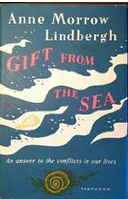
    Gift from the seaExcerpt from Gift From the Sea by Anne Morrow Lindbergh.

    I began these pages for myself in order to think out my own particular pattern of living, my own individual balance of life, work and human relationships. And since I think best with a pencil in my hand, I started naturally to write. I had the feeling, when the thoughts first clarified on paper, that my experience was very different from other people’s. (Are we all under this illusion?) My situation had, in certain ways, more freedom than that of most people, and in certain other ways, much less. . . .

    And so gradually, these chapters, fed by conversations, arguments and revelations from men and women of all groups, became more than my individual story, until I decided in the end to give them back to the people who had shared and stimulated many of these thoughts. Here, then, with my warm feelings of gratitude and companionship for those working along the same lines, I return my gift from the sea.

    Your turn . . . write snippets of your story. Just write!

  • Flash Fiction Online

    Frances Lefkowitz has been published in Flash Fiction.  Here’s what Flash Fiction has to say:

    Every month, Flash Fiction Online is proud to publish what we think is some of the best darn flash fiction (500 to 1000 words) there is. Each issue includes three original stories by both new and seasoned authors. Although many on our staff have a fondness for the speculative, we enjoy and select fiction in any genre. Founded by Jake Freivald in 2007, Flash Fiction Online has been published by Anna Yeatts since September 2013.

    We believe good stories should be free to readers—our goal is to help foster appreciation for short fiction. At the same time, we’re eager to support writers. We offer pro-rate payment for stories (as defined by the Science Fiction & Fantasy Writers of America, $0.05/ word). All our stories are read blind, with the author names and other identifying material stripped off, to ensure impartiality. At FFO, it doesn’t matter if you are a new writer or a seasoned pro–if we like your story, we’ll take it.  Submission guidelines

  • You can build a career as an author . . . — David Sedaris

    You can build a career as an author by playing to your strengths, following your true passion, going at your own pace and never shying away from your unique voice. — David Sedaris    Writers Digest Magazine, October 2013


  • One way to learn how to write . . .

    One way to learn  how to write is to get a book in the genre you want to write in and use it like a text book.  With different colored highlighters, highlight dialogue in one color,  narration in another color, scenic descriptions in a third color. Notice how much dialogue there is compared to narration.  Write notes in the margins. Use sticky notes to show where one character’s story intersects with another character leading to the hookup later in the story. Note foreshadowing. Learn how successful authors craft their novels. And some day, someone learning to write might use your book as a textbook on how to write.

  • Voices Israel Annual Anthology

    Voices Israel Annual Anthology

    The Voices Israel Group of Poets in English publishes an annual anthology of poetry.  Submissions are accepted from Voices members and non-members alike. There is no fee for submitting poems to the Anthology.

    Deadline:  January 31, 2014