Author: mcullen

  • Becoming a Writer in the Third Chapter of Life

    Guest Post by Carole Duff

    All changes, even the most longed for, have their melancholy; for what we leave behind us is part of ourselves; we must die to one life before we can enter another. —Anatole France

    Western culture divides life into three stages: birth/student, work/family, and retirement/death. My husband and I, moving into our retirement years and building a new house, borrowed the Hindu concept of four stages, adding a time of spiritual growth and reconnection between retirement and death.

    The third stage of life, Vanaprastha, the name we chose for our mountain home, means retreat to the forest. Not retirement but time to learn, reflect, and grow. Time to take the internal journey and heal past wounds from loss, rejection, and inexplicable disruptions. Time to explore, discover, seek meaning, share wisdom, and serve others. Time to become our truer selves.

    As it turned out, I became a writer.

    While overseeing the construction of our mountain retreat, I read the books I’d promised myself I’d get to but never had time, walked the dog, and tried new recipes. I wrote about my husband’s daughter, lost to suicide at age twenty-four, a girl I’d never met and wanted to know about as part of my husband’s past. But while reading her journals, hearing her father’s stories, and writing, I found my story bleeding through the pages into hers, because of connections I never expected. Disruptions from when we were five: her parents’ divorce and a home-invader assaulting my mother; mental illness episodes starting at sixteen; troubles in college; rejection in love—stories begging to be written, hiding in our closets. After the house was built, I signed up for writing classes.

    Being a novice was humbling after a long and successful career, teaching, designing curriculum, and publishing technical articles. I was no longer a sage on the stage or guide on the side. My teachers were often the same age as my students—my recent students. More to the point, my wants and path-to-purpose had changed. After years of forward motion, raising children, earning money to pay the bills, pursuing success and honors, I looked back and moved toward asking, Who am I?

    Third-stage-of-life writers often employ creative nonfiction in memoir and personal essays. They are less interested in earning a living as a writer and more interested in the internal search on the page. This journey for self-knowledge is heroic in the Joseph Campbell sense, fraught with external and internal obstacles and resistance. We all have wounds in our past and tend to evade them at all cost. I was appalled to discover the extent of my evasions, self-centeredness, and self-righteousness, my need for approval, to be right and in control. The “clever” stories I’d told myself and others over the years were often self-serving and sometimes outright lies. My husband’s daughter took the same journey, until her mental illness exacted its toll. To become the master of my story, I had to portray myself as both protagonist and antagonist, to turn victims into actors, villains into humans, and the helpless into the able; to find a third way to manage fear, other than flight or fight. Only then could I find peace and offer what I’d learned to others.

    The nuts and bolts of writing can be daunting. Pitches, proposals, publishing, platform. The bottom line of becoming a writer in the third chapter is growth, both personal and professional. Write, write, write. Take classes to grow your craft, read craft books and recommended models, join writing groups, attend conferences, create communities. Open yourself to criticism; be honest and generous in return. Study, learn something new, sing, garden, volunteer. Do all those things and more—and have a grand time!

    Becoming a Writer in the Third Chapter of Life” first appeared on Brevity blog on May 17, 2022

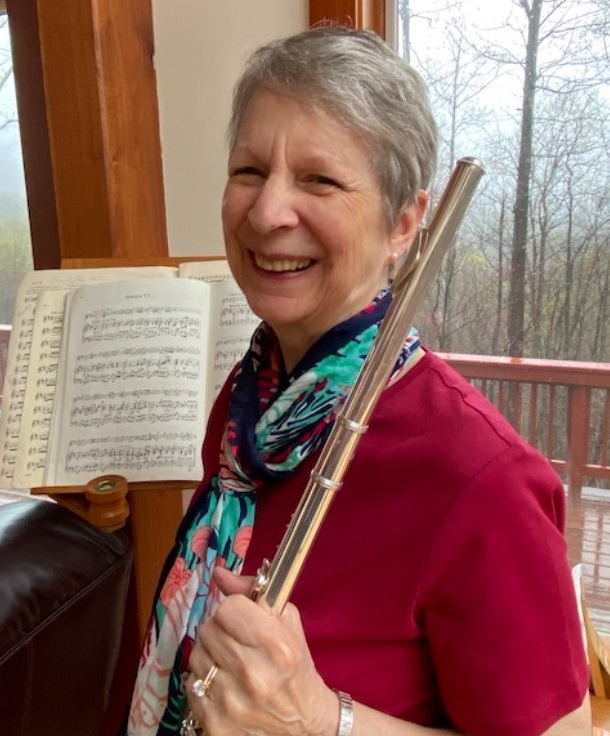
    Carole Duff is a veteran teacher, serious flutist, avid naturalist, and writer of creative nonfiction. She posts weekly to her long-standing blog Notes from Vanaprastha, and has written for Brevity blog, Mockingbird, Streetlight Magazine, The Perennial Gen, for which she is a regular contributor, and other publications.

    Carole lives in Virginia’s Blue Ridge Mountains with her husband, writer K.A. Kenny, and two, large overly-friendly dogs.

    She will present a session on “Becoming a Writer in the Third Chapter of Life” at HippoCamp 2022 in August.
  • Colors and Moods . . . Prompt #655

    I am fascinated with finding writing prompts in a variety of places.

    Today’s prompt is inspired from the Editor’s Letter in Better & Homes Gardens magazine, April 2018, by Stephen Orr, Editor-in-Chief.

    “Color Theory”

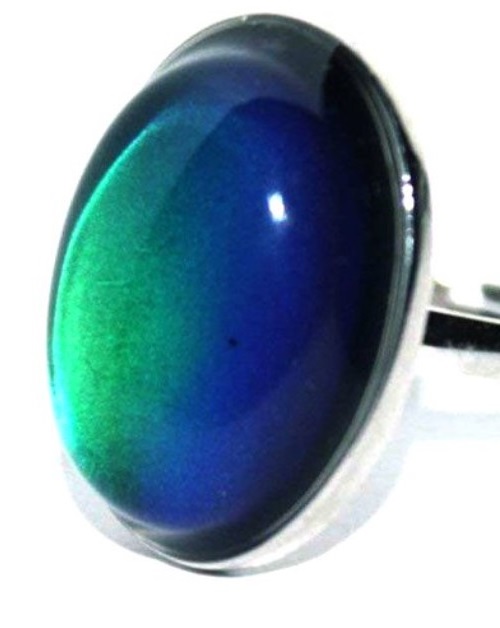
    “Remember mood rings? As a kid, I was obsessed for one hot Texas summer about the idea that the ‘jewel’ in those rings could indicate how a person was feeling emotionally: Pink was happy, black was depressed, blue was optimistic. My little glass oval was often an indecipherable shade of puce . . .” — Stephen Orr

    What mood would you assign to these colors?

    Purple

    Red

    Yellow

    Orange

    Green

    Choose a color and write what mood, or emotion, or character trait comes up for you when you think about this color.

    Using color when writing

    Describe your character by the colors they wear, or what colors they surround themselves with where they live, or work, or their vehicle.

    Use color in an emotional scene to match your character’s mood.

    Utilize color to describe a space: Home, city, workplace, yard, vacation spot.

    Let color be your work horse as a force in your writing.

    Have fun with color!

    More about color:

    Know Your Colors

    Paint Color

    Describe colorful character using similes and metaphors

  • Dear Number Five

    Memorable writing that sparks imagination. Lean in. Hear the writer’s voice on the page.

    Dear Number Five

    By Karen Quest

    Dear Number Five,

    If we are to believe the song, one is the loneliest number, but without you, we wouldn’t know where we’d be. I checked you out, and from math to science, to art, music and literature, to religion and biology, you’re everywhere!

    I hope you have fun reading some cool facts about yourself.

    I give you my Ode to Five.

    Starfish are pentamerous

    Which might sound kind of calamitous

    Five appendages have they

    And no matter what you might say

    I think they are quite glamorous.

    It isn’t criminal to take the Fifth.

    Lanford Wilson chose you for the title of his play, The Fifth of July.

    Beethoven named one of his symphonies after you.

    There are 25 one-ounce shots in a fifth of alcohol.

    Almost all amphibians, reptiles, and mammals which have fingers or toes have five of them on each extremity.

    The five rings of the Olympics represent the five inhabited continents.

    All major north-south Interstate Highways in the United States end in 5.

    While not all animals use them the same way, we all have five senses: touch, sight, hearing, smell and taste.

    Five is the most common number of gears for automobiles with manual transmission.

    From rock to rap, there are a lot of fives.

    The Jackson 5

    Maroon 5

    Grandmaster Flash and the Furious Five

    Ben Folds Five

    Five Finger Death Punch

    Dave Brubeck Quartet’s famous song: “Take Five”

    Always remember – you’re a star – a pentagram!

    Love, Karen Quest

    Since 1998, Karen Quest has blazed a trail in the fair and festival industry as a solo female comedy entertainer with her one-woman comedy variety act, Cowgirl Tricks, and Over The Top Stilt Characters™.

    She is a small business owner with the title of Chief Operating Cowgirl of Giddyup Productions, representing some of the finest family variety entertainers in the business.

    A natural-born educator, Karen has taught acting, improvisation, physical education, and circus skills to ages four to ninety-two.

    Karen’s experience performing at libraries led her to enroll in the Master of Library and Information Science program at San José State University in January 2020, coincidentally, the same month she started Medicare.

    She is slated to graduate in December 2022, and her dream job is to be an Outreach Services Librarian.

    Although she is not fooled easily, she applied to many scholarships that turned out to be shams.

    Karen wasn’t chosen for this $1,500 “Fifth Month Scholarship,” but at least it yielded an essay that was fun to write. 

    The instructions were:

    May is the fifth month of the year. Write a letter to the number five explaining why five is important. Be serious or be funny. Either way, here’s a high five to you for being original. (250 words or less).

  • New Millennium

    New Millennium Writings is an anthology where newcomers are welcome to submit their writing along with established authors.

    NMW also hosts semi-annual awards in poetry, fiction, and non-fiction.

    “New Millennium Writings was launched in 1996 with a 15-word classified ad. From those humble beginnings, NMW has exploded into an internationally recognized and highly sought-after literary award and journal.

    We believe in the creative potential of every writer, regardless of experience. Our blind and anonymous judging system ensures equality to writers of every level. All writers are welcome, and no subject is off-limits.”

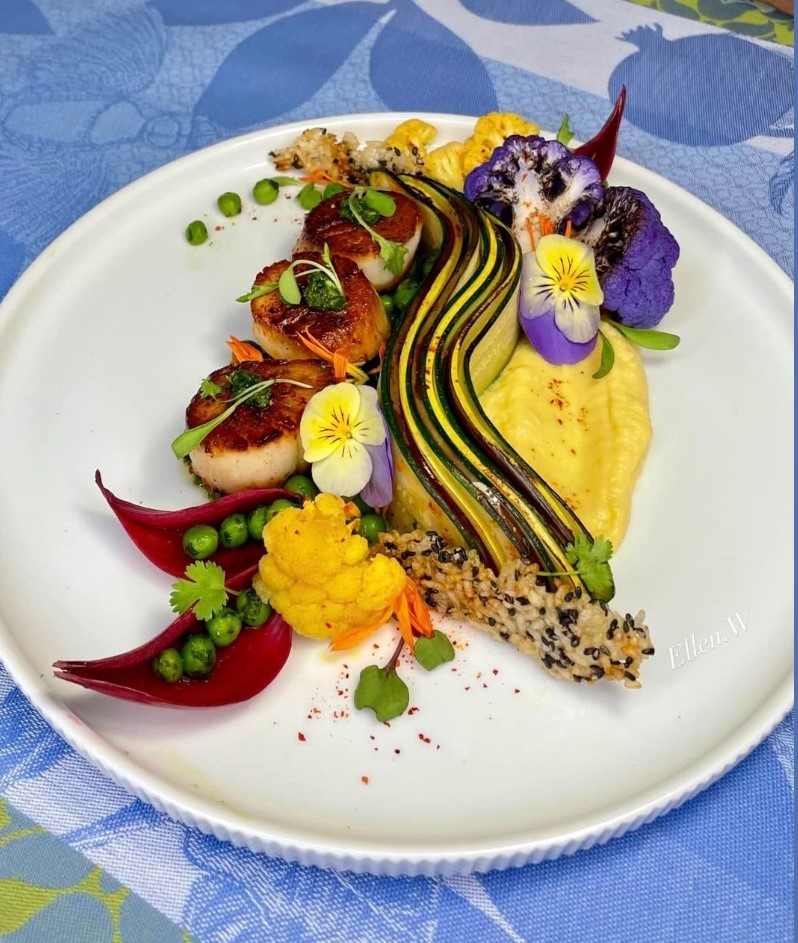
  • Food or Art? Prompt #654

    Photo by Ellen Wu

    Sometimes I get an idea for a writing prompt and then search for an image to go with the prompt.

    The phrase “food or art” popped into my head one day. It took a while, but I found an image.

    So, what do you think . . . food or art?

    Or, food as art?

    Just Write!

    #justwrite #iamawriter #iamwriting

  • Jon Batiste. This is Who I Am.

    Jonathon Michael Batiste

    As I prepared this blog post, we were a country in mourning. Another school shooting. Ukraine. And more.

    My heart is breaking. Maybe yours is, too.

    I try not to get overwhelmed by tragedies. I always fail.

    I try to look on the bright side. I usually succeed.

    Today’s post highlights Jonathon Michael Batiste, looking on the bright side.

    In his commencement address at Salve Regina University, May 21, 2017, Jon Batiste asked, “Who can you help along the way?”

    In my Write Spot Blog posts, I hope to inspire writing. I hope to encourage and offer ideas for you to Just Write.  

    Perhaps Jon’s from-the-heart commencement address will uplift and inspire you.

    Quotes from the commence talk

    “Be as humane as possible. It’s really important to stay human.”

    “Who are you?”

    “Who do you want to be?”

    “What is your purpose?”

    “. . . internal fortitude amidst the chaos.”

    Note from Marlene: I’m wishing you a safe place where you can be you, wherever you are in your Journey of Life.

    Writing Prompt: This is who I am.

    Jonathan Michael Batiste, also known as Jon Batiste, is a singer, songwriter, musician, composer, and recently named one of Time’s 100 Most Influential People in the “Icon” category.

    Jon Batiste has been a bandleader and musical director on The Late Show with Stephen Colbert since 2015.

    Jon’s accolades include an Academy Award, a Golden Globe Award, a Grammy Award, and a BAFTA Film Award in 2020 for co-composing the score for the Pixar animated film Soul.

    Jonathon Michael Batiste won five Grammy Awards out of 14 nominations in 2022, including Album of the Year for his album “We Are.”

  • Comfort Food . . . Prompt #653

    Comfort Food is a real thing.

    The idea of eating for comfort might be new to you.

    Or you may have experienced how food can bring relaxation and a sense of well-being since you were a child.

    Perhaps you are an “eat to live” person and became a “love to eat” person during shelter in place, when activities were limited and frustrations were high.

    Here’s what happened to me with comfort food during shelter in place, summer 2020.

    “Comfort food took on a new meaning. It was more than comfort food. It was about how to cope with feeling scared. When food filled my belly, there was more than a feeling of satiation. There was a feeling of we’re going to be okay. We can handle this. I tell myself this is just a moment in time. It’s temporary. But I know we are forever changed.” —“Things I Never Thought I Would Do,” excerpt from The Write Spot: Musings and Ravings From a Pandemic Year.

    What is your definition of comfort food?

    One idea is that when sugar, salt, and fat hit the pleasure center of the brain, we experience contentment.

    Perhaps an interesting concept to explore.

    Today’s writing prompt: Comfort Food.

    What does comfort food mean to you?

    What do you eat that offers a sense of well-being and security?

    What was your comfort food as a child?

    Note: When I was looking for an image to go with this writing prompt, my first thought was mac and cheese. But I didn’t like any of the images I found. Then I thought “popcorn.” Again, couldn’t find an image I liked.

    I decided to take a poll on Facebook. I was surprised at the range of responses to my question “What is your comfort food?”

    From the informal poll: Ice cream is the most popular comfort food, followed closely by potatoes (mashed and baked).

    Some of the answers were specific: Hazelnut gelato, rice cakes with strawberry jam, mushroom risotto, toast and peanut butter and bourbon whiskey, my wife’s mother’s grandmother’s spaghetti sauce, warm blackberry pie with ice cream, Belgian fries with mayonnaise.

    Also: Granola, hot dogs, jambalaya, lemon bars, meatloaf, pot roast, tapioca pudding, tuna melts, artichokes, and yams.

    A cousin in Grand Rapids responded with “Tamales from the Roosevelt Tamale Parlor!”

    And a couple of “whatever anyone wants to make for me.”

    Your turn: Write about comfort food.

    “Our obsession with sugar, salt and fat.” By Alexandra Sifferlin and TIME.com, March 1, 2013

  • Sleep

    So, you had trouble falling asleep. Again.

    Or, you woke up and couldn’t get back to sleep.

    Or both.

    Why does this happen and what to do about it?

    The following is excepted from “Up at 4 A.M.?” by Amy Spencer, in the magazine, Dr. Oz The Good Life, Jan-Feb 2015 (an oldie, and hopefully a goodie).

    What happens

    If we’re not sure how something will play out, our primitive mind prepares us for the worst possible outcome.

    Survival

    Back in our cave days, our ancestors needed to be prepared to fight or flee to survive.

    Key

    The primitive part of the brain—the amygdala—thinks our idle ruminations are urgent matters that need to be dealt with right away, as if they are real emergencies.

    Wide Awake

    And there we are, wide awake, ready and alert, to battle the catastrophe that we have imagined.

    What To Do

    Take some deep, relaxing breaths.

    Get out of bed, walk around a little, look out a window, read something light.

    Write down what is bothering you, or make a to-do list. Get it out and onto paper.

    Take a mental vacation. Visualize a relaxing place, recreate a fun memory, take a trip down Happy Memory Lane.

    Soothe and Calm

    Listen to soothing and calming music, white noise, or a sleep app.

    Get Checked

    If sleep continues to elude you, seek professional help to rule out medical conditions to get to the cause of your sleeplessness

    And, of course . . . .

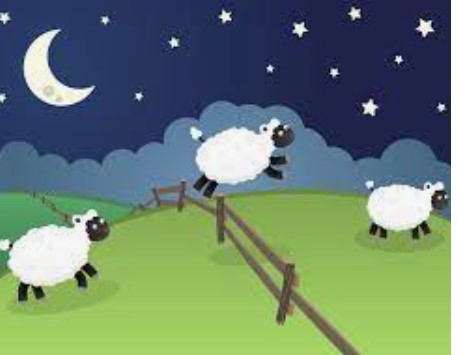
    Count sheep!

    ACTIVITIES TO CALM MIND AND BODY

    Qi Gong To Calm the Mind by Lee Holden

    The mind’s natural tendency is to ruminate on thoughts that produce stress or anxiety.

    Qi Gong provides powerful tools for calming the mind and returning to peace.

    Why is it that humans tend to think about things that cause stress and anxiety? Why can’t we naturally gravitate toward thoughts that bring us to a place of joy?

    Back when humans faced life-threatening situations on a regular basis, it was helpful to have a mind that could quickly identify unwelcome circumstances. The mind evolved to constantly look for signs of danger and plan for the worst. 

    The Mind Can’t Tell the Difference by Brad Yates

    In spite of all the encouragement to live in the present or focus on the future, most of us are likely to still spend a fair amount of time reviewing the past. And, more often than not, the moments we dwell on are not necessarily the highlights.

    It’s normal … but it isn’t without cost. Because the mind can’t tell the difference between something that is real and something that is imagined, just thinking about past troubles triggers the same chemical reactions and the same uncomfortable feelings.

    How to Write About Difficult Topics

     And so, we lose sleep over troubling events and difficult people. We can’t change people and we can’t change what has already happened. We can only change our own thinking. We can write about them to “give them air,” and release these thoughts onto paper (or computer monitor).

    But how to write about these difficulties without adding trauma?

    Perhaps one of these writing prompts will help:

    How to Write Without Adding Trauma

    Write What is Hard to Admit

    Does Your Heart Hurt?

    More ideas to write without adding trauma are in “The Write Spot: Writing as a Path to Healing.” Available from your local bookseller and as both a print and ebook from Amazon.

    Just Write!

  • Brave Healer Productions

    Brave Healer Productions Writing Contest

    Theme: How your pain became your purpose.

    Submit your 500-word or less entry by noon, EST, July 1, 2022

    Include a 50-word bio with one link.

    Include your high-resolution headshot.

    Brave Healer Productions sponsors ongoing writing contests. So, if this topic doesn’t work for you, check their website for the next contest theme.

    Brave Healer Productions Blog

    Brave Healer works with writers to produce their books, such as:

    Shaman Heart, Turning Pain Into Passion and Purpose,” an remarkable book that inspires readers to develop a shaman heart — one that can only be obtained by coming through our darkest moments more healed and whole and then lighting the way for others. 

  • Worried . . . Prompt #652

    Prompt #1

    I’m worried about . . .

    Prompt #2

    50 years ago I worried about . . .

    Prompt #3

    When I was 17, I worried about . . .

    How To Write Without Adding Trauma