Category: Guest Bloggers

  • Guest Blogger Rob Koslowsky explains future verbage

    Koslowsky_headshotGuest Blogger Rob Koslowsky writes about how . . .

    Mathematicians Address Verb(al) Decay

    Regular verbs feature a past tense that ends in “ed.” Words like brush or bump become brushed and bumped in the past tense. But what do you do with those irregular verbs that don’t follow such an easy rule?

    Arise becomes arose (past simple) or arisen (past participle) while find becomes found in both cases of past tense. English students need not despair. Two mathematicians recently collaborated and uncovered the fact that irregular verbs will convert to a regular form. It just takes time.

    The principle of atomic half-life is invoked. Erez Lieberman and Jean-Baptiste Michel’s formula suggests that the more popular the verb the longer the time it takes to be reduced to a regular form in its past tense. For example, have will become haved instead of had—in 38,800 years—and hold will become holded instead of held, but in a much shorter 5,400-year timeframe. Note that have is used 100 times more frequently than hold, a characteristic leading to its longer half life.

    Erez Lieberman says, “Mathematical analysis of this linguistic evolution reveals that irregular verb conjugations behave in an extremely regular way—one that can yield predictions and insights into the future stages of a verb’s evolutionary trajectory.”

    Their mathematical formula was based on the analysis of a 177-word long list of Old English irregular verbs that have been regularized over time. The extrapolation of the English language that has evolved over time is one that will take time to prove.

    Jean-Baptiste Michel says, “Before, language was considered too messy and difficult a system for mathematical study, but now we’re able to successfully quantify an aspect of how language changes and develops.”

    I suppose we’ll continue speaking and monitoring which verbs become regularized. I suspect my descendants will one day comment with wonder on this article that they seed (formerly saw) and readed (formerly read).

    Rob Koslowsky has spent 34 years in the high technology field of optical fiber transmission systems and solar energy systems. His early writings were based on personal experiences and historical non-fiction in the areas of science and technology. This work built upon his first book entitled A World Perspective through 21st Century Eyes (2004) and provides stimulating content for his monthly newsletter A World Perspective, now in its twelfth year of publication. His second book, The Upstart Startup: How Cerent Transformed Cisco, was published in 2014.

    Rob has served as an officer of the Redwood branch of the California Writers Club and has written numerous short stories, song lyrics, and poems.

    Breach of Trust: A Laura Paige Murder Mystery (2015) is his first novel.

    Rob is a member of the IEEE, Sonoma County Astronomical Society, and the Northern California Science Writers Association.


  • Story of A Reluctant Memoirist

    Zoe Fitzgerald CarterGuest Blogger Zoe FitzGerald Carter, author of Imperfect Endings: A Daughter’s Story of Love, Loss, and Letting Go (Simon & Schuster), writes about being a reluctant memoirist.

    I never intended to write a memoir. As a reader, I’ve always preferred fiction to non-fiction and my book, Imperfect Endings, which is about my mother’s decision to end her life after struggling with Parkinson’s for many years, started off as a novel.

    I wanted to write a fictionalized account of my experience growing up as the youngest of three girls and explore how it felt to have two powerful older sisters fighting over my soul. My idea was to create a crisis in my characters’ lives as adults and then show how the old alliances and animosities from their childhood were re-ignited by this “current” event.

    At the time, I was struggling to make sense of my mother’s suicide and I thought, “Hmm… well there’s an interesting crisis.”

    After writing the first 50 pages, my agent suggested that I turn the book into a memoir, claiming that it would have more impact as a “true” story. (I think she also figured it would be easier to sell than a novel.) After much hemming and hawing, I decided to give it a shot.

    Despite my fears, as soon as I made the switch from fiction to nonfiction (and tossed out all the made-up stuff), the tone, language and pacing of the book seemed to fall into place. It may sound strange to say that writing a book about your mother’s suicide was enjoyableand there were parts that were difficult to re-livebut I did find writing “from life” more rewarding than I had expected.

    It was certainly easier than writing fiction, as much as I hated to admit it. Now that I was the character and these were my feelings, my experiences, generating new material was a breeze. Instead of making things up, I was excavating what already existed and using that material to fuel the writing process. I can’t say I became a fast writer, but I definitely got faster.

    Day after day, I would settle myself in my office or in a café and focus on an experience or time period that I wanted to capture. Once images and events began to drift up, I would scribble them down, especially if they seemed vivid or emblematic of a central issue or character. I would then take this material, flesh it out andif warrantedturn it into a fully developed scene.

    I came to think of this like translation. I was essentially taking emotion and memory and translating it into language. But being able to enter into an experience while also standing apart from it, observing and recording it, takes a certain dispassion. (No wallowing allowed!) It is fascinating to travel back to an important event or experience and reconsider it from different angles, but you also need to maintain a critical distance in order to turn it into art. This is especially true when you are deciding what to include and what not to include; what serves your story and what is superfluous.

    Once you have your story, the next hurdle is getting it out in the world. And I’m not just talking about the infuriating scramble to find a publisher. Writing memoir involves a HUGE degree of personal exposure. It is not for the faint of heart. (I had a number of heart-stopping anxiety dreams after my book was bought and sometimes wondered if having a publisher was worse than not having one.)

    But whenever I found myself fretting about having sold my soulnot to mention the souls of various family members—I would remind myself of why I wrote the book and whom I was trying to reach. So many people go through some version of my story and I liked to think that reading about how my family made these difficult end-of-life negotiationsimperfect as they weremight be useful and perhaps comforting for someone else. I certainly hoped so.

    Holding on to your personal, complex truth is especially important when your book is published and the story that you wrote while comfortably ensconced in your private writing bubble is suddenly blasted into the public domain. You no longer have any control over who reads itor how they will respond to it. And once you start the invariable mad dance of promoting your book, you can feel like you’ve turned your life – and even your self into a commodity.

    Which brings me back to my original assertion that I am a reluctant memoirist. And it explains why I am currently at work on a novel.

    You can take a memoir workshop with Zoe at Writers Grotto in San Francisco: “Taking Your Memoir to the Next Level.”

    Zoe FitzGerald Carter was born in France and grew up in Washington D.C. She is a graduate of Columbia Journalism School and has written for numerous publications including The New York Times, The San Francisco Chronicle, Salon and Vogue. Zoe teaches memoir writing at workshops and conferences. . . . scroll down for conference information. In addition to her novel on self-help culture, Twenty-One Days to A Perfect Life, she is working on a nonfiction book about race and elected kinship.

  • What’s so great about being happy?

    Today’s Guest Blogger, Ted A. Moreno, writes about how “happiness is our natural state of being.”

    What’s so great about happiness? Why are most of us always striving for happiness? Why is it so hard?

    Wikipedia defines happiness as: a mental or emotional state of well-being defined by positive or pleasant emotions ranging from contentment to intense joy.

    What I think is interesting is that when we are happy, we don’t notice it as much as when we are unhappy. To me, this suggests that happiness is our natural state of being.

    We are very aware of when we are experiencing negative or unpleasant emotions or when we are not content. We try to do something about it. We seem to be more motivated to avoid unhappiness than to pursue happiness.

    I also think that for many, unhappiness can become a habit.

    What is your habit of being?

    Bob Dylan said that happiness wasn’t the point. In one sense I agree with him, because we will often sacrifice our happiness to gain something. For example, we’ll push our bodies during exercise so that we might have health, which could add to our happiness.

    However, I think that it’s safe to say that we want those pleasant and positive emotions as often as we can get them.

    The Big Question of course is, how can we be happy most of the time?

    I’m happy when I’m still and peaceful. When I’m walking out doors. When I’m holding my children, hugging my wife.

    What makes me really unhappy is a lot of noise, disorder and chaos. I’m unhappy when I think I’ve hurt someone’s feelings. Lack of sleep increases my unhappiness.

    I think the thing that most contributes to my happiness is being free to do what I want and need to do.

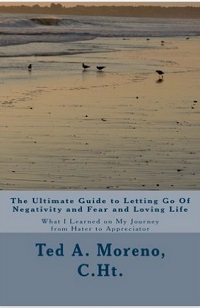
    Moreno.GuideWhat about you? I’d like to hear your thoughts about happiness.

    I explore this topic in my podcast Ted in your Head. You can listen on my website: Tedmoreno.com/podcast. From there you can find links to subscribe or download via iTunes or Soundcloud or just listen on Stitcher.

    Have A Happy Day!

    Ted A. Moreno, C.Ht.

    Creator of the Moreno Method for Life Transformation

    Hypnotherapist and Success Performance Coach

     Check out Ted’s book:

    “The Ultimate Guide to Letting Go of

    Negativity and Fear and Loving Life”

    Available at Amazon.com

     Offices in South Pasadena and Covina

    (626)826-0612 / (909) 257-8260

    Phone Sessions Available


  • Agatha Christie’s notebook method of mystery writing

    Agatha Christie.3Agatha Christie was president of The Detection Club from 1957 to 1976. Formed in 1930, The  Club was a group of British mystery writers who helped one another with technical aspects of their writing and wrote a number of works together.

    Aha . . . an early writing club, or writing group, showing the value of writing with others.

    I was curious about the popularity of Agatha’s books, so headed to my computer chair to research, where answers were clicks away, unlike the “good old days” of thumbing through drawers of cards in the library.

    The following is excerpted from New Yorker Magazine.

    Here’s how the typical mystery novel starts:

    Eight or nine people are assembled in a small place: a snowbound train, a girls’ school, an English country house. Then—oh no! A body drops. Who did this? And why, and how? Among those gathered, or soon summoned, is a detective, who says that no one should leave, please. He or she begins questioning the people concerned, one by one. In the end, he collects all the interested parties and delivers the revelation: the murderer, the motive and the method. Anyone who has ever seen a Charlie Chan movie, or played Clue, or read a detective story of the past half century will recognize this scenario, created by Agatha Christie, the Queen of Crime.

    Two conventions for detective stories had been established when Agatha began writing them. First was the detective’s eccentricity. Sherlock Holmes, for example, when not chasing a criminal, lies on his couch, felled by boredom and cocaine, shooting bullets into the wall of his study. A second rule was the detective, when working, shows almost no emotion. What he or she does show—and what constitutes the main pleasure of the stories—inductive reasoning.

    Agatha generally followed these rules, but she elaborated on them, creating the scenario described above—the small place, the interrogations, the revelation—and used it, fairly consistently, in sixty-six detective novels published between 1920 and 1976.

    At the start, she was a clumsy writer. But she was able to offer her readers what they wanted, a whodunnit, also called a “puzzle mystery”—a story that is a contest between the author and the reader as to whether the reader can guess who the culprit is before the end of the book.

    Agatha favored a clean conking on the head or—her overwhelming preference—poison. That choice was possibly a product of her war work in the dispensary, with its many shelves of potentially lethal drugs. But poison probably appealed to her also because it did not involve assault. Agatha disliked violence. When, in her novels, someone starts to look dangerous, her detective does not pull a gun. He doesn’t have a gun. Bystanders may wrestle the malefactor to the ground. In one case, where there are no bystanders, the detective squirts soapy water into the murderer’s face. It works.

    The murder that sets the plot in motion is rarely shocking. For one thing, readers almost never see it happen. Furthermore, the victim is ordinarily someone with whom we do not sympathize. Often the victim is a rich, nasty old person who enjoys taunting his prospective heirs with the accusation that they wish him dead, so they can collect their inheritances.

    This rule—that Christie’s murders do not touch the heart—admits of one curious exception: the murder that the culprit commits, after the main murder, in order to get rid of someone who knows too much. Here the victim is often a nice or in any case blameless person, and readers witness the crime, or its prelude. In “A Murder Is Announced” (1950), Miss Murgatroyd, who knows that Letty Blacklock wasn’t in the dining room when the gun went off, is taking the washing off the line when she hears someone approaching. She turns, and smiles in welcome, obviously to a neighbor. It has started to rain. “Here’s your scarf,” the visitor says. “Shall I put it round your neck?”

    Christie created two famous detectives: Hercule Poirot and Jane Marple.

    Poirot’s most obvious characteristic is his dandyism. He dyes his hair, smokes thin, black Russian cigarettes, wears pointy patent-leather shoes ill-suited to walking the grounds of the country houses where he must often do his sleuthing. He deplores the English preference for fresh air, thin women, and tea. During interrogations, Poirot exaggerates his foreignness. The person being questioned then takes him less seriously, and in consequence tells him more.

    Miss Marple is the opposite of Poirot. She comes from a sleepy village, St. Mary Mead, and she seems a sweetly bewildered old lady. She has china-blue eyes and knits constantly. Nobody thinks anything of her. They should, because she is a steely-minded detective. When she is on a case, she makes it a rule to believe the worst of everyone. She reports with regret that experience has confirmed this point of view.

    In John Curran’s book, “Agatha Christie’s Secret Notebooks,” the notebooks are school exercise books in which Agatha worked out her plots. She made lists of possible victims, culprits, and M.O.s. Then she picked the combinations that pleased her.

    Marlene’s Musings:  There you have it. If you want to be a successful mystery writer, simply make a list of victims, culprits and methods. And then. . . just write!

  • A Business Model to Avoid

    Guest Blogger Sandy Baker talks about first time publishing.

    The thrill of publishing one’s first book is joyful, a dream come true, right? Oh, the anticipation of getting my children’s picture book into print and out there in the marketplace! I attended lectures, workshops, and conferences to acquire the information I needed to become an indie publisher. I’d heard horror stories from authors who’d been scammed by vanity presses, paid too much for a web design, or didn’t know an ISBN from the BOE or a DBA, POD or LCCN. That would not be me.

    I bought a block of ten ISBN numbers. After all, if one costs $125, ten at $250 is more than a bargain. I set up my own Butterfly Books imprint and obtained a resale license from the state Franchise Tax Board. I was now a sole proprietor ready to do business and offer the world my first children’s gardening book, Mrs. Feeny and the Grubby Garden Gang. This of course was after I’d hired an illustrator and book designer whose charges will remain undisclosed.

    Late in the game, I discovered Butterfly Books already existed. Actually, that imprint became official the very same week mine did. What are the chances? (It takes a lot of sleuthing on the Internet.) That owner was a lawyer; therefore, I wisely decided to avoid an infringement or conflict of interest lawsuit by quickly choosing another imprint name: Black Garnet Press, of which there are no duplicates!

    My book was to be a typical children’s picture book: full color, 32 pages, 8” x 10”, and hardbound. I priced it at $15.95, in the mid-range of this genre. I found a company here in the U.S. that would print them, one, ten or 100 at a time. This is called Print On Demand (POD), and the company I chose after much research and advice was Lightning Source International (LSI), an arm of the huge Ingram distribution company.

    The company would take only 20% of the selling price. Wow, and I would get 80%. We’ll round up to $16 for the ease of it. So 20% of that price is $3.20, and my 80% is a whopping $12.80.

    However, the cost of printing the book was and still is $9—which of course comes right out of my 80%. So, $12.80 – 9 = $3.80, my “royalty” on the book. That’s actually not unlike the BIG publishing companies’ payouts. Not bad, so far.

    Say I consign the book, an agreement that is typically 50-50: the shop nets $8 on a $16 sale and so do I. That means I receive $8 for a book that costs $9 to print and forget the royalty. How’s that for a business model?

    I decided not to purchase 2000 books from a printing company in Korea or China—I know authors with 1800 of them still in their garage. It really is less expensive to print overseas, but who needs that many books?

    Granted, children’s full color, hardbound picture books are among the most expensive to produce. Turns out that LSI doesn’t offer dust jackets nor does it print the title and author on the spine. Arrrgh! Are there lessons to be learned here?

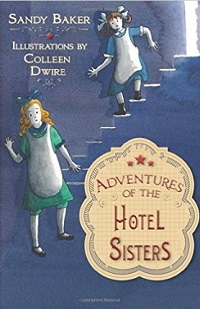
    Adventures of the Hotel SistersNote from Marlene: It seems Sandy did learn a thing or two about publishing. Since Mrs. Feeny and the Grubby Garden Gang was published, Sandy has produced and published eight books.

    SANDY BAKER’S passions are gardening, writing, reading, and traveling. Sandy recently published Adventures of the Hotel Sisters, fictionalized 1920s short stories about her maternal grandmother and her eight children. Sandy’s interest in this era harkens back to 9th grade when she wrote an extensive term paper on 1920s’ clothing, dances, Prohibition, gangsters, Stock Market Crash, and Women’s Suffrage. In between writing and reading, her major gardening project entails removing her front lawn and replacing it with mulch and 24 Provence lavender plants. Sandy is a Sonoma County Master Gardener and president of Redwood Writers, the largest branch of the California Writers Club.

  • Santa’s Secret Wish

    It’s the time of year when gifts are exchanged. Bell ringers thank strangers as they put coins in red kettles. Stores beckon shoppers promising warmth and great sales. Friends gather, sip good cheer. And if you’re lucky, you’ll receive a holiday card or two.

    It’s also the time of year for solicitations . . .  in the mail, on the internet, over the phone. . . “Our need is great. Won’t you give?”

    We can’t possibly share our money with everyone who asks. But we can share kindness, broad smiles and stories that invite us to pause, and reflect the meaning of the season.

    ‘Twas the night before Christmas here and there, someone is reading, reflecting and nodding.

                                                            Santa’s Secret Wish by Betty Werth

    Santa at fence.200On Christmas Eve, a young boy with light in his eyes
    Looked deep into Santa’s, to Santa’s surprise.
    And said as he nestled on Santa’s broad knee,
    “I want your secret. Please tell it to me.”

    He leaned up and whispered in Santa’s good ear.
    “How do you do it, year after year?
    I want to know how, as you travel about,
    Giving gifts here and there, you never run out.

    How is it, Dear Santa, that in your pack of toys
    You have plenty for all of the world’s girls and boys?
    Stays so full, never empties, as you make your way

    From rooftop to rooftop, to homes large and small,
    From nation to nation, reaching them all?”
    And Santa smiled kindly and said to the boy,
    “Don’t ask me hard questions. Don’t you want a toy?”

    But the child shook his head, and Santa could see
    That he needed the answer. “Now listen to me,”
    He told the small boy with the light in his eyes,
    “My secret will make you both sadder and wise.

    The truth is that my sack is magic. Inside
    It holds millions of toys for my Christmas Eve ride.
    But although I do visit each girl and each boy
    I don’t always leave them a gaily wrapped toy.

    Some homes are too hungry, some homes are too sad,
    Some homes are desperate, some homes are bad.
    Some homes are broken, and children there grieve.
    Those homes I do visit, but what should I leave?

    My sleigh is filled with the happiest stuff,
    But for homes where despair lives, toys aren’t enough.
    So I tiptoe in, kissing each girl and each boy,
    And I pray with them that they’ll be given the joy

    Of the spirit of Christmas, the spirit that lives
    In the heart of the dear child who gets not, but gives.
    If only God hears me and answers my prayer,
    When I visit them next year, what I will find there

    Are homes filled with peace, and with giving, and love
    And boys and girls gifted with light from above.
    It’s a very hard task, my smart little brother,
    To give toys to some, and to give prayers to others.

    But the prayers are the best gifts, the best gifts indeed,
    For God has a way of meeting each need.
    That’s part of the answer. The rest, my dear youth,
    Is that my sack is magic. And that is the truth.

    In my sack I carry on Christmas Eve day
    More love than a Santa could e`er give away.
    The sack never empties of love, or of joys
    `Cause inside it are prayers, faith and hope. Not just toys.

    The more that I give, the fuller it seems,
    Because giving is my way of fulfilling dreams.
    And do you know something? You’ve got a sack, too.
    It’s as magic as mine, and it’s inside of you.

    It never gets empty, it’s full from the start.
    It’s the center of lights, and of love. It’s your heart.
    And if on this Christmas you want to help me,
    Don’t be so concerned with the gifts `neath your tree.

    Open that sack called your heart, and then share
    Your joy and your friendship, your wealth and your care.”

    The light in the small boy’s eyes was glowing.
    “Thanks for the secret. I’ve got to be going.”
    “Wait, little boy,” said Saint Nick, “Please don’t go.
    Will you share? Will you help? Will you use what you know?”
    And just for a moment the small boy stood still,
    Touched his heart with his hand and whispered,

    “I will.”

  • Can you make ghosts come alive?

    Guest Blogger Francis H. Powell: Writing About Ghosts.

    What are your feelings about…Ghosts…do they exist? They are ridiculed, have been made mundane, absurd films like Ghostbusters have trivialized them. Kids aren’t blinkered and naïve. Cynics rule.

    Christmas seems the perfect time to unleash a Ghost story.

    Many writers set out to write thrilling stories to a cynical disbelieving audience. Perhaps the golden age of ghost story telling, the Victorian age, was a period when readers were far more susceptible to believing in ghosts. Modern day readers are far more pragmatic, scrutinizing what they are reading. Houses are lit up with bright neon light, streets are not dark and shadowy as they were in past times. I guess very few writers who write ghost stories have ever encountered a “real” ghost, so they are letting their imaginations run wild.

    For a Ghost story to work it has to sustain a high level of tension, from the opening sentence to the last. Short story format works really well on this account. The author faces a mountainous task of how to conclude the story. It’s not like a crime story…in which all the readers’ questions can be answered at the end, the reader of a ghost story has to be engaged by the plot but at the same time needs to feel uneasy and on edge. A successful ghost story should be overflowing with atmosphere, descriptions of sounds, colours, feelings should prevail.

    A good Ghost story should not be too far removed from reality, not too fantastical, this way the reader can believe in it, imagining themselves facing such an encounter with a phantom. A good ghost story should not be like a distant long, long ago fairy tale. The reader should be led to believe the story takes place in the recent past. Writers should shy away from the over-used “old lady” or “tiny infant” go for a ghost that is in some ways a mirror of yourself and representative of your fears. Indicate gruesome happenings but let your reader fill in the details.

    You can test your ghost story by telling it in a room filled with bright light, during the middle of the day, if you are scared under these circumstances, your story is a winner.

    Where should a writer look for ideas? Should they venture back to their childhood and tap into their childhood fears? Do we have to have led troubled lives to write a good ghost story? For M R James, considered an undoubted master of the genre, apparently this was not the case. A colleague of James’s once said, perjoratively, that his was a life untroubled – a smooth progression from Eton to Cambridge and then back to Eton. He never experienced real life; it was in every sense academic. So seemingly an academic, living in a rather insular world has the makings of a great ghost story writer and perhaps it is the ghost story genre that allowed him to challenge the rational world he inhabited, that lay behind his motivation.

    How should we write our ghost story? In the third person or the first person? One option might be…write it in the first person, but make it obvious the narrator is untrustworthy, flitting between reality and madness.

    Ghosts, like people, come in many forms and have different missions whilst amongst the living. Some return from the dead to wreak vengeance; others have good intentions, wanting to help a loved one. Some are the spirits of people who were murdered or committed suicide and so are not at peace and are still troubled beyond the grave.
    What we can say, definitively, is that ghost stories should always contain a lot of suspense, always trying to create anticipation and excitement. Atmosphere is vital in building tension in the
    story.

    Born in 1961, in Reading, England, Francis H. Powell attended Art Schools. In 1995, Powell moved to Austria, teaching English while pursuing his varied artistic interests of music and writing. He currently lives in Paris, writing both prose and poetry. He is the author of Flight of Destiny.

    This article is part of a Festive Spirit Blog Hop. To read posts by participating authors and bloggers, click on Francis H. Powell’s Home Page. Scroll down, choose a name, click on it and you will be transported to another dimension.  Enjoy!

    Festival of Spirits Blog Hop


  • Does failure weigh more than success?

    Guest Blogger Rachael Herron writes about successes and failures.

    It’s December! I know this for a fact (I just rechecked the calendar). No matter which hemisphere you’re in, regardless of season, this year is getting ready for her final bow. It’s completely impossible that 2015 is almost over because about seventeen minutes ago the year was just starting, full of potential and wonder and pale spring-green hope.

    I’m prone to doing what everyone else does at the end of a year: weighing the past year’s successes and failures against each other.

    But you know what? Failure weighs way more than success. When you put things on that imaginary scale, each small failure weighs as much as a wheelbarrow full of rocks while each huge success weighs almost nothing. Success makes you lighter—it makes you able to float for a minute or even an hour—while failure drags you so low your chin scrapes the pavement.

    That? Is not fair. I don’t know about you, but I can have a million successes each day (I woke up alive! I made the best cup of coffee known to mankind! I wrote a sentence I could be proud of and wouldn’t mind other people reading! I knitted a row without stabbing myself with the needle and bleeding to death!) but that one thing I screw up makes me feel like the amazing things don’t count. The scale isn’t affected by the airy happy things I place on the success side, and then it cracks in half with the weight of that awkwardly worded email I sent in which I accidentally hurt someone’s feelings.

    So hey. Let’s do things differently this year.

    Throw away the scale.

    Let’s NOT tally up our successes and failures. Failure will win because it’s big and loud and hulk-smashy. Success (with its fairy wings and gossamer breath) will get pummeled and then go hide in the bathroom to cry.

    Screw that.

    If you just have to make a year-end tally, write down what you’re proud of this year. Things like:
    •    At your day job, you didn’t smack a single person.
    •    Your blueberry muffins disappear from the kitchen within seconds.
    •    You made someone laugh until they cried.
    •    Your socks matched more days than they didn’t.
    •    You started that novel, and now you have more words written than you did last year.

    If your fingers get itchy to list the failures, DON’T. Break the pencil and marvel at your own strength. You already spent enough time on what didn’t go well—I know you did. From enormous impossible things like not saying the right thing before a loved one died to tiny silly things like only remembering to put eyeliner on one eye: You have spent enough time hurting.

    Forgive yourself like you would forgive the person you love most. Don’t spend time “learning” from it — you did that already without even having to try. Be kind to yourself. In three weeks let’s turn the calendar page without fanfare. Last January we thought we had a whole year to finally get things right, but come on. What a burden to place on a brand new year. What was really true was that we noticed where we were in time. We can do that any old day. Let’s do that today, December 10th. Or September 17th. Or February 3rd.

    Every day is a good day to notice where you are, right now.

    Celebrate your successes because they are daily and many and they are spectacular.

    Rachael HerronRACHAEL HERRON is the bestselling author of the novel Splinters of Light and Pack Up the Moon (both from Penguin), the five-book Cypress Hollow series, and the memoir, A Life in Stitches. She received her MFA in writing from Mills College, and when she’s not busy writing, she’s working her other full-time job as a 911 fire/medical dispatcher for a Bay Area fire department. She’s a New Zealand citizen as well as an American, and she is a proud member of the NaNoWriMo Writers Board. She can probably play along with you on the ukulele.

    Sign up for Rachael Herron’s Blog, so you don’t miss a single episode in the life of author Rachael Herron.

  • Rejection, Dejection, Perfection

    SANYO DIGITAL CAMERA

    Guest blogger Terry Elders writes about rejection, dejection, and perfection.

    Luck was on my side. My first submission to an anthology, just eight years ago, got accepted by Chicken Soup for the Soul for “Celebrating Brothers and Sisters.” Since then my stories have appeared in well over a hundred books. But I estimate that I’ve averaged five rejections for every acceptance. That’s a success rate of only 20 percent. Perseverance is key.

    I write for an audience. I’ve known talented writing students say that if they’re ever rejected, they become too discouraged to continue to submit. When I told this to a realtor friend, he laughed.

    “That’s ridiculous. I get turned down every day. If I stopped showing houses, I’d never make a sale. You smile and move on to the next potential customer.”

    I agree. I’ve adopted my late husband’s favorite motto, “Never, ever give up.”

    I keep an orphanage in my stories file. Here’s where all my rejects dwell. Periodically I spot an opportunity that’s perfect for a story that’s languished in the orphanage for years. I apply a little literary rouge and send it out again.

    At first I wrote stories that I thought would make people smile or nod or become inspired. As I grew older, my inner voices urged, “Go deeper.”

    I started with “Dreaming as the Summers Die,” about the last time I saw my birth mom. “Not suited for our audience,” said a couple of traditional anthology publishers. When I read these messages, I could feel the distaste, the pulling back, and I envisioned how I’d spoiled some editor’s morning. Even a friend who read my story suggested I should concentrate on more cheerful topics, and that perhaps I’d better get over something that happened all those decades ago.

    But I persevered and resubmitted. I wanted to see this story in print. It finally found a home in Dream of Things’ debut anthology collection, Saying Goodbye. An online magazine, The Fertile Source, also printed it, and Five Minutes More picked it up. And additionally the story appeared again in Joy, Interrupted, from Fat Daddy’s Farm. How encouraging to find that not every publisher shies away from more meditative pieces.

    I continued with “A Ruffled Mind,” about what it was like to be six years old and scared witless by crossing the street or going to the playground. This story appeared in Anxiety Disorders: True Stories of Survival by Hidden Thoughts Press.

    Once I began edging toward the dark side, I gained courage. Did I want anybody to know why I held on to a hopeless love for years and years? Did I want anybody to know how diminished I felt when my tiny little adoptive mom called me an elephant? What about those feelings of resentment during my late husband’s last weeks? Shouldn’t I be ashamed? Filled with guilt? Maybe not, I decided. Maybe others have shared those experiences. So I wrote those stories, too. And they were published.

    “Needs” appeared in Jonna Ivin’s Loving for Crumbs, “Elephants Never Forget” in Virgie Tovar’s Seal Press publication, Hot and Heavy: Fierce Fat Girls on Life, Love and Fashion, and “Wheels and Deals” in Hidden Thoughts Press, It’s Weighing on Your Mind.

    I don’t dwell on the dark side a hundred percent of the time, though. I still write inspirational stories and submit to Chicken Soup. I’ve had 25 stories accepted by that publisher. I’ve also had eight stories cut by Chicken Soup at the final moment. That doesn’t stop me from submitting to nearly each new possible title posted on its website.

    Further, since the nonfiction anthology market has diminished in recent years, I am considering fiction. I know where to start for ideas. I’m betting there are a few orphans that can be spiffed up through imagination.

    Maybe with perseverance, luck will nestle up to me once again. There’s still room in my bookcase for a few more anthologies with a story carrying my byline.

    TERRI ELDERS, LCSW, began writing for publication in her early teens. Her nonfiction stories have appeared in over a hundred anthologies, including multiple editions of the Chicken Soup for the Soul and Not Your Mother’s Book series. She co-edited Not Your Mother’s Book…On Travel.

    After a nearly three-decade odyssey, she recently returned to her native California. She’s happy to be back near her son, old friends, and her beloved Pacific Ocean. She blogs at A Touch of Tarragon.

  • Guest Blogger Genevieve V. Georget

    Genevieve V. GeorgetGenevieve V. Georget graciously gave me permission to re-post her October 5, 2015 Facebook post. The response to her post was surreal: Over 250,000 likes and 143,000 shares.

    Genevieve’s post  is an excellent example of extraordinary writing that touches the heart.

    Guest Blogger Genevieve V. Georget:

    It was a Wednesday afternoon when I walked into Starbucks that day nearly six years ago. I stood at the bar, waiting for my drink, when the barista politely asked me what I was up to that day. As it turns out, I was en route to the airport at that moment…about to catch a flight to Italy with my husband. After a brief minute of chatting, the barista handed me my coffee and wished me a nice trip. “But then again”, she said “why wouldn’t you…your life is golden!”

    I’ll admit…the gold star was nice. But at the same time, the words knocked the wind out of me. She wasn’t being rude. She wasn’t being sarcastic. In fact, she was being totally genuine. And that’s the part that really took my breath away.

    Because here’s the thing…

    This lovely girl saw me for all of five minutes a day. Usually all dressed up on the way to my full-time job at one of the country’s most prestigious art galleries. Or with my camera in hand to photograph two people in love. Or, yes, on my way to Italy for ten days to celebrate my anniversary. This is what she saw. Therefore, this is what she knew.

    And truth be told, there is darkness in this kind of knowledge. Especially now, when so many of our connections happen only five minutes at a time…fully filtered and perfectly hash tagged. In our defense though, it’s not entirely our fault. That battle we’re fighting…those rough days we’re having…they don’t tend to translate very well when you have twenty people in line behind you for coffee or a hundred and forty characters to spell out your day.

    Honestly, what was I going to tell my barista?

    “Yes, we’re flying to Europe. I just miscarried our baby…we had a terrifying health scare…I’m suffering from post-traumatic stress disorder…and we’re feeling pretty far from God right now. So, yeah, going to Italy seemed as good a place as any to just run away from our life and justifiably eat gelato twelve times a day.”

    No. I wasn’t going to tell her this. Because shocking total strangers into oblivion is a bit harsh and cruel. Especially when she’s the girl in charge of making your coffee every day.

    But I did spend the entirety of that flight wondering; about our sense of authenticity…our collective vulnerability…our polished identity. And it made me feel like a total fraud. Because I’m not any of those things that this girl sees on the other side of her coffee bar.

    If I showed up one morning, wearing my most ragged and scarred self…it would be a very different girl staring back at her [and she would likely feel inclined to serve me alcohol instead of coffee!]…

    Because I was bullied a lot as a teenager.

    I’m afraid of thunderstorms.

    I spend an absurd amount of time worrying about what other people think of me.

    My biggest challenge in life is letting go of people. Even if they hurt me.

    I hide behind my humor for fear that people won’t accept me without it.

    I feel like I have failed as a daughter.

    I try to avoid big groups so that I won’t feel like the invisible one among it.

    I’m insanely self-conscious of my smile.

    I feel like I’m an easy person to walk away from in life…and it haunts me on a daily basis.

    I almost always operate under the assumption that I care more about everyone else than they do about me.

    I unfollow people on Instagram if their life seems too perfect because it makes me feel inadequate.

    I feel like a terrible mother pretty much all the time.

    I hate emptying the dishwasher.

    Every day, I’m afraid that my husband is going to wake up and finally realize how much crazy he married.

    I thank God for every day that he doesn’t!

    I don’t like to try new foods…so I travel with my own jar of peanut butter.

    I want to write a book so badly that it hurts. But I’m afraid of people telling me that my life was never worth telling.

    I struggle, every single day, with feeling like I’m enough. Skinny enough. Funny enough. Good enough.

    And I cry. A lot.

    I highly doubt I would get a gold star for any of this. But, now, six years later, I do know one thing for sure; that even with all of my frailty…all of my fears…and all my faults…none of those things make my life any less golden.

    Scars tell stories. Scars mean survival. Scars mean you showed up for the fight instead of running from it.

    And we’ve all got them…even the sweet girl serving my coffee. She’s fighting her own battle…defending her own front line…struggling in her own way.

    And maybe it’s not about collecting gold stars for the perceived reality we give the world on Facebook…but it’s about the purple hearts we get for living bravely among the real one.

    Because life requires guts…it requires bravery…and it requires vulnerability.

    So, buy your coffee…wear your scars proudly…and carry on, dear soldier…

    You’re not in this battle alone.

    GENEVIEVE V. GEORGET

    My name is Genevieve…but you can call me Gen…

    I am a wife. I am a mother. I am a daughter and I am a grand-daughter. I am a sister. I am a niece and I am an aunt. I am a friend. I am a child of God. I am addicted to Facebook. I am the year of the horse and Gaelic for white wave. I am a summer baby and the sign of Cancer. I am a reader and I am a storyteller. I am putting my life on paper. I am the victim of people’s hair fetishes. I am a lover of Gap commercials and strawberry season. I am a Starbucks junkie. I am a hockey fan. I am a lover and not a fighter. I am lost without peanut butter. I am the alter ego of a wolf and a politician in a past life. I am urban and I am in love. I am happiest at home and most comfortable in my flip-flops. I am a fabulous photograph on my driver’s license. I am an only child and the baby of the family. I am a work in progress and always in recovery from something. I am trying to let go and still reaching for your hand. I believe that naps and dancing in the kitchen can cure just about anything. I am often wondering what happens next. I am proof that time heals all wounds. I am a hopeless romantic and madly in love. I am a believer that everyone has a story and I am still unwritten. I am a frequent visitor of any bookstore and I am a woman of mystery. I am craving chocolate. I am searching for answers and I am enchanted by my friends. I am tripping on toy cars and I am constantly cleaning up cheerios. I am afraid of thunderstorms and losing the people that I love. I am raising my hands to the heavens and I am thanking my lucky stars. I am almost always found on one side of a camera and I often feel that music is the only thing left that makes sense in the world. I am living and I am learning. I am convinced, as the saying goes, not all who wander, are lost.

    Basically, I’m just a girl. Writing herself into wholeness.

    photo credit: | Richelle Hunter Photography