Use a published memoir as a textbook to write your memoir.
Read the memoir. Read it again to examine structure.
Notice where author used narration vs. dialogue to tell the
story. Notice the balance between fast-paced action scenes and slower,
contemplative scenes. Note when and how backstory is used.
Let’s use Angela’s Ashes by Frank McCourt as our textbook.
McCourt’s ability to write as if experiencing events as they
unfold, pacing, and his strong writing voice made Angela’s Ashes a New
York Times beloved best seller.
Angela’s Ashes takes the reader on an emotional journey.
There is so much vulnerability in this book. McCourt reaches into our
compassionate hearts as he tells his story, moving from childhood to adulthood.
He weaves details into a story, similar to the Glass
Castle by Jeannette Walls.
McCourt taps into universal messages and themes.
Understanding your theme will help to write your memoir.
Possible themes:
Being different
Poverty
Religion
Coming of age
Alcohol/drug use
Death
Despair
Dignity
Disease
Ethnicity
Feeling helpless
Not fitting in
Technique
McCourt uses a variety of techniques to create intimacy in
his themed books of children in poverty in Ireland. He changes his writing
voice and tone to match his age progression.
He employs rhythm and repetition, keeping the thread of the theme/plot
running throughout the book.
He “shows” situations so that readers understand what is going
on. There is a lot that doesn’t get said. For example, when Frank’s
sibling dies, and when a friend’s sister dies, there are no death scenes.
Rather, there is action and dialogue seen through the lens of children. This is
one method of avoiding too much tragedy: Keep it fast paced and use humor where
you can. No woe is me, no pity-parties.
When writing about unsavory characters, use compassion and
find redemption.
These ideas are based on a webinar by Linda Jo Myers and Brooke Warner, intertwined with my thoughts and observations.
Another example of going deep in writing and willing to be vulnerable about a difficult subject is “Meeting My Father,” which I wrote and published in The Write Spot: Memories. I have written in my journal about my father for over thirty years. After a series of fortunate experiences, I had the epiphany that he was more than a Third Street bum and more than just a sperm donor. I was able to give him the loving tribute I felt he deserved, even though I do not have one good memory of him.
The definition of marketing is connecting with people in a human way and doing it as authentically as possible.
Writing can heal and transform lives.
Guest blogger Bella Mahaya Carter shares her
epiphany about newsletters and marketing.
Sometimes I want to lay down my ambition, hit cruise control, and glide through life. But as an author (and human being) there’s so much I don’t know and want to learn. Case in point: I had a wonderful experience publishing my memoir with She Writes Press. I’ve come close to selling out my 1000-book print run—except for a few boxes left in my garage, which remind me of this important fact: books don’t sell themselves.
The realization that I (along with most authors today) need to take responsibility for the business part of my writing life has been sobering—but also, surprisingly fun. I’ve been reading marketing books the way I used to read craft books as a young writer—inhaling them with wonder and awe. But these days, more than ever, authors are expected to sell their books, no matter how they publish. Knowing as much as we can about publishing and book promotion is essential for success, not to mention peace of mind.
Dan Blank, author of Be the Gateway, has been on my radar for years. His book sat on my shelf unread. When I finally picked it up a few weeks ago, I couldn’t put it down. Just as I was beginning to become curious about blogging and newsletters and wanting to understand these tools better, Dan offered a four-week workshop on this subject, so I signed up.
I didn’t expect what came next.
Dan had me evaluate my priorities, craft a mission statement, and get clear about what I was doing and why.
And then he challenged—disrupted—my ideas about author marketing.
Disruption is your friend.
I don’t know about you, but when someone tells me something that contradicts what I believe to be true, my default position is to become defensive. This makes learning difficult. But the reason we hire coaches and teachers is to learn from them. It made sense to set my ego aside and listen to, and at least try, Dan’s suggestions.
This instruction challenged me most:
Dispense with your fancy designed newsletter and send out a plain text email. Reach out to the people on your email list as a person, not a brand.
Publishing and book promotion are opportunities to deepen self-awareness, nourish meaningful connections, and delight in peak experiences while being of service.
I thought about how I paid my web designer to create a spiffy Mail Chimp template that reflected my brand, complete with banner, logo, and author photo. Dan said that I didn’t need these advertising bells and whistles.
But the thought of showing up without them—just me (as if I’m not enough without my “brand”)—made me nervous. I didn’t feel completely naked, but I definitely felt vulnerable—and scared.
That’s when I realized it was easy to hide behind the window-dressing of my newsletter/brand.
I asked myself: What do I like to see in my inbox? I had to stop and think about this. I knew what I didn’t like: anonymous advertising and people overwhelming me with information, offers, and promotions. By contrast, I realized that I looked forward to Dan’s emails, as well as others who regularly offer valuable insights (and free) advice and suggestions that enrich my life and work. People writing from their hearts about what they’re seeing and learning, and sharing their hard-earned discoveries with me. I savor this type of human connection. And then this became clear:
The definition of marketing is connecting with people in a human way and doing it as authentically as possible.
Many authors don’t realize that marketing can be as innovative and raw a process as writing. The difference is that instead of communicating just with yourself (and your higher power), you’re communicating with others. Sixteen (instead of the usual five or six) people on my email list replied to my first (experimental) plain text email. They responded with great ideas, conversation, and support. More people opened that email, too. And a few people even shared it with others! Hearing that made my day. Someone enjoyed what I wrote so much they felt compelled to share it! Amazing. I felt rewarded for my courage and grateful to Dan.
The deeper reason I hired him is that I’m working on a proposal for my new book, and although I have confidence in the material, I realize that my author platform may not be robust enough to attract a traditional publisher. And, regardless of how I publish, I want to learn more about finding and building an audience for my work.
The title of my new book is Where Do You Hang Your Hammock: How to Find Freedom and Peace of Mind While You Write, Publish, and Promote Your Book. Between the books I’m reading, the Nonfiction Writers Conference I attended last week, and the work I’m doing with Dan, my mind is flickering with marketing ideas. For example, I heard that there’s a “National Hammock Day,” which “commemorates the universal symbol for relaxation.” Who knew? Perhaps publishing my book on or near this date might provide publicity opportunities.
Although my book is geared toward writers, its message of resilience, flexibility, and cultivating freedom and peace of mind extend well behind this niche. Several ideas come to mind: I could write and pitch stories about relaxation to media outlets when my book launches—and every year after on my book’s “birthday.” I could reach out to special sales clients for bulk sales. Maybe writing associations, organizations, nonprofit groups, or even writers’ clubs might want to purchase copies to give to their author-members as a welcome or thank you gift. The possibilities are fun to consider.
I’m not saying I’ll never send out another designed newsletter, but for now I’m challenging myself to show up “plain”—just me and my thoughts about my unpredictable journey, in conversation with beloved readers and friends. One of the things I discovered while speaking to a writing colleague recently is that I’ve spent too much of my life hiding and trying to look good and it’s time to stop and just be me.
Here’s the mission statement I wrote for Dan’s class:
I believe in the power of writing to heal and transform lives, and I view publishing and book promotion as opportunities to deepen self-awareness, nourish meaningful connections, and delight in peak experiences while being of service.
Dan also encouraged me to get clear about my blog’s subject matter, which wasn’t hard to nail down. My blog explores intersections between the writing life, spirituality, and personal transformation and growth. That’s what my new book is about, too. I want to give this project its due. I want to give it space, let it breathe. I’m not in a hurry.
Is this easy? No! Does it diminish your overall creativity and writing output? No! Does it make you immune to vulnerability? No! But, honestly, I wouldn’t want to live any other way. I’m human. I vulnerable. I’m afraid. I take chances. And I sometimes fall on my ass.
There’s no one right way for authors to market their books. What works for one person may not work for another. The key, as I’ve said, is to come from your heart and to be authentic.
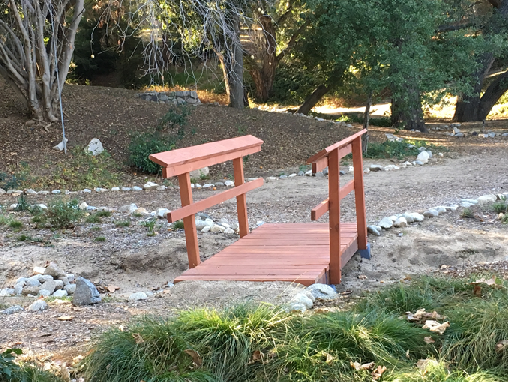
While visiting the Descanso Gardens, I took this photo. Bridges literally connect us from one place to another. They are also great metaphors for psychologically transporting us from where we are to where we’d like to go. People can be bridges. So can unexpected situations or sudden insights. While writing this post, it occurred to me to do some additional, authentic marketing by putting my memoir on sale for the holidays.
My memoir, Raw: A Midlife Quest for Health and Happiness, is available for $9.99 (no tax and free shipping)—if you buy it directly through my website. I’d be happy to sign the book to you or a friend or family member before mailing it. This offer is good through December 21. If you haven’t ordered a copy yet, please do. And if you read and enjoyed Raw, please consider buying a copy as a holiday gift. Your support means more than I can say.
[Note from Marlene: Raw is excellent. I have learned from it personally and have given it as gifts.]
Bella Mahaya Carter is a poet, author, teacher, and coach. In 2008 Bombshelter press published her poetry book, Secrets of My Sex. Her poems, stories, essays, and articles appear in dozens of print and online journals. A practicing Spiritual Psychologist, whose mission is to heal herself and others through creative work, Bella serves clients around the world with her transformational classes, workshops, and coaching.
Should your memoir have a theme? Yes, according to Brooke Warner.
“Your memoir has an atmosphere, the air a reader breathes, and it’s called theme. Its presence is felt in every scene, whether or not it’s explicitly named by the author.” —Brooke Warner, “Back to Port,” The Writers, February 2016
“If your theme is vague, such as transformation, try to articulate what initiated your transformation.” Warner gives the example of Wild by Cheryl Strayed and H Is for Hawk by Helen Macdonald, both about transformation while working through grief.
One of the most powerful things an author has ever said to me was a comment by Mark Nepo, reflecting on his personal journey over the past three years, which, due to the support of Oprah, has been pretty meteoric in nature. He told me, “I’m just so glad that I kept writing back when no one was listening.”
This reverberated in me, perhaps most profoundly because of the number of clients I work with every year who reach a crisis point, led by the voices of their inner critics that say things like, “Why are you bothering?” “No one is going to want to read this.” “Who cares?!”
In my work as a writing coach, I’m pretty hard-pressed to think of a single client who hasn’t struggled with messages like this at some point in their process—some more than others of course.
Mark’s simple statement spoke to me for a number of reasons:
You never know when people are going to find your work. Oprah found Mark’s book, The Book of Awakening, ten years after its first publication. The fact that he had so much work already out in the world is undoubtedly what’s allowed him to soar. You can get a big break like an endorsement from Oprah, but even with a big break, you have to have done (and continue to do) the hard work and discipline of writing.
If you let the critical voices get the best of you, you’re accepting defeat on someone else’s terms. Your inner critic is a bastard, so let’s just get that out of the way. It does not want you to succeed. It wants to keep you small. I’ve witnessed a lot of writers allow the inner critic to talk them out of pursuing their creative dreams. It’s the single most widespread creative tragedy I know of.
It’s important to find your own grounding in your work. This one is big. So many writers want to be heard, but they’re looking for outside validation to tell them that they’re good enough, or they’re only measuring success based on who else cares about their work. Writing whether or not anyone is listening means that you are writing for your own expression, desire, creativity, gifts—and people finding it, and/or finding it important, is secondary.
The only way to be successful as a writer is to publish. This is obvious in terms of how we measure success, but so many writers are just sitting on their work—waiting for what? Mark published lots of works on very small houses over the years. He’s incredibly prolific, and he writes to publish, as well as to process, to teach, to connect, to commune. But in this mix must be publishing because this is the only way to gain readers (listeners). Be consistent about getting content out into the world. (And it’s good that social media, blogging, guest posting, or digital only strategies be a part of this—content is content!)
You have to be your own best listener. If and when no one is listening, and whether it’s true or not that no one is, you need to feel the way your message affects you. If you know the feeling of flow, then you know the feeling of connection and resonance with your own words. It’s powerful stuff. Addictive even. Feed on this rather than the words of your inner critic.
Of course, the number of people who are listening is going to shift as you grow. Part of your growth will come from practice; part of it is gaining confidence that what we say matters; part of it is owning that we want to be successful and that’s okay. You may start with ten listeners and grow to a few hundred and then to a few thousand and then much more. Even the most famous and widely published authors started with a first piece of writing and a first published book.
Brooke Warner is publisher of She Writes Press, president of Warner Coaching Inc., and author of What’s Your Book? and How to Sell Your Memoir, and the co-author of Breaking Ground on Your Memoir. Brooke’s expertise is in traditional and new publishing, and she is an equal advocate for publishing with a traditional house and self-publishing. She sits on the board of the Independent Book Publishers Association, the Bay Area Book Festival, and the National Association of Memoir Writers. Her website was selected by The Write Life as one of the Top 100 Best Websites for Writers in 2014 and 2015. She lives and works in Berkeley, California.
Brooke will be a presenter atWriters Forum in Petaluma, California on April 16, 2015