Guest Blogger Frances Lefkowitz

  • Guest Blogger Frances Lefkowitz

    Today’s guest blogger, Frances Lefkowitz, writes about the importance of family stories and keeping memories alive.

    Telling stories ‘round the table, can increase well-being, reduce anxiety and depression, reinforce feelings of closeness among family members, and build resilience for navigating life’s normal ups and downs.

    Stories about something good coming from something bad are particularly therapeutic.

    When something bad happens, but you find a way to use it to your advantage, you redeem (and transform) the negative experience.

    The tales need to be structured, with a beginning, a middle, and — most crucial — an end, a conclusion that makes sense of the situation and gives it meaning.

    Tips for getting the storytelling started:

    1. Share photos: Albums, yearbooks, holiday photos, loose photos in shoeboxes.

    2. Start and continue traditions. Rituals contribute to stories.

    3. Share stories during mealtimes.

    Frances Lefkowitz has spent over twenty years writing and publishing.

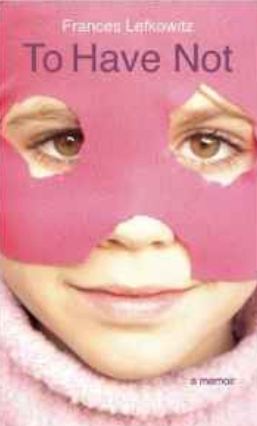
    The author of two biographies and a memoir, To Have Not, about growing up poor in 1970s San Francisco. 

    Frances leads popular writing workshops, and has developed a self-editing technique that she teaches to writers so they can revise and edit their own work. As founder and director of the grant-funded Community Memoir Project, she brings free memoir-writing workshops to public libraries and community centers, and publishes anthologies of these under-represented voices.

    Frances finally making it down the face of an 8-footer in Costa Rica, after getting dumped over the falls approximately 50 times. Practice makes perfect, in surfing and in writing.

  • This happened . . . Prompt #402

    Today’s prompt is inspired by a talk Ianthe Brautigan gave on March 5, 2001.

    Memoir is a journey. Just because it’s your life, don’t think you know the end. A beeper could go off and change everything.

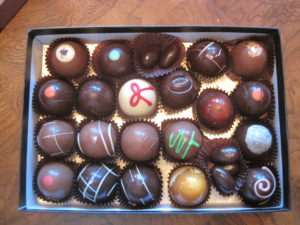
    Life is like a box of chocolates . . . you don’t know what you got until you bite into it. Sometimes your life makes sense after you write and digest your findings.

    Ianthe suggests writing a memoir in an unusual way, not “this happened and then that happened.”

    To start: Write excerpts from your past. Write your stories. Don’t worry about where they will go.

    Tell your story as if sitting around a campfire.

    If you need inspiration:  Make a collage from magazine articles/photos about what you want to write about. Look at these when you need a nudge to write.

    Once you start writing, let go of how you should write. Relax into your writing. Your heart knows what to write about. Allow it.

    Ianthe suggests thinking of the clothesline structure:  Two strong posts at ends. One is for the solid introduction. The other post is for the solid end. Then play around with insides. Move your stories around as you desire.

    Writing Prompt: Think about your childhood. Write about whatever your mind flashes on.

    Prompt:  This happened to me . . .

    Examples of excellent memoirs:

    To Have Not by Frances Lefkowitz

    imperfect endings by Zoe Fitzgerald Carter

    the underside of joy by Seré Prince Halverson

  • How to Write A Memoir— Part Two

    How To Write A Memoir, Part 1 lists a variety of methods for writing personal stories.

    Part 2 continues with revision and the business of writing.

    Take care of yourself

    Writing one’s life story can be difficult. While writing, take good care of yourself. Anytime you are feeling overwhelmed by this writing process, set your work aside. Take a break, get some fresh air, visit with a friend. Read helpful, supportive material such as Toxic Mom’s Toolkit.

    Organize

    When editing, save your “cuts” in separate files (either paper file folders or on computer files). You might be able to use these darlings in another personal essay.

    Use manila file folders to store print material: newspaper articles, photos, handwritten notes, letters, brochures, etc.

    Revising

    In the revising stage, delete what might cause embarrassment. Fine tune for accuracy.

    HydrangeaShape like a gardener pruning a hydrangea. Take a few snips here, cut a little there. Stand back, look over your work.

    Revise until you are satisfied. Or, you may reach a “good enough” stage and let it go. Most writers are never completely satisfied with their writing.

    While in the editing stage, read your manuscript as if you are an impartial observer. Look at how the cast of characters are portrayed. Check if their privacy has been respected. Read with empathy toward the characters who inhabit this story. Frances Lefkowitz believes “. . . empathy is so crucial to a good memoir—and to good relationships, and to family Thanksgivings in which everyone comes out alive.” —Frances Lefkowitz, “Are Your Parents Still Speaking to You?” December 20, 2013, The Write Spot Blog.

    Permission from cast of characters?

    Should you let your cast of characters read your manuscript?

    There is no correct answer. Some people say yes. Others say no. My suggestion is if you think something will be offensive, consider if these particular details need to be in the story. If not, omit them. If the details are crucial, leave them in, knowing it might offend someone who may cut off contact with you. If you want to continue contact with that person, ask him/her to read. If he/she is uncomfortable with some passages, you may be able to tweak to everyone’s satisfaction.

    This is your story and you have a right to write it, but do you have a right to publish it? Be mindful of defamation (libel for written material). Carefully consider the risks of writing your personal story for publication.

    “Writers face three big risks when using real people in their writing: defamation, invasion of privacy, and misappropriation of the right of publicity. Yet every fiction writer bases characters on real people. Memoirists and nonfiction writers identify people by name. How can writers use real people in their work without risking a lawsuit?”   —Helen Sedwick, “How to Use Real People in Your Writing Without Ending Up to Court,” September 13, 2014

    Beta Readers

    Part of your editing process might be to have others read your manuscript. These early readers (also called beta readers) might find scenes that don’t make sense or need clarification. Only ask people you trust and who will give you honest appraisals. Choose these readers very carefully. Give them specific things to look for (continuity, repetition, unclear areas, sections that could be condensed or expanded, etc).

    Why Write This Story?

    After you have written all that you want to write, while your manuscript is “resting,” take time for contemplation. Why are you writing this story? And why do you want to publish it (if you do)? If you are writing to share what you have learned on your journey and think it will be helpful to others, wonderful. If you are angry and want revenge, consider the consequences.

    Upon reflection, you may realize that some healing happened during the process of writing and you released the pain. Maybe you will find there is no longer a desire for revenge.

    “Honesty. Compassion. Forgiveness. Hold these words in your mind as you write about your family.” —Kerry Cohen, “How to Write About Family in a Memoir” by Kerry Cohen, author of The Truth in Memoir, [excerpted from “The Writer’s Dig,” column by Brian Klems , Writer’s Digest, January 22, 2015]

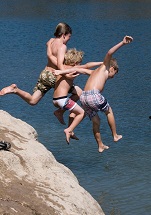
    Boys jumping into water. SorensenAfter typing “The End”

    Celebrate! You achieved your goal.

    But, what if your memoir isn’t quite working?

    You may decide to publish your work as fiction rather than memoir. The option of revising your memoir into fiction is explored in How To Turn Memoir Into Fiction.

     Celebration  Photo by Kent Sorensen
    Hydrangea photo by Marlene Cullen
  • How To Write A Memoir — Part One

    Your Life. You lived it. Surely you can write about it. Right?

    In How To Write A Memoir, Part 1, we’ll discuss methods and ideas about writing personal stories, with links to published memoirs.

    How To Write A Memoir, Part 2, we’ll cover organizing, revising and more.

    You can write in chronological order, or build your story around pivotal events. In the beginning, it doesn’t matter what structure you use. Write in a style that is comfortable for you. Try one way and if isn’t working for you, try something else.

    Memoirs written in chronological order (with back story woven in): To Have Not by Frances Lefkowitz  and Grief Denied by Pauline Laurent.

    Rachael Herron, A Life in Stitches, assembles her stories around her knitting experiences.

    For the first draft, it’s fine to jump around in time. Don’t worry too much about making sense in the early stage of writing. Get your stories written. Organize later.

    Paper or Computer?
    You can write using paper and pen/pencil or on a computer. Or both. For the most part, it doesn’t matter which method you use. The advantage of a computer is it’s (usually) faster. The advantage of paper and pen or pencil is the portability. Some people suggest there are benefits to handwriting for accessing creativity.

    Self-care

    If remembering and writing details about your life is difficult, it’s very important to have a strategy to avoid additional trauma. Create a self-care plan to protect yourself when writing about deeply painful topics.

    Writing Prompts

    You can use writing prompts to jumpstart your freewrites, to trigger memories and to make discoveries. Choose a prompt, write for 15 or 20 minutes. Take a break. Next time, choose another prompt. Good prompts to get started are:

    I remember . . .

    I don’t remember . . .

    In this photo, I . . .

    In this photo, you . . .

    family photosPhotos

    You can use photos to inspire your writing. First, look at the photo. Write all the details that you can see. Write about what happened before and after the photo was taken. Write about feelings you have connected with this photo.

    Photos might remind you about activities, important occasions and details that you may have forgotten. Did Grandpa always wear that hat? Did Grandma wear her apron with the little flower print every day, even on holidays? My Nana did.

    Other Memoirs

    Read memoirs to get an idea of how you want to proceed with your memoir. Some styles will appeal to you. Others aren’t right for you. You can read reviews on both Amazon and Goodreads to research different styles of memoirs.

    Susan Bono, What Have We Here, grouped her personal essays by theme.

    Rayne Wolfe, Toxic Mom Toolkit, braids three strands: her memoir, excerpts from others and toolkits.

    Janice Crow, I Give You My Word, created poems and watercolors to enhance exploring her journey.

    Story Telling

    When writing, think of yourself as a storyteller. In this story, you are the main character. Your family and friends are the supporting cast members. When you write, don’t think of any of these cast members. Write events (scenes) as you remember them, without worries (for now) about accuracy. With the first draft, put on your story-telling hat and write what happened.

    Research

    Interview family members, friends and acquaintances to learn details you may not know. You might realize a broader perspective from hearing other points of view.

    Research news, locally and world-wide, during the time period your story takes place. Tie in events with your story, if appropriate. Fact check details: slang, clothing styles, popular dances, technical gadgetry, geographical, etc.

    Take a few minutes

    After you have written all that you want to say, spend some time reflecting. What compelled you to write these stories?

    Perhaps your writing is a learning tool to understand what happened and to educate others as Piri Thomas does in Down These Mean Streets.

    Maybe your desire is to get these stories off your chest, to vent, to release emotions as well as help others similar to Ellevie by Marcelle Evie Guy.

    Maybe you want to record family stories, to document your family history.

    How To Write A Memoir – Part 2, we explore what to do after you have written your memoir, revision and the business of writing.
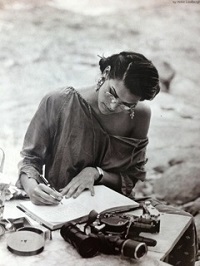
    woman writingFinal Comments
    This likely will be an emotional project. Take whatever time you need for breaks. Remember to exercise, go on walks, drink water and find joy, wherever you can.

    Just Write

    There are over 200 prompts on The Write Spot Blog. Use them for your memoir, for personal exploration and for fun!


  • The Power of Storytelling—Now Proven

    Guest Blogger Frances Lefkowitz writes:

    The life of a freelance writer is full of the uncertain (“where will my next assignment come from?”) and the mundane (“did I spell that source’s name right?”), coupled with high deadline pressure and middling compensation. But every once in a while, I get to track down fascinating regular people and ask them to tell me stories. That’s what I did for a recent article for Good Housekeeping on the power of storytelling. The assignment was to write about the new evidence that storytelling has benefits for the health and wellness of individuals, families, and communities, and I had to read my fair share of academic research journals and talk to my fair share of M.D.s and Ph.Ds. But I also got to sit back, relax, and listen to tall tales.

    The best, most enduring stories, it turns out, are those that contain both hardship and humor. Like the one Evelyn Karozos, who comes from a large Greek family in the Midwest, told me about how the whole family used to eat dinner in the parents’ bedroom on sticky summer nights—because that was the only room with an air conditioner. Or the one a southern grandmother—and who can beat Southerners for storytelling—told me the one about her great grandpa, who once wooed a wealthy widow by wrapping the few dollar bills he had around a wad of newspaper, then casually letting it drop from his pocket, leaving the impression that he was rolling in money.

    And then there was the one from Emily Pickle, a young mother from Florida, who recounted a bittersweet story about the time her grandmother was going through a health crisis in which she suffered temporary dementia-like symptoms. “This was the year the Gators won the championship, and the quarterback was Danny Wuerffel,” she told me, adding, “Football is a very big deal where we come from.” When her mother and uncle went to visit Grannie in the hospital, they found her repeating, “Danny Wuerffel, Danny Wuerffel” over and over, as if she were reciting a prayer. When Pickle’s Uncle Jay shared the anecdote with the rest of the family, he mimicked Grannie’s reverence, rocking back and forth, repeating the beloved QB’s name, eliciting laughter and tears in his audience. “It was awful, but it was funny, too, the way he told us,” she pointed out. And beneath the laughter and the tears, Uncle Jay was sending an important message to the rest of the family, that “Grannie’s going to recover from this; she’s going to laugh, we’re going to laugh, and this will be one more family story — not a family tragedy.” And he was right.

    Psychologists call these “redemptive stories,” because they “redeem” a negative experience, finding some silver lining in a bad event. The point is NOT to be a pollyanna and sugarcoat the fear, danger, or difficulty. The point is to acknowledge the negativity, and also find some kind of lesson or benefit in it—even if that benefit is simply that the family came together to overcome a challenge. When people hear these stories, they get a laugh, a release of tension, a sense of belonging, and a signal that together, we can find ways to carry on.

    I tell you all this because, as writers, we deal in stories. We distill them and write them down and spruce them up and pass them on. And by doing so, we are not only making a livelihood; we are contributing to the health and well being of the people who read us.

    Click here to read the Good Housekeeping article.

    Frances LefkowitzFrances Lefkowitz is the former Senior Editor of Body+Soul (aka Martha Stewart’s Whole Living) and Book Reviewer for Good Housekeeping, as well as the author of the memoir To Have Not. She writes and edits fiction and nonfiction, and teaches for The Sun magazine’s writing workshops, the Omega Institute’s Memoir Festival (with Cheryl Strayed), Catamaran Literary Review’s August 2015 retreat, and other events.

    Frances blogs about writing, publishing and footwear at PaperInMyShoe.com
    Photo by Giacco Yanez

    Frances will join other editors at Writers Forum on May 21. 2015 in Petaluma . . . meet editors, chat with editors, find an editor to help polish your manuscript.

  • What games did you play? Prompt #32

    Lefkowitz.To Have NotToday’s prompt is from To Have Not, a fascinating memoir by Frances Lefkowitz.

    When us kids used to walk down 16th Street to the schoolyard or across Sanchez to the corner store, we’d keep a lookout for cool cars. When one drove by – a red mustang convertible, a tiny MG, a black Jag with the silver cat ready to pounce off the hood – whoever saw it first would point and say, “That’s my car!” We could play this game anywhere, my brothers and their buddies and I, shouting the words loud and fast to drown out anyone else who might be thinking about claiming the same car.  You could even play it alone, whispering the three magic words while walking home from school or sitting in a window seat on the bus, leaning your drowsy head against the sun-warmed glass. Then the car would speed through traffic, carrying your dreams out of sight. You’d covet, grasp, and lose, all in a few quick seconds of shiny colored metal whizzing by.

    Frances blogs about writing, publishing, and footwear at PaperInMyShoe.com.

    Prompt:  What game did you and your friends or siblings make up? What does this say about your childhood?

  • Flash Fiction Online

    Frances Lefkowitz has been published in Flash Fiction.  Here’s what Flash Fiction has to say:

    Every month, Flash Fiction Online is proud to publish what we think is some of the best darn flash fiction (500 to 1000 words) there is. Each issue includes three original stories by both new and seasoned authors. Although many on our staff have a fondness for the speculative, we enjoy and select fiction in any genre. Founded by Jake Freivald in 2007, Flash Fiction Online has been published by Anna Yeatts since September 2013.

    We believe good stories should be free to readers—our goal is to help foster appreciation for short fiction. At the same time, we’re eager to support writers. We offer pro-rate payment for stories (as defined by the Science Fiction & Fantasy Writers of America, $0.05/ word). All our stories are read blind, with the author names and other identifying material stripped off, to ensure impartiality. At FFO, it doesn’t matter if you are a new writer or a seasoned pro–if we like your story, we’ll take it.  Submission guidelines

  • Guest Blogger Frances Lefkowitz – “Are your parents still speaking to you?” The Dangers of Memoir

    “Are your parents still speaking to you?”

    This question—a darn good one—comes up pretty much every time I do a Q&A. The short answer is “Yes.” My parents and siblings are all still talking to me; we still get together for holidays and birthdays and no blood gets shed. But this is not the case for other memoirists; I know several who are estranged from their families. Discussing family matters, revealing secrets, shining light on our most vulnerable and tragic moments including bad behavior or naive mistakes, and getting just our version into print, so it sounds like the official word on the subject: If this is what we do when we write memoir, then offending the people in our lives is one of our occupational hazards.

    The long answer is that this question is a great opportunity to discuss the distinction between the process of writing a memoir or personal essay and the process of publishing one. When writing, I don’t think about anyone, such as my parents, reading it, because I need to write freely and allow the thoughts, feelings, and images to emerge. Censorship in any form, including self-censorship emanating from a fear of hurting someone, hampers the creative process. But publishing–making this writing public–is a whole other story. When you get to the publishing stage, however, you have some decisions to make about what you are willing to reveal and risk in your life, for the sake of your art. When the memoir manuscript I’d been writing for ten or so years was finally about to become a book, I realized with a shudder that this was serious now, that the characters I’d been writing about were real people, with feelings and lives, that my looseness with words might accidentally hurt someone. So I gave it another close read, ignoring plot problems, repeated phrases, and awkward-sounding sentences to look solely at how I had portrayed the people in my life, especially the ones I wanted to remain in my life. Were there places where I tossed off a flip, and not really accurate, remark for the sake of humor or malice?  If so, was the result—a laugh, a cringe—worth the risk of insulting a real person? Sure enough, I found spots here and there throughout the book that felt rude, possibly hurtful, and most of them were not very entertaining or even very true. Many of these spots involved ex-boyfriends, some of whom I still love. Editing out insults turned out to be no sacrifice to the art of the work. What I nipped and tucked did not hurt the veracity of the memoir, and may even have improved it, because I applied an extra layer of empathy. And empathy is so crucial to a good memoir—and to good relationships, and to family Thanksgivings in which everyone comes out alive.

    Frances Lefkowitz is the author of TO HAVE NOT, a memoir about growing up poor in 1970s San Francisco which was named one of 5 Best Memoirs of 2010 by SheKnows.com. An award-winning and much published writer of fiction, personal essays, memoir, and flash fiction, Frances is also an editor, writing coach, and writing workshop leader. The former Senior Editor of Body+Soul magazine (aka Martha Stewart’s Whole Living), Frances is the book reviewer for Good Housekeeping and a manuscript reader for a leading literary agency. She blogs about writing, publishing, and footwear at PaperInMyShoe.com.