Today’s prompt: Life is just a . . .
Set your timer for 15 minutes and finish the thought. . .
Life is just a . . .


Today’s prompt: Life is just a . . .
Set your timer for 15 minutes and finish the thought. . .
Write about something that seemed so wrong but turned out right.
 Photo by Breana Marie
Today’s writing prompt is inspired from the September 2014 issue of Writer’s Digest magazine.
“A man opens his mailbox to find an envelope containing a set of instructions.”
Set your time and write for 20 minutes. Set it aside for twenty minutes. Then read. Tweak, make a few changes, but not too many. The energy from that first and fast writing is usually spot-on.
Write a short story of 750 words or fewer based on this prompt and enter Writer’s Digest Contest #60.
Send your story using the online form at writersdigest.com/your-story-competition or send via email to yourstorycontest@fmedia.com (entries must be pasted directly into the body of the email; attachments will not be opened).

~ You see something you can’t live without, but you don’t have enough money to pay for it. What do you do?
~ You see a neighbor, alone, weeping. What do you do?
~ You see an acquaintance shoplift. What do you do?
~ You see two married acquaintances, without their spouses, heads and bodies close together, in a suggestive position. What do you do?
~ You are a young child and smile up at the grown-up whose hand you are holding but you don’t recognize the grown-up. What do you do?
Pick one and write for 20 minutes.
Note from Marlene: You can tweak prompts however you want. For example, with this prompt, the setting could be a deserted walkway near water, in a park, at a crowded Saturday market. You choose the setting and Just Write!
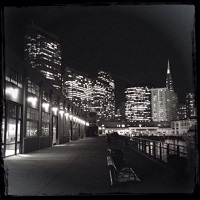
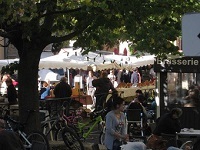

Photo by Sasha Oaks Photo by Jim C. March Photo by Kent Sorensen
Write about an article of clothing, shoes, or jewelry. . . something you are wearing right now.
 Photo by Breana Marie
There are more how-to-write books than we have time to read. IF we tried, we would spend all our time reading about writing and not writing. But there are a few especially good how-to write books. Here are some of my favorites. What are your favorite writing books?
Dorothea Brande was an early proponent of freewriting. In her book Becoming a Writer (1934), she advises writers to sit and write for 30 minutes every morning, as fast as they can.
Peter Elbow advanced freewriting in his books Writing with Power and Writing Without Teachers (1975), and freewriting has been popularized by Julia Cameron through her books The Artist’s Way and The Right to Write.
A few more writing books:
Aronie, Nancy Slonim – Writing From the Heart
Baldwin, Christina – Storycatcher
Barrington, Judith – Writing the Memoir, From Truth to Art
Baty, Chris – No Plot? No Problem!
Bennet, Hal Zina – Write From The Heart
Clegg, Eileen M. – Claiming Your Creative Self
DeSalvo, Louise – Writing As A Way of Healing
Epel, Naomi – Writers Dreaming
George, Elizabeth – Write Away
Goldberg, Natalie: Living Color, Long Quiet Highway, Wild Mind, Writing Down the Bones, The Great Failure
Heffron, Jack – The Writer’s Idea Book
Kabat-Zinn, Jon – Wherever You Go, There You Are
Keene, Sam and Anne Valley-Fox – Your Mythic Journey
Kelton, Nancy Davidoff – Writing From Personal Experience
King, Stephen – On Writing
Lauber, Lynn – Listen to Me
Lamott, Anne – Bird by Bird
Lara, Adair – Naked, Drunk and Writing
Nelson, Sara – So Many Books, So Little Time
Rosenfeld, Jordan – Make a Scene
Saltzman, Joel – If You Can Talk, You Can Write
Schneider, Pat – Writing Alone And With Others
Smith, Michael C. and Suzanne Greenberg – Everyday Creative Writing
Ueland, Brenda – If You Want to Write
Walker, Christine – A Painter’s Garden
Walton, Todd & Toomay, Mindy – The Writer’s Path
Zimmerman, Susan – Writing to Heal The Soul
Just a few of my books on writing. Yes, I have two copies of Jordan’s Make A Scene: One for my personal use and one for lending.


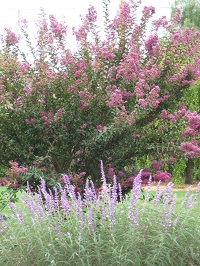
I love to work in the garden, pulling weeds, and occasionally being creative with new plantings. I love tugging at weeds and hearing the slrrp as they surrender their grip and let go. Writing is a lot like weeding . . . letting go and enjoying the moment. Not always worrying about the end product; just enjoying the moment of complete surrender.
Later, after the writing seedlings have sprouted, it’s time for editing, which is a lot like pruning. When I’m pruning a fruit tree or a rose bush, I make a few snips, stand back to see how it looks and how it’s shaping up. It’s the same with editing. . . . make a few changes, then re-read. Keep what’s good and continue pruning until the piece has shaped to satisfaction.
Yard sale, garage sale, tag sale. . . whatever you call ’em, what do you think about ’em?
Or . . . write about an unusual find at a yard sale, garage sale, tag sale . . . whatever you call ’em.