What do Contest Judges Look for?

  • What do Contest Judges Look for?

    Notepaper.make a listRecently I was one of three judges for a writing contest. We didn’t agree during the first round of reading on the winners. It took re-reading and much discussion to select the three winners. So that got me to thinking. What do contest judges look for when choosing winning entries?

    My fellow judges and I came up with:

    Make sure to follow the guidelines. They aren’t arbitrary. The guidelines are specific for a reason.

    Make sure to follow the criteria of what genre the contest is. Don’t submit memoir if the contest is fiction. Even though the judges may not be able to tell for sure if something is fiction or memoir . . . if it feels like memoir, it probably is. And that won’t work in a fiction contest.

    The winning entries that stood out excelled in creative writing and well-crafted stories. The writing and stories were compelling, keeping reader engaged to the end.

    Proofread. I know this is obvious, but many of the entries had typos or punctuation errors.

    Have someone read your entry – both for feedback and to proofread.

    If it’s a fiction contest, make sure your entry is a story. Many of the entries were anecdotes, rather than full pieces (beginning, middle, end with a definable plot and fleshed out characters).

    Avoid clichés – in words, phrases and story line. This goes back to the unique story. Tell us something new, or write something old with an interesting twist.

    Understand and use correct point of view. Many entries jumped around with point of view, sometimes it was hard to tell who “he” and “she” referred to.

    Stay with the same verb tense, except when appropriate to use past or future tense. Stories got extra points from me when using present tense (because that’s harder to do than using past tense).

    Susan Bono shares her views on contests in her essay, A Thought or Two on Writing Contests, originally published in Tiny Lights, A Journal of Personal Narrative, 2/9/2007.

    More thoughts on entering writing contests:

    “Don’t assume the winners of a writing contest were the only ones to submit excellent work. There are only so many prizes available in any given contest. Winning may equal good, but losing does not always equal bad. Your turn will come.” —Susan Bono, author of What Have We Here: Essays about Keeping House and Finding Home, has judged many, many contest entries.

    “Make us see something about the world in a fresh way or remind us of something important that has an arguable public dimension.” — Dan Lehman, River Teeth, A Journal of Nonfiction Narrative

    “There is a difference between experience and meaning-making. If we are reading along and this happens and this happens, and we still don’t know why it is important, then we know the writer might not be up to it . . . just writing about something that has happened to you is never enough. It’s what the writer does with her own experience, what she makes of it that counts.” —Joe Mackall, River Teeth, A Journal of Nonfiction Narrative, (paraphrased from original quote by Judith Kitchen).

    River Teeth Journal, Editor’s Notes, Volume 17, Number 2, May 31, 2016

    Are you motivated? Ready? Enter!

    River Teeth Submissions

    Redwood Writers, a branch of The California Writers Club sponsors contests year-round.

    The Writer Magazine regularly calls for contest submissions.

    Writer’s Digest Magazine lists contests.

    Links to writing contests.
  • Jane Dystel: How long should it take to write a novel?

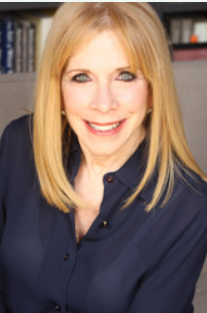
    Jane DystelToday’s Guest Blogger is Jane Dystel, president of Dystel & Goderich Literary Management:

    Over the weekend, I finished a remarkable first novel.  The author had taken many years to complete this work and, in the end, I think the time it took her to do so has paid off (of course, only the marketplace will tell).

    Thinking about this – the time it takes a writer to finish a book – brought to mind how different each writer’s process is.  I found this very interesting piece on the subject in the Huffington Post.

    I have clients who take many years to finish their novels, much like the writer whose work I read this weekend.   Then, there are those who actually ask for deadlines (from me) by when they should have their next manuscript completed.  And then, of course, there are those who can conceptualize their stories and write them down much much faster.

    In the end, there is no right answer to how long it should take a writer to complete his/her manuscript.  It is what works for each individual.  I find it’s best not to compare your process to others’. Do what feels right for you.

    Originally posted on the Dystel and Goderich website, February 29, 2016, “How Long Should It Take Me To Write My Novel?”

    Note from Marlene: Jane’s thoughts about self-publishing are in the May 2016 issue of The Writer Magazine. Here’s an excerpt: “As an agency, we are now more interested in developing . . . authors’ careers and helping them be successful hybrid authors—those who are traditionally published and continue to self-publish at the same time.”

    Jane Dystel, President, has been an agent since 1986. Her publishing career began at Bantam Books. She then moved to Grosset & Dunlap, where she was a managing editor and later an acquisitions editor. From there, she went on to become Publisher of World Almanac Publications, where she created her own imprint. When she joined the agency that would soon become Acton and Dystel, Inc., she quickly developed a reputation for honesty, forthrightness, hard work, and real commitment to her authors and their writing careers. In 1994, with a growing roster of clients, she founded Jane Dystel Literary Management, which became Dystel & Goderich Literary Management in 2003. Born in Chicago, Jane grew up in Rye, New York. She is the daughter of publishing legend, Oscar Dystel, who is currently a consultant for DGLM. In her teens, she was an accomplished figure skater. Jane received her BA from New York University and attended Georgetown law school for one year before leaving for her first job in publishing. She has an abiding interest in legal subjects. She is married to Steven Schwinder and has a daughter, Jessica, and a son, Zachary. She lives in New York City with her family and two dachshunds and is a tenacious golfer.


  • Why should you submit to literary journals?

    Why should you submit to literary journals?

    June 2015 issue of The Writer magazine answers:

    “Even though many don’t offer payment, literary journals are a great way to get your writing’s foot in the editor’s door. Some writers may overlook smaller publications to concentrate on bigger projects, but doing so could be a mistake. Whether you’re looking to apply to an MFA program or want to build your publishing portfolio, publication in a literary magazine or journal can be a useful first step toward your dream career.”

    For the next few Saturdays, I’ll post information about literary journals as places you can submit your writing. I welcome your comments and suggestions.

    ~Marlene

  • Trust Your Instincts

    Gabriel Packard asked Bo Kaprall: What is the most important thing you’ve learned about writing? — The Writer magazine, June 2015

    Kaprall answered, “Probably the most important single thing I’ve learned about writing is to trust your instincts, because, especially with comedy, it’s so subjective. One person will love it; another person will hate it. Everyone seeks comments and reinforcement or criticism, but really you need to trust your instincts, and that’s harder for someone who’s new at it than someone who’s a little more seasoned.”

    Marlene’s Musings: I agree. When in doubt, listen to your “gut feeling.” Your instincts are right on . . . you just have to trust yourself. With that in mind, when working with an editor . . . listen to what the editor has to say . . . you don’t always have to agree, nor make the suggested changes. Just listen carefully, then go with what your instincts say.

    Bo KaprallBo Kaprall writes, directs and produces Saturday Night Live’s Weekend Update. He has written for The Carol Burnett Show, The Cher Show, The Partridge Family, Welcome Back Kotter, Laverne & Shirley and the Bob Hope Christmas Special, among other accomplishments.


  • What’s the most important thing you’ve learned about writing?

    Andrew Sean Greer answers this question in the September 2014 issue of The Writer Magazine.

    What’s the most important thing you’ve learned about writing?

    “That you be clever as clever, and people will be impressed, but they will only be impressed for so long. After that, unless you are very real in your writing, and donate some piece of your heart, and are vulnerable, someone else will come along much more clever than you. Better to be ready from the outset. There is no competition for vulnerability. We are all in that together.”

    Note from Marlene:  There’s that vulnerability thing again.  Feeling vulnerable seems to go along with sharing your writing with others. . . that’s what Steve Jobs and I were talking about in the August 14, 2014 post about the most important tool in life about making big choices.  Well, Steve and I didn’t actually have this conversation. . . but we could have, in my writerly imagination!

    Your turn:  What’s the most important thing you’ve learned about writing?

    The Writer Magazine

  • The nervousness of writing — Francisco Goldman

    “When you’re beginning a book, or getting back into a book, as I am now, you have to learn to deal with the nervousness and stress of it. The blank page or the stalled page is incredibly intimidating. And you have to turn that nervousness – rather than into something that blocks you, rather than into something that makes you try to over-think, that makes you feel that you can’t proceed unless you have a clear idea of where you’re going – you have to harness that nervousness, almost like a natural force, and make it work for you. You have to trust that you’re just going to get inside the page and get inside the sentences, and you have to release the desire to feel in control and just follow the writing where it takes you and have faith that you’re eventually going to find the way.  — Francisco Goldman 

    January 2014 issue of The Writer magazine.“Writers on Writing: Find the power to overcome writing fears.”

    The Writer magazine article written by Gabriel Packard

    Francisco Goldman

  • Dispute the thoughts that don’t serve you.

    Listen closely to yourself and dispute the thoughts that don’t serve you – even if those are true. For example, you might think, “Writing a novel is hard. Selling a novel is hard.” Yes, both thoughts are true, but they don’t serve you. The only thought that serves you is, “I’m off to write a novel.” — Eric Maisel, January 2014 issue of The Writer magazine.


    The Write Spot Banner

  • Are there rules for essay writing?

    Pat Olsen has written an excellent article about writing personal essay in the December 2013 issue of The Writer magazine. Highlights:

    “. . . when I am so obsessed about an idea that I can’t wait to put pen to paper, the essay almost writes itself. That’s not so say I don’t struggle over every word, or that I’m done after the first draft . . . Some of the best advice I’ve received is that it’s not only what you choose to include in an essay that’s important, but it’s also what you choose to omit.”  She gives an example and then goes on to ask:

    “Are there actual rules for essay writing? If so, not all writers agree on them.” After consulting essayists, here’s what she discovered:

     Kate Walter:  “‘An essay should have a universal theme . . . No matter how unusual a story may seem,’ she says, ‘there should be a broader theme that every reader can identify with.”

     Andrea King Collier:  “‘Voice is everything,’ she notes. ‘Two people can write an essay on the loss of a parent, and it is the voice and the approach/lens of the writer that can make one sing over the other.’”

     Bob Brody: “Start with an anecdote, a scene or an observation, Brody advises. Go back in time or stay in the present. Have a single big moment or a series of big moments.”

     Amy Paturel:  “The best essays, she says, are about a transformation. ‘Between the beginning and the end of your essay, there has to be some sort of epiphany or awakening . . . ”

     Andrea Cooper:  “. . . take a break from your essay. ‘I studied once with memoirist Patricia Hampl, who encouraged us to think of revision literally,’ she says. “It’s re-vision, re-seeing.’”

    Lots of good information in this article about writing personal essay.

     Nina Amir posts writing prompts on her blog.  Her January 31, 2014 post, about personal essays, includes Writing Prompt #9, Brainstorm Personal Essay topics.

    Nina writes, “Personal essays tend to focus on one particular event and how it affected you or your life. They often have universal themes that makes it possible for readers to relate to personal stories.”


  • Three Top Pointers About Writing Personal Essays by Kelly Caldwell

    From December 2013 issue of The Writer magazine. “In the Classroom” with Kelly Caldwell.

    1. Don’t worry about What is My Larger Subject? in your first draft. Just get out of your own way, write the story and let the universal themes of the essay reveal themselves.

    2. When you’ve got that first draft, ask yourself, “So what?” and write down the answer.

    3. When you reach a point in the essay where you want to make things up because they would be more interesting or more satisfying or just prettier, don’t. This is creative NONfiction, after all, and yes, that matters. Also, those are usually places where you need to dig deeper, because that’s where the richer, more meaningful material usually lies.


  • Nobody writes a perfect first draft — Jonathan Maberry

    “More often ‘writer’s block’ is a result of writers trying too hard to write a perfect novel in the first draft.  Nobody — no-freaking-body — writes a perfect first draft.” says Jonathan Maberry, multiple Bram Stoker awards winner, author of 18 novels, including Joe Ledger thriller series, 30 non-fiction books, 1200 feature articles, 3,000 columns and writes projects for Marvel Comics. — “Jonathan Mayberry: How I Write”  by Larry Atkins, The Writer magazine, October 2013