This week we’ll discuss how to write the hard stuff without experiencing trauma while you write.
Notes and guidelines
Whenever a writing prompt is suggested, feel free to write whatever you want. You never have to stay with the prompt. Don’t stop and think, just follow your mind and write wherever it takes you. What’s on your mind is more important than the suggested prompt.
Keep writing, don’t cross out, don’t erase, don’t stop and think . . . keep your pen moving.
If you get stuck: Rewrite the prompt. Literally, write the prompt and see where that takes you.
Or write, “What I really want to say.” And go from there.
If you don’t like where you’re going, start over. Start over by rewriting the prompt. Or just start writing about something different.
When we have an emotional situation, we tend to replay it in our minds. Perhaps we want the negative situation to go away so we try to ignore and suppress what happened.
But we don’t forget. Sometimes, what we resist, persists.
You can use writing to shift your perspective. Sometimes you can’t change the situation that’s causing you pain. You can change how you look at it.
We all experience grief, trauma, sadness. And we have our unique ways of handling those stresses. There is no one right way to handle our life difficulties. What is right for one person, may be wrong for someone else. One way might be to write.
And please, if you feel you need professional help. . . seek that out.
Louise DeSalvo, Writing as a Way of Healing
“The therapeutic process of writing goes something like this: We receive a shock or a blow or experience a trauma in our lives. In exploring it, examining it, and putting it into words, we stop seeing it as a random, unexplained event. We begin to understand the order behind appearances.”
Marlene’s Musings: The key is to write about these events and the emotions surrounding them and not re-traumatize ourselves while we’re writing.
It seems to me, it’s like this: While you are sleeping, you have a dream or a nightmare; your body reacts as if the situation is true . . . you might perspire, your heart beats faster, your breathing is shallow. Then you wake up and phew. . . it was just a dream.
Same thing when you write about a difficult situation or experience you have had, you might have a physical reaction. You might become tense or anxious. Tears might appear. This is all very normal.
Have A Plan
Have a plan for when you experience discomfort while writing. Do some deep breathing. Look away from your writing. Have something nearby to focus on. If you need a time-out while you are writing . . . look at your focal point. It can be a favorite decorative item, a rock, a shell, paperweight, candle. Choose something that is soothing and relaxes you.
You can get up, walk around, look out a window. Then get back to your writing.
Another plan for taking care of yourself while writing is to have a saying or a mantra. Something you tell yourself that is calming. It might be the word “breathe.” Or it might be “look up.” Something to momentarily take your mind off your writing and back into the present.
Louise DeSalvo talks about becoming present to your pain. Don’t deny its existence. Let yourself feel it. Record your pain honestly, without hypocrisy, dishonesty, sentimentality or idealization. If we write about our pain, we heal gradually. Instead of feeling powerless and confused, we move to a position of wisdom and power.
“When we feel empowered, we don’t need control. We walk in grace.”
Let’s get ready to write.
Just as an athlete limbers up before practice, let’s stretch and then relax into our writing.
Roll your shoulders around. And around the opposite direction.
Roll your head and your neck. Roll back the other way.
Sit comfortably in your chair. Your chair is firmly supporting you. Rest your hands comfortably in your lap, or on your thighs or on the table.
Take a deep breath in, hold and let go. Let go. Let go of your worries. Let go of your concerns.
Feeling completely supported and totally comfortable.
As we go through this relaxation, take deep breaths as you need to and really whoosh out on the exhale.
Wiggle your toes. Rotate your ankles in circles.
Relax your legs. Let go of the calf muscles. Let go of any tension in your legs. Just let go.
Relax your thighs. Let the chair take the weight of your thighs. Let go of any tension in your thighs.
Deep breath in. Hold and release. Let go of any concerns you have. Let your worries fly away.
Relax your stomach. Release and relax.
Deep breath in and as you exhale, let go of any tension that might be lingering. Just let go.
Let’s do some writing.
Write whatever comes to your mind. Don’t stop and think, just follow your mind and write wherever it takes you. Set your timer for 12-15 minutes and Just Write. There are two possible writing prompts below. Choose one for each writing period or, you can write on both at the same time. Just take a break by looking up, breathing and remember:
Writing can help us look at what happened in a new light. We can’t change what happened, but we can change how we view it.
 Prompt: Disappointment
Prompt: Write a letter to someone, alive or not, saying what you really want to say. A letter you probably won’t send.
A Prayer For The World
Let the rain come and wash away
the ancient grudges, the bitter hatreds
held and nurtured over generations.
Let the rain wash away the memory
of the hurt, the neglect.
Then let the sun come out and
fill the sky with rainbows.
Let the warmth of the sun heal us
wherever we are broken.
Let it burn away the fog so that
we can see each other clearly.
So that we can see beyond labels,
beyond accents, gender or skin color.
Let the warmth and brightness
of the sun melt our selfishness.
So that we can share the joys and
feel the sorrows of our neighbors.
Let the earth, nourished by rain,
bring forth flowers
to surround us with beauty.
And let the mountains teach our hearts
to reach upward to heaven.
—Rabbi Harold Kushner

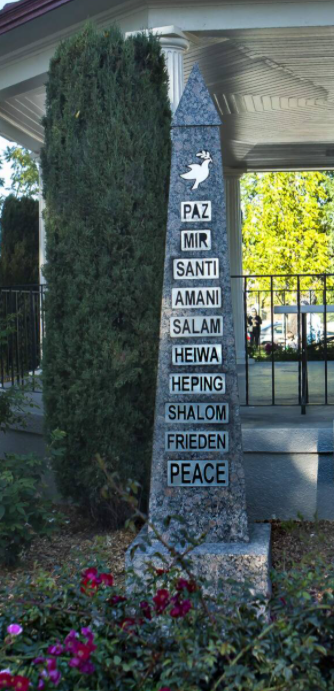
 Guest Blogger Nancy Julien Kopp writes about a topic I am passionate about: Healing through writing.