Create Original Phrases

  • Create Original Phrases

    potato chips
    Photo by icon0 com on Pexels.com

    Rather than using a tired cliché, create your own phrases that might become popular and memorable. Like this one:

    “ . . Maureen Seaton wrote beautiful poems the way some people eat potato chips.” — Mario Alejandro Ariza, “Writers on Writing,” Writer’s Digest, July/August, 2024

    Have fun with clichés.

    #justwrite #amwriting #iamawriter

  • Do Not Be Afraid to Write What You Know

    Memorable writing that sparks imagination. Lean in. Hear the writer’s voice on the page.

    Do Not Be Afraid to Write What You Know

    By Mashaw McGuinnis 

    An acquaintance of mine texted after reading some of my novel-in-progress. “Don’t try so hard with stereotypical language and trailer park folks . . . I don’t buy it.” I wanted to disappear into the furniture, but instead I texted back a bumbling explanation that I wasn’t trying too hard, that the people in my stories are the people that I know, and I know them well.

    I always dread sharing my work because my middle-class friends never believe me when I say my characters, experiences, and vernacular come directly from my own dysfunctional, lower-class upbringing.

    By “lower class,” I mean more than low income or under-educated. I was raised by Dust Bowl migrant grandparents. Two generations back, only one had more than a seventh-grade education. Californians called them “Arkies” when they’d arrived hungry from Arkansas in the late 30s, searching for work. Like Steinbeck’s Joads, they picked fruit and cotton and slept in government camps in the Central Valley.

    Eventually, my grandfather secured a union factory job, but their hardscrabble roots ran deep. My clan put the “hard” in hardscrabble. One aunt died from an overdose, leaving eight kids behind—two came to live with us. My spitfire grandmother went to jail for shooting three neighbors, and one Sunday fried chicken supper was interrupted with a drug-withdrawal seizure requiring an ambulance. When my grandparents died, they left nothing but a family tradition of grit.

    These experiences—not unusual in my family—made for a wealth of material once I learned to write. But nothing prepared me for the responses I received from my fellow writers.

    Over and over, I heard “you’re exaggerating” or “your characters are hyperboles.” (The first time I heard that I was too ashamed to ask what “hyperbole” meant.) In critique groups, workshops and conferences, I think of those people as “normies”—middle-class people, or often, upper-middle class people, who grew up wearing braces and taking college prep classes in high school, raised by parents who never threatened to kill each other or send the kids to foster homes. Their parents were either college-educated professionals, or they raised their kids to become that.

    Normies in my workshops didn’t know the person sitting next to them resorted to winning TV game shows to pay for teeth that looked like theirs. Most would never suspect she’d barely squeaked by in high school with a “C” average or understand why she stumbled over the pronunciation of “cacophony.”

    Writers like me—blue collar, less-educated, rough around the edges—whatever category we claim, we learn by reading. We may understand definitions, but don’t hear the words pronounced in a real-world scenario. If I ever used “cacophony” in a conversation with my relatives they’d assume I was playing a prank. I wouldn’t attempt to work these terms into conversations at conferences or workshops, lest I mispronounce them to people who tout their MFAs and Pushcart nominations. If only conferences could offer workshops in how to navigate through a roomful of educated, middle-class writers.

    The normies’ families I most admired were upper-middle class—they went on vacations instead of parole. Their homes had real art. Their parents threw dinner parties. Mine had real guns and threw dinner plates. My scrappy upbringing was one of constant chaos. We didn’t have music or literature or own our homes, and we sure didn’t dream of college. We worried the next fist in the wall would get us evicted. Each family member used whatever tools we could to eat, sleep and keep working. Arkies were programed to survive, nothing more.

    Recently, I finally came out in a private Facebook group for women writers. After reading for years about the other members’ publications, fellowships, and acceptance into acclaimed retreats like Hedgebrook, I fessed up. I asked if there were other lower-class writers, like me, who lurked in the shadows of the FB group, feeling like they don’t belong but not wanting to reveal their true roots.

    Many members responded with their own versions of my story. Yes, their “normie” counterparts accused them of hyperbolizing their characters’ vernacular, confronted them on their described scenes, even settings. One woman said her critique group didn’t believe a trailer park would really have so much grass. The acquaintance who’d texted me her opinion of my chapter (and who assumed I was middle-class) once said to me that Pulitzer-Prize winner Barbara Kingsolver did a much better job of writing lower-class characters than I had done.

    Where are the under-educated, lower-class writers with generational trauma supposed to fit? Like transplants from other countries, or people from mixed cultures, we don’t feel at home in either world. I can masquerade as a normie for the short term, but when you’re raised in a family that racks up jail terms like frequent flier miles, others eventually spot the squalor seeping through the cracks.

    When I employed the help of a writing coach to help me craft an entry to a regional contest, he said, “That’s great, but it’s not the kind of award that will change your life.” I cobbled together the courage to respond, while fearing I’d sound like a character from Hee Haw to someone with his background. The coach taught MFA students, he’d won awards, and he was a fellow at some mucky-muck writer place. I struggled to explain how, for someone like me, a regional award felt life changing. (I omitted the part about how much I needed the $900 prize money.)

    Someone in my Facebook discussion offered, “One thing working-class writers have over everyone else is a work ethic.” Now at 61, I realize what I concealed for so long is actually my biggest asset. More than anything to succeed, a writer needs tenacity. And as my tough-as-leather grandma once told me, “You want something bad enough, you’ll fight like a rabid dog to get it.”

    I’m trying, Granny.

    Originally posted as “Blue Collar, Less-Educated, Rough Around the Edges: The Other Marginalized Writers,” Brevity, August 19. 2024.

    Mashaw McGuinnis started writing from bed while fighting chronic Lyme Disease. Her work has appeared in Good Housekeeping, The Sun magazine, and other publications. The opening chapter to her novel-in-progress won first place in women’s fiction at the Pacific Northwest Writer’s Association’s writing contest, and her flash memoir, “Taft, Ca.” was a recent winner in Writing by Writers Short Short contest. She has a high school diploma from Hueneme High School. Learn more about her work at Mashaw McGuinniss, Writer.

  • At Least . . . Prompt #804

    Before writing:  Stretch.

    Get comfortable in your chair.

    Take some deep breaths in and release.

    When you are ready:

    Prompt #1      Making lists

    List 3 things you don’t want to write about. Just a list.

    List 3 things that happened a long time ago that you are still angry, resentful or hold a grudge about. Just a list.

    List 3 things that happened this past week that made you mad. Just a list.

    Prompt #2

    Write:  Choose one of those experiences. Write about it. Be as detailed and as explicit as you can.

    When did it happen?  Day of week? Time of day?

    Where did it happen? Who was involved?

    What were you wearing?   

    Remember to look up and breathe if the writing is difficult.

    Write for 15-20 minutes.

    When you are finished with this writing, shake out your hands. Breathe.

    Intro to Prompt #3

    You can use writing to shift your perspective. Sometimes you can’t change the situation that’s causing you pain.

    You can change how you look at it.

    Take a few minutes to rethink your experience that you just wrote about and see if you can find something hopeful about your encounter. 

    Even though you were affected in a negative way, maybe you can find something positive that came from it.

    Even if your event was traumatic and extremely unpleasant, is there anything positive you can add?   

    Maybe after the difficulty you noticed that you changed your attitude, your way of thinking.

    Maybe you learned something that was helpful. Or you saw things differently.

    Or, maybe you regret what happened and think, “If only . . .”

    Sometimes thinking “If only . . .” can help by learning from our actions or inactions.

    Other times, thinking “If only,” can make us feel worse, we feel we should have done things differently. It feels like it was our fault. We blame ourselves.

    Something that could help: Change to thinking “At least.”

    Prompt #3

    The “at least” idea comes from “The Power of Regret” by Daniel H. Pink.

    Take a few minutes to write about something good —anything —that came from the experience you wrote about.

    What did you learn that helped you?

    Start by writing . . .

    I learned . . .

    Or:  I realized . . .

    Or:  At least . . .

    Prompt #4

    Check in with your emotions. Take a few minutes to write about how you are feeling right now.

    End on a positive note:

    See yourself as a little child. Look deeply into this little child’s eyes. See the longing that is there and realize there is only thing this little child wants, and that is love.

    Reach out with your arms and embrace this child.

    Hold her or him with love and tenderness. Tell her how much you love her, how much you care. Admire everything about this child and say that it’s okay to make mistakes.

    Now, let this little child get very small, until he or she is the size to fit into your heart. Put her or him there so whenever you look down, you can see this little face looking up at you, and you can give it lots of love.

    Feel a warmth beginning to glow in your heart center, a softness, a gentleness. Let this feeling begin to change the way you think and talk about yourself.

    Note: You can use these prompts over and over.

    Make a date with yourself to continue writing. Choose a day and time to write Treat it like a doctor’s appointment.

    For more information on writing about difficult subjects:

    The Write Spot: Writing as a Path to Healing

    Just write. No matter what!

  • It’s more than okay to ask for help.

    “Always remember one thing. If you respectfully ask for help, you give the other person a chance to be a good guy. You’re giving as well as getting. Don’t ever apologize or embarrassed to be part of that process.” — Hap Glaudi

    Excerpt from “A Sportcaster’s Advice,” Chicken Soup for the Soul.

    Note from Marlene: I love the concept of “give the other person a chance to be a good guy.”

    Reprinted with permission.
  • Regrets . . . Prompt #803

    Regrets: We all have them.

    There are four parts to this writing prompt. You can do all four at once. Or, take breaks. Write on one prompt at a time.

    Take care of yourself while writing:

    Look up. Walk around. Look out a window. Take some deep breaths.

    Part 1:  Write about a regret you have.

    Something you did or something happened that you wish hadn’t happened.

    Write what happened as if you were a journalist.

    This happened. Then that happened.

    Write for 20 minutes.

    Part 2:  Write about the emotions surrounding that experience.

    Remember: Take care while writing.

    Part 3.  What are you resisting writing about?

    Take a deep breath. Capture whatever you can about what happened. Put your thoughts and feelings into words.

    Part 4.  Let go.  Notice what you are feeling. Allow your feelings to be. Deep breath in. Let it out. Release.

    Turn your attention to now, this moment.

    Turn away from wanting a different outcome.

    Invite compassion in.

    Welcome your feelings, whatever they are . . . rather than try to push then away.

    Sit with your emotion

    Welcome your emotions with an open heart.

    You can say, silently, quietly, or out loud:

    “Regret or anger . . . I have always pushed you away. Now, I’m allowing you to be here.”

    Can you let go of those feelings of regret?

    Deep breath in. Exhale.

    Take another deep breath in. Exhale

    Acknowledge your regrets and allow them to be.

    The Write Spot: Writing as a Path to Healing” has many resources for taking care while writing about difficult subjects.

    Blog posts on self-care while writing: Use Your Writing To Heal.

    Just Write!

  • Passions

    Going through an old (paper) file folder, I found something I wrote around 2011:

    I am passionate about writing. It is my joy to find the exact right word for what I’m looking for.

    Some people work crossword puzzles for a hobby. If there was such a hobby for finding precise words, that’s what I would do.

    Well, it is what I do!

    Grant Faulkner also appreciates discovering the right word, as described in his Substack essay, “A Grab Bag of Trinkets, Flotsam, Jetsam, Doo Dads, Dad Doos, Rusty Objects, Found Objects, Attempts at Erudition—and More (but not less):

    “Words have halos, patinas, overhangs, echoes.” —Donald Barthelme

    “I steal “frotteur” from James Salter, who said, “I’m a frotteur, someone who likes to rub words in his hand, to turn them around and feel them, to wonder if that really is the best word possible.”

    As a frotteur of words, I love this quote, because a word is never a definite thing. A word holds textures and nuances and surprises. It’s erotic, shape-shifting, enticing, and elusive.” — Grant Faulkner

    Back to me: Yes! Simply yes.

    Your turn: Write what you are passionate about.

    Note: “The Write Spot: Memories” was carefully curated to make sure all the words are “just right.”

    #justwrite #iamawriter #iamwriting

  • Write What You Know: What Does That Mean, Exactly?

    Guest Blogger Dixie Somers writes:

    If you’re a writer, you’ve no-doubt heard the phrase “write what you know” in every workshop you’ve attended. But what does that actually mean? Should you only write about your personal experiences? Do you have to be an expert on a topic to write about it? Not necessarily! To get a better grasp on this common writing tidbit, I’m here to break it down and help you find what you “know.” So grab your pen and paper (or keyboard) and let’s dive into this together.

    What is “Knowing?”

    To start, let’s define what it means to “know.” The Merriam-Webster dictionary defines it as having a clear perception or understanding of something. So when we’re told to write what we know, it means writing about things that we have a good grasp on and can easily convey to others. This can include personal experiences, but it doesn’t have to be limited to just that.

    This also doesn’t mean that you should restrict yourself to writing about your everyday life. If that were the case, nearly all of our novels, movies, and TV shows would be about waking up, going to work, and grocery shopping. Not the most gripping content, for sure. While these activities are no less real, needful, and common, it doesn’t mean that “writing what you know” should be restricted to just the mundane. In fact, the more you transform “what you know,” the more potential you have!

    Personal Experiences

    Writing from personal experience is one way to incorporate the concept of “writing what you know” into your work. Your unique perspective can make for powerful and relatable storytelling. Bear in mind that you don’t have to limit yourself to just your own experiences, either. You can also draw from the experiences of those around you, such as family stories, or even the latest research and learn about new topics to incorporate into your writing.

    By incorporating personal experiences into your writing, you add a touch of authenticity to your words. Personal experiences hold emotions, details, and moments that can be difficult to fully capture unless dictated. This also allows readers to connect with your writing on a deeper level, as they may have gone through similar experiences themselves. Some examples could be the death of a loved one, a moment of clarity you’ve had, or an unforgettable experience. Adding personal touches in your writing can make your words more engaging for readers, so don’t ever think your life is “too boring” to draw from. No two people’s lives are the same: embrace that variety that makes your life yours.

    Research and Imagination

    Another way to write what you know is through research and your own imagination. Take the time to dive deeply into a topic that interests you, whether it be through books, articles, or interviews with experts. Then use your imagination to put yourself in different scenarios related to that topic and see where it takes you. Combining knowledge gained through research with your own creativity can lead to compelling and well-informed writing that’ll reach out and grab anyone who comes across it.

    While these two topics aren’t the be-all-end-all, science fiction and fantasy hold tremendous potential for cultivating your imagination. These genres often take real scientific concepts or historical events and add a creative twist, resulting in rich and intricate worlds. Authors such as J.R.R. Tolkien (with The Hobbit and The Lord of the Rings), Ursula K. Le Guin (Tales from the Earthsea), and Mary Shelley (Frankenstein) have crafted entire universes based on their own extensive research and imagination. They’ve shown that by incorporating what you know with your creativity, you can create captivating stories that transport readers to new and exciting places.

    Another way to write what you know is through your own dreams! Dreams can be an intriguing, if not bizarre, source of inspiration and can often reveal deep-seated thoughts, fears, and desires that you may not be aware of in your waking life. But by paying attention to your dreams and incorporating them into your writing, you can add layers of depth and complexity to your work. As any writer knows, there’s nothing greater than seeing the ideas in your head come to life on a page.

    Emotions and Empathy

    Writing what you know also means tapping into your emotions and empathy. Even if you haven’t experienced something firsthand, you can still write about it by putting yourself in someone else’s shoes and trying to understand their perspective. By connecting with readers on an emotional level, you can create powerful and impactful writing that comes from a place of understanding.

    To better connect with emotions and empathy, try some creative exercises. These can include writing from the perspective of a different gender, age, or cultural background than your own. You can also try writing in different genres to challenge yourself and explore new perspectives. By continuously practicing these exercises, you’ll not only improve your ability to write what you know but also strengthen your understanding and empathy towards others.

    Next time someone tells you to “write what you know,” don’t feel limited or stuck. Instead, think about all the different ways that you can apply this concept to your writing. Draw from personal experiences, research and imagination, and emotions and empathy to create work that is meaningful, authentic, and uniquely yours. Remember, there’s no one way to “know” something—it’s all about finding your own perspective and using it to connect with others through your writing. Happy writing!

    Dixie Somers is a freelance writer who loves to write for business, health, and women’s interests. She lives in Arizona with her husband and three beautiful daughters. You can find her on Twitter (X) and Facebook.

  • Hope . . . Prompt #802

    Today’s Writing Prompt:

    Hope

    #justwrite #iamwriting #iamawriter

  • Time Machine . . . Prompt #801

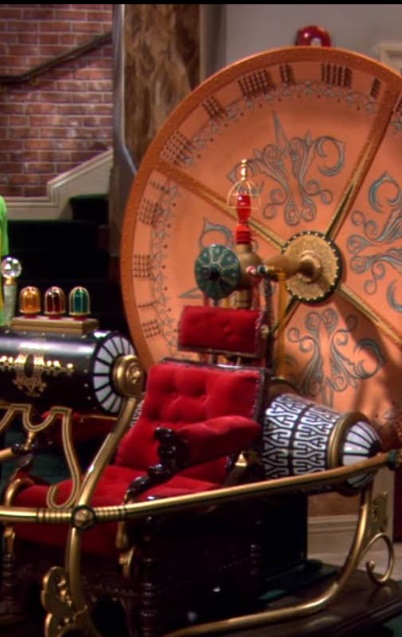
    If you had a Time Machine, what day, what month, what year would you like to travel to?

    Why that time?
    Who do you want to be there with?

  • Teleportation . . . Prompt #800

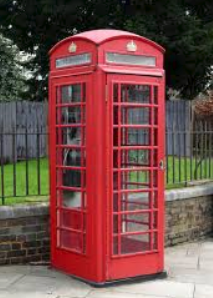
    If you had a working teleportation device, where would you go?
    Why?

    What would you do there?

    #justwrite #iamawriter #iamwriting