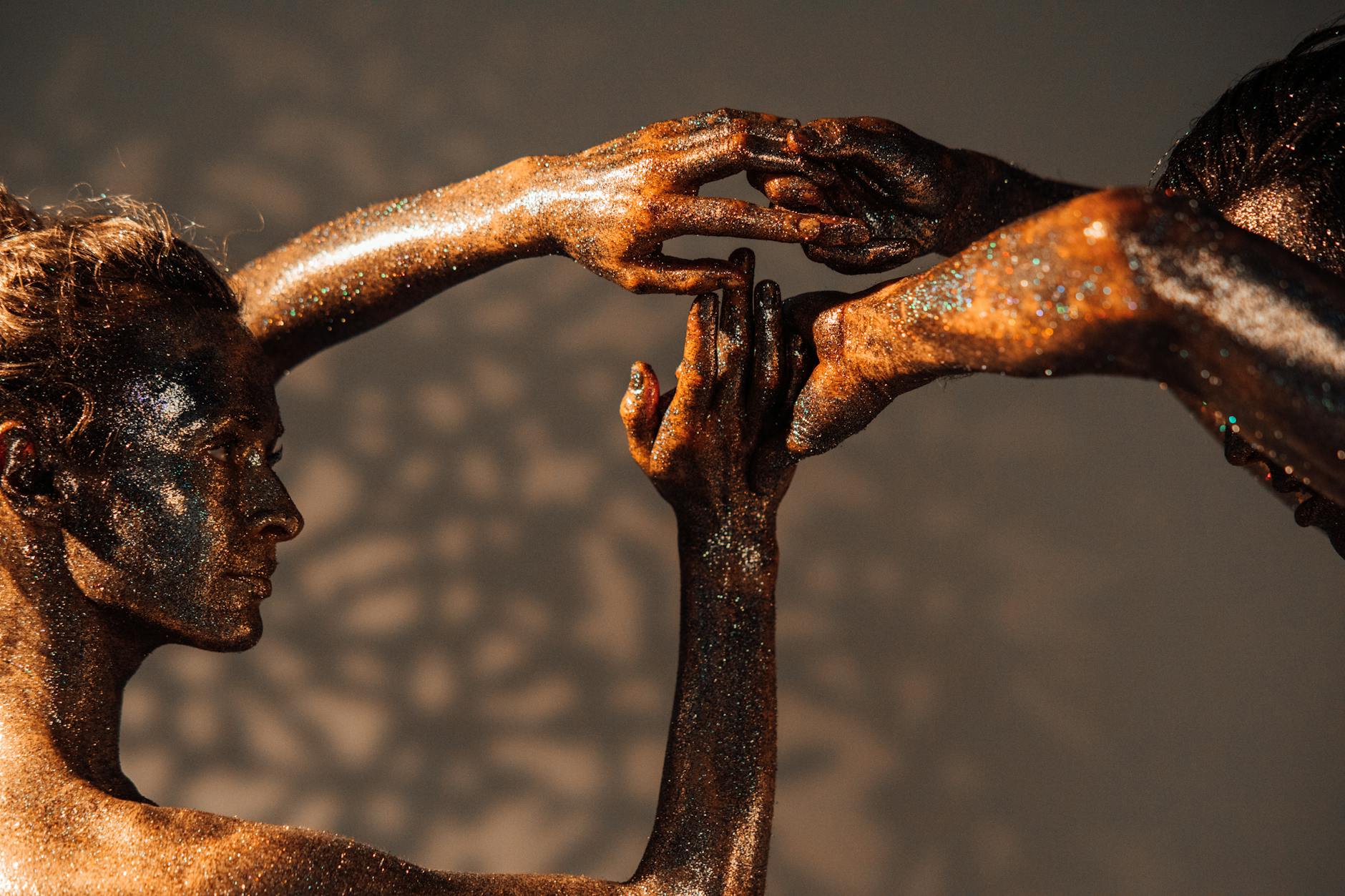
October is breast cancer awareness month. I would like to expand to body awareness. Write about an illness or a physical change you, or someone you know, went through. Include your age and who was involved. How did you find out about the illness? What was the next step? What happened? Are you still affected by this illness/physical change?
According to Diane Stark, author of “Life of the Party,” a Chicken Soup story in “Be You:”
“If your favorite activity is a busy one that involves lots of people, you are an extrovert. If your activity is a quiet, solitary pursuit, you are an introvert. The vast majority of writers are introverts. It’s just how we’re wired.”
Diane discovered, “I am a social introvert. It’s someone who is outgoing, but also requires alone time to be healthy.”
Prompt: Are you an introvert, an extrovert, or a combination?
List your three favorite activities.
Are these things you do by yourself or in a small group, or with a lot of other people?
When you are tired or stressed, what activity appeals to you most?
After being by yourself all day, are you anxious to be around other people?
Note from Marlene: Grant Faulkner’s musings on his Substack page are golden comfort to a writer’s soul, offering unique perspectives that inspire writing.
For example, his essay on “Surrender as Action Verb.”
“When we surrender ourselves to our art, we allow ourselves to soften. Surrender invites us to give ourselves up to something larger, to meld with wonder and awe. Surrender creates intimacy and expansiveness at the same time. It sparks curiosity, exploration. It’s the equivalent of going to sleep: by sinking into an unconscious state, we allow dreams to fill us. We give up trying to change and control things. The rigidities of expectations, desires, and aspirations melt away.
Think what would change if you allowed yourself to surrender in a conversation. What if you committed to listening, to let another’s words and spirit rise up and take you instead of focusing on your point of view, your needs. What if you decided not to try to win the next argument you find yourself in? What if you decide not to be the star of the conversation?”
Excerpted from “Surrender as Action Verb” on Grant Faulkner’s August 18, 2024 Substack: Intimations: A Writer’s Discourse.
Birds & Blooms is a bimonthly magazine focused on the beauty in your backyard.
“Our magazine coves a wide range of topics such as attracting hummingbirds, building birdhouses, gardening for butterflies, growing veggies, plus a lot more.”
“Alternate versions of past events are common, because it is human nature, especially where childhood memories are concerned, to move ourselves—over time—to the center of a story. We are hardwired to see the world through our own points of view, and increasingly so with the passage of time. Memory is a river, not a block of cement.” — “But My Sister Remembers It Differently: On Working with Contested Memories,” by Dinty Moore, Aug. 15, 2024 Brevity Blog.
Note from Marlene: I am very excited to share Jennifer’s post with you. Since my passion is how to write about difficult subjects without adding trauma, I am especially grateful to Jennifer for addressing this topic.
Jennifer’s eloquent writing on what she doesn’t know about her father is outstanding and an example of how you can write about “what you don’t know.”
Guest Blogger Jennifer Leigh Selig:
When I lead memoir writing retreats, I like to kickstart the mornings with writing prompts. One of the tricks of my trade is a manilla envelope stuffed with images I’ve printed out of vintage and iconic toys and games from across the decades. It’s a ritual I cherish—spreading these images out on the long conference room tables, imagining my students’ delight as they light upon a special toy or game that brings back fond memories, and then watching them begin to furiously write.
This last retreat was different. I found myself tearing up as I laid out the pictures of the Kewpie doll and the troll. I found those tears falling as I laid out the pictures of Clue and Yahtzee. So many of the toys and games took me back to my beloved grandmother’s house. This was the first retreat I led since her death at 102 years old. I was blessed with 60 years of my life with her. And now no more.
I wiped my tears away before anyone entered the room. Sitting alone in the circle, I wondered if there was any writing prompt I could give that wouldn’t trigger someone. Even asking: “Write a happy memory about your mother” is fraught with danger. What if someone has no happy memories of their mother? What if someone’s mother has just been diagnosed with a terminal disease? What if someone has no mother?
Then I remembered a writing prompt a teacher gave me that triggered a torrent of furious writing. I shared that piece with my students, to acknowledge that any prompt, no matter how seemingly innocuous, can stir something deep within.
For fifteen minutes, write about your father’s eating habits. Remember the journalistic imperative to include what, how, where, when, and why, all aiming to flesh out a deeper sense of who your father is. Follow the writer’s adage to write what you know.
I don’t know a thing about what my father eats. I don’t know if he peppers everything he eats with tons of salt or if sugar is his road to ruin. I don’t know if he frequents farmers’ markets for the freshest produce or if he stockpiles boxes of frozen food in his grocery store cart. I don’t know if he goes to the grocery store or if that’s the province of his wife. (I don’t know if my father even has a wife.)
I don’t know a thing about how my father eats. I don’t know if he’s a gentleman who savors each bite or a feral animal who wolfs down his plate. I don’t know if he smacks his food with relish, if he rests his elbows on the table, if he licks his fingers or knows to use a napkin. I don’t know whether he dives straight into a meal, or if he stops to thank God first. (I don’t know if my father even believes in God.)
I don’t know a thing about where my father eats. I don’t know if he eats standing up in the kitchen or if he takes a plate to the sofa where he can watch sports on TV. I don’t know if his taste skews toward fine dining establishments or all-you-can-eat buffets or if he prefers eating at home. (I don’t know where my father’s home even is.)
I don’t know a thing about when my father eats. I don’t know if he’s a creature of habit or if he eats when he’s hungry, regardless of the hour. I don’t know if he eats after smoking or smokes after eating, or if a happy-hour cocktail always precedes dinner. I don’t know if his children nag him for skipping a meal, or scold him for snacking all day. (I don’t know if my father even has other children.)
I don’t know a thing about why my father eats. I don’t know if he’s trying to gain or lose weight, to lower his cholesterol, to control his diabetes, or to stave off cancer. I don’t know if he eats when he’s stressed or he eats when he’s bored. I don’t know if he eats for pure pleasure or whether he eats to stay alive. (I don’t know if my father is even alive.)
If my father is no longer alive, I don’t know where he died, when he died, or why he died. I don’t know how he died, or what he was doing when he died. I don’t know whether he is interred in a tomb where coffin flies feast on his corpse or if he was buried at sea where fish nibble on his flesh or if they bled him out before they burned him to ashes and scattered him.
I cannot flesh out my father, Teacher. I cannot write what I know, because I do not know the flesh and the blood of my father.
___
As a writer, I was seething. Not seething at my teacher, though the prompt did seem presumptuous. But in the end, I’m glad I wrote to it. It was good to see how bad I still feel that half of who I came from is a ghost. This is the raw power of writing prompts crafted by others—when we open our memory bank, we have no idea if the coins will fall out heads or tails, or which is best for us.
So I tell my students—I’m going to give you writing prompts this week. Even if I don’t mean it to, any prompt may trigger distressful or traumatic memories. If you go there, it may hurt. If you go there, it may help.
Jennifer Leigh Selig is an LBGTQ+ teacher, book publisher, and author whose writing career spans nearly four decades. Her most recent book is Deep Memoir: An Archetypal Approach to Deepen Your Story and Broaden Its Appeal, a companion to her co-written Nautilus Gold award-winning book, Deep Creativity: Seven Ways to Spark Your Creative Spirit. Learn more about Jennifer and her writing classes and her publishing companies.
Your turn: I don’t know . . .
Choose a prompt from The Write Spot Blog and Just Write!
“Fact-packed prose might feed the mind, but stories stir the soul. This is where structuring your narrative to build interest comes into play. The goal is to weave your facts into a story arc that escalates the wonder, making each page a gateway to the next surprise.
By balancing detailed factual content with engaging narrative structures and vivid scene-setting, you transform your nonfiction into a compelling story. This isn’t just information, it’s an experience, a journey through the phenomenal world of your subject that educates and enchants.”
— “From Ordinary to Extraordinary,” Ryan G. Van Cleave, Writer’s Digest Sept/Oct 2024