West Marin Review accepting submissions

  • West Marin Review accepting submissions

    West Marin Review, a literary and arts journal published by Point Reyes Books and Neighbors & Friends, is now accepting submissions of literary works, poetry, and visual art for Volume 6, for publication in 2015.

    Submission Deadline: September 1, 2014

    Click here for submission guidelines.

    Submit only unpublished work in all categories (excerpts from blogs are okay).

    Prose and poetry may be submitted online or through U.S. Mail. Visual art may only be submitted through U.S. Mail. 

    Submission fee: Please attach a check for $10.00 made out to West Marin Review with your submission. If you are submitting more than one piece or in more than one category, you need only pay once. If you are submitting online and through the mail (for example poetry and art), you need only pay with your online submission; please note this in your mailing. Mail to:

    West Marin Review
    Post Office Box 1302
    Point Reyes Station, CA 94956

    Simultaneous submissions are okay, but notify immediately if your work is selected elsewhere.  Compensation for published material is two copies of the volume of West Marin Review in which the piece appears.

    Questions? Write to West Marin Review at info@westmarinreview.org.

    West Marin ReviewVOLUME 5: This year’s Review is a sampler of extraordinary prose, poetry, and art. The issue includes actor/author Peter Coyote, composer Burt Bacharach, poets Linda Pastan and Howard Norman, artists Randall Gray Fleming and Wendy Schwartz, along with art and poetry from West Marin school children and Tomales High School students.

    Click here to purchase.

  • Guest Blogger Ted A. Moreno’s Top Ten Tips for Super Productivity

    Ted A. Moreno, Certified Hypnotherapist and Success Coach, shares his top ten tips for super productivity.

    1. Start the day centered and grounded. Jim Rohn said “Either you run the day, or the day runs you.” How you start the day will affect how your day goes. If you wake up and you are already rushing around and running late, the day is running you. Give yourself some space to be prepared mentally and feel super in the morning, even if it means getting up earlier to exercise, read or meditate.

    2. Write down your goals the night before. Make your to do list the night before. Plan to start the next day with the most important things that will make the biggest difference, or start with the hardest. This way, you move into the day with momentum and the feeling of productivity and being super!

    3. Keep yourself fed and watered. I have an avocado tree and a tangerine tree in my back yard. If I don’t water them and feed them, they don’t produce. Same with you.

    4. Have a routine or a system. Develop a habit of productivity by using a system that works for you. It might include a Franklin Covey type planner, Outlook tasks, or one of the many online tools available. I use the Pomodoro Technique and a daily calendar sheet with my list that I carry around in my shirt pocket. Not very high tech but it super works.

    5. Prioritize tasks. Some days you are not going to be able to do it all. Prioritization maximizes your productivity and focus so that you get the most super important stuff done. Roll the non-essential stuff over to another day.

    6. Pay someone to do those things that are not worth your time. What can you take off of your plate by paying someone else to do that gets paid less per hour than you do? For 10 bucks a week, my super gardener does in 45 minutes what it used to take me 3 hours to do.

    7. Work simultaneously instead of sequentially. Instead of working on something  for four hours, work on it for an hour and half, then another project for an hour,  then another for an hour or so.  You will be moving a number of projects forward at the same time. Waiting to start the next one until the current one is done is a super productivity killer.

    8. Get rid of distractions. Turn off email, Facebook and silence your phone while you are working on a task. These are the biggest time vampires that will suck the productivity out of you. Work for an hour, then take 15 minutes to return calls or email. One guy I know has a phone message: “I return calls between 4 and 6 pm,” thus setting the expectations for his callers as to when their call will be returned. Guard your time like the super precious asset it is.

    9. Be ok with failure. Dan Kennedy says “Success is cooked up in a messy kitchen.” Don’t wait for conditions to be super, or perfect, or for your desk to be organized or the moon to be full. Just start and keep moving forward. Things might get screwed up, you may need to scramble, improvise, or start over. Sometimes that’s what it looks like.

    10. Take a break. Being super productive doesn’t mean killing yourself or not spending time with loved ones. Productivity doesn’t necessarily mean struggle either. Play some music, take a walk, call a friend, eat some ice cream, then get back to your project refreshed, renewed and feeling super good!

    Need help with productivity or procrastination? I’d love to help you. Click here to contact Ted.

    Your companion on the path to possibility, Ted A. Moreno

    Ted A. MorenoTed A. Moreno is a hypnotherapist, success performance coach, published author, educator and sought-after speaker who helps his clients become free from fear and anxiety, procrastination and bad habits such as smoking. Ted works with  business professionals, performers, athletes, students and anyone seeking excellence in all areas of life. Ted’s book, “The Ultimate Guide to Letting Go of Negativity and Fear and Loving Life” is available on Amazon.com.

    Note from Marlene: I have worked with Ted. Hypnotherapy via phone lines works! Ted was very helpful in assisting me with getting past some roadblocks. I highly recommend him.

  • The only sin writers can commit is . . .

    “The only sin writers can commit is not to write.” — Eleanor Hyde, originally in the August 1976 issue of the Writer Magazine, reprinted in the August 2014 issue.

    Note from Marlene: So, you are itching to write and need a jumpstart? Go to the prompts page of this blog for ideas.

    Click here for more prompts and read what others have written. Scroll down and click on a plaque.

    Writing Prompts


  • Pocket Pronouncements . . . Prompt #89

    Today’s prompts are inspired by Write Free, Attracting the Creative Life by Rebecca Lawton and Jordan E. Rosenfeld.

    Pocket Pronouncements:

    Today I trust:

    Today I give:

    Today I celebrate:

    Note from Marlene: You can write on one of these, two of these or all three. You can mix and match them.

    Becca and Jordan write: “We call these ‘Pocket Pronouncements’ because you should be able to write them on something small enough to carry around with you, yet their size and power is far greater than you imagine.”

    Write Free.Becca.JordanMarlene has two copies of Write Free, Attracting the Creative Life to give away to the first two people who comment on this blog post.

    You can purchase Write Free Attracting the Creative Life at Becca‘s or Jordan’s website.

  • We all have an intuitive sense. . .

    I think we all have an intuitive sense, but we get side-tracked by what others think or we get distracted by all the “noise” both inside our heads and outside. It’s hard to get quiet and listen to what we think. But when we do, we experience the joy of discovering what’s going on for ourselves.

    A passage in Reading Water, Lessons From The River, by Rebecca Lawton, describes a situation when Becca was a white water rafting guide and had one person, a friend, in her raft. They capsized, lost the boat and nearly drowned. Becca managed to save the life of her friend.

    After it was all over, Becca asked her friend: “Do you regret running it?”

    Becca’s friend answered, “It might have been the right choice for you,” she said, “But from now on, I’m making my own decisions.”

    Here’s an idea for getting in touch with your intuition and writing deeply.

    You can use suggestions for relaxation from the June 24, 2014 Just Write Post, “Listen to your body as a way to creativity.”

    Settle comfortably in your chair. Breathe in deeply through your nose. Exhale loudly. Take a few deep breaths and let go. Release your worries. Let go of your fears. Just let go.

    Follow your inner sense, your intuition, your gut level feeling  …  pay attention, use what you’ve got. Don’t fight it. Relax into your own judgment and decision making.

    Choose a writing prompt and Just Write.

    Old meets new bridge.Jim C. March Old bridge meets new. Photo by Jim C. March.


  • Aprons . . . Prompt #88


    ApronsMy grandmother put her apron on every morning right after she put on her house dress. She wore an apron every day, even to parties. She made all her clothes, including her aprons. She always chose a small flower design and used colorful seam binding for trim around the edges.

    I also wear aprons, but only when cooking and eating. . . saves many an outfit from food stains.

    Today’s prompt is: Aprons

    Thank you, Kathy Myers, for the inspiration to hang my aprons in the kitchen.

    Thank you, Pam Swanson, for emailing so many years ago, “The History of Aprons.”


                                            THE HISTORY OF APRONS

    The principal use of Grandma’s apron was to protect the dress underneath. Because she only had a few dresses, it was easier to wash aprons than dresses and they used less material, but along with that, it served as a potholder for removing hot pans from the oven.

    It was wonderful for drying children’s tears.

    From the chicken coop, the apron was used for carrying eggs, fussy chicks, and sometimes half-hatched eggs to be finished in the warming oven.

    When company came, aprons were ideal hiding places for shy kids.

    And when the weather was cold, Grandma wrapped her apron around her arms.

    Those big old aprons wiped many a perspiring brow, bent over the hot wood stove.

    Chips and kindling wood were brought into the kitchen in that apron.

    From the garden, the apron carried all sorts of vegetables.

    After the peas had been shelled, it carried out the hulls.

    In the fall, the apron was used to bring in apples that had fallen from the trees.

    When unexpected company drove up the road, it was surprising how much furniture that old apron could dust in a matter of seconds.

    When dinner was ready, Grandma walked out onto the porch, waved her apron, and the men knew it was time to come in from the fields to eat.

    It will be a long time before someone invents something that will replace that ‘old-time apron’ that served so many purposes, especially what many children and grandchildren received from the simple apron. . . Love!

    Adapted from:  The History of Aprons,  which may have been originally from  Grandma’s Apron.

    Writing Prompt:  Aprons

  • YWCA invites writers to address the issue of domestic violence

    The YWCA invites Sonoma County writers to address the issue of domestic violence through poetry, flash fiction and memoir for October 2014’s Domestic Violence Awareness Month.

    Authors and poets are free to explore the topic from many perspectives, focusing on a more personal approach, a social level, the viewpoint from victims, children, loved ones, those who witness the violence, or those who work in the field, such as doctors, police, therapists.

    The YWCA defines domestic violence as threatening behavior that seeks to control and exercise power over another. This behavior can include one or all of the following: emotional abuse, psychological abuse, sexual abuse, verbal abuse, physical abuse, financial abuse, and/or threats of abuse or violence to a partner’s children or pets.

    Short fiction and personal narrative pieces should not exceed 1000 words. Up to three poems may be submitted, but the total number of pages of poetry shall not exceed three.

    Entries should be in Times New Roman, 12 point, double-spaced. Poetry may be single spaced. Please submit electronically in a Word document, sending to the following address:        wingpoet@gmail.com

    Include author’s name, address, phone number, and e-mail address, as well as a 50-word writer’s autobiographical statement.

    The deadline is Sept. 10, 2014.

    For any questions, please contact Michelle Wing at (707) 478-1460 or wingpoet@gmail.com, or Misty Bastoni, Volunteer Coordinator at the YWCA, (707) 303-8401.

    The YWCA will host four separate nights of author readings in Sebastopol, Santa Rosa, Sonoma and Cloverdale in October, as part of Domestic Violence Awareness Month.

    The YWCA is dedicated to eliminating racism, empowering women and promoting peace, justice, freedom and dignity for all.  

    For more information on the YWCA Sonoma County, YWCA USA and YWCA World, please visit our website .

    YWCA

  • The Miracle of Language: Reminders from 50,000 Feet by Daniel Ari

    Guest Blogger Daniel Ari talks about The Miracle of Language: Reminders from 50,000 Feet

    Chin.

    An alien from another galaxy encountering those four written characters or the sound we as English speakers make reading them would have no idea what we were writing or talking about. The markings or sounds alone would give the alien no inkling that they even possess a corresponding meaning in the physical world.

    We write using a complex system of symbols that are almost entirely abstracted from the physical phenomena they indicate. The alien might stand a chance at understanding spoken onomatopoeias, perhaps fetching a connection between the shouted words bang, boom or screech with the aural phenomena they represent. And perhaps the written article a might indicate to the alien the spirit of its meaning as something singular. Yet wouldn’t you be impressed with an alien that could intuit even those connections from our abstract language? I would.

    The miracle is that we learn to associate a huge range of phenomena with a huge range of symbols. For example, you can read the word candy as it appears here on screen and know it’s the same word as the one built out of plastic, foot-tall, block letters above the entryway of a candy store. The two symbol sets are vastly different in appearance, yet we decode and access related bodies of meaning from both.

    At the same time, the range of meanings we associate with the symbols is enormous. Where does your mind go when you read candy? Cellophane-wrapped hard candies? A bag of Halloween spoils? Or a sudden, unspecific craving? Or that song “I Want Candy” by Bow Wow Wow?

    It awes me that I can write chin—never mind the font—and you can visualize the chin that makes the most sense for you. If I want to guide your mind, then I can add prominent, clean-shaven, Caucasian, famous. Or I can write about meeting Jay Leno backstage before a live concert a few months before he took over The Tonight Show from Johnny Carson.

    My brother Phil was one of three comedians opening for Jay that night. I went backstage to meet Leno, and he joked amiably with my brother and I and about five others from the campus comedy club, including our friend Mike Chin. I could see Mike was thinking about cracking his joke about also being a “chin” comedian, but before he could, Leno handed me a Coke from the table of refreshments—cubes of cheese, cut vegetables, a bowl of M&Ms candy, green ones included—and Mike’s moment was lost. I recall feeling jealous of my brother and the other two comics who had opening slots that night. I also had mixed feelings about Leno beneath my celebrity-awe. In the comedy club at that time, we regarded David Letterman as the better comic, the one who should have taken Carson’s throne.

    I think it’s a miracle that you can make sense of what I’ve written. And to honor the miracle, I’ve done my best to aid your understanding by choosing my words consciously, with the intention of making my meanings clear—even the unspoken ones.

    I like to assume an atmospheric view of language sometimes because it reminds me of the magnitude of the project and helps me accept the processes of writing as gradual and incredibly grand. It helps me remember that it’s taken me 47 years—and counting—to learn the abstract symbolic system of contemporary North American English.

    When you interpret the rows of abstracted symbols I have chosen, you get an indication of my experience. That’s why I revisit and rework my strings of symbols so meticulously—adding, subtracting and swapping; changing handwritten to digital to printed; translating writing into voice.

    We attempt to share experience. Remembering that writing means communicating through a complex system of abstraction reminds me that results are guaranteed to be inexact. But if perfection is impossible, connection isn’t. That’s what we as writers strive toward, and when we experience that others are moved by what we’ve strung together, that is the greatest satisfaction a writer can feel. Do you know what I mean?

    DANIEL ARI writes, teaches and publishes poetry. He lives in Richmond, California, where he leads a monthly writing jam, thriving since 2011; and he has taught and led writing sessions and workshops since the 1980s. Daniel has recently placed creative work in Poet’s Market (2014 and 2015 editions), Writer’s Digest, carte blanche, Cardinal Sins, Flapperhouse, Gold Dust Magazine and McSweeney’s. Daniel also works as a professional copywriter and performs improvisation with the troupe Wing It in Oakland, CA. His blogs are Fights with poems and IMUNRI = I am you and you are I.

    Daniel AriRead Daniel’s tongue-in-cheek, “Reject A Hit” about e.e. cummings in the July/August 2014 issue of Writer’s Digest magazine.

    Daniel will be the July 17, 2014 Writers Forum Presenter in Petaluma, California


  • It doesn’t matter whether the story is set in the present day, 100 years ago hence, or . . .

    “It doesn’t matter whether the story is set in the present day, 100 years ago hence, or in a place that has never and could never exist outside the pages of a book: The writer’s job is to present an utterly convincing and wholly seamless world,” Simon Morden, author of fantasy novel Arcanum. — The Writer Magazine, July 2014

    Ireland Countryside. Jim C. March


    Photo by Jim C. March

  • Three-part prompt . . . Prompt #87

    Today’s prompt is three parts. Take about 20 minutes, or as much time as you need, for each section.

    Part One: Write a list of events from this past month:

    What aggravated you?

    What frustrated you?

    What made you laugh or cry?

    pin

    What made you lose your temper?

    What was the worst thing that happened?

    The best?

    The most disturbing or weird?

    Part Two:  Choose one thing from your list and write about it. Write whatever comes to mind. Write what you would really like to say to the other people involved.  Take your time with this. Write until you have no more to say on the subject.

    Write what happened from your point of view.  Lola.200

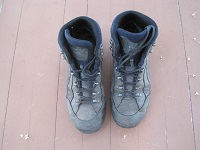
    Part Three: Only do this after you have done Part Two — If another person was involved, step into his or her shoes. Write what happened from the other person’s point of view.

    shoes.women                                                    shoes.men

    Just Write!