Feeling your way in the dark . . .

  • Feeling your way in the dark . . .

    “The way I write, it’s like feeling your way in the dark. You don’t know if it’s going to catch fire  — not just your imagination, but your emotions.” — Dan Coshnear

    Northern California writer Dan Coshnear is the author of two collections of stories, Jobs & Other Preoccupations (Helicon Nine 2001) and Occupy & Other Love Stories (Kelly’s Cove Press 2012). Born in Baltimore in 1961, he has traveled in Europe, Canada, Mexico, Haiti, and all over the U.S., often by thumb, and once for a few thousand miles by freight train. After living on Cape Cod and in New York and San Francisco, he finally settled with his wife, Susan, in a house under some very tall trees along the Russian River in Sonoma County, California. His stories have been published in Fourteen Hills, juked, The Missouri Review, Third Coast and Zyzzyva.

    Occupy CoshnearAbout Dan’s latest publication . . . Occupy & Other Love Stories

    “To occupy means to be present, to be available emotionally, to stand up for oneself, and sometimes to protest. The opposite is absence. To be rendered silent, useless, vacant because of fear or confusion or despair. Each of the stories presents a challenge, not only to an individual character but to a relationship. This short story collection from award-winning California author Daniel Coshnear includes 12 stories about occupation, featuring ordinary heroes. A thoughtful mood is reinforced with 16 full color images from Oakland artist and UC Berkeley Professor Emeritus Squeak Carnwath.”


  • Right now . . . Prompt #83

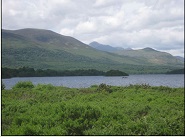
    Ireland, photo by Jim C. MarchSet your timer for 12-15 minutes and write.

    No judging.   Shoo your inner critic away.     Just write.

    Today’s Prompt:  Right now . . .

    Photo taken in Ireland by Jim C. March

  • Listen to your body as a way to creativity.

    In this Just Write post, we’ll take a look at the idea of listening to your body as a way to get past blocks toward your creativity.

    First, turn off your cell phone or put to vibrate. Unplug from Facebook and emails. Eliminate as many distractions as you can.

    If you are experiencing extreme grief or pain, please get professional help. This post, of course, cannot replace the need for professional assistance.

    Ready? Here we go.

    We all experience grief, trauma, sadness. And we have our own ways of handling those stresses. There is no one right or wrong way to handle these difficulties. What is right for one person, may be wrong for someone else. What works for me, might not work for you, so take what works for you from this post, ignore the rest.

    Let’s take a moment now to breathe, relax and get settled.

    Take a deep breath in and let out with a whoosh.

    Deep breath in. Relax. Let go.

    Drop your head to your chest and rotate in a circle.

    Rotate shoulders in a circle.

    Scan from head, down to your toes. Check in with your body.

    Notice places that are tight. Notice any uncomfortableness.

    As you scan your body, become aware of any place that draws your attention – notice what part of your body calls out to you.

    Place the palm of your hand on the part of your body that calls your attention. Or bring your breath there if it’s not reachable with your hand.

    Allow your hand to be filled with the information of that place.

    Take a deep breath in. Let it out with relaxing sigh.

    Thinking about that place in your body that calls out . . . what do you notice? Who hangs out there? Who do you see?

    If you could have a conversation with that part of your body, what would it sound like?

    If you have blockages in your life, your work, or your creativity, your body can tell you what’s going on. If you are stuck, notice where you feel it in your body.

    When you pay attention to that stuck feeling, you can work past it and then you will be free to work as you wish. Discover what’s really bothering you.

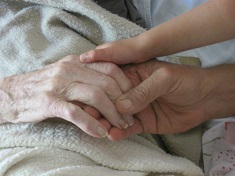
    When you are ready, write about what you have discovered. Write about that place in your body that wants attention. Or just write about whatever is on your mind.Hands

  • Sweatpants & Coffee wants your stories.

    The Story of Sweatpants & Coffee

    The idea for Sweatpants & Coffee was born, as many great ideas are born, during a time of personal reflection and solitude. That is to say, while its founder was taking a hot shower. The concept of a site that would celebrate all things comfort-related, one that would help people to feel good about themselves, was immensely appealing to Nanea Hoffman. With dripping hair, she bought a domain name and sketched out a plan. Nanea spends a lot of time in sweatpants, drinking coffee, so this was inevitable. Sweatpants & Coffee is a place where you can kick back, enjoy yourself, and be comfortable. Because when you are your most comfortable self, you can do anything.

    Sweatpants & CoffeeNote from Marlene: Sweatpants & Coffee is an amazing website. . . poetry corner, flash fiction, inspiration, interviews, all kinds of good stuff. So grab a cuppa and join in the fun.


  • Alicia Butcher Ehrhardt reveals her secrets for tight control.

    Guest Blogger Alicia Butcher Ehrhardt shares her secrets for keeping track of plots, characters and their shenanigans.

    Hi! Marlene asked me to write about the weird way I write – and I will, with one caveat: don’t try this at home.

    In fact, don’t try any of this at all unless you already know you’re an extreme plotter (as opposed to a pantser), and need to 1) have tight control over what happens in your novel, and 2) have a method that you are comfortable with to keep track of all that plot stuff. If you are a true pantser – following your instincts alone – I think the following will strike you as insane.

    I do this because my CFS-addled brain makes it very difficult for me to keep everything in my head – more about that in a minute.

    I gave up Word for managing a writing project because I had too many files, and no system to keep them under one management. I am good with Styles in Word after I finish writing – and it’s one way of formatting output to look exactly as I want it to.

    Scrivener manages my writing projects, and I use all its features to the max. While I’m working on a scene, I have a number of auxiliary files where I do my thinking, and use the synopsis, label, metadata, etc. features of the Inspector – little text files Scrivener provides for you automatically with each file in your main hierarchy. Scrivener will also ‘Compile’ your text from the pieces into an ebook, or a Word file with a lot of formatting control over the output.

    I use Dramatica to plot – and I don’t recommend it unless you want to spend years learning what it means (some of the terminology is tricky), but it leads to the possibilities of fiendishly complicated plots that hang together beautifully at the end. Again, I use almost ALL the text boxes in the program that allows me to store bits and pieces of thought – and they can all be transferred to the working files when I need them.

    I use Dramatica’s Scene/Chapter list function to set out what goes where, and then copy that structure to my Scrivener project for the writing. I end up easily with an outline of the whole project in either program, and I keep the correspondence between the two up-to-date. Dramatica keeps track of what goes where with checklists, so I can see that everything (called appreciations – apps for short) I answered when creating the story actually ends up in a scene in the final story.

    Because I have all this structure in place – which can be collapsed or expanded to any level – when it comes to the writing part, I have a single scene at a time in my workspace with several files containing every little piece of character, plot, or theme that is going into the scene. When I start the writing, I don’t yet know how these bits will be expressed by my characters within a scene that has a short title – “Scene 9.1 – Andrew restless after fight; sleeps at Kary’s house,” but with a solid structure I can have the fun of figuring out how to make the pieces fit – and the knowledge that when I’m done, the scene will fit neatly into its slot in the Chapter and Book.

    A scene is about how much I can work with at a time: my brain won’t keep more than that loaded without dropping bits. Since I usually take several naps during a writing session, I’d make no progress if I had to go look at the whole. Within the scene I set up as many beats as I have topics to expand, so that a scene is composed of one to several beats dealing with a small subset of ideas/dialogue/action/thoughts, and segues neatly into the next beat, so that a scene is a set of linked mini-stories with transitions that make sense. Structure within structure.

    Once I don’t have to worry about losing that absolutely wonderful Idea I had for a plot bit in Chapter 19 just because I’m writing Scene 9.1 about the fight aftermath, because I stored it for when I get there, in a searchable format I can’t mess up, it frees my mind to concentrate on the scene at hand – and how I want to actually tell the story I’ve invented. It’s like knowing I can bring the red thread from the back of the tapestry to the front to weave in a rose when I want one, because the red thread is there, on the back side, ready for me to use.

    Just writing a bit about this makes it seem impossible, but if you are interested in more control, and in some of the tools I use, please drop by liebjabberings.wordpress.com, and type into the search box: scene template [8 posts with screenshots of the Scrivener template I’ve created to store my bits; downloadable], Dramatica [for apps and plotting],  and structure [how I use it when writing]. Select Categories such as ‘CFS’ for how my brain works and why I have to manage it to even write at all, or ‘fears’ for the things I do battle with regularly which keep me from writing. Check out the Pride’s Children tab to see the novel being created with these tools posted, a new polished scene every Tuesday – and judge for yourself whether my method produces something you find readable. Or the short story ‘Princeton’s Dancing Child’ – also plotted with the tightest form of Dramatica.

    Hard to believe, but this complicated superstructure makes it possible for my writing to be simple: once I get the ideas in order, the writing flows – a topic for an entirely different kind of post.

    Note from Marlene:  Click here for 9 reasons why Nina Amir uses Scrivener.

    Alicia Butcher EhrdardtI’m Alicia (ah-lee-see-ah). I use: Alicia Butcher Ehrhardt. No ‘B.’ No hyphen. And no, I’m not related to Amelia. My middle name is Guadalupe.

    WRITING THE HARD WAY: I am a PWC (person with CFS); I try not to let it have more of my life than absolutely necessary, but it’s something I battle every day for possession of my brain. Sometimes I win. I take a lot of naps.

    I cannot NOT write. Fiction is my hobby – mainstream, SF, mystery, ? – and I will e-publish myself when I’m ready for prime time.

    I sing, garden, draw a little. I will tackle, subject to energy limitations, any household task short of Heating-and-Air-Conditioning. When my brain balks at learning something new, that’s when I know I have to. It can take a while.

    DH is now retired. We share a love of science, a home in suburban NJ, a bird-and-butterfly garden, and a chinchilla named Gizzy. My children, who were home-schooled, consider me opinionated and stubborn; they are mostly on their own, and a credit to their parents. My wonderful family and friends are responsible for my sanity, such as it is.

  • I went deep into storytelling mode — Becca Lawton

    Today’s quote is from Write Free – Attracting the Creative Life by Rebecca Lawton and Jordan E. Rosenfeld.

    Rebecca wrote:

    “I wrote another personal essay, in part with the column in mind but mostly with the intention of simply telling my story. There was a message I wanted to convey in the piece: one of loss and sadness, but also of triumph and survival. Because I had taken my focus off publication while writing, I went deep into storytelling mode. Much of the writing for the piece was done in subconscious writing fashion. When I finished a decent draft, I went outside to water my flower garden. I felt a certainty that hadn’t been there before. the essay was so good, so moving. I knew it would be published — if not in the target column, then certainly elsewhere.”

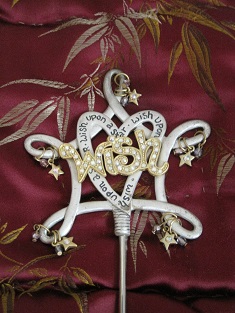
    WandNote from Marlene: What strikes me as being important in this passage is when Becca let go of the thought of publishing, she was able to go “deep into storytelling mode.” That’s my wish for you.

    Write whatever you want to write. Don’t worry about a thing. . . don’t think about publishing, don’t think about anyone looking over your shoulder. No judging. No criticizing. Just write.

  • Stroll down memory lane . . . Prompt # 81

    Today’s writing prompt is inspired by Rebecca Lawton’s May 26, 2014 blog post, which begins:

    “Candles of buckeye blossoms and their subtle fragrance have always confirmed the return of summer. Seeing them this week reminded me that certain sights, sounds, and smells trigger strong memories. The whisking sound of a broom on stairs recalls family vacations at the lake, where our host rose early to sweep fallen live oak leaves. The musky scent of open water reminds me of being on a raft enjoying the primal sensations of floating a muddy river. The first bars of a Beatles song bring back the excitement of junior high school dances. Sipping tequila reminds me of kayaking from Loreto to La Paz on the Sea of Cortez.”

    Click here to read the rest of the post.

    Writing Prompt: Stroll down memory lane . . . pause when a remembered event causes a visceral reaction: you might feel a sensation in your gut . . . write about that event, using sensory detail.

    You can use the Summer Prompt as a starting place. Not the “how I spent my summer vacation” September school essay. Focus on detail . . . using sensory description in your writing. Capture that musky lake smell, the charred wood campfire smell. Go with tactile detail: the sticky marshmallows on your fingers, the feel of a rough floor on your bare feet, the bright sun fighting closed eyelids. Wake up! Go deep in your writing. Reach out and capture those feelings. . . whatever they are.

    BuckeyeAfter you write, take a look at the responses to Prompt #77    (scroll down) . . . folks used wonderful detail writing about summer.

    Join us! Write your freewrite. Post your writing on The Write Spot Blog.

  • Rebecca Lawton Week

    This is “Rebecca Lawton Week” on The Write Spot Blot. Today’s inspiration for “Just Write” is from her book, Reading Water, Lessons from the River:

    The water-level fluctuations, both daily and seasonal, gave us regular lessons in how the river varied depending on flow. The thalweg, or deepest or best navigable channel, didn’t always follow a direct path. On one key day early in my training, I followed a boatman friend named John through the long, straight, placid reach of the Stanislaus below Razorback Rapids. As I rowed down the middle of the river, choosing the course where the main flow had been weeks before, I noticed John’s boat meandering from one side of the river to the other. He kept his hands on the oars but barely exerted himself, simply using the oars to adjust his boat’s position on the water surface. He moved briskly downstream through the calms with little effort. Even as I rowed steadily to keep up, he beat me by finding the strongest flow and doing the bare minimum to stay on it.

    “It’s true,” John told me later. “You’ve just got to use the current. It’ll carry you if you don’t fight it.”

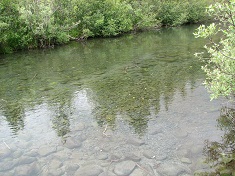
    Water.BreanaNote from Marlene: Sometimes our writing meanders, like John and his boat, and that’s just fine. Find the current in your writing. Let your mind wander and let your freewrite take you on a meandering route and you might find the rhythm for your best creative writing. Just Write!

    Photo by Breana Marie.

    Click here for Rebecca Lawton’s website.

  • I Spy. . . Prompt #80

    Today’s writing prompt is inspired from the book, Write Free, Attracting the Creative Life by Rebecca Lawton and Jordan E. Rosenfeld

    This writing exercise is called: I Spy

    List a few things that happened this morning or yesterday. They don’t have to be big or memorable, just whatever falls into your mind.

    The goal is to slow down and take stock of those things you do not normally notice.

    Writing Prompt: Focus on one event and write how you felt about this encounter. Jot down your feelings and then do a freewrite.

    fish 2Did the event make you think of anything else? Did it remind you of other events, experiences, memories or feelings? What were you thinking while it happened, or just before or after?

    Write your freewrite. Type your freewrite and save it.  Log on and post your writing on The Write Spot Blog.