Writer Advice introduces a new project

  • Writer Advice introduces a new project

    Writer Advice introduces a new project:

    Communicate an important message to a child, parent, spouse, lover, neighbor, fictitious character, or real literary agent.

    Write a letter that fits a category below:

    •     Letter to a parent, child, spouse, or other family member
    •     Letter to a lover
    •     Letter to a neighbor
    •     Letter to a civil servant or other service provider
    •     Letter from a character to you or to another character
    •     Letter to a potential agent or publisher

    Express yourself, hone your voice, find new subjects for your writing, share issues, share your thoughts and voice with the world.
    B. Lynn Goodwin (Writer Advice) will let you know the message she gets from your letter and the impression she receives of you as the author of the letter. You may be determined, confused, frustrated, wise, or inspiring.

    Letters only please. Keep them short. Less is more. Suggested length is 50-500 words.

    Deadline: July 18, 2014

    Submission fee = $15.   If your letter is shared on Writer Advice, you will receive a $45 prize.

    Click here for submission information.

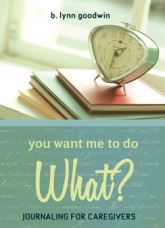
    Journaling for CaregiversB. Lynn Goodwin is the owner of Writer Advice and the author of You Want Me to Do WHAT? Journaling for Caregivers, available on Amazon. Her stories and articles have been published in Voices of Caregivers; Hip Mama; the Oakland Tribune; the Contra Costa Times; the Danville Weekly; Staying Sane When You’re Dieting; Small Press Review; Dramatics Magazine; Thickjam.com, Friction Literary Journal, and The Sun. She’ll have a piece in Writing After Retirement: Tips by Successful Retired Writers and a different piece in Small Miracles from Beyond: Dreams, Visions and Signs that Link Us to the Other Side. She’s just signed a contract for her Young Adult novel, Talent, and offers manuscript consultations through Writer Advice.


  • Guest Blogger Rebecca Lawton: conflict = bringing opposing forces to light

    Rebecca Lawton writes about conflict . . . the kind writers want to have in their writing.

    Recently I read an article by a bestselling novelist who claimed she didn’t follow the well-worn advice to include conflict in story. “I hate conflict,” she wrote. “I don’t like to read it, and I don’t like to write it.” Wondering what techniques she did use to captivate her devoted followers, I turned to my bookshelf and opened one of her latest works to the first page.

    The initial paragraph set a sunny, peaceful scene in which couples and families strolled and played outdoors; the second paragraph described a situation only blocks away where a crowd was experiencing danger that had “turned their perfect Saturday into a nightmare.”

    Bingo. Conflict. The word is via the Latin conflictus, meaning contest. My good old Oxford English Dictionary describes conflict as “an incompatibility between two or more opinions, principles, or interests” (There’s a conflict between his business and home life) or “a clash of opposing wishes or needs” (My heart is in conflict with my brain).

    Our writing instructors tell us that we’ll engage our readers if we start our works with some sort of clash in our opening sentence or paragraph and keep it coming throughout our stories. We’re directed to embed it in every page to engage our readers nonstop.

    It’s good advice. In his fabulous manual, Writing the Breakout Novel Workbook, Donald Maass describes the many levels of conflict that can be integrated into our stories. There’s Inner Conflict (the clash of desires within a character), Bridging Conflict (temporary conflict or mini-problem), Inherent Conflict (a world of conflicting forces), and Main Conflict (main problem in the story). And those are just a few examples.

    There’s a connection between writing conflict and building story tension. The two words are inherently opposites, but they work together to hold the interest of our readers (I’ll say more about how conflict and tension are related at the June 19, 2014 Writer’s Forum hosted by Marlene Cullen.

    Even before I knew how to weave conflict into a story, culture clash inspired me to write my novel Junction, Utah. From experience I knew communities were disagreeing over resources in the oil-rich American desert, where the story is set, and I wanted to explore that clash. There was much to tell, and as I wrote and rewrote, I discovered new opportunities to bring the opposing forces to light.

    Here are ten of the many opposites I identified in my characters and settings in Junction.

    • Dry versus Wet
    • Settled versus Nomadic
    • Hawk versus Dove
    • Solo versus Communal
    • War versus Peace
    • Wild versus Tame
    • Wounded versus Healed
    • Shadow versus Light
    • Lost versus Found
    • Death versus Life

    But don’t take my word for the universality of conflict. Go to your own bookshelf and do a survey of your own beloved stories. I did, and found opposing wishes or needs woven into the fabric of these favorites:

    • North versus South in Gone with the Wind (Mitchell)
    • Free versus Enslaved in Huckleberry Finn (Twain)
    • Light versus Dark in Moby Dick (Melville)
    • New versus Old in The Great Gatsby (Fitzgerald)
    • Truth versus Lies in To Kill a Mockingbird (Lee)
    • Mice versus Men in Of Mice and Men (Steinbeck)
    • Establishment versus Renegade in The Monkey Wrench Gang (Abbey)
    • Refined versus Rough in Angle of Repose (Stegner)
    • Masculine versus Feminine in The Green Hills of Africa (Hemingway)
    • Domestic versus Wild in The Yearling (Rawlings)

    Like it or not, conflict is a constant presence in our lives. Fortunately, it also beats the heart of truth in stories and keeps readers engaged to the last page. Don’t think you like to write and read conflict? Think again.

    Rebecca Lawton’s work has been published in Orion, THEMA, the San Francisco Chronicle Magazine, Shenandoah, Sierra, More, and other magazines. Her essay collection about the guiding life, Reading Water: Lessons from the River, was a San Francisco Chronicle Bay Area Bestseller and ForeWord Nature Book of the Year finalist.

    With her agent, Sally van Haitsma, Rebecca published a debut novel, Junction, Utah. Her collaboration with photographer Geoff Fricker, Sacrament: Homage to a River, is just out from Heyday, and her first short story collection, Steelies and Other Endangered Species (Little Curlew), is due out in June. Her literary honors include the Ellen Meloy Fund Award for Desert Writers and three Pushcart Prize nominations—in fiction, poetry, and nonfiction—and residencies at Hedgebrook and The Island Institute. In fall 2014, she will be working on her second novel while serving as Fulbright Visiting Research Chair in Humanities, Social Sciences, and Fine Arts at the University of Alberta.

    For up-to-the-century news, visit Rebecca at the below links or send her email at becca (at) beccalawton (dot) com to receive her monthly writer’s postcard.

    Lots of ways to connect with Rebecca Lawton:

    Becca

    Website

    Blog

    Twitter

    Facebook


  • Your gut may lead you astray, but . . .

    “Your gut may lead you astray, but it’s never wrong. If you don’t have the guts to act on something and the moment passes, you will always remember that you were a gutless wonder. In gut we trust.” Herb Caen

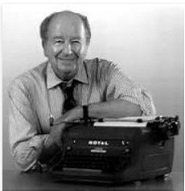
    Herb Caen (1916–1997) was a journalist whose daily column of local goings-on and insider gossip, social and political happenings, painful puns and offbeat anecdotes appeared in the San Francisco Chronicle for nearly  sixty years.

    Herb Caen

    “The secret of Caen’s success [was] his outstanding ability to take a wisp of fog, a chance phrase overheard in an elevator, a happy child on a cable car, a deb in a tizzy over a social reversal, a family in distress and give each circumstance the magic touch that makes a reader an understanding eyewitness of the day’s happenings.”  Wikipedia


  • Balance. . . Prompt #79

    Today’s writing prompt. . . balance.

    Spools.Scheibach

  • Writing is like excavating . . .

    Writing prompts on The Write Spot Blog are designed to encourage writing that takes the writer on a journey of discovery.

    Our freewrites can refresh our memories and remind us of times past. It’s like excavating — digging deep and dredging up memories.

    You can start writing very simply — with pen or pencil and paper or keyboard.

    To go deep into your writing — rest both feet on the floor, rest your hands lightly on your lap or on the table. Take in a deep, nourishing breath and slowly let it out. Another deep breath in and s-l-o-w-l-y release. Sink into your breath and relax on the out breath.

    Review the prompt and start writing. If you get stuck and don’t know what to write next:

    ~ Write the prompt . . . sometimes re-writing the prompt brings up new ideas.

    ~ Write “I remember. . . ” and go from there.

    ~ Write “I don’t remember. . . ” and see where that takes you.

    ~ Write “What I really want to say . . . ”   This is my favorite to inspire deep writing.

    Shovel Whatever methods you use . . . just write.


  • The next time . . . Prompt #78

    Today’s writing prompt:     The next time . . .


    angel.flying

  • Saddle Road Press wants your writing.

    Are you looking for a press to publish your book length writing? Consider Saddle Road Press, as Michelle Wing did with her book of poetry, Body on the Wall.

    Saddle Road Press, founded in 2011, is a small literary press located in Hilo, on the Big Island of Hawai’i. In 2013 they founded the Forty-Three North Chapbook Series – named for the latitude of Lake Erie – to honor their long-time home near Buffalo.

    Now that SRP is permanently settled back home in Hawai’i, they are focusing more on writing from and about the Pacific. They are primarily looking for work that moves and delights them. They are open to older writers, to non-MFA writers, to performance pieces, to writers whose first language is not English. They are interested in poetry, literary fiction, memoir and essays.

    Shape your writing now, and be ready to submit later this year.

    “We read submissions once each year, between November 15th and January 15th. Please do not submit manuscripts outside of these periods. Typically we publish three books a year.”

    SRP has now gone digital, Editor’s Blog.

    Saddle Road Press


  • Guest Blogger Janet Ciel: Recall a time in your life. . .

    Janet Ciel writes:

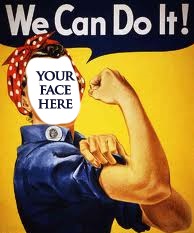
    The other day I was having a conversation with a biking friend who mentioned she had a dream of being a poster child for the 70′s and above age group. She said she was buckling down on her eating, biking as much as possible, and is joining a gym. She was inspired by an amazing woman she read about who is in her 90s and still competing in track and field events.

    You know my response was enthusiastic, as of course I always feel that our maximum potential is just another bike ride away. I am amazed at the strength and endurance increases that are possible by just doing it, what “it” is for you, over and over again. No matter what your age you can get stronger and more vibrant.

    But some of you have not even started. You might be in your 70s or older and are saying, “it’s too late for me, why bother?” The answer to that is baloney!

    First, what do you want your old age to be like? How does being in a nursing home from a stroke, heart attack or inability to move sound to you? How about the idea of your kids having to take care of you and the burden on them? The endless hospital visits, and the vulnerability that comes from a frail body: you are longing for this?

    But I think the huge question is: Do you want your life to be one of motivation and striving towards a better you, or one who is just resigned to who you are and will be…a “whatever” kind of thing?

    Okay, I am on a rant here, but I feel strongly about this. Those of you who are not doing something truly challenging for yourself physically, I encourage you to push the envelope and actually develop some muscle. And when I say muscle I mean it both literally and in other contexts.

    Literally, we need real muscle so that we do not develop osteoporosis. When you work with weights you will develop muscle, and it is vital for our long term strength and well-being. I so recommend braving a boot camp, if you’re reasonably fit, or a core fitness, bar sculpt, TRX or other type of class which works with weights and resistance.

    But we also need to develop our “I-am-getting-off-the-couch-and-getting-my-butt-in-gear” muscle too. Once it has been in use for awhile it becomes habit. And once you create the habit…change is inevitable.

    We should consider the brain muscle. Okay, I’m not sure brain is a muscle, but it certainly needs a big shift when it comes to activity for a lot of us. So many people have the “I hate exercise” loop running through their heads. If that sounds like you I encourage you to recall a time in your life when you decried having to do something you “hated,” but then eventually liked and then loved. Think computers, for example. I am betting most of us were a tad intimidated, if not downright angry at having to face this machine and learn it. Now it is so ingrained in us that we cannot go anywhere without it being with us in some way. Few people go into a serious exercise regimen “loving” it from the outset. In fact, for most I would say it is a gradual build-up of little steps leading to an eventual “Wow, look what I can do!”

    So set this blog aside, get on some sneakers and let’s make 2014 the year we look back on and say, “I started then and I am so glad!”

    Note from Marlene: Perhaps you started writing and then stopped because of __________ (fill in the blank). No matter the reason, if you really want to write. . . just start. . . get out a notebook, paper, pen or flex your fingers and sit at your keyboard. By the way, I started a boot camp program last year and absolutely love it. If you are in the Petaluma area, join me at Fitness Revolution.

    Rosie Riveter.CielGuest Blogger Janet Ciel has lost 80 lbs and maintained that loss since 2001. She is a former Weight Watchers leader, and a certified Life Coach specializing in weight management. Janet and her husband Denver recently opened a new bike rental company in Sebastopol, the Sebastopol Bike Center. Janet is a proponent of healthy, smart eating and activity. Check out her website, Healthy and Happy and subscribe to her newsletter to read her blogs monthly.

  • All writing is . . . E. B. White

    All writing is communications; creative writing communication through revelation — it the Self escaping into the open. — E. B. White   The Paris Review Interview

    E. B. WhiteE.B. White was a contributor to The New Yorker, co-author of The Elements of Style and author of Charlotte’s Web.