Elizabeth Berg demystifies how to describe characters

  • Elizabeth Berg demystifies how to describe characters

    I love it when writers describe characters in a way that I can really see them, beyond eye and hair color. The trick is how to describe a character that gets into the essential details of the person.

    Elizabeth Berg demystifies how to describe characters, using interesting details, in “Escaping into the Open,” The Art of Writing True, page 91:

    Whether you’re writing fiction or  nonfiction, you can greatly help define a character by sharing not only what he says and does, but also how he looks. Again, details matter. don’t tell the reader that someone is old; show it by describing the dime-size age spots, the sag of the cheeks, the see-through hair, the spiderlike spread of veins at the back of the knees. Are nylons falling down? Are belts too big? Are there greasy thumbprints on the lenses of bifocals? Is the posture stopped or stubbornly erect? Is there a periodic squeal from a hearing aid? What does he eat for breakfast? How does she speak on the phone? Do medication bottles rattle in his front pocket? Does she keep nitro-glycerin in a silver monogrammed case?

    Your Turn:  Write a character sketch. Write so that readers can hear, see, smell, feel your character.
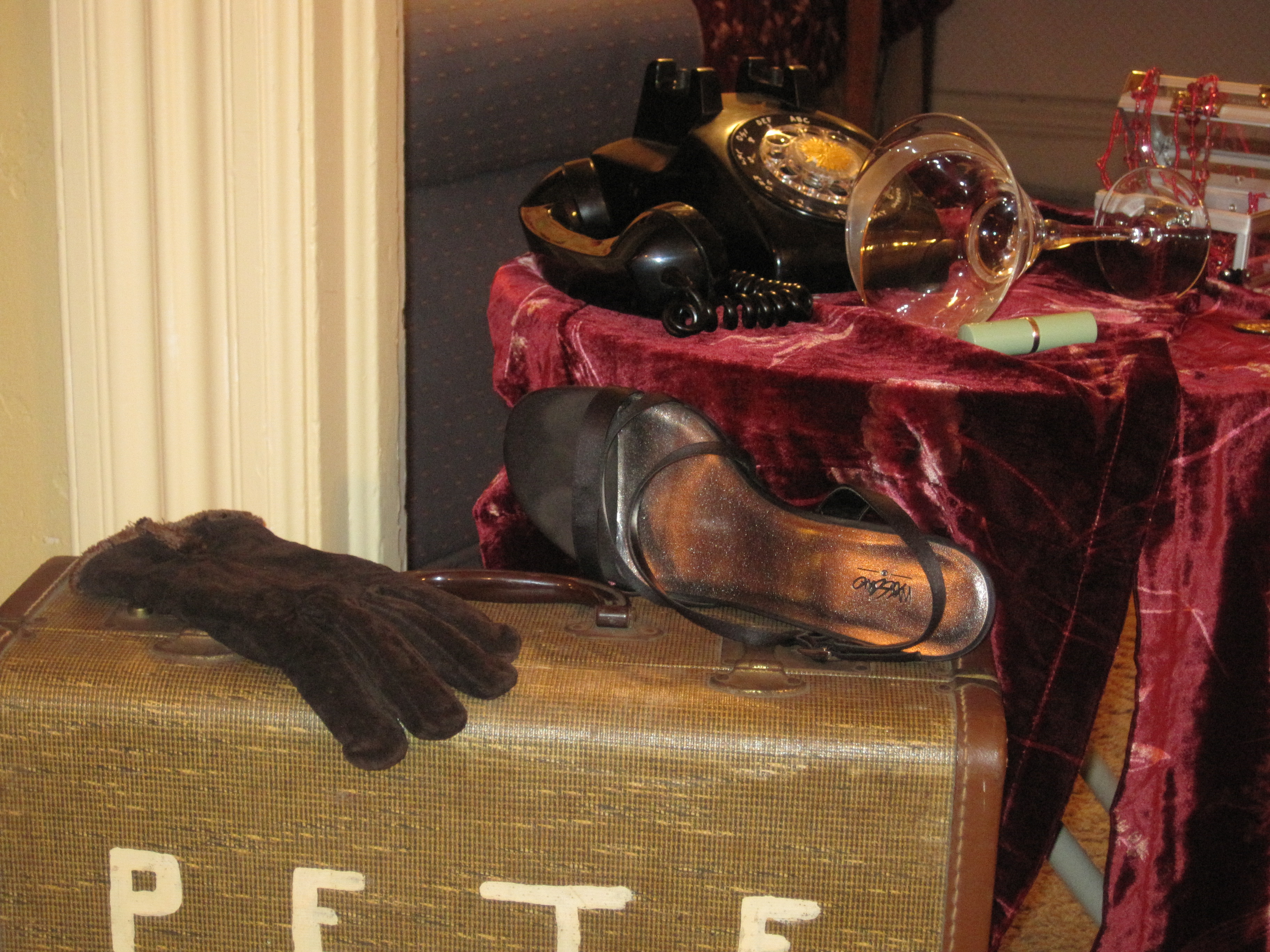
  • What happened here? #23

    Pete Prompt

    What can you do with this photo prompt?  Write whatever comes up for you.

  • Guest Blogger Suzanne Murray explains How Nature Can Enhance Your Creativity

    When I received the inspiration for the name of my business Creativity Goes Wild, I was on a modern day vision quest with Bill Plotkin in an extraordinary canyon in southern Utah that allowed me to really open to the flow of new ideas. Along with the name, I also got that the essence of the work included three different elements: Nature, creativity and the soul which are aspects we can connect to that can really help us live full and authentic lives.

    I have long thought of nature as the original artist. If you spend any time in nature and pay close attention, you become aware of the beauty and design and patterns in both small things like the symmetry in pine cones and snowflakes or on a grander scale the patterns in the erosion of mountains or the movement of clouds across the sky.

    At first glance nature might look chaotic or random or disordered but the more you observe and learn about the natural world the more you become aware of the elegance of design in every creation. We can draw inspiration for our own creativity from spending time in Nature, the same way we feel inspired by visiting an art exhibit, going to a play or watching a good movie.

    Spending time in nature actually slows down our brain waves, taking us from the beta waves where our mind attends to daily activities into alpha waves which offer a naturally meditative state where we access the part of our mind that has new thoughts and ideas, flashes of insight, and more readily makes connections. This can help us with the essence of the creative impulse and process.

    Whenever I find myself stuck on a creative project I will go for a walk in nature and it always opens me back up to the flow. Or if I am looking for a place to begin a creative work I will plant the seed in my subconscious mind and then go to nature, not to think about it, but to allow the inspiration to rise to the surface of my mind.

    Try it. Whether you like to sit in the garden or go for a walk among the trees, see if you don’t find that connecting to nature doesn’t open you up to new ideas and possibilities.

    Suzanne Murray is a gifted writing and creativity coach, EFT practitioner, intuitive healer and writer with deep ties to Nature and the wisdom of the Earth. She offers writing and creativity retreats in beautiful natural places including Yosemite and the West of Ireland.

  • “Writing is easy.” Mark Twain

    “Writing is easy. All you have to do is cross out the wrong words.” Mark Twain

  • “Pass on the dream and tell its truth” — Natalie Goldberg

    In her book, “The True Secret of Writing” Natalie Goldberg writes:

    Writing is for everyone, like eating and sleeping. Buddha said sleep is the greatest pleasure. We don’t often think of sleep like that. It seems so ordinary. But those who have sleepless nights know the deep satisfaction of sleep. The same is true of writing. We think of it as no big deal, we who are lucky to be literate. Slaves were forbidden to learn to read or write. Slave Owners were afraid to think of these people as human. To read and to write is to be empowered. No shackle can ultimately hold you.

    To write is to continue the human lineage. For my grandfather, coming from Russia at seventeen, it was enough to learn the language. Today, it’s our responsibility to further the immigrant dream. To write, to pass on the dream and tell its truth. Get to work. Nothing fancy. Begin with the ordinary. Buddha probably knew, but forgot to mention, that along with sleep, writing can be the greatest pleasure.

  • Today I know . . .Prompt #22

    Today’s prompt is inspired by B. Lynn Goodwin, owner of Writer Advice, and the author of You Want Me to Do WHAT? Journaling for Caregivers, available on Amazon.

    Prompt:  Today I know . . .

  • Yesterday I believed . . . The truth is . . . Prompt #21

    Writing prompts inspired from You Want Me To Do What? Journaling for Caregivers by B. Lynn Goodwin.

    Prompt:  Yesterday I believed . . .  The truth is . . .

  • This is a space for free wild mind writing. . . — Christine Falcon

    “This is a space for free wild mind writing that doesn’t need to be analyzed nor dissected. It’s about the practice of writing and tapping into that raw creative energy, just to keep our juices flowing.” — Christine Falcon

  • Guest Blogger Katya Cengal talks about Getting Published

    In a way, getting published, whether in article form or book form, is about finding the right fit. When you submit a piece you are looking for the perfect partner. In that sense it can be compared to modern dating or job placement. Both parties are looking for something — it is the match maker, recruiter or agent’s job to make sure everyone gets what they want. If you don’t have an agent, you must take on the role of match maker yourself, courting various editors and selling them on your story. Several months ago I found out about a woman in San Francisco turning old Muni buses into mobile showers for the homeless. It seemed like a brilliant idea and a perfect fit for a women’s magazine. I wrote a pitch highlighting the female innovation angle. My contact there loved it. Unfortunately, the editors above her did not. So I stored the story away and went about working on other pieces. I didn’t give up on it though. I knew it was a great story, it just hadn’t found the right home. I waited a while and then revised the pitch to fit a more general audience instead of a female focused audience and pitched it to Newsweek. They loved the idea and the result is The Great Unwashed. It took months for that short piece to get printed, but I am glad I didn’t give up on it. Sometimes in writing you just have to have patience that the right fit will come along eventually and step forward when it does. Just like in so many of life’s other searches.

    Katya Cengel has written for National Geographic, Newsweek, Salon, Esquire and Sports Illustrated   among other publications. Her University of Nebraska book “Bluegrass Baseball: A Year in the Minor League Life” was rated one of the top ten non-fiction books of 2012 by Shelf Awareness and was also a finalist for the 2013 Kentucky Literary Award.

  • Today I feel . . .Prompt #20

    Today’s prompt is inspired from You Want Me To Do What? Journaling for Caregivers (available on Amazon) by B. Lynn Goodwin, founder of Writer Advice,  promoting authors through interviews. Writer Advice also publishes experienced and emerging writers, showcasing fresh ideas and high quality writing.

    Prompt:  Today I feel . . .