“I almost never start with inspiration. If you start to write a scene or an idea, if you can stick at that for 20 minutes, eventually you can get lost in the process and the creative function takes over. The imagination suddenly kicks in. You almost have to dive in and start to work, and eventually, if you get in the groove, you can flourish. — Amor Towles, author of Rules of Civility, interview by Hillary Casavant, November 2013 issue of The Writer magazine.
-
Physical location and action to describe emotional state – Prompt #12
“Setting says something about character, says Rhodes,” in “Location Location” by Elfrieda Abbe, October 2013 issue of The Writer magazine. David Rhodes, author of Driftless and Jewelweed, goes on to say, “A person walking along an empty beach is thinking deeply. . . If a couple sits at a high place overlooking an open valley, they are in love and the future of that love extends before them. A character running through the forest is happy; one lying down is sick or sad. These associations are not hard-fixed symbols, but rather associative colorings that come to life in that split second between emergent images and first thoughts. In stories, such descriptive asides can be used to add depth to the passions and to suggest both strong and ambiguous states of mind.”
Prompt: Put yourself, or your fictional character, in a emotional frame of mind. Write, using physical location and action to describe character’s emotional state. Don’t tell us what his or her emotion is. Write a descriptive scene. Commentators: What emotion do you think writer wants to convey?
-
Favorite place from childhood – Prompt #11
Picture a house you grew up in. If you grew up in more than one house, just choose one. It doesn’t matter which one. Stand back from the house, across the street, or across a yard, and look at your house. Notice the size, shape and color of your house.
Walk a little closer. What do you see? Take a look around. Perhaps you notice some trees, or plants, a yard or a fence. Perhaps a sidewalk.
Look at the side of the house that you usually first walked into. Maybe a front door, or a side door, or a back door. Walk towards that door.
Open the door and step inside.
Take a look around. Even though it may have been awhile, this room is so familiar. Walk towards your favorite room in the house. If you don’t have a favorite room in this house, go to your favorite spot. Maybe it’s under a tree, or away from your house. Maybe it’s a friend’s house or a relative’s house. Go to your favorite place from your childhood.
Prompt: Write about your favorite place from your childhood
-
Stephen King’s advice to his son.
” Finish the book. Finish the book, regardless of how bad it is. You can make it better in a rewrite.” — Joe Hill, son of Stephen and Tabitha King, best writing advice his parents gave him, July/August 2013 Writers Digest Magazine.
-
Remember when you . . . Prompt #10
The current issue of Writer’s Digest magazine (Nov/Dec 2013) is filled with inspirational prompt ideas. Here’s one, “Start with the statement ‘Remember when you . . . ‘ and dream up something unusual to fill in the blank.”
Or, you can write about something that really happened.
Prompt: Remember when you . . .
-
What if . . . Prompt #9
Take any situation from real life, reel life, or from fiction and change the story. Start out with “What if . . . ” and go from there. What if you hadn’t taken that job, moved to that city? What if you had gone a different route? What if Dorothy didn’t follow the yellow brick road? What if the top of the Empire State Building was closed that evening? Change your story to what could have happened. Change the ending to a well-known movie or book or poem. Use your imagination. Go wild. Be quirky. Write freely.
Prompt: What if . . .
-
Boulevard magazine – now accepting submissions
Boulevard magazine is now accepting submissions. “Boulevard strives to publish only the finest in fiction, poetry, and non-fiction While we frequently publish writers with previous credits, we are very interested in less experienced or unpublished writers with exceptional promise. If you have practiced your craft and your work is the best it can be, send to Boulevard.”
-
Fabulous character sketch – Elizabeth Berg
“My mother was dressed in her beautiful yellow summer robe, the tie cinched evenly into a bow at the exact center of her waist, but her auburn hair was sticking up in the back, an occasional occurrence that I always hated seeing, since in my mind it suggested a kind of incompetence. It was an unruly cowlick, nearly impossible to tame — I knew this, having an identical cowlick of my own — but I did not forgive its presence on my mother. It did not go with the rest of her looks: her deep blue eyes, her thin, sculptured nose, her high cheekbones, her white, white skin — all signs, I was certain, of some distant link to royalty.” — What We Keep by Elizabeth Berg
-
Location, or place as a character – Prompt #8
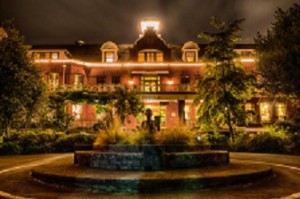
Prompt: Write about a city . . . where you live now, or used to live, or have visited, or from your imagination. Here are examples from the NaNoWriMo Blog.
It is Sunday in Hamburg. Six o’clock in the morning and everything is quiet. Most people are sleeping peacefully in their beds, but not me. I’ve been awake all night. Waiting for this special moment. I feel tired but push on: there is nothing better than the beauty of a new dawn and the breeze of freedom it holds. Soon, I will go to the one place where people who lived through the night can meet those who are first to welcome the morning.
Entering downtown Montreal is like stepping through a time machine. The old port brings you straight to the 1600s: where architectural elegance usurped function, and everything was made of stone. And these stones have stories to tell—showing the stains of floodwaters from as far back as 1642.
New York: The City That Never Sleeps. It’s a common phrase, but it means a lot more than last calls at 4 a.m. and a 24-hour subway system. This town doesn’t run on one schedule, it runs on over 8 million.
Bodegas, hot dog carts and $1 pizza places line the streets of Midtown Manhattan and the Village, catering to this continual flux of pedestrian traffic. Trains full of 9-to-5ers pour out of Grand Central Station, giving way to tourists, then pre-curtain-call diners, then club-goers and night shift workers, on to the late-night partiers and night owls, until, as dawn breaks, early-shift workers and audition-goers pass through, re-starting the cycle all over again.
Your Turn: Write about a city.
-
If you want to write – Brenda Ueland
Tell about some childhood memory, write it as carelessly, recklessly, fast and sloppily as possible. Forget about writing ‘writing,’ and about trying to please the teacher, tell what you remember spontaneously, impulsively. Brenda Ueland, If You Want to Write